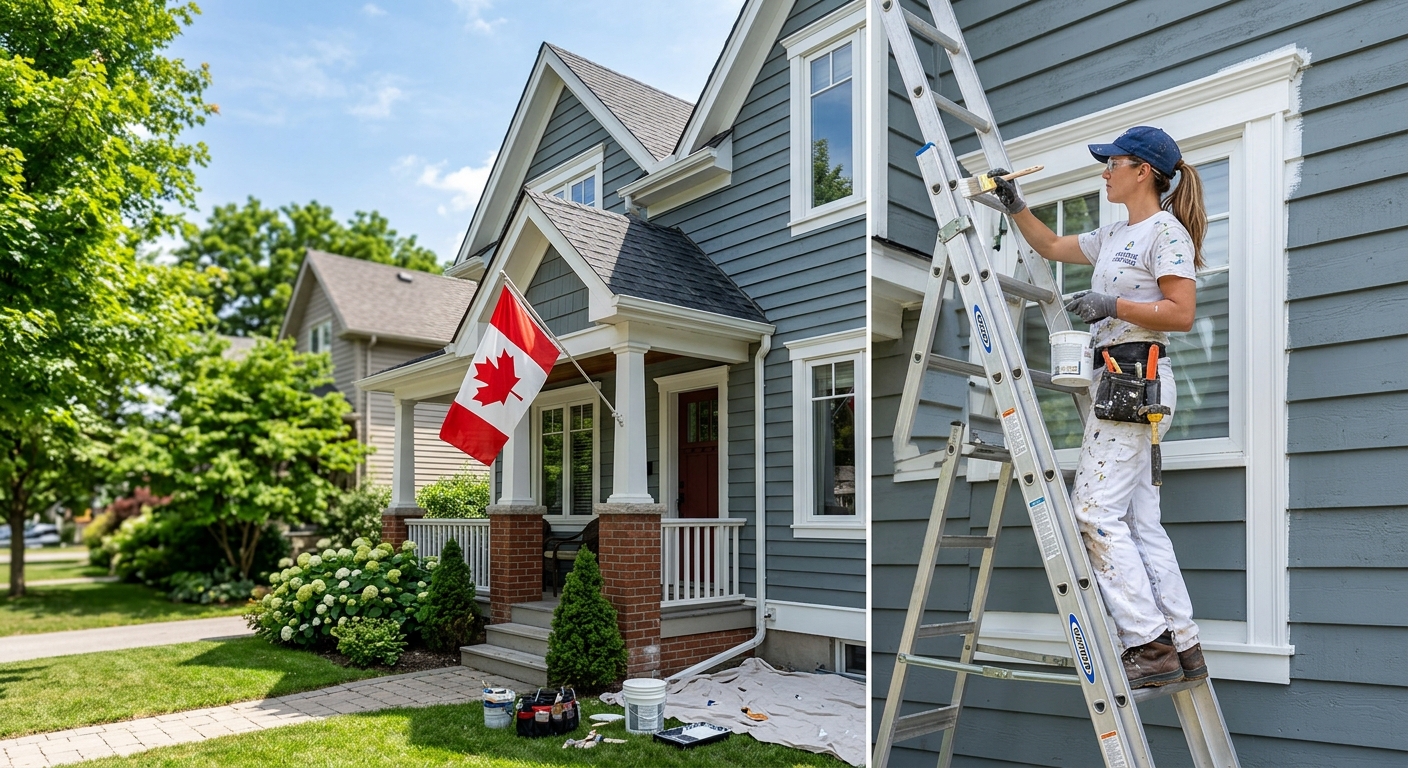
Painting options and costs in Tam O'Shanter-Sullivan
Tam O'Shanter-Sullivan is a neighbourhood in Toronto where homeowners often choose between simple refreshes and full, prep-heavy repaints—largely because many houses here are older. With a population of 27,446 (Statistics Canada, 2021 Census), the area supports steady demand from spring through early fall, and that timing matters for both interior and exterior work. Exterior repainting in the GTA is tightly tied to the weather: contractors typically book the late May-to-June window and then again from September to mid-October, when temperatures stay above about 10°C for enough time to apply and cure properly. In June–August, demand rises, so pricing can run about 10–15% higher during the strongest weeks.
On older homes (including pre-1980 builds that are common around Toronto), cost is driven less by the “topcoat” you see and more by what happens before paint goes on: scraping, sanding, patching, caulking, and priming—sometimes with multiple paint layers. If you're dealing with pre-1978 materials, professional contractors also plan lead-safe work practices even when homeowners aren't required to do so. Interior work is less season-sensitive, but prep still rules the budget, especially when you've got textured walls, patched drywall, or lots of trim.
Below is a practical price comparison to help you place your quote in context for Tam O'Shanter-Sullivan.
| Service |
What's Included |
Typical Duration |
Price Range |
| Interior — whole home (walls, ceilings, trim) |
Move prep/masking, patching and sanding as needed, prime bare spots, caulk trim gaps (as applicable), 2-coat system on walls/ceilings, paint to trim/doors (basic scuff-sand and prime if required) |
6–12 business days |
$2,800 – $6,000 |
| Interior — per room (standard bedroom or living room) |
Protect floors and fixtures, patch/sand spot repairs, prime where required, 2-coat walls, basic trim touch-ups/paint to edges |
1–3 business days |
$500 – $1,200 |
| Exterior — full house (siding, trim, soffits) |
Pressure wash (weather-permitting), scrape/sand loose coating, caulk joints, prime bare/spot areas, 2-coat exterior paint, paint soffits and trim, minor touch-ups to fit line work |
2–4 weeks (schedule-dependent) |
$3,500 – $8,000 |
| Exterior — trim and accent colours only |
Surface prep on trim/accents, caulking where accessible, prime bare metal/wood where needed, 2-coat finish on selected elements |
5–10 business days |
$1,500 – $3,500 |
| Kitchen cabinet painting (doors, frames, spray finish) |
Degrease, full disassembly where practical, scuff-sand and adhesion prep, prime (stain/bleed control when needed), sprayed topcoat, light hardware masking, re-hang |
8–15 business days |
$2,000 – $4,000 |
| Specialty / faux finish (accent wall, texture) |
Surface prep and base coat, custom technique application, multiple layers/clear if required, protective topcoat for durability |
2–7 business days |
$800 – $3,000 |
Prices are estimates only and vary by project scope, site access and material selection.
What affects the price of painting in Tam O'Shanter-Sullivan
In Tam O'Shanter-Sullivan and across Toronto, you can see the same “interior repaint” quoted 30–50% apart. The reason isn't mystery—it's scope and preparation details. Labour rates, how much patching is required, how many coats are truly needed, and whether the contractor includes key steps (priming bare spots, caulking edges, disposal) all change the total even when the final colour is identical. Material choice also matters: contractor-grade vs. premium lines change coverage and durability, which can affect both coat count and touch-up costs.
For exterior work, climate rules the schedule. In the GTA region, exterior painting is usually limited to late May through early October when temperatures stay around and above 10°C and remain favourable long enough for proper adhesion and cure. That shorter, high-demand season often pushes pricing up 10–15% in June–August, especially for full-house projects. Coastal BC often runs longer but with persistent humidity and rain pressures; GTA crews don't have that same year-round mildew cycle, but they still manage rain delays and humidity spikes. Older homes (including the many pre-1980 properties around Toronto) also add prep time: scraping, sanding, caulking and priming can represent 50–70% of labour on a repaint. If you're looking at an exterior full house that can land in the $3,500 – $8,000 band, the cost difference often comes down to how much surface is failing and how much primer and repair is required to get a stable base.
Concrete examples from Tam O'Shanter-Sullivan: a house with peeling trim might need spot-priming plus extended sanding to avoid “ghosting” through the topcoat, while a home with sound surfaces may fit closer to the lower end of $1,500 – $3,500 when you're only doing trim and accent colours. A second-storey exterior with tight access can also add scaffolding time and labour.
| Price Factor |
Why It Matters |
Cost Impact |
| Surface prep — scraping, sanding, patching drywall or wood |
Prevents peeling, bumps, and premature failure; determines adhesion |
Can add 20–60% depending on condition |
| Number of coats — 2-coat system over primer vs. 1 coat over existing |
Coverage and hide; reduces flashing and colour variation |
Typically increases by 10–25% if primer/coats change |
| Paint quality tier — contractor-grade vs. premium (Benjamin Moore, Sherwin) |
Coverage, durability, washability, and colour stability |
Often shifts total by ~5–15% |
| Ceilings and trim — adds significant time vs. walls-only |
Height, masking, cutting-in, and detail work |
Can add 15–35% on interior repaints |
| Exterior season window — short season raises summer rates |
Higher scheduling pressure and limited “ideal” weather weeks |
Often 10–15% higher in June–August |
| Lead-safe precautions — required for pre-1978 homes with lead paint |
Reduces risk when sanding/scraping older paint; affects process and cleanup |
Can add 5–20% on older trim/window/rail areas |
| Surface material — drywall vs. plaster vs. wood vs. stucco |
Different absorption and bonding requirements; affects primer choice |
Can add 10–30% depending on substrate |
| Height and access — multi-storey exterior requires scaffolding or lifts |
Safety setup, protection, and longer prep/coat time |
Can add 15–40% for second-storey and tall elevations |
Permits & regulations in Ontario
In Ontario, painting typically does not require a municipal permit for homeowners. You generally do not need permits to paint interior walls, ceilings, trim, or to repaint an exterior home in standard residential colours. Where it can get more complicated is if the work touches regulated materials or involves building systems—but a standard paint job is usually “permit-free.”
For houses built before 1978 (common across older Toronto neighbourhoods), health guidelines recommend testing for lead paint before sanding or scraping, and using lead-safe work practices if lead is present. This is not legally mandated for homeowners in the way some construction trades are, but it's considered standard professional practice: wet methods to reduce dust, HEPA vacuuming, and proper containment and disposal.
Before you sign anything in Tam O'Shanter-Sullivan, confirm your contractor carries liability insurance and has workers’ compensation coverage (WSIB). Then insist on a written contract that clearly states the paint brand and sheen, number of coats, surface prep scope, and which items are included (primer type, caulking, cleanup and disposal).
To verify coverage step-by-step: (1) check their Ontario business details via the province's online business/registry sources; (2) ask for a current certificate of insurance and confirm it includes general liability for painting work; (3) request proof of WSIB coverage and match it to the business name on the quote; (4) if they're working near potentially lead-containing surfaces, ask how they'll control dust and what waste handling they follow; and (5) ensure the contract has a detailed scope so there are no surprise exclusions.
Interior vs exterior painting — getting the best result in Tam O'Shanter-Sullivan
The biggest difference between a paint job that lasts and one that fails early in Tam O'Shanter-Sullivan is preparation matched to the climate. Toronto’s seasonal swings—plus rain delays during the exterior window—can expose weak prep fast, while interior failures usually show up as scuffs, stains, or peeling around patched areas. For interiors, start with filling, sanding, and priming: patch compounds need proper cure and smooth sanding, and bare spots must be primed to prevent uneven sheen and flashing. Sheen choice matters too. Flat or matte can look great on low-traffic ceilings, but for living rooms and hallways, eggshell or satin on walls balances easy cleaning with a soft look; semi-gloss on trim resists scuffs. Regardless of brand, two proper coats over a correctly primed surface almost always outlast a “one thick coat” shortcut.
For exteriors, prep is even more decisive. Scrape loose coating, sand edges, and caulk before painting so you’re not trapping moisture behind new paint. Primer type should match the substrate: wood and bare areas may need adhesion-focused primers, while problematic stains or tannins often require stain-blocking systems. In the GTA, you don't buy products because it's constantly damp like the coastal provinces; you buy for stability across humidity spikes and cooler nights, and you paint when temperatures support curing.
Cabinet painting is a smart alternative to replacement when your boxes are structurally sound and you want a fresh look. It costs less than replacement in most cases because you're re-finishing surfaces, but it still needs degreasing, sanding, and spraying for a durable finish. For pre-1978 homes, lead-safe precautions should be part of the plan if you're scraping trim or working around older window/rail paint.
Where does the money make sense? For example, spending an extra prep-focused $600–$1,200 on exterior scraping, caulking and priming can prevent peeling that would otherwise force a costly repeat later—often outweighing a minor paint-brand upgrade. Conversely, paying for premium exterior paint without fixing substrate issues is rarely where you should put your budget first.
| Project Type |
Key Prep Step |
Recommended Coats |
Price Band |
| Interior — fresh drywall (new construction) |
Prime whole surface and feather joints for uniform absorption |
1 primer coat + 2 finish coats |
$600 – $1,800 |
| Interior — repaint (good condition, no repairs) |
Clean/de-scuff and spot-prime if colour change requires it |
2 finish coats (spot-prime only) |
$400 – $1,200 |
| Interior — repaint (patching and priming needed) |
Patch, sand, and prime repairs to avoid flashing |
1 primer/spot-primer + 2 finish coats |
$700 – $1,800 |
| Exterior siding (wood or fibre cement) |
Scrape/sand failing areas, caulk joints, prime bare spots |
Primer/spot-primer + 2 finish coats |
$3,500 – $8,000 |
| Exterior trim and accents only |
Surface profile creation and adhesion primer on bare/aged spots |
2 finish coats (with primer where needed) |
$1,500 – $3,500 |
| Kitchen cabinets (spray finish) |
Degrease thoroughly, sand for adhesion, and prime/seal properly |
Primer/sealer + 2 sprayed finish coats |
$2,000 – $4,000 |
How to choose a painting contractor in Tam O'Shanter-Sullivan
Choosing well in Tam O'Shanter-Sullivan starts with proof of coverage and clear documentation. In Ontario, verify the contractor has liability insurance and WSIB (workers’ compensation) coverage; ask for a current certificate of insurance and proof of WSIB coverage and make sure the policy names match the business name on the quote. For Ontario compliance, you can also review their business details through provincial online sources and confirm they are a real, operating company—not just a personal email or social handle.
Then compare quotes properly. Get 2–3 itemised written quotes with a labour + materials breakdown, not a lump sum with vague wording. Scope is where surprises hide: ask what’s excluded (furniture moving, heavy floor protection, repairing drywall beyond minor patching, sanding extent, lead-safe disposal). Confirm whether permit pull is included (in Ontario, painting usually doesn’t require a permit, but a good contractor should say so clearly). Also ask about disposal/cleanup—scraping creates debris, and you want it handled.
Warranty matters: request the workmanship warranty length and whether it covers blistering/peeling related to prep and application. Ask if the manufacturer warranty transfers to you (some products have conditions tied to application and proof of product). For payment, never pay more than 10–15% upfront; use a holdback until the job is complete and cleaned. Finally, get a timeline with a stated start date and completion estimate in writing, especially for exterior work where the weather window can tighten.
- Request proof of liability insurance and confirm coverage is current (ask for certificate, not just “we’re insured”).
- Request WSIB proof and match it to the contractor’s legal business name.
- Make sure the quote lists paint brand and sheen (not “premium paint”).
- Confirm prep scope: scraping/sanding extent, patching limits, and caulking responsibility.
- Ask whether primer is included and on which surfaces (bare wood, stained areas, patched drywall).
- Verify coat count: 2-coat system plus any primer, not “one coat where needed.”
- Clarify furniture moving, masking, and floor protection inclusions.
- Confirm cleanup and disposal (drop cloths, vacuuming, waste bagging, site leave-ready).
- Ask for schedule planning for exterior work around rain delays and curing time.
- Review warranty terms in writing, including what it covers and exclusions.
- Agree on a payment schedule that holds back at least 10–15% until completion.
- Ensure the contract includes a colour/finish schedule so there are no mismatch disputes.
Red flags I see in the Tam O'Shanter-Sullivan market: “we’ll skip primer” on bare or patched areas, vague scope that doesn’t mention caulking or cleanup, refusing to provide insurance/WSIB proof, quotes that are only verbal or lack product/coat details, and crews asking for large upfront payments without a signed contract and schedule.
Frequently asked questions — painting in Tam O'Shanter-Sullivan
How do I prep walls before painting?
If you’re preparing interior walls in Tam O'Shanter-Sullivan, focus on cleanliness and surface integrity. Start by removing dust and grease (wipe with a mild detergent solution and rinse, then let dry). Patch holes and cracks using a drywall compound, then sand smooth and remove dust with a vacuum or tack cloth. Caulk trim gaps lightly so new paint doesn’t bridge cracks. If walls have glossy areas or stubborn stains, they may need sanding or spot-priming—this is where many DIY jobs lose durability. A contractor will often prime bare spots and repairs to prevent flashing, and then apply a 2-coat finish. If your home is older, especially pre-1978, avoid aggressive scraping of painted trim and ask your contractor about lead-safe practices before sanding.
Do I need to worry about lead paint in an older Tam O'Shanter-Sullivan home?
It depends on the age of the materials and what you plan to do. In Ontario, there typically isn’t a permit requirement for painting, but for homes built before 1978, health guidelines recommend testing for lead paint before sanding or scraping. If lead is present, lead-safe work practices are the professional standard: wet methods to control dust, HEPA vacuuming, and proper containment and disposal of debris. For Tam O'Shanter-Sullivan owners, this matters most on older trim, window components, and railings where scraping may be required. In practice, a good contractor will either test/plan for lead-safe controls or use methods that reduce dust exposure and protect the work area. Budget-wise, lead-safe prep can move labour upward—often a noticeable add-on within a repainting project—but it’s far cheaper than dealing with hazardous cleanup later.
How long does it take to paint a house?
Timelines in Ontario depend on prep and weather, not just the hours crews put on paint. For interiors in Tam O'Shanter-Sullivan, a whole home typically takes about 6–12 business days if there’s sanding, patching, and trim work. A single room can be done in about 1–3 business days (assuming furniture protection and no major repairs). For exteriors, expect longer and weather-dependent scheduling: contractors often target late May through June and then early September to mid-October when temperatures are suitable for curing. If you’re doing a full house exterior, a realistic window is often 2–4 weeks due to rain delays, multiple coats, and cure time between passes. If your quote is at the exterior end (for example $3,500 – $8,000), ask for a written schedule that shows prep days and coat days.
What's the difference between paint quality tiers?
Paint quality tiers mainly affect coverage, durability, and how forgiving the product is when your surface prep isn’t perfect. Premium lines often provide better hiding and stain resistance, and they can hold up better to washing in high-traffic areas. Contractor-grade options can still perform well, but they may require more careful application to avoid uneven sheen or flashing, particularly on patched drywall or colour changes. In Tam O'Shanter-Sullivan, the “tier” decision should follow prep quality—prime and patch correctly first, then choose the finish based on room use. If you’re comparing quotes, don’t just compare the paint label; look for whether primer and correct coat count are included. That’s why two-coat systems and proper priming are often where you see better results and more predictable long-term performance, regardless of tier.
How do I compare painting quotes?
Compare quotes like a homeowner detective: scope, coat count, prep responsibility, and inclusions. In Tam O'Shanter-Sullivan, I recommend requesting 2–3 itemised quotes showing labour and materials, not a lump sum. Confirm exactly what’s included in “prep”—scraping, sanding, patching, priming bare spots, and caulking. Ask how many finish coats are included and whether it’s truly 2 coats over primer where required. Look for exclusions: furniture moving, disposal, and what happens if they uncover damage behind old paint. Also check whether they list paint brand and sheen. For exterior work, ask how they’ll handle weather delays within the late May–mid October window. If one quote is in the $1,500 – $3,500 range for trim-only and another is much higher, it could simply be missing prep or coats—or it could include a bigger scope than you assumed.
What paint sheen should I use in different rooms?
Sheen choice should match how the space is used and how easy you want cleaning to be. In most Tam O'Shanter-Sullivan interiors, ceilings often use flat or matte to hide imperfections. Bedrooms and living rooms usually look great in eggshell or satin on walls: they provide a softer appearance than semi-gloss and still tolerate everyday cleaning. Kitchens, hallways, and areas near doors benefit from a slightly higher-sheen finish (often satin) because scuffs wipe easier. Trim and doors generally do best in semi-gloss for durability and a cleaner edge. The key rule is that prep determines smoothness; sheen determines appearance and cleanability. If you’re changing sheens dramatically or moving from a glossy surface to a new finish, plan on proper sanding and priming so you don’t get uneven sheen or flashing under the new light.