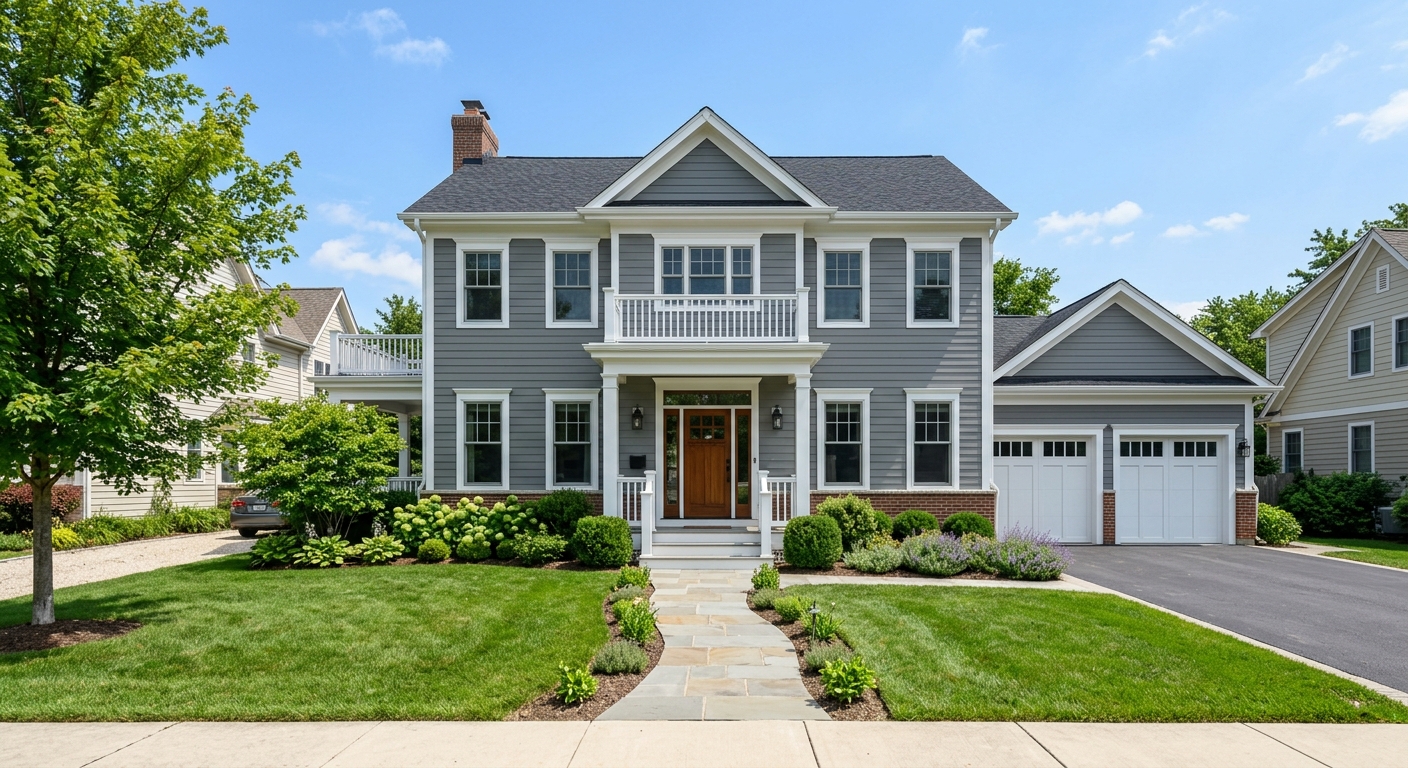
Painting options and costs in Essex
Essex homeowners usually have a clear set of choices—interior, exterior, cabinets/trim, or decorative work—but the cost can swing quickly once you consider the age and condition of the home. In Essex, many dwellings are older; about 63.1% were built before 1981, which often means more patching, caulking, and priming to stabilize aged substrates before paint goes on. That same age profile is also why lead-safe work practices are a common expectation on professional jobs when paint may be pre-1978, especially around windows, doors, and older trim.
In the Windsor–Sarnia area, exterior painting is highly seasonal. The practical window for good curing runs roughly late May through early October, when temperatures stay steady and humidity is manageable enough for proper dry-to-recoat timing. Because the demand is compressed into those few months, summer scheduling can be tighter and contractor rates often reflect that. If you’re in a neighbourhood with heavier repaint demand—such as near Maidstone or along the Essex shoreline/older village core—prep complexity and material choice (especially low-VOC products and better-primer systems) can change your budget more than the “colour decision” itself.
Below are realistic price bands for Essex homeowners so you can compare like-for-like scopes before you request quotes for your project.
| Service |
What's Included |
Typical Duration |
Price Range |
| Interior — whole home (walls, ceilings, trim) |
Patch/fill and sand where needed, caulking, primer as required, 2-coat finish (flat/eggshell/satin as selected), basic prep protection, tape-off and cleanup |
5–10 days |
$1,600–$4,800 |
| Interior — per room (standard bedroom or living room) |
Surface prep, spot-prime as needed, 2-coat finish, edge work around trim, ceiling coverage, cleanup |
1–3 days |
$800–$1,800 |
| Exterior — full house (siding, trim, soffits) |
Power wash, scrape/sand where needed, caulking of gaps, stain/peeling spot repair, primer system, 2-coat exterior finish, masking/protection, final cleanup |
7–16 days |
$2,700–$7,000 |
| Exterior — trim and accent colours only |
Cleaning, spot prep and priming, 2-coat coating on trim/accents only, masking and protection of adjacent surfaces |
3–8 days |
$1,500–$3,800 |
| Kitchen cabinet painting (doors, frames, spray finish) |
Degrease, light scuff/sand, repairs as required, bonding primer, sprayed finish, hardware removal/reinstall (where feasible), protective topcoat |
4–10 days |
$2,200–$4,000 |
| Specialty / faux finish (accent wall, texture) |
Surface preparation for texture/finish, base coat, 1–2 specialty layers as specified, topcoat/seal where needed |
1–5 days |
$1,000–$3,000 |
Prices are estimates only and vary by project scope, site access and material selection.
What affects the price of painting in Essex
In Essex, two quotes for the same “number of rooms” can differ by 30–50% once you factor in prep, product tier, and site conditions. Windsor–Sarnia is especially sensitive to timing and labour availability: exterior work is compressed into a late May to early October window, so summer scheduling pressure can increase rates. That’s similar to the demand pattern across Ontario, but not as damp-and-timing-heavy as coastal BC, where long periods of moisture can require mildew-resistant systems and extra planning. The result in Essex is that a professional quote isn’t just paint—it’s the cost of getting surfaces stable enough for coatings to cure and bond properly.
Older homes throughout the region—about 63.1% built before 1981—often require significantly more surface work than newer drywall-only interiors. On repainting jobs, prep can be 50–70% of labour: scraping failing coatings, sanding loose edges, caulking cracks, spot-priming bare wood, and repairing small drywall issues. That same prep complexity is one reason exterior repainting commonly sits near the upper end of the exterior band (for example, $2,700–$7,000 for a full house depending on condition), while clean interior refreshes can land closer to the low-to-mid interior band ($800–$3,500 for typical scopes depending on how many rooms and how much trim work is included).
Concrete Essex examples: a pre-1981 siding run with peeling areas may require more primer and more labour time than “cosmetic” trim-only work; a multi-storey layout can push you into scaffolding/lift rental; and homes with many windows/trim details take longer to mask and protect. If your goal is exterior curb appeal, addressing the prep first is what prevents “pretty for one season” failures.
| Price Factor |
Why It Matters |
Cost Impact |
| Surface prep — scraping, sanding, patching drywall or wood |
Bonding and longevity depend on removing loose paint and stabilizing substrates |
+20% to +60% depending on condition |
| Number of coats — 2-coat system over primer vs. 1 coat over existing |
Better hiding and uniform colour only happen with the correct coat system |
+5% to +25% |
| Paint quality tier — contractor-grade vs. premium (Benjamin Moore, Sherwin) |
Premium coatings often spread better, cover more evenly, and hold colour longer |
+10% to +30% material portion (often less than prep savings would be) |
| Ceilings and trim — adds significant time vs. walls-only |
Ceilings and detailed trim increase cutting-in, masking, and drying coordination |
+10% to +40% |
| Exterior season window — short season raises summer rates |
Demand concentration increases contractor scheduling pressure and labour premiums |
+5% to +20% |
| Lead-safe precautions — required for pre-1978 homes with lead paint |
Containment, HEPA vacuuming, and safe disposal add labour steps and controls |
+10% to +35% |
| Surface material — drywall vs. plaster vs. wood vs. stucco |
Different substrates need different primers and prep methods to avoid peeling/blistering |
+10% to +45% |
| Height and access — multi-storey exterior requires scaffolding or lifts |
Access equipment and safety procedures add time and rental costs |
+15% to +50% |
Permits & regulations in Ontario
In Ontario, painting generally does not require a permit for typical residential interior or exterior repainting. There are, however, work practices that become essential on homes built before 1978. Health guidelines recommend testing for lead paint before sanding, scraping, or otherwise disturbing surfaces if your home may contain lead-based paint, and using lead-safe methods if lead is confirmed or strongly suspected. Professional lead-safe practices usually include wet methods to reduce dust, HEPA-filtered vacuuming, and appropriate bagging and disposal—especially when stripping or sanding older trim, soffits, or window components. This isn’t usually a legal “permit” item for homeowners, but it is the standard expected for professional contractors.
What typically does require permitting is not painting itself, but related alterations—like structural changes, roof replacement, or certain exterior work under other municipal approvals (your contractor will clarify if anything is beyond paint-only). For painting, what you should verify is compliance and insurance: the contractor should carry liability insurance and have WSIB/WCB workers’ compensation coverage for their employees.
Step-by-step for Essex homeowners: (1) ask for the contractor’s WSIB/WCB account proof and a current clearance/coverage document where available; (2) request a certificate of insurance (COI) naming you as a certificate holder or providing sufficient liability limits; (3) confirm the company’s licensing/business registration information through Ontario’s public business/licensing resources; (4) get a written contract listing paint brand, sheen, number of coats, and explicit prep items (caulking, scraping, priming, disposal). Then you’ll know exactly what you’re paying for.
Interior vs exterior painting — getting the best result in Essex
In Essex, the difference between a long-lasting paint job and a premature failure is usually preparation and system choice—not the colour. For interiors, surface prep matters most: filling dents and nail holes, sanding to a smooth feather, and priming areas that are porous, stained, or newly repaired. After prep, sheen selection is practical. Flat can hide wall imperfections but scuffs more in high-traffic areas; eggshell or satin typically performs better for family rooms and hallways. Real-world rule of thumb: two coats over a properly matched primer outlasts “one thick coat,” especially on patch repairs and colour changes.
For exteriors in Ontario’s weather, prep is even more critical because coatings are constantly stressed by temperature swings, wind-driven rain exposure, and seasonal drying. Caulk gaps and joints before painting—doing it after the first coat is a common mistake that can trap moisture and cause blistering. Primer type matters: stained or bare wood often needs an appropriate bonding/stain-blocking primer, and different substrates (wood, fibre cement, stucco) need tailored primer systems to avoid adhesion problems. In Essex, a premium low-VOC system is nice for interiors, but for exteriors the “right product” is really about adhesion, flexibility, and proper cure in the late spring-to-early fall window.
Cabinet painting is a smart budget alternative to replacement when boxes and frames are solid. If your kitchen is dated, cabinet painting typically gives the best value compared with full replacement—especially when you pair it with a quality bonding primer and sprayed or professionally rolled finish. And for pre-1978 homes, expect lead-safe precautions on any sanding or scraping that disturbs older trim.
Example of where price differences are justified: if a repaint quote for a full exterior comes in closer to the top of the exterior range (around $2,700–$7,000), it’s often because the contractor is planning for extensive prep—more scraping, caulking, and primer—rather than just rolling colour. If your home is in good condition and you choose trim-only work, you may be nearer the lower band (for example, $1,500–$3,800).
| Project Type |
Key Prep Step |
Recommended Coats |
Price Band |
| Interior — fresh drywall (new construction) |
Prime new drywall evenly to prevent flash/soak-through and patch bleed |
Primer + 2 finish coats |
$1,200–$3,800 |
| Interior — repaint (good condition, no repairs) |
Clean/dust removal, light scuff, caulk touch-ups, spot-prime only as required |
2 finish coats (primer only on stains/patches) |
$800–$2,600 |
| Interior — repaint (patching and priming needed) |
Sand smooth, fill/feather repairs, spot-prime different absorbency areas |
Primer spots + 2 finish coats |
$1,000–$3,500 |
| Exterior siding (wood or fibre cement) |
Power wash, scrape loose edges, caulk, and apply correct primer for adhesion |
1 primer system (where needed) + 2 exterior coats |
$2,700–$7,000 |
| Exterior trim and accents only |
Masking and careful prep of trim lines; prime bare wood/affected spots |
2 coats (primer on prepared/spot areas) |
$1,500–$3,800 |
| Kitchen cabinets (spray finish) |
Degrease thoroughly, bond-prime, sand/scuff for adhesion between coats |
Primer + 2–3 finish coats (system dependent) |
$2,200–$4,000 |
How to choose a painting contractor in Essex
Choosing a painter in Essex is about verifying the basics first, then matching scope details. Start by checking Ontario licensing/business registration information for the company (the exact registry path can vary by business type), and always request proof of insurance. Ask for (1) a certificate of liability insurance (COI) showing current coverage amounts; (2) WSIB/WCB workers’ compensation coverage for their employees, usually confirmed through WSIB/WCB clearance/coverage documents; and (3) a written contract that identifies the work scope clearly. If a contractor can’t provide these documents, move on—painting often involves ladders, weather exposure on exteriors, and cutting/primer systems that require safe handling.
Next, request 2–3 itemised quotes. You want labour and materials broken out, not just a single lump-sum number. Pay close attention to what’s excluded: older coatings disposal, scaffolding/lift rental, lead-safe prep steps if applicable, pressure washing, caulking supply, and surface repairs. Disposal and prep are frequently where “low” quotes become expensive.
Warranty matters too: ask for workmanship warranty length and what it covers (peeling, cracking, adhesion issues), and confirm whether the manufacturer’s paint warranty depends on proper surface prep and application. Payment schedule should protect you—never pay more than 10%–15% upfront, and keep a holdback until the job is complete and cleaned. Get the start date and completion estimate in writing, especially for exterior work that must fit the late spring-to-early fall curing window.
- Ask for COI liability insurance and confirm it’s current
- Request WSIB/WCB coverage proof for their workers
- Get an itemised quote (labour + materials), not just one total
- Confirm paint brand, sheen, and exact number of coats
- Ensure prep scope is explicit: scraping, sanding, caulking, spot-priming
- Clarify protection and cleanup (drop sheets, masking, final washdown)
- Ask whether pressure washing is included for exterior work
- Confirm disposal of scraping debris and any hazardous materials handling
- Check lead-safe process for pre-1978 homes if sanding/scraping is needed
- Verify whether scaffolding/lift rental is included or extra
- Review warranty: workmanship duration + coverage details
- Use a payment schedule with a holdback until punch-list completion
Red flags I commonly see with painting contractors in the Essex area: they refuse to itemise quotes; they won’t provide insurance/WSIB/WCB proof; they talk you out of primer or proper prep (“we’ll just roll it”); they demand a large upfront payment; or they give only vague timelines without tying exterior work to the curing window and weather conditions.
Frequently asked questions — painting in Essex
How do I fix peeling exterior paint in Essex?
Peeling exterior paint in Essex is almost always a prep-and-system issue, not just a “spot touch-up” problem. First, identify where it’s failing: bubbling and peeling at trim edges often points to moisture intrusion and poor adhesion, while widespread peeling can indicate inadequate previous prep. A proper fix starts with cleaning, scraping loose paint back to sound edges, sanding feathered transitions, and then caulking gaps before coating. Because Essex has a short exterior season (late spring to early fall), timing matters—surfaces need to stay dry long enough for primer and finish coats to cure. If your home is pre-1978 (many are—63.1% built before 1981), professional contractors may follow lead-safe practices if lead is present. Expect pricing to land in typical exterior repaint bands (often $2,700–$7,000 for full-house work) once prep is properly addressed.
What colours add the most resale value in Essex?
For resale value in Essex, the safest play is usually “timeless neutrals with clean contrast.” Many buyers respond well to light, warm whites or off-whites for siding, paired with deeper trim colours that look crisp in southern Ontario light. If you want a little personality, choose one accent—such as the front door or a small trim detail—rather than colouring the entire facade. With older housing stock common in the Windsor–Sarnia area, neutral siding can also help conceal minor surface irregularities that show up more with very dark colours. In practice, colour upgrades don’t usually change labour much, but premium coatings and proper sheen selection can. Since median household income in the region is about $87,000 (Statistics Canada, 2021 Census), homeowners often prefer approaches that look modern without looking trendy. A contractor can help you pick colours that work with existing roof/shingle tones and brick/stone undertones.
How much does it cost to paint a house in Essex?
The cost depends heavily on whether you’re painting the entire interior, the full exterior, or a mix—and especially on how much surface prep is needed. For interior whole-home painting in Essex, budgets commonly fall around $1,600–$4,800 when prep, caulking, and trim work are included. For an exterior full house repaint (siding, trim, soffits), realistic pricing often sits near $2,700–$7,000 because prep can be extensive on older properties. Essex’s exterior season is short, so scheduling pressure can also affect the final number. A typical strategy to control cost is to address the worst areas first (scrape/prime failing spots) and choose whether to do trim-only accents versus a full repaint. If you share your home size, number of storeys, and where peeling or staining is happening, a contractor can narrow the range with a scope-based quote.
How much does interior painting cost per room in Essex?
Per-room interior painting in Essex typically ranges from $800–$1,800 for a standard bedroom or living room when prep is straightforward (surface cleaning, filling small imperfections, and two finish coats). The price moves up when you add significant patching, heavy staining, lots of trim, or ceiling coverage beyond standard expectations. If your room needs additional priming because of repaired drywall or colour changes, you should plan closer to the mid-to-upper end of the range. In older Essex homes (with many built before 1981), unexpected prep can happen because surfaces may be uneven or prior coatings may be inconsistent, which makes spot priming essential for a uniform finish. For accurate budgeting, ask for an itemised quote that lists sanding/fill, caulking, primer allowances, and the specific number of coats rather than only a room count.
When is the best time for exterior painting in Essex?
In Essex and the broader Windsor–Sarnia region, the best time for exterior painting is late spring through early fall, when temperatures and humidity are stable enough for coatings to cure properly. Practically, many contractors aim for roughly late May to early October, avoiding weeks when rain is likely during application and drying. The reason is simple: exterior paint systems need a reliable window for dry-to-recoat and full cure, and moisture trapped under coatings can lead to blistering or peeling. This timing pressure is why summer schedules can get booked quickly. If you’re planning a full-house exterior repaint, locking in your quote early in the season helps you choose quality products and get the prep work done without rushing. If weather delays happen, a contractor should adjust the schedule rather than paint over damp surfaces.
How many coats of paint do I need?
Most quality residential projects in Essex use a system: primer where required, then two finish coats. Interiors are commonly 2 coats over the correct primer, with spot primer for repairs or stain-blocking as needed. For exteriors, the usual approach is one primer system on prepared/affected areas plus two exterior finish coats to ensure full coverage and consistent sheen. Some homeowners ask about “one thick coat,” but that often fails sooner—especially in high-wear areas or on patch repairs—because hiding and adhesion can be uneven. If you’re repainting over a sound surface with minimal repairs, your quote may still recommend two finish coats for uniform colour and durability. If your home has peeling areas or bare wood, primer and proper prep are non-negotiable. Budgeting for the full coating system keeps you closer to the typical interior range (often $800–$3,500 depending on scope) and exterior bands when prep is included.