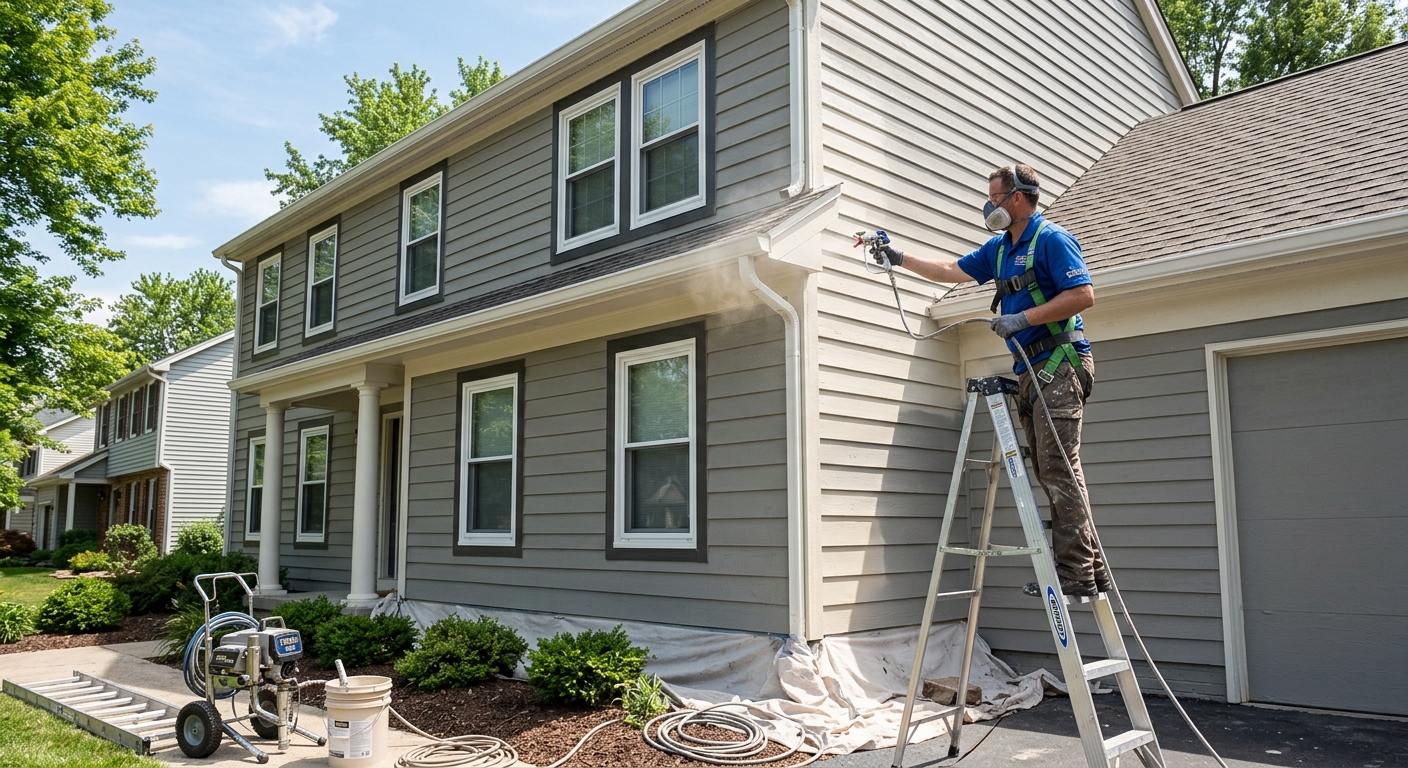
Painting options and costs in St. Catharines
St. Catharines homeowners often ask what their painting will cost, and the answer depends less on the paint colour and more on prep, access and how the home is built. In the City’s housing mix, 71.0% of homes were built before 1981, which usually means more aged trim, older drywall finishing and more caulking that needs scraping and replacement before paint can last. With 37,945 homeowner households (64.4% of households own) (Statistics Canada, 2021 Census), repaint projects are common—especially in established neighbourhoods near the Welland Canal and along parts of the Niagara Escarpment where moisture can linger.
In the Hamilton–Niagara Peninsula painting market, pricing is shaped by four-season continental weather. Exterior work is typically limited to a late spring-to-early fall window when surfaces can stay dry and coatings cure reliably. That short season compresses contractor availability and can push exterior pricing higher in peak summer, particularly for multi-storey homes or jobs that need wood repair and scaffolding. Interior work is more flexible, often scheduled in summer for faster drying, but can also be done in shoulder periods when crews have room on the calendar.
Expect local differences between “like-sized” homes because older construction usually requires more labour for scraping, sanding and priming; that prep can become 50% to 70% of the total labour on a repaint. As a quick budgeting anchor, interior projects often land anywhere from $500 up to $5,000, while full exterior repaints commonly fall in the $1,500 to $8,000 range once prep and paint system are included.
Use the table below to compare common scopes, then refine with an in-home inspection of substrate condition, ceiling heights and access.
| Service |
What's Included |
Typical Duration |
Price Range |
| Interior — whole home (walls, ceilings, trim) |
Move-protect, patch/sand as needed, prime where required, caulking at edges, 2-coat finish (sheen selected per surface), cleanup |
5–12 days |
$2,000–$5,000 |
| Interior — per room (standard bedroom or living room) |
Patch/sand (minor), prime as required, 2-coat finish on walls, edge work, light prep and cleanup |
1–3 days |
$500–$1,800 |
| Exterior — full house (siding, trim, soffits) |
Surface wash, scrape/sand, caulk, prime exposed/suspect areas, 2-coat exterior system, protect landscaping, final cleanup |
1.5–3.5 weeks |
$3,500–$8,000 |
| Exterior — trim and accent colours only |
Prep and prime bare spots, caulk, paint trim/accent areas, protect adjacent surfaces, cleanup |
4–10 days |
$1,500–$3,800 |
| Kitchen cabinet painting (doors, frames, spray finish) |
Degrease, light sanding, fill/sand, prime, spray finish on doors and frames, hardware protection, final cure and touch-ups |
5–10 days |
$2,000–$4,500 |
| Specialty / faux finish (accent wall, texture) |
Surface prep, base coat, specialty finish application, sealing/clear where appropriate, cleanup |
2–7 days |
$1,000–$6,000 |
Prices are estimates only and vary by project scope, site access and material selection.
What affects the price of painting in St. Catharines
In St. Catharines and the wider Hamilton–Niagara Peninsula, two contractors can quote the “same” repaint and still differ by 30% to 50% because the scope is never truly identical. The biggest driver is prep: scraping failing coatings, sanding glossy surfaces, patching drywall or wood, and priming problem areas. On older homes—71.0% built before 1981—those steps often take longer because the substrate has had decades of thermal movement and moisture exposure (Statistics Canada, 2021 Census).
Exterior costs are especially sensitive to weather. In Ontario and Alberta, the practical window for exterior work is roughly late May to early October; crews generally need temperatures above about 10°C and dry conditions during application and curing. Coastal BC can allow a longer season, but higher humidity and rainfall mean additional mildew-resistant systems and more careful timing. In our region, the shorter season concentrates demand, so exterior jobs can see spikes in peak summer—particularly if your house is multi-storey or needs scaffolding, lifts, and extra protection for landscaping and hardscaping.
Local material types also matter. Many St. Catharines homes use aged wood trim, stucco, brick, and aluminum/vinyl siding, and each substrate needs a different prep and primer approach. A case in point: if you’re deciding between an exterior trim-only refresh versus a full-house repaint, a trim/accent job might land in the $1,500 to $3,800 band, while a full exterior can move into the $3,500 to $8,000 range because you’re paying for larger surface area prep, priming continuity and system build-up. Another example: minor interior patching can keep a per-room interior project closer to the $500–$1,800 band, but adding ceiling repairs and full prep can push it toward the upper end of interior whole-home pricing.
| Price Factor |
Why It Matters |
Cost Impact |
| Surface prep — scraping, sanding, patching drywall or wood |
Prep determines adhesion and the longevity of the finish, especially on older homes. |
+20% to +60% labour on repaints |
| Number of coats — 2-coat system over primer vs. 1 coat over existing |
New primer + full 2-coat coverage prevents flashing and uneven sheen. |
+10% to +35% |
| Paint quality tier — contractor-grade vs. premium (Benjamin Moore, Sherwin) |
Better coatings often cover better, resist stains and last longer on trim. |
Material cost +5% to +25% |
| Ceilings and trim — adds significant time vs. walls-only |
Ceilings and detailed trim require more cutting-in, protection and smoothing. |
+15% to +45% |
| Exterior season window — short season raises summer rates |
More demand in peak weeks can increase crew and scheduling costs. |
+10% to +30% |
| Lead-safe precautions — required for pre-1978 homes with lead paint |
Testing/containment, HEPA cleanup and proper disposal add labour. |
+10% to +50% depending on findings |
| Surface material — drywall vs. plaster vs. wood vs. stucco |
Each substrate needs different primers and prep to avoid peeling or staining. |
+10% to +40% |
| Height and access — multi-storey exterior requires scaffolding or lifts |
Access affects safety time, staging, and protection of surfaces below. |
+15% to +60% |
Permits & regulations in Ontario
In Ontario, painting typically does not require a permit. That means your project normally proceeds with standard trade practices—covering floors, protecting landscaping, and restoring the work area. The main “regulation-like” concern for professional contractors is health and safety, not permits: for homes built before 1978, health guidelines recommend testing for lead paint before sanding, scraping or otherwise disturbing coatings. If lead is present, professional lead-safe work practices are standard—wet methods to reduce airborne dust, HEPA vacuuming, containment where needed, and proper disposal. While this is not automatically legally mandated for homeowners in the same way it is for contractors performing lead-safe work, reputable contractors will still price this into the job if your home’s age and coating condition suggest risk.
Also verify your painter’s protection basics: confirm they carry liability insurance and have workers’ compensation coverage (WSIB/WCB) for their employees. Ask for a written contract that specifies the paint brand and sheen, the number of coats, and exactly which prep steps are included (scrape/sand, caulking, priming, and how repairs are handled). If a contractor says “we’ll paint it” without naming primer types or coatings, you’re missing the details that control performance.
To verify a contractor in St. Catharines, homeowner steps are straightforward: (1) check the trade’s Ontario business information online for legitimacy, (2) request a current certificate of insurance for liability (ask the expiry date), (3) ask for WSIB/WCB proof showing their coverage status, and (4) request any lead-safe documentation if your home is pre-1978.
Interior vs exterior painting — getting the best result in St. Catharines
In St. Catharines, the difference between a paint job that looks great for years and one that fails early comes down to prep, moisture control and the right system for the substrate. For interiors, the surface preparation beats the brand in terms of durability: filling, sanding, removing dust, priming stains, and caulking edges where walls meet trim all reduce peeling and bubbling later. Sheen choice matters too. Flat paint hides imperfections on ceilings and low-traffic areas, eggshell works well on many bedrooms, satin is a common choice for hallways and family rooms, and semi-gloss is typically best on trim and doors because it cleans well. In practice, two coats over a proper primer almost always outlast one “thick” coat—especially on patched or newly primed spots.
For exteriors, Ontario weather punishes shortcuts. Thorough surface prep (wash, scrape loose material, sand edges, and prime appropriately) is what prevents adhesion failure. Caulking before painting matters because it reduces water ingress and helps stabilize joints through freeze–thaw cycles. Primer type also changes with substrate: wood and porous materials often need primers that bind and seal, while glossy surfaces and metal-adjacent areas may require specific bonding primers. In our Hamilton–Niagara Peninsula market, many contractors use mildew-resistant or stain-blocking systems where humidity and near-lake moisture can affect siding and trim. Lead-safe precautions for pre-1978 homes should be part of the plan if coatings will be disturbed.
Budget reality check: if you’re deciding whether to repaint cabinets or replace them, cabinet painting can be a smarter move. A typical spray-finish cabinet job usually sits in the $2,000–$4,500 band, which can be far less than replacement once you consider new doors, hardware, installation and the mess of gutting. The “don’t spend” comparison is similar on exteriors: choosing trim-only versus full repaints can keep you closer to the $1,500–$3,800 range, but if the siding is chalking or peeling, paying for proper full-surface prep is what justifies the higher $3,500–$8,000 full-house budget.
| Project Type |
Key Prep Step |
Recommended Coats |
Price Band |
| Interior — fresh drywall (new construction) |
Prime drywall and patch seams; sand for a smooth, dust-free surface. |
Primer + 2 coats |
$1,200–$4,500 |
| Interior — repaint (good condition, no repairs) |
Clean, light scuff-sand, spot-prime any marks, then cut in and roll evenly. |
2 coats |
$500–$3,200 |
| Interior — repaint (patching and priming needed) |
Patch and sand, prime exposed repairs and stain areas to prevent bleed-through. |
Primer (spot) + 2 coats |
$900–$5,000 |
| Exterior siding (wood or fibre cement) |
Scrape/sand failing areas, caulk joints, prime suspect spots, then apply full 2-coat system. |
Primer + 2 coats |
$3,500–$8,000 |
| Exterior trim and accents only |
Strip loose paint, sand edges, prime bare wood and caulk before finishing. |
Prime where needed + 2 coats |
$1,500–$3,800 |
| Kitchen cabinets (spray finish) |
Degrease thoroughly, sand/fill, prime for adhesion, then spray doors and frames. |
Primer + 2 finish coats (typical) |
$2,000–$4,500 |
How to choose a painting contractor in St. Catharines
Choosing well in St. Catharines is about verifying coverage and comparing like-for-like scopes. First, confirm Ontario coverage: ask for proof of liability insurance (and check the certificate is current and lists the correct business name) and request WSIB/WCB proof for any employees working on your home. Then get 2–3 quotes that are itemised—not just a lump sum. You want a breakdown that separates labour and materials, and that lists surface prep actions (scrape/sand, patching, caulking, priming), number of coats, paint brand and sheen, and how cleanup and disposal will be handled.
Read the exclusions carefully. Does the quote include removal of hardware, protection of floors and landscaping, or permit-related items (usually not required for painting in Ontario, but some work—like specific strata rules—may affect access)? Look for disposal included for peeling debris and any hazardous waste handling if needed for older coatings. Warranty matters too: ask for a workmanship warranty length, and understand whether the product/manufacturer warranty is included, and if it transfers to future owners.
Payment schedule: never pay more than about 10% to 15% upfront. Use a holdback tied to completion of the final coat and touch-ups. Finally, insist on a written timeline with a start date and a completion estimate. In an area where exterior work is weather-constrained, a contractor should also be able to explain what happens if rain delays curing or if a substrate needs extra prep time.
- Verify liability insurance is current and ask who is covered on the job.
- Confirm WSIB/WCB coverage before work starts (no exceptions).
- Require an itemised quote with labour + materials breakdown.
- Ask what prep is included and what is excluded (repairs, caulking, priming).
- Confirm number of coats and paint brand/sheens for each surface.
- Get details on cleanup: tarps, vacuuming, and debris removal/disposal.
- Clarify how colour changes on cabinets/walls will be handled (primer/bleed prevention).
- Ask about warranty: workmanship length, product warranty, and transferability.
- Review schedule realism: ask for start date and completion estimate in writing.
- Keep upfront payment under 10–15% and hold back until final touch-ups.
- Request proof of past local projects (photos) from similar homes in the Niagara region.
- Ensure the contract includes surface protection commitments (floors, landscaping, fixtures).
Red flags I commonly see in St. Catharines: vague scopes like “prep as needed” with no details, refusal to provide WSIB/WCB proof, quoting only on square footage without discussing substrate condition, pressure to pay large deposits upfront, and promises of exterior work “any time of year” despite Ontario cure and dry-time requirements.
Frequently asked questions — painting in St. Catharines
How do I compare painting quotes?
Start by comparing the scope, not the total number. In St. Catharines, quotes often vary because prep and the paint system differ: ask each contractor to list surface prep (scraping/sanding, caulking, patching), primer type, and the exact number of coats for walls/ceilings/trim or siding. For older homes—71.0% built before 1981 (Statistics Canada, 2021 Census)—confirm how they handle aged trim and whether they include spot priming for stains. Make sure materials are comparable: paint brand and sheen, not just “top-quality paint.” A fair comparison also includes protection and disposal. If one quote lands near the interior band (for example, $500–$1,800 per room) while another does not mention caulking or priming repairs, that difference usually explains the price gap.
What paint sheen should I use in different rooms?
Sheen choice is about cleanability and how light reflects. In St. Catharines homes, a flat finish is commonly used on ceilings because it hides imperfections. For bedrooms and quieter areas, eggshell is a popular balance—slight scrub resistance without too much shine. Family rooms and hallways often do best with satin, since it cleans easier over fingerprints and daily wear. Trim, doors and most mouldings usually use semi-gloss for durability and easier wiping. If you have older walls with patch marks (common in homes built before 1981), proper primer plus a moderate sheen helps prevent flashing. Ask your painter to match sheen to the room’s use and to confirm which surfaces get a full 2-coat finish.
Can I paint my house exterior in spring or fall in St. Catharines?
You can sometimes paint in shoulder seasons, but Ontario’s cure and dry-time requirements mean timing matters. For St. Catharines, exterior work generally needs a run of dry weather with temperatures warm enough for proper adhesion and curing. If the forecast is cool or rainy, coatings can fail to set correctly, leading to soft finish or adhesion issues later. That’s why many contractors aim for late spring to early fall when conditions are more consistent. Spring can work if surfaces are fully dry and temperatures stay above roughly 10°C during application and early curing. Fall can be risky if nights cool quickly. If you need exterior work, ask your contractor to plan around a weather-dependent schedule and to explain what they’ll do if conditions change.
How do I choose a painting contractor in St. Catharines?
Choose based on verification and clarity. In Ontario, painting usually does not require a permit, but coverage and safe work practices do matter. Ask for current liability insurance and proof of WSIB/WCB for employees, and verify the dates on the certificates. Get 2–3 itemised quotes that separate labour and materials and specify prep steps, primer type, number of coats and paint brand/sheens. For older homes, ask if they discuss lead-safe precautions when coatings may contain lead before sanding or scraping. A reputable contractor will also outline cleanup, disposal and workmanship warranty. Avoid anyone who won’t put the scope in writing or who asks for large deposits early. A clean, detailed quote often explains why interior jobs range from $500 up to $5,000 depending on repairs and prep needs.
How many coats does an exterior repaint need in St. Catharines?
Most exterior repaints in St. Catharines follow a 2-coat approach over appropriate primer, because Ontario weather and surface age demand full coverage and durability. The number of coats can increase if the existing coating is poorly bonded, if you’re changing from a very dark to a very light colour, or if bare wood/stained areas require additional priming. Typically, contractors plan for primer plus 2 finish coats on siding and trim after scraping, sanding and caulking. That’s one reason exterior pricing often moves into the $1,500 to $8,000 band: you’re paying for prep and system build, not just rolling a top coat. Ask your contractor to specify primer where needed, and how they’ll handle repair areas so you get consistent sheen and adhesion.
What is the best primer for older St. Catharines homes?
For older St. Catharines homes built before 1978, the “best” primer depends on the substrate and the coating condition. Generally, the goal is to create adhesion and block stains or irregular surfaces before the finish coats. If you have chalking, peeling, or previously glossy coatings, a bonding primer or stain-blocking primer is often appropriate after scraping and sanding. For repaired wood or areas with old caulking, priming those surfaces first improves uniform coverage. If lead paint risk exists because of the home’s age and you’ll disturb surfaces, you’ll also want lead-safe planning before sanding or scraping. Your contractor should name the primer type in the contract, because primer selection is a major reason why exterior projects can vary widely in price and longevity.