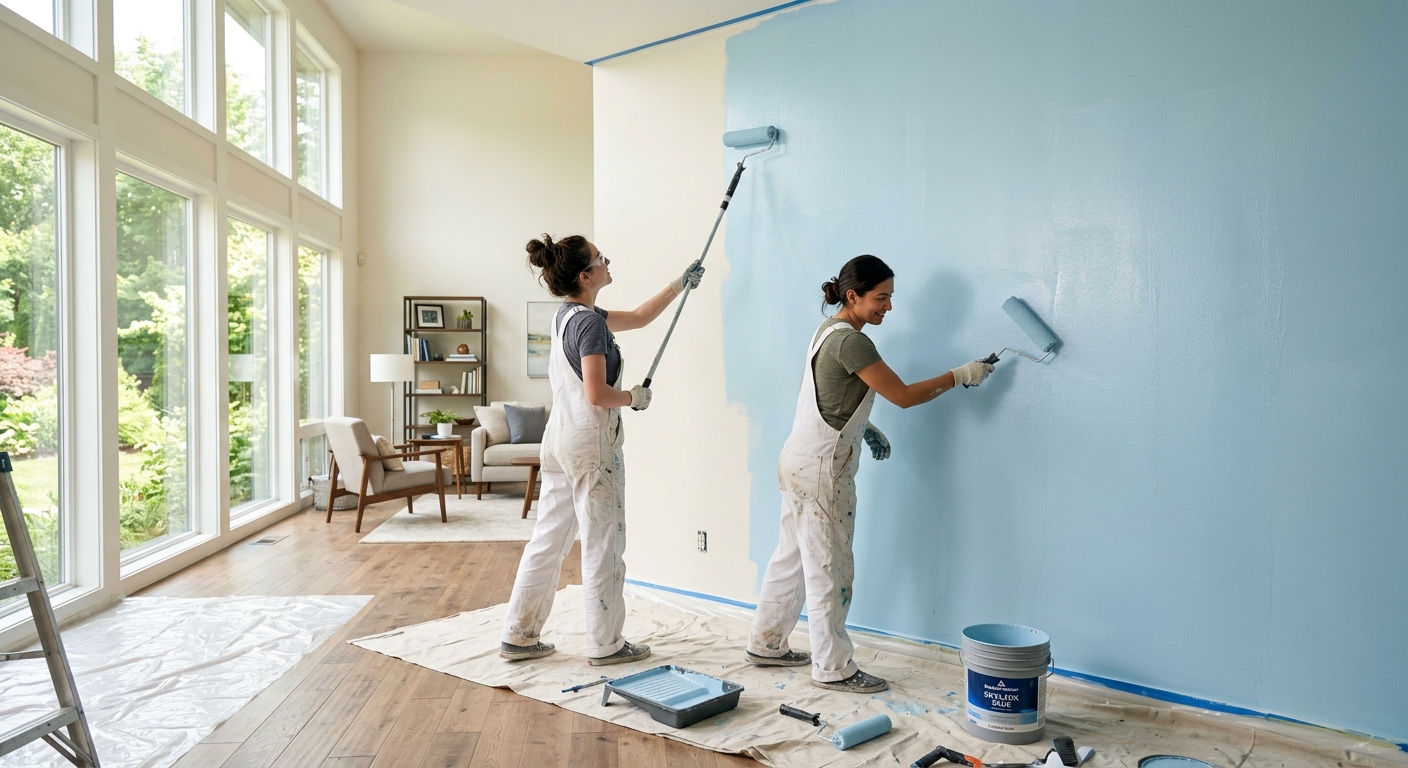
Painting options and costs in Cabbagetown-South St.James Town
Cabbagetown-South St.James Town is a neighbourhood where homeowners often want a clean, refreshed look without getting caught in endless change-orders. With a population of 11,669 people (Statistics Canada, 2021 Census), there’s steady year-round demand for interior touch-ups, but exterior painting is a tighter seasonal window. Toronto’s housing stock also leans older in many pockets of the city; in repainting situations, it’s common to discover multiple paint layers that need proper scraping, sanding, patching and priming before the topcoat goes on.
In the Greater Toronto Area, exterior work is typically scheduled from late May through June and again from September to mid-October, when temperatures stay above about 10°C for proper curing and humidity spikes are easier to manage. That’s why you’ll often see pricing move upward in June–August—peak demand compresses “ideal” weather weeks. Interior projects are less weather-dependent, but costs can still swing significantly based on ceiling height, stairwells, masking, and how much repair work is required.
In Cabbagetown-South St.James Town specifically, exterior painting is especially in demand around the Cabbagetown/Parliament Street area and nearby side streets, where many homes have prominent trim, window details and porches that show wear early. If you’re comparing options, the best way is to match scope to duration and typical pricing—so you can budget confidently before any contractor starts prep.
The table below gives typical ranges for common project types in Toronto’s market.
| Service |
What's Included |
Typical Duration |
Price Range |
| Interior — whole home (walls, ceilings, trim) |
Prep/patching, sanding where needed, primer spots or full prime as required, paint application (walls/ceilings), caulking, baseboards/window trim painting, light protection and cleanup |
4–10 days |
$1,500 – $6,000 |
| Interior — per room (standard bedroom or living room) |
Prep/patching, primer spots as needed, paint application for walls and either ceiling or trim package (per scope), masking and cleanup |
1–3 days |
$400 – $1,800 |
| Exterior — full house (siding, trim, soffits) |
Power washing, scraping/sanding failing areas, caulking, priming bare spots, two-coat finish system where specified, paint line control, protection and cleanup |
6–14 days |
$1,900 – $8,000 |
| Exterior — trim and accent colours only |
Surface prep on trim/accents, spot priming, caulking, two-coat application (or as specified), masking adjacent surfaces and cleanup |
2–6 days |
$1,500 – $4,500 |
| Kitchen cabinet painting (doors, frames, spray finish) |
Hardware removal, degreasing/cleaning, sanding/spot repair, primer and sprayed finish, caulking and reinstallation, optional new hardware install support |
5–12 days (including cure time) |
$1,000 – $4,000 |
| Specialty / faux finish (accent wall, texture) |
Surface prep, texture/finish application, colour mixing/techniques as quoted, sealing as required, protection and cleanup |
1–5 days |
$300 – $5,000 |
Prices are estimates only and vary by project scope, site access and material selection.
What affects the price of painting in Cabbagetown-South St.James Town
In Toronto and across Ontario, two contractors can quote the “same” paint job and still end up 30–50% apart—usually because the scope of prep, priming, and coatings count isn’t identical. A repaint that looks simple from the street can turn into a much longer labour plan once we account for failing caulk lines, rough wood edges, soft drywall patches, and the number of coats required for hiding and durability.
Exterior painting is tightly climate-bound in the GTA. In Ontario and Alberta, the window for exterior work runs roughly late May through early October. Contractors need temperatures above about 10°C for application, and conditions steady enough for curing over 24–48 hours. In coastal BC, the challenge is persistent dampness and mildew risk, so different (often higher-cost) mildew-resistant systems and careful scheduling are common. In Cabbagetown-South St.James Town, the main constraints are frost, rain and humidity spikes—so projects sometimes get resequenced, which also affects labour rates. Peak June–August demand can push pricing 10–15% higher compared with shoulder season.
Older housing stock across the region matters too: more scraping, sanding, caulking and priming. On repainting jobs, preparation can be 50–70% of labour—so if your exterior needs feathering, window/trim detailing, and more primer coverage, it can quickly move from a lower end band near $1,900 – $8,000 toward the upper half. Interior costs can follow a similar pattern: a “walls only” refresh might start around the lower interior band, but if ceiling height, trim detailing and repairs are involved, it can climb toward the upper interior range of $1,500 – $6,000.
In Cabbagetown-South St.James Town, two concrete examples I see often are porch/railings where peeling is concentrated at contact points (more scraping and touch-up primer), and window trim where multiple paint layers require careful stripping to avoid bubbling or adhesion failures.
| Price Factor |
Why It Matters |
Cost Impact |
| Surface prep — scraping, sanding, patching drywall or wood |
Prep drives adhesion and smoothness; failing areas must be stabilized before paint. |
Often the biggest labour swing; can add 20–40%+ |
| Number of coats — 2-coat system over primer vs. 1 coat over existing |
Hiding power and durability depend on coat count and what it’s covering. |
Can change totals by 10–25% depending on coverage |
| Paint quality tier — contractor-grade vs. premium (Benjamin Moore, Sherwin) |
Premium lines generally improve coverage, stain resistance and longevity. |
Material cost may add ~5–20%, but prep savings can offset |
| Ceilings and trim — adds significant time vs. walls-only |
Ceilings require careful edging and often more masking; trim needs precision. |
Typically +15–30% for “trim included” scopes |
| Exterior season window — short season raises summer rates |
Limited “ideal” weeks increase contractor scheduling pressure. |
May increase labour rates by 10–15% in peak weeks |
| Lead-safe precautions — required for pre-1978 homes with lead paint |
Protective methods (wet sanding, HEPA vacuuming, sealed containment) increase time. |
Can add 10–30% depending on condition and affected surfaces |
| Surface material — drywall vs. plaster vs. wood vs. stucco |
Different substrates need different primers and prep techniques. |
Varies widely; wrong primer can cause failure and rework |
| Height and access — multi-storey exterior requires scaffolding or lifts |
Access changes both safety requirements and setup time. |
Commonly +10–25% on multi-storey exteriors |
Permits & regulations in Ontario
In Ontario, most painting work does not require a permit. That said, the “regulatory” part homeowners need to get right is usually safety, not paperwork—especially in older Cabbagetown-South St.James Town homes where paint can be pre-1978.
For homes built before 1978, health guidelines strongly recommend testing for lead paint before sanding or scraping, and using lead-safe work practices if lead is present. This isn’t typically a homeowner “legal mandate” to apply on your own project, but for professionals it’s standard practice to reduce exposure. Lead-safe methods often include wet methods to reduce dust, HEPA vacuuming, containment where needed, and proper disposal of dust and debris.
What DOES require a permit is uncommon for painting itself. However, permits may come into play if your project includes structural work, replacement of exterior cladding, or significant modifications that trigger building permit requirements under Ontario building rules. For pure paint scopes—interior walls/ceilings, trim painting, siding/soffits painting—permits generally are not the path.
To verify a contractor in Cabbagetown-South St.James Town, ask for: (1) the Ontario business registration info they can provide and any trade certification documentation they claim, (2) liability insurance certificate naming you as the additional insured, and (3) proof of WSIB/WCB coverage for workers. Then insist on a written contract listing paint brand/line, sheen, number of coats, surface prep included, and who handles site protection and disposal. If a contractor can’t provide insurance and WSIB/WCB documentation up front, treat that as a stop sign.
Interior vs exterior painting — getting the best result in Cabbagetown-South St.James Town
The difference between a long-lasting job and a premature failure in Cabbagetown-South St.James Town is rarely the paint colour—it’s the prep discipline, the coating system, and whether the timing matches Ontario’s conditions. Interiors fail most often when surface prep is rushed: patching without proper adhesion, skipping sanding where required, or not priming repaired areas so the topcoat hides evenly. Two coats over a suitable primer almost always outlast one thick coat, because the first coat locks in the repair and the second completes uniform film build and colour hiding.
Sheen choice also matters in day-to-day use. Flat paint hides wall imperfections but marks more easily; eggshell is a popular compromise for bedrooms and living rooms. Satin or semi-gloss on trim and doors improves cleanability without looking overly shiny. For Toronto interiors, we also plan around humidity changes: curing times need to be realistic, especially during shoulder seasons when indoor ventilation and airflow can vary.
For exteriors, surface prep is the foundation for adhesion through freeze–thaw cycles and rain events. Caulking before painting helps stop water ingress; paint over cracked caulk without addressing the gap is a common reason for peeling. Primer selection matters by substrate (wood, fibre cement, masonry/stucco). In BC you often hear “mildew-resistant” as a must due to dampness; in Ontario, the priority is temperature stability and correct recoat windows during the short season. If the job is scheduled in late summer, humidity spikes can slow curing—so contractors must track weather and keep work moving without trapping moisture.
Cabinet painting is a budget alternative to replacement, often delivering a dramatic look without the demolition mess. For example, if cabinet replacement is out of reach, a spray-finished cabinet repaint typically fits in the cabinet band of $1,000 – $4,000, which can be far less than full kitchen replacement. For pre-1978 homes, lead-safe precautions are important where sanding or scraping occurs on trim or window details—this can add time, but it prevents health and disposal issues.
| Project Type |
Key Prep Step |
Recommended Coats |
Price Band |
| Interior — fresh drywall (new construction) |
Prime drywall with the correct sealer/primer to prevent flashing and uneven sheen |
2 coats over primer |
$1,200 – $3,500 |
| Interior — repaint (good condition, no repairs) |
Light sanding/cleaning, caulk tight spots, spot prime if needed |
2 coats |
$400 – $2,200 |
| Interior — repaint (patching and priming needed) |
Patch, sand flush, then spot prime all repairs before topcoat |
2 coats over primer/repairs |
$800 – $3,800 |
| Exterior siding (wood or fibre cement) |
Wash, scrape failing paint/rough edges, caulk, then prime bare substrate |
2 coats with primer where required |
$1,900 – $8,000 |
| Exterior trim and accents only |
Edge prep and caulking on trim lines for water shedding |
2 coats |
$1,500 – $4,500 |
| Kitchen cabinets (spray finish) |
Degrease, sand/abrade, prime properly, and mask carefully |
2 sprayed coats (plus primer) |
$1,000 – $4,000 |
How to choose a painting contractor in Cabbagetown-South St.James Town
When choosing a painter in Cabbagetown-South St.James Town, verify three things first: Ontario coverage, liability, and workers’ compensation. Start with insurance—ask for a certificate of liability insurance and confirm the coverage is active for the term of your project. Next, request proof of WSIB/WCB coverage for their workers (and confirm it applies to the people working at your home). If they claim subcontractors will be used, ask to see the same documentation for those subcontractors too.
Then get 2–3 itemised written quotes. The best quotes break labour and materials out separately rather than giving only a single lump sum. Look for a detailed scope: what’s included in prep (scraping, sanding, drywall patching, caulking), what primer is included, how many coats, and whether ceiling/trim is part of the price. Ask who supplies and disposes of waste, and whether site protection (floor coverings, plastic containment, masking) is included. Permits are usually not required for painting alone in Ontario, but the quote should still state any municipal/condo constraints they are factoring in.
Warranty matters. Confirm workmanship warranty length and whether it covers peeling, flaking, or adhesion failure tied to prep. Also note whether the paint manufacturer warranty depends on application by an approved contractor or specific prep conditions. Payment should be conservative: never more than 10–15% upfront; hold back a portion until final cleanup and walkthrough are complete. Finally, insist on a written timeline with a start date and an estimated completion date so you can plan around Ontario’s exterior season scheduling realities.
- Ask for liability insurance certificate before signing.
- Confirm WSIB/WCB coverage for all workers (not just the owner).
- Require the quote to list paint brand/line, sheen, and exact coat count.
- Ensure surface prep is explicit: scraping/sanding/patching/priming/calking.
- Check whether caulking and primer coverage for bare spots are included.
- Confirm cleanup and disposal are included (scrape debris and drop sheets).
- Ask about protection: floors, railings, landscaping, and nearby surfaces.
- Get written timelines including recoat/curing time allowances.
- Verify warranty details in writing (what’s covered, for how long).
- Use a payment schedule with a holdback until final walkthrough.
- Confirm who handles lead-safe practices if pre-1978 paint is disturbed.
- Look for a clear communication plan for weather-related delays on exterior work.
Red flags in Cabbagetown-South St.James Town: contractors who quote exterior work for “any time of year” without discussing curing temperatures; quotes that don’t mention priming/caulking (or assume paint will adhere to failing surfaces); asking for large upfront payments (beyond 10–15%); refusing to provide insurance/WSIB/WCB proof; or offering only verbal promises about coats and prep without a written contract.
Frequently asked questions — painting in Cabbagetown-South St.James Town
What paint is best for Cabbagetown-South St.James Town's climate?
In Cabbagetown-South St.James Town, the best exterior performance comes from the right system for Ontario’s freeze–thaw and rain cycles, not just the colour. For siding and trim, we typically use a primer matched to the substrate and a durable exterior topcoat designed for temperature swings and washable film build. Because the GTA’s exterior season is short (late May to June and again September to mid-October), the product also needs to cure reliably when temperatures are above about 10°C. For interiors, the “best” paint is usually the right sheen: eggshell for many living areas and satin for trim/doors, chosen based on how often you clean and how much light you get. If you’re planning a repaint, tell your contractor your timeline—weather windows can affect which products perform best.
How long does exterior paint last here?
Exterior paint life in Cabbagetown-South St.James Town varies mainly with prep quality and timing, but many well-prepped, properly coated exteriors realistically last about 7–15 years. Shortening happens when peeling surfaces are painted over without scraping and priming bare spots, or when caulking isn’t addressed before the topcoat. The GTA’s limited exterior season also matters: if application and recoat times don’t match curing conditions (especially around humidity spikes), adhesion can suffer. Homes in older neighbourhood pockets often require more intensive surface prep—scraping, sanding, and priming can be a large share of labour, and that’s what protects your investment. If you’re budgeting, exterior “full house” painting commonly falls within bands like $1,900 – $8,000, which typically reflects the prep effort and coating system included.
Should I paint or replace my cabinets?
In many Ontario homes, painting cabinets is the smarter first move if the boxes are solid and you mainly want an updated look. Cabinet painting—especially sprayed for a smooth finish—can refresh your kitchen without demolition, and it avoids the dust and timeline blowouts that come with replacement. A spray-finished cabinet project often fits in the typical cabinet band of $1,000 – $4,000, depending on number of doors/drawers, prep needs (grease, damage), and whether frames and trim are included. Replacement can be worth it when cabinet boxes are damaged, doors no longer align properly, or you’re changing layout or hardware plumbing. For pre-1978 homes, if existing trim has older paint that needs sanding/scraping, lead-safe work practices should be planned. The key decision is condition plus your tolerance for prep time.
How do I prep walls before painting?
If you’re doing a small prep yourself in Cabbagetown-South St.James Town, the goal is to remove contaminants and allow proper adhesion. Start by cleaning walls to remove cooking grease, dust and residue; then patch holes and cracks with appropriate filler, let it cure fully, and sand smooth. Wipe dust off after sanding. Remove or secure loose hardware and cover items that can’t be moved. Caulk only where gaps exist (and choose paintable caulk), then let it cure. That said, the biggest “prep” items—like priming repaired areas for uniform hiding and ensuring the old paint isn’t failing—are often where homeowners miss details. A contractor may spend more time on prep than you expect, especially in older homes where multiple paint layers and spot failures require extra scraping/sanding and spot-priming before colour goes on.
Do I need to worry about lead paint in an older Cabbagetown-South St.James Town home?
Yes, it’s something to take seriously in an older Cabbagetown-South St.James Town home, particularly if it’s pre-1978 and you plan to sand, scrape, or disturb painted trim. In Ontario, painting work usually doesn’t require a permit, but health guidance recommends testing for lead paint before sanding/scraping and using lead-safe work practices if lead is present. Professionals typically use wet methods to reduce dust, HEPA vacuuming, careful containment, and proper disposal of dust and debris. This isn’t about panic—it’s about controlling exposure. For homeowners, you can reduce risk by avoiding dry sanding and making sure any contractor planning prep can explain how they’ll handle lead-safe procedures if test results or condition indicate it. Ask for their lead-safe approach in writing as part of the scope.
How long does it take to paint a house?
For painting in Cabbagetown-South St.James Town, the timeline depends on interior vs exterior and how much repair/prep is needed. Interior whole-home painting commonly takes about 4–10 days, assuming patching and priming are included and access is manageable. A “per room” interior refresh often takes 1–3 days. Exterior work is more weather-sensitive: most crews aim for late May through June, and again September to mid-October, so typical exterior “full house” timelines are about 6–14 days, depending on siding condition, required scraping, caulking, primer coverage, and whether scaffolding or lifts are needed. If you’re trying to match a season, ask for a written completion estimate and recoat timing in the contract. That planning is what protects finish quality and avoids repeat work.