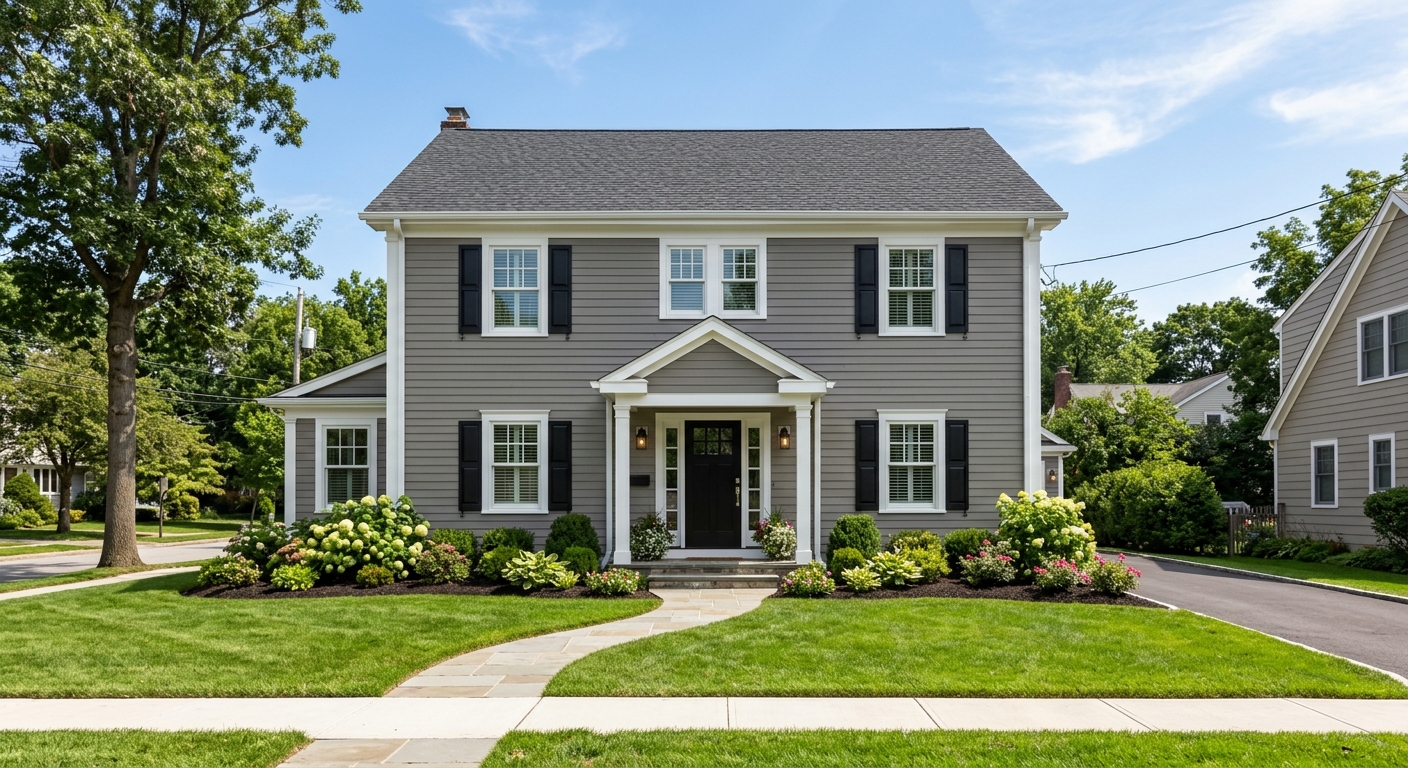
Painting options and costs in Milliken
Milliken is a suburb in the Toronto market where painting costs tend to reflect both older housing stock and a short, weather-dependent exterior season. In 2021, the area’s population was 26,572 (Statistics Canada, 2021 Census). Just as importantly for painters’ labour, much of the surrounding housing includes older builds—meaning you often see multiple paint layers, more caulking and patching, and sometimes lead-safe precautions for pre-1978 trim, windows and railings. Interior work is less seasonal, but the price still changes with surface condition, height/access, and how “clean” you want the finish to look (from a basic refresh to designer colours and specialty techniques).
In the Greater Toronto Area, exterior painting is typically scheduled from late May through June and again in September to mid-October, when temperatures stay above about 10°C for 24–48 hours and humidity is manageable. June–August often brings peak demand and fewer “ideal” curing windows, so exterior pricing commonly sits about 10–15% higher than shoulder-season work. That’s why a good estimate in Milliken balances preparation time (often 50–70% of exterior repaint labour on older homes) against realistic weather planning. This is also where contractor availability matters—bookings tighten when homeowners want a June start.
Trade demand is especially consistent in the Milliken/Markham boundary areas like Milne Dam conservation area vicinity (Markham-side), where many homeowners coordinate exterior refreshes around school-year timelines and landscaping schedules. Use the table below to compare typical scopes and price ranges, then we’ll break down what drives those differences in the next section.
| Service |
What's Included |
Typical Duration |
Price Range |
| Interior — whole home (walls, ceilings, trim) |
Move/cover contents, patch & sand, prime where needed, prep floors and fixtures, paint walls/ceilings, paint trim/doors (scope-dependent), clean-up |
6–12 days |
$2,200 – $6,000 |
| Interior — per room (standard bedroom or living room) |
Protect floors, fill & sand minor defects, prime as required, paint walls, paint baseboards/trim and one door (scope-dependent) |
2–4 days |
$600 – $1,900 |
| Exterior — full house (siding, trim, soffits) |
Wash, scrape/sand loose paint, caulk joints, repair minor defects, prime stained/failed areas, paint siding and full trim/soffits, final clean-up |
1–3 weeks |
$3,500 – $8,000 |
| Exterior — trim and accent colours only |
Surface prep on trim only (wash, scrape/sand, spot prime), paint trim/accent lines, protect siding, caulk where accessible |
3–7 days |
$1,500 – $4,500 |
| Kitchen cabinet painting (doors, frames, spray finish) |
Remove/label doors (as feasible), clean & de-grease, sand/scuff, prime bonding coats, spray finish, reinstall hardware (scope-dependent) |
5–12 days |
$1,400 – $4,000 |
| Specialty / faux finish (accent wall, texture) |
Surface prep, specialty skim/texture prep (as needed), custom application, multiple coats depending on finish type |
2–6 days |
$800 – $3,500 |
Prices are estimates only and vary by project scope, site access and material selection.
What affects the price of painting in Milliken
Even when two homeowners describe the “same” job in Milliken, quotes can vary by 30–50% across the Toronto area because painting is mostly a labour-and-prep trade, not just paint purchase. Differences in how contractors handle surface condition, number of coats, product quality, and jobsite logistics (parking, protection, dust control, and safe access) can add up quickly. In practice, the biggest swings come from exterior prep on older homes and from interior ceilings/trim details.
For exteriors, the season is tightly climate-bound in the GTA: late May–June and again September to mid-October, when application temperatures are above about 10°C and curing can happen over 24–48 hours. In Ontario, shorter “ideal” weeks concentrate demand, and June–August pricing often runs about 10–15% higher. By contrast, coastal BC can offer a longer window but with higher humidity and mildew pressure, shifting product choices and prep diligence. In Milliken, we mainly plan around frost, rain and humidity spikes—yet those same factors can still force extra sanding, more primer, or delays that affect scheduling.
Older homes in this region tend to require more labour. When scraping and patching becomes extensive, prep can reach 50–70% of total exterior repaint labour. For example, a straightforward trim refresh might start near a typical exterior trim band of $1,500 – $4,500, while a full repaint on siding with peeling edges and caulk replacement can push toward the full-house band of $3,500 – $8,000. In Milliken, I also commonly see cost increases when paint failure is near window trim or soffits where water has been sitting—caulking and priming need to be done correctly, not rushed.
| Price Factor |
Why It Matters |
Cost Impact |
| Surface prep — scraping, sanding, patching drywall or wood |
Determines adhesion and how smooth the finish looks; older surfaces need more conditioning |
Can account for 30–70% of labour |
| Number of coats — 2-coat system over primer vs. 1 coat over existing |
Proper coverage and durability usually require a primer and at least two top coats |
Extra coats can add 10–25% |
| Paint quality tier — contractor-grade vs. premium (Benjamin Moore, Sherwin) |
Higher tiers often hide better, resist scuffing/fading, and reduce rework |
Often shifts materials and may reduce labour |
| Ceilings and trim — adds significant time vs. walls-only |
Cut-in time, masking, and detailed work increase hours |
Can add 15–40% |
| Exterior season window — short season raises summer rates |
Limited ideal curing weeks increase demand and contractor scheduling pressure |
Typically +10–15% in peak weeks |
| Lead-safe precautions — required for pre-1978 homes with lead paint |
Wet methods, HEPA vacuuming and disposal add time and supplies |
Can add 5–20% depending on extent |
| Surface material — drywall vs. plaster vs. wood vs. stucco |
Absorption and bonding needs differ; wrong primer can lead to peeling |
May change primer type and prep hours |
| Height and access — multi-storey exterior requires scaffolding or lifts |
More setup, safer containment and extended time on site |
Often increases cost significantly on larger homes |
Permits & regulations in Ontario
In Ontario, painting itself generally does not require a permit for typical interior or exterior decoration. Where the project can trigger additional requirements is usually tied to other work types (for example, structural repairs or regulated abatement, not routine painting). For homeowners in Milliken, a practical rule is: routine sanding/scraping and repainting are typically not “permit work,” but health precautions become critical if you’re dealing with older materials.
For homes built before 1978, health guidelines strongly recommend testing for lead paint before sanding or scraping. If lead is present, lead-safe work practices are standard for professional contractors: using wet methods, HEPA vacuuming, proper containment and disposal, and minimizing dust spread. While this is not legally mandated for homeowners in the way regulated abatement projects can be, it is the safer approach and is part of why credible pros build lead precautions into their scope.
Before you book a contractor, confirm these three basics in Ontario: (1) liability insurance, (2) WSIB/WCB coverage for workers, and (3) a written contract that lists paint brand/line, sheen level, number of coats, and surface prep inclusions/exclusions. To verify coverage, look for an insurance certificate (COI) naming your property/worksite, and ask for WSIB clearance/coverage details. If they can’t provide documentation or they only quote verbally, treat that as a major red flag. Finally, ensure the contract spells out whether permits (if any are needed for ancillary work) and disposal of waste are included.
Interior vs exterior painting — getting the best result in Milliken
In Milliken’s Toronto-area climate, the difference between a long-lasting paint job and a premature failure is usually not the topcoat—it’s the prep decisions and timing. For interior work, surface prep is king: filling and sanding small defects, cleaning properly, and priming stained or patched areas. Sheen selection matters too. Flat paint hides wall imperfections best but can scuff; eggshell is a common compromise for living rooms and bedrooms; satin or semi-gloss helps in kitchens, trim and higher-touch zones because it cleans more easily. And the “two coats over proper primer” rule still holds—one thick coat rarely performs as well, because coverage and curing consistency suffer.
For exteriors, Ontario weather cycles make prep and caulking non-negotiable. In Milliken, rain events and humidity spikes can interrupt curing, so we caulk before painting (to prevent water ingress at joints) and use primer types that match the substrate. Oil-based primers can be appropriate for certain adhesion and stain-blocking needs, while quality acrylic/latex systems work well on properly prepared and primed surfaces. Unlike coastal BC where mildew-resistant products are a dominant driver, our main exterior constraints are frost, rain and humidity swings—so choosing a system that’s temperature-stable and properly applied during the GTA season is what prevents peeling and blistering. Pre-1978 homes also require lead-safe precautions around older trim and windows.
Cabinet painting is often the best value alternative to replacement if your boxes are solid and you’re comfortable with the finish refresh. As an example, if your kitchen upgrade budget is closer to an interior refresh range (or you want to stay under a specialty band), cabinet painting can be a focused project—but it should still include thorough degreasing, proper bonding primer and a multi-step finish. If you skip that prep, you’ll pay twice when doors start showing adhesion failures.
| Project Type |
Key Prep Step |
Recommended Coats |
Price Band |
| Interior — fresh drywall (new construction) |
Seal/prime drywall to control suction and prevent blotching |
Primer + 2 top coats |
$1,000 – $3,500 |
| Interior — repaint (good condition, no repairs) |
Light scuff/sand, clean, spot-prime if needed |
2 top coats (spot prime as required) |
$600 – $2,400 |
| Interior — repaint (patching and priming needed) |
Patch, sand flush, and prime repairs for uniform sheen/colour |
Primer on patches + 2 top coats |
$900 – $3,200 |
| Exterior siding (wood or fibre cement) |
Scrape loose paint, caulk joints, prime bare/failed areas |
Primer (where needed) + 2 top coats |
$3,500 – $8,000 |
| Exterior trim and accents only |
Strip/feather failing edges and prime exposed spots |
Primer (where needed) + 2 top coats |
$1,500 – $4,500 |
| Kitchen cabinets (spray finish) |
Degrease, sand/scuff, and use bonding primer for adhesion |
Primer + 2 finish coats (system-dependent) |
$1,400 – $4,000 |
How to choose a painting contractor in Milliken
When you hire a painter in Milliken, verify Ontario coverage and job discipline before you sign. Start with licensing: Ontario requires many trades to be registered/licensed depending on the work type, but painting contractors should still be able to provide proof of business legitimacy and accountability. Next, check liability insurance—ask for a certificate of insurance naming your project/address. For workers’ compensation, in Ontario you want WSIB coverage (not “we’re insured” loosely). Ask for a WSIB clearance letter or documentation showing active coverage.
Then request 2–3 itemised written quotes. A proper quote separates labour and materials, and lists prep scope (washing, scraping, sanding, caulking, priming), how many coats, and what sheens are proposed. It should also say what’s excluded: removal of heavy fixtures, landscaping protection, sealing of stucco cracks, removal of storm windows, and lead-safe scope if pre-1978 surfaces are involved. Make sure disposal is included (paint waste, masking wrap and debris).
Warranty is another differentiator. Ask for workmanship warranty length and what it covers (for example, adhesion/peeling tied to prep, not colour preference). Clarify whether manufacturer product warranties apply and whether you must use the original materials and recommended system. For payment, use a schedule that never asks for more than 10–15% upfront; hold back until key completion points are done (final coat dry/cured, touch-ups, and site clean-up). Get a start date and completion estimate in writing, especially for exterior work where the GTA weather window is tight.
- Provide COI (liability insurance) showing coverage dates and limits.
- Provide WSIB coverage proof/clearance for workers.
- Use a written contract with prep scope and number of coats.
- List paint brand/line and sheen level per surface (walls/trim/ceilings).
- Specify how they handle scraping, sanding and priming of failed paint areas.
- State caulking approach (what joints, what product, when it’s applied).
- Confirm weather planning for the exterior season (rain/frost/humidity impacts).
- Include disposal/removal of debris and cleaning of site.
- Detail prep protection (floors, landscaping, fixtures, and masking method).
- Show an itemised labour + materials breakdown (not just a lump sum).
- Confirm warranty terms in writing, including what triggers service calls.
- Keep upfront payment to 10–15% and agree on holdback for completion.
Red flags I see in Milliken include: quotes that omit prep details (“we’ll just paint over it”), no WSIB/insurance documentation, vague warranty wording, offering a June start without discussing weather curing windows, and insisting on a large upfront deposit. Also watch for contractors who won’t explain coat counts or who won’t include caulking and priming responsibilities in the contract.
Frequently asked questions — painting in Milliken
How do I choose a painting contractor in Milliken?
Start with proof and paperwork. In Milliken/Ontario, ask for a certificate of liability insurance and WSIB coverage documentation before you book a site visit—don’t rely on verbal assurances. Then request 2–3 itemised written quotes that separate labour and materials, list the prep steps (wash/scrape/sand/caulk/prime), and specify the number of coats and sheen. For exteriors, make sure the quote reflects the GTA’s short ideal window (late May–June and again September to mid-October) so they can plan around rain and humidity spikes. If you’re comparing costs, remember that prep-heavy repainting is why an exterior full-house estimate might land in the $3,500 – $8,000 band rather than a small “trim-only” job.
How many coats does an exterior repaint need in Milliken?
For most properly prepared exterior repaints in Milliken, you should plan on a primer (on bare/failed areas) plus two full top coats. If the existing coating is well bonded and you’re only refreshing areas that won’t require extensive stripping, some systems can stay close to two top coats, but you still want primer where adhesion is compromised or where you’re moving to a significantly different colour. The GTA season makes this important: with temperatures hovering around or above 10°C for curing, rushing to “one heavy coat” often leads to patchiness and early peeling when humidity spikes or rain interrupts drying. A properly scoped full house typically fits the $3,500 – $8,000 range because prep and coat timing drive labour.
What is the best primer for older Milliken homes?
For pre-1978 homes in the Milliken area, the “best primer” starts with correct surface preparation and lead-safe handling recommendations before sanding/scraping. Assuming you’ve addressed any lead paint concerns safely, the primer choice depends on substrate and the condition of the old coating: you generally want adhesion and stain-blocking where repairs, tannins, or old failures are present. On wood or areas with bare patches, a bonding primer is critical; on patched areas, priming helps keep colour and sheen consistent across repaired zones. If you’re doing exterior trim only, primer quantity and spot-priming accuracy heavily affects performance—this is why trim-accent work is often scoped in the $1,500 – $4,500 band: prep quality controls durability, not just paint type.
Should I paint or wallpaper my Milliken home?
For most Milliken homeowners, paint is usually the easier, more durable choice—especially if your walls have minor patching, seam repairs, or older texture variations. Paint lets you control sheen by room (flat/eggshell for living areas, satin for higher-touch surfaces) and it’s typically faster to refresh later. Wallpaper can look great, but installation quality matters more than the brand: walls must be smooth, properly primed, and moisture-safe. With Toronto-area humidity swings and the way older homes settle, wallpaper seams can sometimes telegraph or lift if prep isn’t perfect. If you want to improve appearance without major demolition, painting is often the safer ROI. Interior room repaint projects frequently start around the $600 – $1,900 range depending on trim/repairs.
How do I fix peeling exterior paint in Milliken?
Peeling exterior paint in Milliken is usually a bonding and moisture-entry issue, not just a colour problem. The fix starts with removing all loose, failing material (scrape and sand back to sound edges), then cleaning the surface so primer can adhere. Next, caulk joints and address any water paths near trim, soffits and window details—caulking before painting helps prevent repeat failure. Prime exposed areas correctly (especially bare wood or where old coatings have broken down), then apply two top coats scheduled around weather windows so curing isn’t interrupted. If the peeling is widespread, plan for prep-heavy labour—full-house exteriors commonly land in the $3,500 – $8,000 band because the time is in preparation. If pre-1978 lead concerns apply, a lead-safe approach is standard before sanding/scraping.
What colours add the most resale value in Milliken?
In Milliken and the broader Toronto market, resale-friendly colours tend to be “light, clean, and timeless.” For exteriors, homeowners often choose warm whites, soft greys, and greige bases paired with darker trim accents to define windows and rooflines. On interiors, neutral palettes (warm off-whites, light greys, and muted taupes) photograph well for viewings and are easier for buyers to imagine their belongings in. The best colour is also the one that matches your home’s architecture and light exposure—what looks great in a sample can shift with Ontario daylight and seasonal contrast. If you’re hiring a pro, focus more on consistent prep and coat system than on chasing a trendy shade; that’s what protects the finish. Most projects that include whole-home refreshes fall within the interior range of $2,200 – $6,000, where premium colour choices should still be paired with proper priming to avoid uneven coverage.