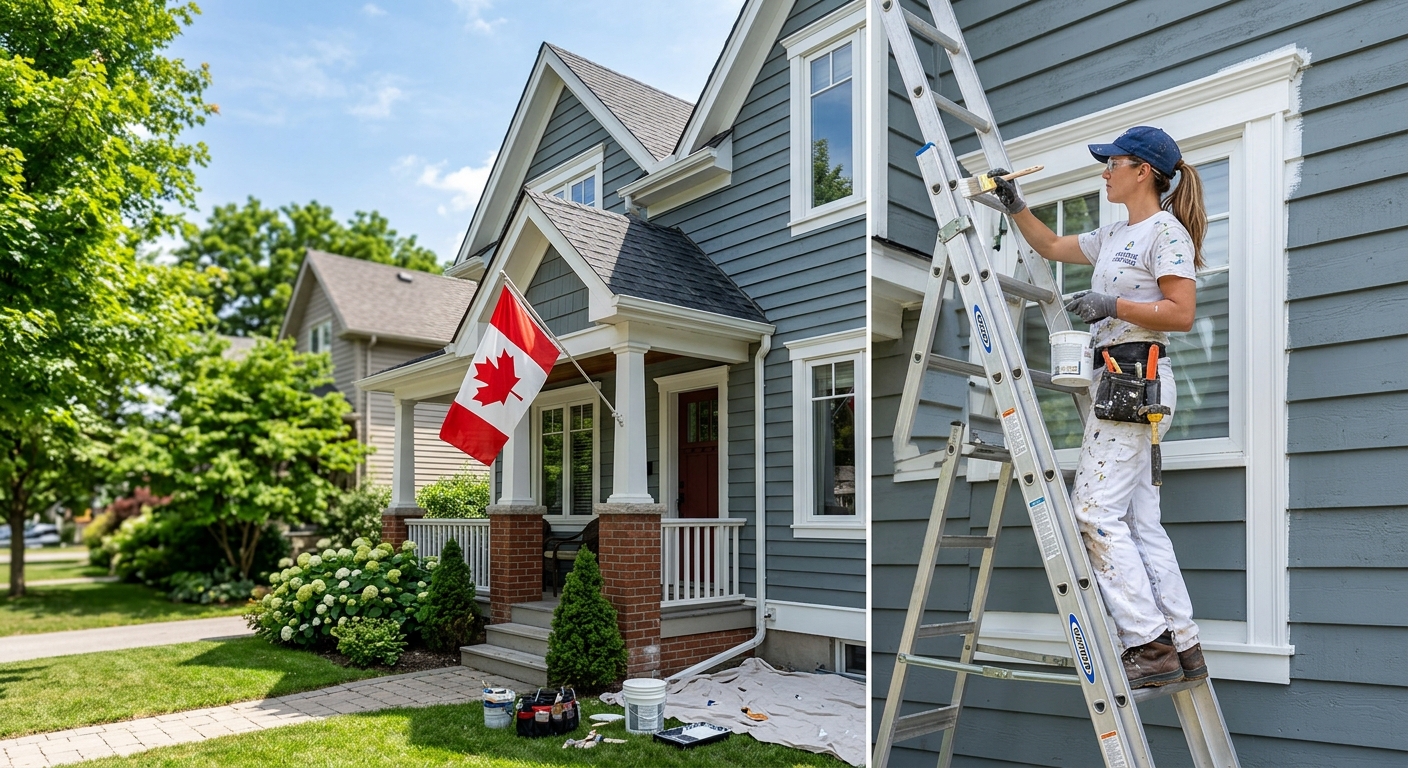
Painting options and costs in Kanata
Kanata is a fast-growing Ottawa-area community, and with about 90,000 residents (Statistics Canada, 2021 Census), there’s steady demand for both interior refreshes and exterior repainting on established neighbourhoods. A large portion of local housing stock is older, so many projects start with more prep than homeowners expect—scraping loose material, sanding rough spots, patching drywall or wood, and applying a proper primer system. Where pre-1978 coatings exist, health guidelines recommend treating surfaces as potentially lead-containing, which means wet methods, careful containment, and HEPA cleanup for professional crews (homeowners aren’t required to do testing themselves, but the right contractors build lead-safe practices into the job plan).
In the Ottawa economic region, exterior painting is largely limited to the late spring through early fall window, with daytime temperatures roughly 10–30°C and nights staying above freezing to support adhesion and proper cure. That compressed season concentrates competition for labour and can tighten scheduling, which often nudges pricing upward compared with year-round interior work. By contrast, interior projects can be scheduled more flexibly, so you’ll usually see a wider range of availability and options.
For Kanata homeowners, trade demand is especially high around Kanata Lakes and the surrounding postal-code areas, where many families book multi-room updates ahead of summer. Once you know what you want to paint, it’s easier to compare realistic scopes—see the ranges below.
| Service |
What's Included |
Typical Duration |
Price Range |
| Interior — whole home (walls, ceilings, trim) |
Protect flooring and fixtures, patch/sand as needed, prime repaired areas, caulk key joints, paint walls and ceilings, paint interior trim (doors/casing as scope allows), clean-up and final touch-ups |
5–10 days |
$1,800–$3,500 |
| Interior — per room (standard bedroom or living room) |
Prep and protection, patch/sand minor defects, prime where required, paint walls, and include standard trim/door touch-ups based on scope |
1–3 days |
$300–$1,200 |
| Exterior — full house (siding, trim, soffits) |
Pressure wash/degrease (where appropriate), scrape and sand failing areas, caulk gaps, spot prime, prime system as required, paint siding plus trim and soffits, protection, clean-up |
7–18 days |
$1,200–$9,000 |
| Exterior — trim and accent colours only |
Masking/protection, scrape/sand limited areas, caulk and spot prime, paint trim and selected accents, feathering around edges, clean-up |
3–8 days |
$800–$4,000 |
| Kitchen cabinet painting (doors, frames, spray finish) |
Remove/label doors (as feasible), degrease, sand, prime for adhesion, spray or roll finish for uniformity, paint frames, re-install hardware/doors, curing time guidance |
4–10 days |
$1,200–$3,500 |
| Specialty / faux finish (accent wall, texture) |
Surface preparation for decorative finish, base coat(s), artist finish application, protective topcoat where needed, clean-up |
2–7 days |
$500–$6,000 |
Prices are estimates only and vary by project scope, site access and material selection.
What affects the price of painting in Kanata
In Kanata and across the Ottawa region, two quotes for what looks like the “same job” can differ by 30–50% because painting cost is driven less by paint itself and more by what it takes to get surfaces ready and to keep workmanship durable through Ontario’s freeze–thaw swings. For interior work, the biggest drivers are patching, priming, and sheen/finish selection; for exterior work, the prep-to-priming ratio can control the whole budget. Older homes typical of the Ottawa area often need more scraping, caulking, sanding and full priming, and that prep can represent 50–70% of labour on a repaint.
Exterior painting in this region is tightly climate-bound. In Ontario, the practical window for exterior work runs roughly late May to early October, when daytime temperatures stay around or above 10°C and rising during application. In coastal British Columbia, coatings must deal with damp, marine conditions and mildew concerns, which pushes contractors toward mildew-resistant products and stricter moisture checks—raising cost for different reasons. In Kanata, the challenge is timing and cure: a shortened season can concentrate demand, and the labour market pressure in summer can translate into higher rates even when material choices are similar.
Two concrete examples: (1) If your siding has blistering or peeling paint, labour shifts toward scraping back to sound material and applying a full primer system—pushing an exterior project toward the upper end of the $1,200–$9,000 band. (2) If your ceilings are stained or the walls need multi-step patching, interior costs move from the lower $300–$3,500 interior range toward the higher end, because priming and additional sanding/touch-ups take time. Even a single “hidden” issue like failing caulk at trim lines can add several hours and extra materials for proper sealing.
| Price Factor |
Why It Matters |
Cost Impact |
| Surface prep — scraping, sanding, patching drywall or wood |
Determines adhesion and final appearance; most failures come from inadequate prep |
+10% to +40% |
| Number of coats — 2-coat system over primer vs. 1 coat over existing |
Coverage and uniformity depend on colour change and substrate condition |
+5% to +25% |
| Paint quality tier — contractor-grade vs. premium (Benjamin Moore, Sherwin) |
Hides better, often lasts longer, and can reduce rework |
+3% to +20% |
| Ceilings and trim — adds significant time vs. walls-only |
Trim requires careful masking, edging, and usually more spot-priming |
+10% to +35% |
| Exterior season window — short season raises summer rates |
More crews are booked in a narrower timeframe; scheduling pressure costs time |
+5% to +30% |
| Lead-safe precautions — required for pre-1978 homes with lead paint |
Containment, HEPA cleanup and disposal add labour and consumables |
+10% to +60% |
| Surface material — drywall vs. plaster vs. wood vs. stucco |
Different absorbency and prep requirements change labour and primer needs |
+5% to +35% |
| Height and access — multi-storey exterior requires scaffolding or lifts |
Safety setup and time directly affect crew hours |
+10% to +50% |
Permits & regulations in Ontario
In Ontario, painting work typically does not require a permit for standard interior or exterior painting. The main compliance focus for homeowners is safety and how the contractor handles hazardous or regulated materials when they are present.
For homes built before 1978, health guidelines recommend testing for lead paint before sanding or scraping. If lead is present, professional lead-safe work practices are standard: wet methods to minimize dust, HEPA vacuuming, proper containment, and compliant disposal of waste and debris. This is not usually legally mandated for homeowners to perform themselves, but it’s exactly what you want your painting contractor to follow when they encounter old coatings.
Separately, confirm your contractor carries appropriate coverage for work on occupied properties: liability insurance and valid workers’ compensation coverage (WSIB/WCB). For your own protection, require a written contract that specifies the paint brand/line, sheen choices (e.g., eggshell for bedrooms/living areas, satin/semi-gloss for higher-wear zones), number of coats, and which prep steps are included (patching, priming, caulking, and sanding). If your scope includes any special containment, dust control, or lead-safe procedures, spell that out in writing.
How to verify in a practical order: (1) ask for a copy of the certificate of insurance (liability) and check the coverage is active for your dates; (2) request proof of WSIB/WCB coverage; (3) use the contractor’s online business registration/licensing lookup where applicable to confirm they are in good standing; (4) request a written statement of how they will handle pre-1978 surfaces before cutting/grinding.
Interior vs exterior painting — getting the best result in Kanata
In Kanata, the difference between a job that looks good for a year and one that lasts is usually preparation and system choice—not just paint brand. For interiors, surface prep comes first: proper filling, sanding, and priming for patched drywall or stained spots. Then choose the right sheen for how the room is used. Flat paint hides imperfections but scuffs more easily; eggshell is a common balance for living rooms and bedrooms; satin and semi-gloss hold up better where you wipe fingerprints and smudges. The durability rule is simple: two coats over a correctly prepared primer generally outlasts one thick coat, and it prevents uneven sheen and flashing.
For exteriors in Ontario, prep is even more decisive because moisture can work into failed caulk lines and around trim. Caulk before painting (with the right caulk type for exterior movement), scrape back to sound edges, and prime properly—especially on bare wood or where old paint is peeling. Ontario’s temperature swings also make correct product choice important: you need coatings that are designed to cure properly in the conditions during the late spring through early fall window, with temperatures staying above freezing at night. In other regions like coastal BC, contractors lean toward mildew-resistant systems; in Alberta, temperature stability matters differently—so don’t borrow product assumptions from a different climate.
Cabinet painting is a budget alternative to replacement when boxes and layout are solid. It’s still prep-heavy (degreasing, sanding, adhesion primer), but it’s often the fastest way to update a kitchen without a full remodel. For pre-1978 homes, lead-safe precautions apply when sanding or scraping old surfaces—plan for it early to avoid schedule surprises.
Example: if you’re deciding between whole exterior repainting and trim-only accents, the “value” comes down to what prep is required. If the siding coating is failing, doing only trim will still leave your biggest weather-exposed areas unaddressed—pushing the result toward the $1,200–$9,000 range because full scraping and priming is the durable fix.
| Project Type |
Key Prep Step |
Recommended Coats |
Price Band |
| Interior — fresh drywall (new construction) |
Prime all new drywall before topcoats to control absorption |
1 primer + 2 topcoats |
$300–$1,200 |
| Interior — repaint (good condition, no repairs) |
Light scuff-sand and caulk minor gaps; spot prime nothing or minimal |
2 topcoats (over appropriate primer if needed) |
$400–$2,000 |
| Interior — repaint (patching and priming needed) |
Patch/fill, sand smooth, prime repairs and stained areas |
1 primer + 2 topcoats (system-dependent) |
$600–$3,500 |
| Exterior siding (wood or fibre cement) |
Scrape to sound edges, caulk, wash/degrease, spot prime then build system |
Primer as needed + 2 exterior topcoats |
$1,200–$9,000 |
| Exterior trim and accents only |
Masking plus scrape/sand limited areas and spot prime bare spots |
Spot primer as needed + 2 topcoats |
$800–$4,000 |
| Kitchen cabinets (spray finish) |
Degrease and sand for adhesion; use bonding/adhesion primer |
1–2 primer coats + 2 finish coats |
$1,200–$3,500 |
How to choose a painting contractor in Kanata
Choosing a contractor in Kanata comes down to verification and clarity. Start by confirming Ontario compliance signals: liability insurance (ask for the certificate and verify it’s active for your project dates), and valid workers’ compensation coverage (WSIB/WCB) so you’re not exposed if a worker is injured on site. Next, look for proof of business legitimacy and good standing through the relevant online listings for Ontario contractors (the contractor should be able to point you to what you need, and answer questions directly).
Then request 2–3 itemised written quotes. You want a breakdown that separates labour and materials, and—crucially—lists what’s included in prep: scraping, sanding, caulking, primer type, patching allowances, and clean-up/disposal. Avoid lump sums that hide the scope. Ask whether permits are included (painting generally doesn’t need one in Ontario, but any special work rules or waste handling sometimes affects how a contractor budgets). Make sure the quote states the paint brand/line and sheen, the number of coats, and what happens if weather forces a stop for exterior work.
Warranty matters: request the workmanship warranty length and whether it applies to peeling/flaking tied to prep and adhesion. Also confirm the product/manufacturer warranty terms and whether it’s transferable to your new owner (if you sell the home). Payment should be staged: never pay more than 10–15% upfront, and hold a portion until the job is complete and cleaned.
Finally, get a written timeline: proposed start date, number of workdays, and estimated completion, along with what the contractor does for rain/dampness delays during Ontario’s late spring to early fall window.
- Ask for certificate of liability insurance and confirm dates match your schedule.
- Request proof of WSIB/WCB coverage for the painting crew.
- Verify business details and licensing/registration information through official Ontario listings.
- Get a written scope that lists prep steps (patching, sanding, priming, caulking) and surface condition assumptions.
- Ensure labour and materials are itemised (not one “materials included” line).
- Confirm paint brand/line and sheen per room and per exterior surface.
- Require the number of coats and whether primer is included for repairs and bare areas.
- Check disposal/cleanup details (vacuuming, debris removal, protection removal timing).
- For pre-1978 homes, ask how lead-safe practices will be handled if encountered.
- Request a workmanship warranty statement in the contract (duration and what it covers).
- Agree to a payment schedule with a holdback until final walkthrough.
- Get weather and scheduling rules in writing for exterior work.
Red flags in Kanata include: refusing to provide insurance/WSIB documentation, quoting without a clear prep checklist, using vague lines like “proper prep” instead of naming the work, demanding a large upfront payment, and starting exterior work before temperatures are suitable for curing during the late spring through early fall window.
Frequently asked questions — painting in Kanata
What paint sheen should I use in different rooms?
In Kanata and across Ontario, sheen choice is about cleaning ability and how much light you reflect. For bedrooms and low-traffic areas, eggshell is a popular compromise because it resists scuffs better than flat while still looking smooth. In living rooms and hallways, satin or eggshell usually performs better when you wipe fingerprints and daily marks. Bathrooms and kitchens often benefit from a more washable finish (commonly satin), especially where humidity and cooking residue are a factor. If you’re painting trim and doors, semi-gloss (or a trim-rated satin) typically gives crisp edges and handles cleaning. If your contractor suggests only flat paint everywhere, ask what sheen they recommend for each surface and why.
Can I paint my house exterior in spring or fall in Kanata?
You can sometimes paint in spring or early fall in Kanata, but the success depends on temperature and cure conditions, not just the calendar. In the Ottawa region, the exterior window is usually late spring through early fall when daytime temperatures sit roughly around 10–30°C and nights stay above freezing, so coatings can adhere and cure properly. If rain is likely soon after application, a reputable contractor may delay because moisture can interfere with drying and lead to adhesion problems. As a rule, expect fewer scheduling choices outside the core season, and that can affect labour availability. If your budget is tight and you’re considering a trim-only refresh, pricing still varies—trim-only projects may fall in the $800–$4,000 range depending on prep and masking needs.
How do I choose a painting contractor in Kanata?
Start with verification: ask for liability insurance and proof of workers’ compensation coverage (WSIB/WCB), and make sure the certificate dates match your project. Then compare itemised quotes—labour and materials broken out—so you can see what prep is actually included (scraping, sanding, patching, caulking, and primer for repairs). In Kanata, projects on older homes often need more prep, which is where price differences show up quickly. A good contractor will also discuss safety practices for pre-1978 surfaces if old paint is present (lead-safe work practices when sanding/scraping is required). Finally, get the warranty details in writing, agree on a payment schedule with a holdback, and obtain a start date and completion estimate. Avoid contractors who won’t provide documentation or who won’t put the scope in a contract.
How many coats does an exterior repaint need in Kanata?
Most exterior repaints in Kanata follow a system approach rather than a fixed number. Commonly, that means 2 coats of exterior topcoat, with a primer included as needed for bare areas, repairs, and any substrate that won’t accept topcoat uniformly. If you’re dealing with failed paint and you have to scrape down to sound material, primer coverage becomes more important for adhesion and long-term durability. If an exterior is in very good condition and the existing coating is sound, some scopes may reduce prep work, but a true 1-coat finish is rarely enough for consistent colour and weather resistance. Because prep is a major driver, exterior pricing can swing widely—typical full-house ranges often sit within $1,200–$9,000 depending on how much scraping and priming is required.
What is the best primer for older Kanata homes?
For older Kanata homes, the “best” primer depends on what the contractor finds after prep—whether you’re dealing with bare wood, patched drywall, stained areas, or old failing coatings. In repaint scopes, primers are chosen to lock down residual chalking, improve adhesion to the existing surface, and seal repairs so the topcoat doesn’t flash or peel prematurely. If your home has pre-1978 coatings, health guidelines recommend treating the situation as potentially lead-containing when sanding or scraping is involved, which can add protective procedures around primer application. A reputable contractor should show you the primer they plan to use (for example, bonding/adhesion primer for wood and spot-primers for repairs) and explain why it matches the substrate. Don’t accept “one size fits all” primer without referencing the condition of your exterior or interior repairs.
Should I paint or wallpaper my Kanata home?
In Kanata and across Ontario, painting is usually the better default for most homeowners because it’s faster, easier to maintain, and forgiving when surfaces have minor imperfections—especially after patching and priming. Wallpaper can look great, but it’s more sensitive to substrate condition: uneven drywall, poor repairs, and moisture issues can telegraph through seams or cause edges to lift. Painting also gives you flexibility with sheen and touch-up when family life happens. The decision often comes down to wall condition and how long you want the finish to last: if you’re already budgeting for patching and primer, paint may be more cost-effective. If your walls are very smooth and you want a specific pattern, wallpaper can work—just ensure the contractor preps properly and accounts for seam placement and durability. If you’re considering interior work, interior pricing commonly starts around $300–$1,200 per standard room depending on prep and trim scope.