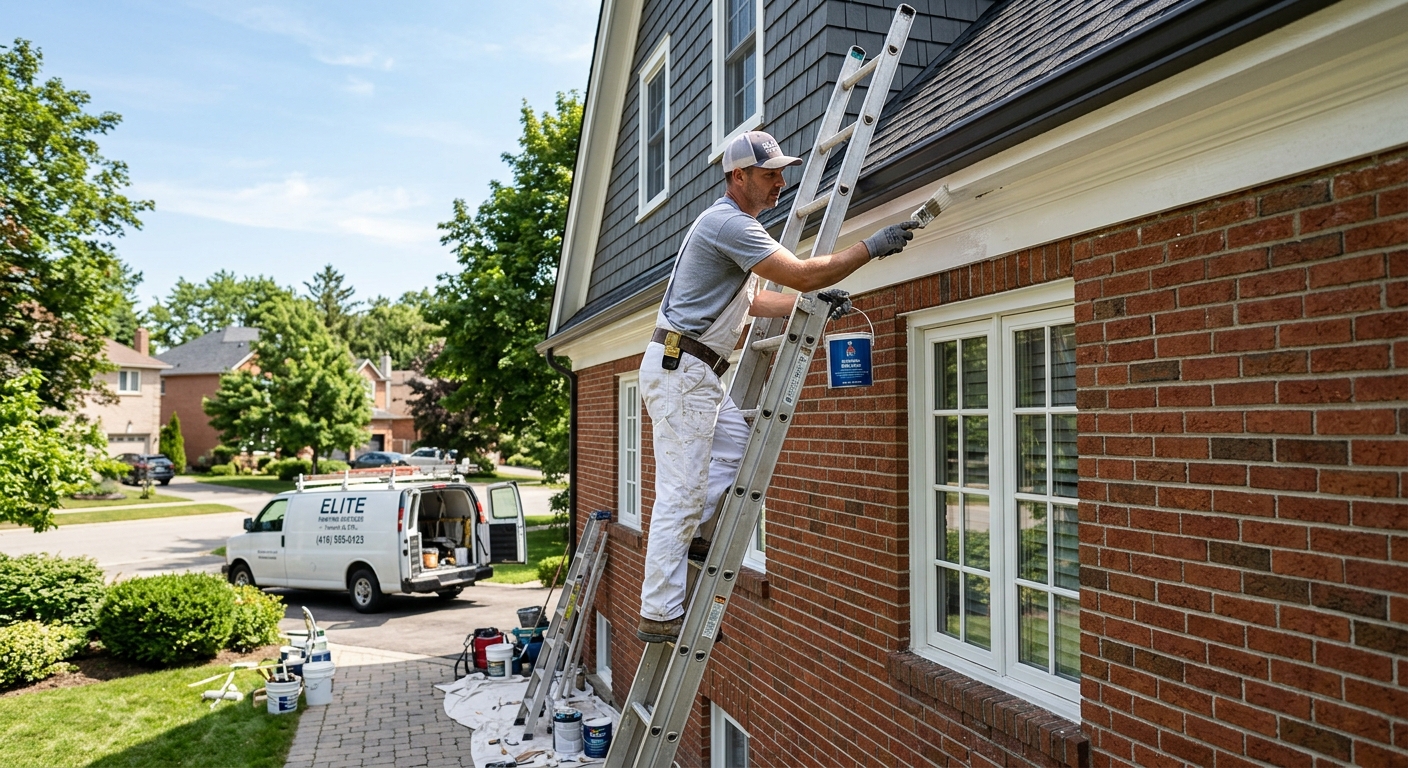
Painting options and costs in Ottawa
Painting in Ottawa ranges widely in price because you’re working with a mix of older housing and a very practical weather window. Ottawa has 260,220 homeowner households (Statistics Canada, 2021 Census), and a large share of dwellings were built earlier—44.2% of homes were built before 1981. That matters because pre-1980 trim, plaster, and siding often need extra scraping, patching, and full priming to prevent peeling and flashing. Where older coatings exist in pre-1978 homes, contractors commonly follow lead-safe work practices (containment, wet methods, HEPA cleanup) to reduce dust exposure, even though this is not typically a permit-driven requirement.
Cost also reflects how the Ottawa market schedules skilled painters. Exterior painting is largely confined to late spring through early fall, when daytime temperatures are roughly between 10–30°C and nights stay above freezing—allowing coatings to cure properly and reducing adhesion problems. In popular inner-city areas such as Sandy Hill, demand for timely summer slots is often high, so full-house exterior work can book out quickly.
To give you a clear benchmark before you call for estimates, here are typical Ottawa price ranges by project type. Use these as “apples-to-apples” targets, then compare quotes on the prep scope and coat count (not just the paint brand) before choosing a contractor.
| Service |
What's Included |
Typical Duration |
Price Range |
| Interior — whole home (walls, ceilings, trim) |
Move-light furnishings (as agreed), prep, patching, sanding, caulking where needed, prime bare/repair areas, 2-coat system on walls/ceilings, paint trim/doors (per plan), cleanup and dust protection |
5–12 days |
$1,800–$6,500 |
| Interior — per room (standard bedroom or living room) |
Prep, patch/spot prime as needed, 2-coat paint on walls, paint ceiling (if requested), basic trim/door touch-ups per scope, cleanup |
1–3 days |
$300–$1,200 |
| Exterior — full house (siding, trim, soffits) |
Power wash/hand prep (per condition), scrape/sand where peeling or loose, caulking, prime bare areas, 2-coat exterior system, paint trim/soffits, surface protection and site cleanup |
2–4 weeks |
$1,200–$9,000 |
| Exterior — trim and accent colours only |
Targeted prep on trim areas, caulking as needed, prime bare spots, 2-coat paint on accents, protect landscaping and hardscape, cleanup |
3–10 days |
$500–$3,800 |
| Kitchen cabinet painting (doors, frames, spray finish) |
Degrease/clean, light sanding and abrasion, fill/prime, spray or brush systems as appropriate, 2 top-coat finish, hardware removal and re-install (per scope) |
1–3 weeks (including cure time) |
$900–$3,500 |
| Specialty / faux finish (accent wall, texture) |
Surface prep to a level suitable for the finish, base coat(s), specialty product application, feathering/blending at transitions, final topcoat/clear as required |
2–7 days |
$500–$6,000 |
Prices are estimates only and vary by project scope, site access and material selection.
What affects the price of painting in Ottawa
In Ottawa and across Ontario, it’s common to see quotes for the “same” painting job come in 30–50% apart. The biggest driver isn’t paint—it’s prep and scheduling. For exteriors, the region is climate-bound: exterior work generally runs late May to early October, with daytime temperatures around 10–30°C and nights above freezing. That short, reliable window concentrates demand and tightens summer calendars, which can raise summer rates. In contrast, coastal British Columbia may offer a longer stretch of work but brings higher humidity and frequent rain timing constraints, so crews often need mildew-resistant systems and stricter moisture checks.
Older homes throughout the Ottawa area also change the labour math. With 44.2% of homes built before 1981 (Statistics Canada, 2021 Census), you should expect more surface preparation—scraping peeling paint, sanding, caulking, patching drywall or wood, and priming bare substrates. On many repainting jobs, that prep can represent 50–70% of total labour. In practical terms, a partial repaint can look like “just labour,” but the primer and patching time quickly adds up, especially on trim-heavy elevations.
Concrete Ottawa examples: (1) If your siding has blistering or failing caulk lines, the contractor will need more scraping and re-caulking before priming—this can move an exterior job from the lower end of the $1,200–$9,000 band toward the middle/high end. (2) If your home is taller or has limited access, lifts or scaffolding increase time—often nudging a trim-focused project (within the $500–$3,800 range) upward. (3) Interior costs can still climb with ceilings and full trim packages, because those areas add passes, masking and precision work.
| Price Factor |
Why It Matters |
Cost Impact |
| Surface prep — scraping, sanding, patching drywall or wood |
Durable adhesion depends on removing loose coating and levelling damaged areas. |
Often the largest swing (can add 20–60%). |
| Number of coats — 2-coat system over primer vs. 1 coat over existing |
Coverage and hiding require the correct coat build, especially on dark-to-light changes. |
Typically adds 5–30% depending on substrate. |
| Paint quality tier — contractor-grade vs. premium (Benjamin Moore, Sherwin) |
Higher-quality coatings usually level better, resist scuffing, and reduce rework. |
Can range from minor to 10–25% overall. |
| Ceilings and trim — adds significant time vs. walls-only |
Masking, edges, and detail work are time-intensive. |
Often increases 15–40% on interior. |
| Exterior season window — short season raises summer rates |
Weather limits curing and increases scheduling pressure. |
Can push costs 10–20% higher in peak weeks. |
| Lead-safe precautions — required for pre-1978 homes with lead paint |
Special cleanup and controls protect occupants and workers. |
Can add 5–25% depending on condition and scope. |
| Surface material — drywall vs. plaster vs. wood vs. stucco |
Porosity and bonding differ; each needs the right primer and prep. |
Often shifts 10–30%. |
| Height and access — multi-storey exterior requires scaffolding or lifts |
More setup time and safer working methods. |
Can add 15–50% for full exterior. |
Permits & regulations in Ontario
In Ontario, painting typically does not require a permit for normal interior or exterior decorative work. However, if you’re renovating or altering structures (for example, removing built-in elements that involve regulated materials, or doing non-paint work that triggers other approvals), the rules can change—so always confirm scope with your contractor up front.
For homes built before 1978, health guidelines recommend testing for lead paint before sanding or scraping, and using lead-safe work practices if lead is present (wet methods to control dust, HEPA vacuuming, careful containment, and proper disposal). This is not usually mandated for homeowners as a “permit step,” but it is standard practice for professional contractors because it protects occupants and workers and reduces contaminated dust from spreading.
When you’re hiring in Ottawa, focus on insurance and coverage rather than permits. A reputable contractor should carry liability insurance and workers’ compensation coverage (WSIB/WCB) for employees. Ask for proof before work starts.
Step-by-step checks you can do:
- Find the contractor’s Ontario licence/registration details through the appropriate online registry entry they provide (or the company number they list).
- Request a current certificate of insurance for liability—confirm it’s active and that your address is covered as the job site.
- Ask for WSIB/WCB clearance (or proof of coverage) and verify dates match the project period.
- Get a written contract stating the paint brand/line, sheen, number of coats, and exactly what prep is included (repair, caulking, sanding, priming).
- Confirm what’s excluded: often mould remediation, extensive carpentry, or lead-testing costs.
Interior vs exterior painting — getting the best result in Ottawa
To get a long-lasting paint job in Ottawa, the difference between “looks great now” and “still looks good next year” comes down to prep, correct primer choice, and the reality of our freeze–thaw and moisture swings. For interiors, surface prep beats brand: filling, sanding, caulking, and priming any patch repairs are what prevent peeling and flashing. Pick sheen by function—flat/eggshell for low-traffic ceilings and walls, satin for hallways, and semi-gloss for trim because it wipes easier. Two coats over a proper primer system nearly always outlasts one thick coat because it builds coverage evenly and reduces thin spots that can stain.
For exteriors, start with what the weather will punish: water ingress points and failing caulk lines. In Ottawa, I strongly recommend caulking before painting so the coating can bond to stable, sealed edges. Primer matters by substrate—oil-based primers can be appropriate for certain stains, tannin bleed, or problematic bonding surfaces, while latex primers are common when conditions suit them. Unlike coastal BC (where mildew-resistant systems and moisture timing are critical), Ottawa work is more about curing and adhesion during the late spring to early fall window when temperatures stay above roughly 10°C and nights remain above freezing.
Cabinet painting is often a cost-effective alternative to replacement. If your existing cabinets are structurally sound, refinishing can be a realistic budget win versus full replacement, especially when you’re aiming for a smooth, durable topcoat. For pre-1978 homes, plan on lead-safe precautions for any scraping or sanding that disturbs old paint.
A practical dollar example: if a full interior refresh is quoted near the $300–$1,200 per-room range, but one quote includes extensive patching, sanding, and priming for repairs that another quote skips, the “cheaper” option can lead to early scuffs and visible patch lines—so the extra prep cost is justified. On exteriors, a quote positioned near the $1,200–$9,000 band can differ drastically depending on whether the contractor includes proper caulking and primer over bare spots (often the difference between a repaint that lasts and one that fails early).
| Project Type |
Key Prep Step |
Recommended Coats |
Price Band |
| Interior — fresh drywall (new construction) |
Prime bare drywall and sand between coats if needed for uniform absorption |
Primer + 2 topcoats |
$1,200–$4,200 |
| Interior — repaint (good condition, no repairs) |
Clean/de-gloss, spot prime only where necessary, light scuff-sand |
2 topcoats (primer only on problem spots) |
$300–$3,500 |
| Interior — repaint (patching and priming needed) |
Patch, sand smooth, caulk edges, and prime repairs for hiding |
1 primer + 2 topcoats |
$800–$4,500 |
| Exterior siding (wood or fibre cement) |
Scrape/ sand loose areas, caulk, and prime bare wood/stains before topcoat |
Primer (as required) + 2 exterior coats |
$1,200–$9,000 |
| Exterior trim and accents only |
Edge prep and targeted priming to stop bleed-through |
2 topcoats (primer as needed) |
$500–$3,800 |
| Kitchen cabinets (spray finish) |
Degrease thoroughly, sand/abrade, prime properly for adhesion |
Primer + 2 topcoats |
$900–$3,500 |
How to choose a painting contractor in Ottawa
Choosing the right painting contractor in Ottawa is mostly about verifying coverage, confirming the scope, and paying in a way that protects you. First, verify Ontario compliance by checking their Ontario licensing/registration details (ask for the licence/registration number and confirm it through the appropriate public registry entry). Next, request a certificate of liability insurance and make sure it’s current for the job dates. Finally, confirm workers’ compensation coverage (WSIB/WCB) so you’re not exposed if a worker is injured on your property.
Then get 2–3 itemised written quotes, not a single lump sum. The best estimates break costs into labour and materials and clearly list what prep is included (scraping, sanding, patching, caulking, priming, number of coats, and whether ceilings/trim are covered). Read exclusions carefully—common gaps are lead-testing, mildew remediation, furniture handling, disposal fees, and any repairs beyond small patching.
Look for a workmanship warranty in writing (including the length and what it covers). Product/manufacturer warranties can help too, but they usually require proper surface prep and paint system compliance. Ask whether the warranty is transferable if you sell your home.
Payment schedule matters: never pay more than 10–15% upfront. Hold back final payment until the job is complete, cleaned, and you’ve reviewed touch-ups in person. For timing, insist on a written start date and an estimated completion date—painting delays happen, but a clear plan helps you reschedule work and protect your property.
- Verify Ontario licence/registration details and confirm the company name matches the quote.
- Get a current certificate of liability insurance and check the expiry date.
- Confirm WSIB/WCB coverage before work starts.
- Use itemised quotes: labour, materials, prep materials, and protective supplies.
- Confirm paint brands/lines, sheen level, and exact number of coats.
- Ask what’s included for caulking and whether it’s done before primer/topcoat.
- Confirm cleanup/disposal is included (drop sheets, tape removal, waste handling).
- Demand a written scope for prep: scraping, sanding, patching drywall/wood, priming bare spots.
- Request a site-access plan if you have limited parking, narrow lots, or multi-storey elevations.
- Get a realistic timeline and weather contingency plan for Ottawa exteriors.
- Review warranty terms: duration, covered issues, and how claims are handled.
- Payment schedule: keep upfront to 10–15% and finalize after walkthrough.
Red flags in Ottawa: quotes that skip prep and only quote paint (“2 coats” without patching/priming detail), no proof of WSIB/WCB or liability insurance, vague scope like “all surfaces” without listing repairs and caulking, pressure for large upfront payments, and no written warranty or completion timeline. If you see any of these, keep looking.
Frequently asked questions — painting in Ottawa
When is the best time for exterior painting in Ottawa?
The best time for exterior painting in Ottawa is typically late May through early October, when daytime temperatures are roughly in the 10–30°C range and nights stay above freezing. That helps coatings cure properly and supports good adhesion, especially on siding and trim that expand/contract with cold nights and summer humidity. In practice, start dates often depend on your siding condition: if there’s peeling, the crew needs dry weather for scraping, caulking, and priming before topcoats. If rain systems are moving through your area (Ottawa and nearby communities), painters may pause between coats to ensure surfaces are dry and stable. If you’re planning a repaint, book early for spring—summer schedules can tighten quickly for neighbourhoods with lots of older homes and active renovations (Statistics Canada, 2021 Census).
How many coats of paint do I need?
In most Ottawa repainting situations, the reliable approach is a 2-coat system over the correct primer. Two coats improve uniform coverage, reduce the risk of thin spots, and help the finish resist scuffing and moisture over time. If you’re painting bare or patched areas, you’ll usually need primer on those zones first, then two topcoats for a consistent sheen and hiding. On interiors, “one thick coat” is often a false economy—especially on ceilings and textured walls where coverage varies. For budgeting, it’s common to see per-room interior projects land in the $300–$1,200 range when prep is limited, while jobs that require extra priming/patching often move toward the higher side of the interior bands. Your quote should specify primer and coat counts, not just the topcoat.
What paint is best for Ottawa's climate?
For Ottawa’s climate, the “best” paint is the one matched to your substrate and the expected exposure, using the right primer and prep. For exteriors, look for a durable exterior acrylic or equivalent system rated for Ottawa conditions, with good resistance to moisture and temperature swings. If your home has staining or bonding issues, priming is key—choosing the wrong primer can lead to bleed-through or premature failure even with premium paint. Contractors often account for Ottawa freeze–thaw cycles by ensuring surfaces are dry and temperature-stable during application. While coastal BC typically emphasizes mildew-resistant product choices due to persistent dampness, Ottawa is more focused on proper curing during the late spring to early fall window when nights remain above freezing. If you’re repainting a home built before 1981 (Statistics Canada, 2021 Census), plan on additional prep and primer coverage to handle older substrates.
How long does exterior paint last here?
Exterior paint life in Ottawa varies by surface condition, prep quality, and exposure, but it’s reasonable to think in terms of “repel and protect” rather than a fixed number of years. A properly prepped and primed repaint done in the correct season can hold up several years longer than a job that only spot-paints failing areas. The most common early failures come from inadequate scraping and priming over loose material, poor caulking at joints, and painting over damp or unstable surfaces. Because Ottawa’s exterior season is compressed (late spring to early fall with curing temperatures and above-freezing nights), timing matters: rushing coats can reduce adhesion. If your exterior work is quoted toward the lower end of the $1,200–$9,000 band, confirm the prep scope—jobs that skip major sanding/priming may not last as long, especially on older trim and siding. If you want, share a few photos and I can tell you what usually shortens lifespan in Ottawa.
Should I paint or replace my cabinets?
If your Ottawa kitchen cabinets are structurally sound (doors/cabinet boxes aren’t sagging, swollen, or severely warped), painting is often the better value. Cabinet refinishing can refresh the look without the disruption and cost of replacement. Many homeowners choose painting to keep costs closer to the $900–$3,500 band for cabinet painting, especially when they want a specific colour or finish. Replacement makes sense if your frames are damaged, the layout is changing, or the cabinets are too far gone to sand and prime effectively. For a durable painted finish, the contractor should degrease thoroughly, abrade surfaces, prime correctly, and apply a smooth topcoat system—often using spray for an even result. If your home is pre-1978 and involves sanding old finishes, lead-safe practices may be required for disturbed paint.
How do I prep walls before painting?
If you’re prepping for an interior repaint, the goal is to create a stable surface for adhesion and an even final finish. In Ottawa homes, walls often have mixed conditions—patches, previous repairs, and minor texture differences. Typically, you should: remove dust and grease (a proper cleaning), fill holes and cracks, sand patches smooth, and clean again after sanding. Any flaking paint must be scraped back to sound edges, then primed before painting. If there’s water staining, it usually needs a stain-blocking primer rather than just topcoat. Caulking is important around trim and edges for clean lines. While many homeowners handle simple cleaning and minor patching, professional prep is where you get the “all-over evenness” in sheen and colour—especially when quotes sit in the $300–$3,500 interior range depending on repairs and ceiling/trim scope.