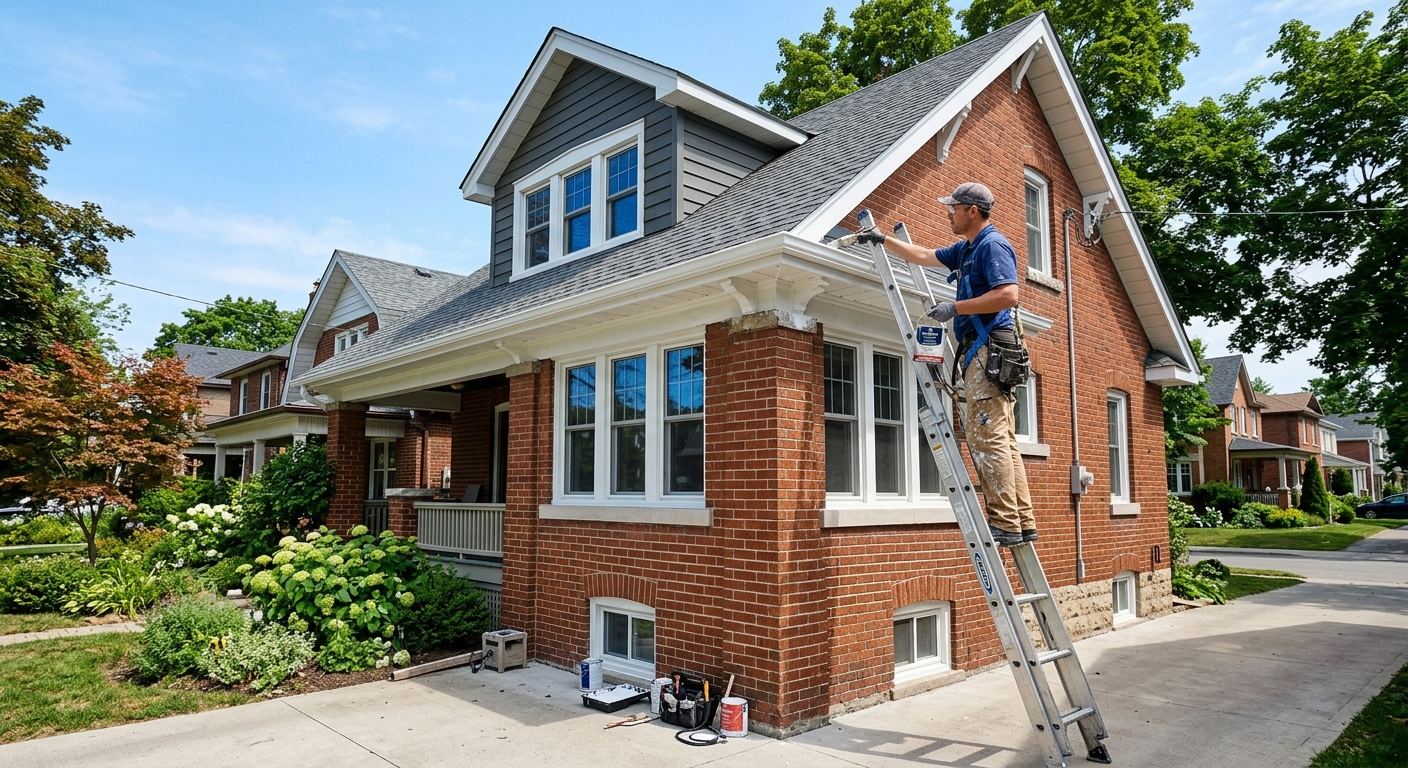
Painting options and costs in Humbermede
Humbermede, Ontario homeowners have a wide range of painting options, but the final price usually comes down to prep time, scope, and the short exterior weather window the Greater Toronto Area depends on. With a population of 15,545 (Statistics Canada, 2021 Census), the area has enough contractor demand that scheduling can tighten during peak weeks. Humbermede’s older housing stock is common across the Toronto economic region, and homes built pre-1980 typically need more scraping, sanding, caulking, and priming to smooth out cracks and adhesion issues—sometimes even additional lead-safe precautions depending on the materials and condition. That extra preparation is why two “same-colour” repaints can land far apart in cost.
In the GTA, exterior painting is typically focused in late May through June and again from September to mid-October, when temperatures stay above about 10°C for proper curing and adhesion. June–August demand often pushes exterior pricing 10–15% higher, mainly because contractors are booked solid during the best drying windows and rain/humidity spikes can force re-scheduling. Interior work is far less season-dependent, so interior quotes are more stable, with labour driven by how many walls/ceilings, how much trim work is needed, and how carefully furniture and surfaces must be protected.
If you’re comparing contractors, start with the table below—then confirm what each scope includes for prep, number of coats, and disposal. From there, you can choose the option that fits your timeline and budget.
| Service |
What's Included |
Typical Duration |
Price Range |
| Interior — whole home (walls, ceilings, trim) |
Protect floors/furnishings, patch & sand, prime where needed, caulk key transitions, paint walls/ceilings, paint trim/doors (scope-dependent), clean-up and debris disposal |
4–10 days |
$1,800 – $5,500 |
| Interior — per room (standard bedroom or living room) |
Mask/protect, prep & patch, sand smooth areas, prime where required, paint walls, paint trim (baseboards and/or casing per scope), clean-up |
1–3 days |
$400 – $1,200 |
| Exterior — full house (siding, trim, soffits) |
Thorough wash, scrape/sand, caulk exterior joints, prime bare/blemished areas, 2-coat exterior system (product and sheen per substrate), spot repairs, final clean-up |
7–18 days |
$3,000 – $7,800 |
| Exterior — trim and accent colours only |
Surface prep on trim areas, caulk details, prime where needed, paint trim/accent colours (usually fascia, soffits, railings depending on access), clean-up |
3–8 days |
$1,500 – $4,800 |
| Kitchen cabinet painting (doors, frames, spray finish) |
Hardware removal, sanding/deglossing, box & drawer prep, primer and sprayed topcoats, light scuff-sand between coats, re-install and clean-up |
5–15 days (including cure time) |
$2,200 – $4,500 |
| Specialty / faux finish (accent wall, texture) |
Plan/colour mock-up (if needed), surface prep to a smooth base, specialty application technique, protective clear coat where appropriate, clean-up |
2–7 days |
$500 – $3,500 |
Prices are estimates only and vary by project scope, site access and material selection.
What affects the price of painting in Humbermede
In the Toronto area, it’s common to see the “same” painting scope vary by 30–50% across quotes, even when homeowners pick the same colour swatches. The biggest driver is prep: how much scraping, sanding, patching, and priming is required depends on what the existing paint system is doing. Renovation timelines also matter—interior projects can be scheduled year-round, while exterior work is tightly bound to workable temperatures and drying times.
For Humbermede, the exterior season is typically late May to early October, when temperatures stay above about 10°C and the surface can dry and cure after application. Short “ideal” weeks concentrate demand, which is why exterior pricing often trends 10–15% higher in June–August. By contrast, coastal regions like BC often deal with persistent dampness and mildew pressure that changes product choices and timing; in the GTA, the main constraints are frost risk, rain, and humidity spikes rather than year-round wet conditions. Older homes—common throughout the Toronto market—add labour because you may need to address multiple paint layers and adhesion problems; on repainting jobs, prep can be 50–70% of total labour.
Here are a few cost examples I see in Humbermede: (1) a full exterior repaint on pre-1980 siding can land closer to the upper end of the $1,500 – $8,000 exterior band if extensive scraping and caulking are needed; (2) switching from “trim only” to a full house often jumps into the $3,000 – $7,800 practical range because primer and full-system coats require more time; (3) interior jobs with heavy ceiling coverage or lots of trim can move toward the higher end of interior estimates because labour is mostly time, not just product.
Ultimately, the quote that looks “cheaper” often has less prep, fewer coats, or exclusions around repairs, caulking, or disposal.
| Price Factor |
Why It Matters |
Cost Impact |
| Surface prep — scraping, sanding, patching drywall or wood |
Determines adhesion and how long the finish lasts; older layers and cracked caulk need more time |
+10–40% |
| Number of coats — 2-coat system over primer vs. 1 coat over existing |
Coverage and durability depend on a true multi-coat system, especially for stains, patches, and colour changes |
+5–20% |
| Paint quality tier — contractor-grade vs. premium (Benjamin Moore, Sherwin) |
Premium coatings often cover better and resist scuffing/fading; cheaper systems may require more passes |
+3–15% |
| Ceilings and trim — adds significant time vs. walls-only |
Ceilings and detail work require more masking, cutting-in, and careful brush/roller technique |
+10–25% |
| Exterior season window — short season raises summer rates |
Fewer ideal days and high demand mean contractors price based on availability and scheduling pressure |
+10–15% |
| Lead-safe precautions — required for pre-1978 homes with lead paint |
If lead is present, proper containment and cleanup add time and materials; wet methods and HEPA vacuuming are standard practice |
+5–20% |
| Surface material — drywall vs. plaster vs. wood vs. stucco |
Different substrates absorb and bond differently; each needs correct primer and technique |
+5–25% |
| Height and access — multi-storey exterior requires scaffolding or lifts |
Access equipment and safety planning increase labour and rental costs |
+10–35% |
Permits & regulations in Ontario
For painting in Ontario, permits are generally not required for typical interior or exterior repainting work. Painting a residence is usually considered routine maintenance, and homeowners typically don’t need to pull a permit simply to apply new coats. Where rules come into play is around health and safety—especially for older homes.
For homes built before 1978, health guidelines strongly recommend testing for lead paint before sanding, scraping, or any work that creates dust. If lead is present, lead-safe work practices are standard for professional contractors: wet methods to control dust, HEPA-filtered vacuuming, containment where needed, and proper disposal of debris. This isn’t something homeowners are typically told “legally you must do X” for DIY, but it is the standard approach I expect from a serious contractor when pre-1978 materials may be involved.
Also confirm your contractor carries: (1) liability insurance and (2) WSIB/WCB workers’ compensation coverage for employees (or proof of coverage if they use subcontractors). Before work begins, get a written contract that specifies the paint brand and product line, sheen, the number of coats, the surfaces/prep included (patching, priming, caulking), and whether disposal and cleanup are part of the scope.
To verify: check the contractor’s Ontario business information (online registry), request a current certificate of insurance showing liability coverage, and ask for WSIB/WCB clearance or account coverage proof. Then confirm these documents match the legal business name on the contract.
Interior vs exterior painting — getting the best result in Humbermede
In Humbermede’s Toronto-area climate, the difference between a paint job that lasts and one that fails early is usually surface prep and coat system—more than brand hype. Indoors, start with filling, sanding, and priming: patched drywall edges and stained spots should be primed so the topcoat doesn’t flash or peel. Then choose sheen based on how the space is used. A flat/eggshell look can be right for many living-room walls, but kitchens, hallways, and areas that get frequent cleaning often do better with eggshell or satin. Two coats applied over a proper primer consistently outlast one thick coat because the film forms more evenly and cures uniformly.
Outdoors, prep becomes non-negotiable. After washing, scrape and sand anything loose, then caulk gaps before painting so water can’t track behind trim or siding. Use primer matched to the substrate: for bare wood or areas with tannin bleed, correct spot priming matters; for better adhesion on existing systems, your contractor should confirm the existing coating type and choose the right primer strategy. While BC crews emphasize mildew-resistant coatings, the GTA’s main exterior risks are rain/humidity spikes, temperature swings, and frost—so timing and cure windows are critical.
For kitchen cabinets, painting is a smart budget alternative to replacement, but only when the prep is thorough and the finish system is sprayed and allowed to cure. If you have pre-1978 concerns, the same lead-safe precautions apply when preparing trim surfaces that may generate dust.
Example: if a full exterior repaint is quoted around the upper exterior band (near $3,000 – $7,800), that higher figure is often justified when caulking, priming of bare wood, and extensive scraping are included. A “trim-only” quote around $1,500 – $4,800 makes sense only if siding and larger surface areas truly don’t need prep.
| Project Type |
Key Prep Step |
Recommended Coats |
Price Band |
| Interior — fresh drywall (new construction) |
Prime new drywall and feather edges before topcoat |
Primer + 2 coats |
$700 – $2,200 |
| Interior — repaint (good condition, no repairs) |
Clean, degloss, light sand, caulk transitions |
2 coats (primer only on spots) |
$400 – $1,200 |
| Interior — repaint (patching and priming needed) |
Patch/sand, spot-prime repairs and stain-prone areas |
Primer spots + 2 topcoats |
$600 – $1,800 |
| Exterior siding (wood or fibre cement) |
Wash, scrape/sand loose areas, caulk gaps, and prime bare spots |
Primer (where required) + 2 exterior coats |
$3,000 – $7,800 |
| Exterior trim and accents only |
Detail prep: scrape, sand, caulk, and spot-prime trim edges |
Primer where needed + 2 finish coats |
$1,500 – $4,800 |
| Kitchen cabinets (spray finish) |
Sand/degloss, proper primer adhesion, controlled cabinet masking |
Primer + 2 sprayed coats |
$2,200 – $4,500 |
How to choose a painting contractor in Humbermede
Choosing the right painter in Humbermede is mostly about verifying coverage and matching the quote to a clear scope. First, confirm Ontario licensing where applicable, and request proof of liability insurance with active dates and limits. Next, check WSIB/WCB coverage: ask for a clearance letter or account proof (depending on the contractor’s setup) and make sure coverage is for the legal entity that will be on your job. If they use subcontractors, ask how subcontractor coverage is handled.
Then get 2–3 itemised written quotes, not lump sums. You want a breakdown for labour and materials so you can compare prep steps (scraping/sanding/patching, caulking, priming), number of coats, and product tier. Read exclusions carefully—especially around furniture moving, window/door masking, disposal, repairs beyond “minor patching,” and whether they handle scaffolding/lifts for multi-storey exteriors. Ensure the contract states paint brand/product line, sheen level, and prep included.
Warranty matters too. Look for a workmanship warranty length (how long they stand behind adhesion and workmanship) and clarify whether manufacturer warranties depend on product usage and prep. Ask if the warranty is transferable if you sell the home. For payment, never agree to more than 10–15% upfront; hold back a portion until completion and walkthrough. Finally, get a start date and completion estimate in writing, with realistic allowance for weather delays on exterior work.
- Ask for proof of liability insurance with your contractor’s legal name.
- Verify WSIB/WCB coverage with a clearance letter or coverage proof.
- Use itemised quotes: labour hours, prep steps, and materials list.
- Confirm number of coats and where primer is required.
- Require a written scope: scraping, sanding, caulking, and patching specifics.
- Ask whether power washing/pre-wash is included and how surfaces are dried.
- Confirm disposal/cleanup is included (bagging, hauling, and site sweep).
- Check whether window/door trim, railings, and soffits are included or excluded.
- Clarify colour/finish sheen selection process and who approves final colours.
- Request a workmanship warranty statement in writing.
- Confirm payment schedule and holdback terms before signing.
- Get timeline details including weather contingencies for exteriors.
Red flags I often see with painting contractors in Humbermede include: vague scopes (“prep as needed” without detail), no proof of WSIB/WCB or liability coverage, quotes that skip priming on repaired areas, promises of “one-coat coverage” without substrate prep, and payment requests that exceed 10–15% upfront with no written completion terms.
Frequently asked questions — painting in Humbermede
How do I prep walls before painting?
If you’re prepping in Humbermede yourself, focus on cleanliness, repairs, and dust control. Start by washing walls to remove grease (especially kitchens) and let them dry fully. Fill holes and cracks with patch compound, then sand smooth so the repaired area is flush—do not skip sanding, because ridges show through paint. Wipe off sanding dust with a damp cloth or tack cloth. If you have stains, water marks, or patch areas that previously had different colours, spot-prime them so the topcoat doesn’t “flash” or discolor. Caulk small gaps around trim, outlets, and baseboards once surfaces are dry.
For older Ontario homes, especially pre-1978 materials, be cautious with sanding/scraping if you’re unsure about lead paint risk. Professional prep can significantly affect cost—on interior repaints, many quotes in the $400 – $1,200 range assume patching and priming only where needed.
Do I need to worry about lead paint in an older Humbermede home?
It’s smart to take lead paint seriously in older Humbermede homes. Health guidance recommends testing for lead paint before sanding or scraping when the home is built before 1978, because dust generation during prep is the main concern. For many homeowners, the practical step is to ask your contractor how they handle pre-1978 surfaces: do they test, and if lead is present, do they use lead-safe work practices (wet methods, HEPA vacuuming, and proper disposal)? While homeowners often hear “it’s not legally mandated for you,” professional contractors typically treat it as standard practice to protect occupants and workers.
If lead precautions are required, expect that prep time and cleanup steps add cost and may push exterior quotes toward the higher end of the local bands (for example, full exterior work commonly lands between $3,000 – $7,800 when prep is extensive). The right approach reduces risk and helps prevent messy, uneven finishes.
How long does it take to paint a house?
For Humbermede and the broader GTA, timelines depend more on prep and drying/cure scheduling than on “rolling paint time.” Interior painting can often be done in stages, since it isn’t tied to the outdoor temperature swings that affect curing. A whole-home interior job typically runs several days—commonly 4–10 days depending on the number of rooms, ceilings, trim detail, and how much patching/priming is required. If furniture needs extensive moving/masking, that adds time too.
Exterior painting is slower because of weather and cure windows. Contractors often work late May–June and September–mid-October, when conditions stay suitable for proper drying and adhesion. Rain or humidity spikes can delay progress, so a full exterior repaint commonly takes 7–18 days, sometimes longer if substrate prep is heavy.
When contractors quote, ask for a start date, completion estimate, and what happens if weather interrupts exterior work.
What's the difference between paint quality tiers?
Paint quality tiers mainly affect coverage, durability, and how forgiving the finish is during application. Premium coatings from brands commonly used by contractors (such as Sherwin or Benjamin Moore product lines) often provide better hiding, smoother leveling, and stronger resistance to scuffs and stains—especially important on trim, high-touch doors, and hallways. They may also reduce the chance of needing extra coats because coverage is more consistent.
Budget or contractor-grade coatings can still look great, but they may require more build (more passes) to reach full uniformity—particularly when changing colours significantly or covering patched areas. In practical terms, a higher-quality system can sometimes keep you closer to a “2-coat expected” approach, while lower-tier products can nudge the job toward additional coats.
On interiors, that’s why quotes in the $400 – $1,200 per-room range might differ even when the scope seems similar—often the coating tier and prep assumptions drive the variance.
How do I compare painting quotes?
Compare quotes like a homeowner detective: the cheapest number isn’t always the best deal if prep and coats aren’t equivalent. Ask for itemised labour and materials breakdowns, not just a total. Confirm what’s included for surface prep: scraping/sanding, patching, priming on repairs, and caulking. Then confirm the number of coats and where primer is required—especially on patch areas and any stained spots.
Also compare exclusions: furniture moving, ladder/scaffold setup for exterior access, disposal/cleanup, and whether window/door trim and soffits are included. For exteriors in Ontario’s GTA climate, ask how they manage the short season (late May–June and September–mid-October) and what they do if rain or humidity disrupts cure time.
Finally, match paint lines and sheen levels across quotes. If one quote lands in the $1,500 – $4,800 trim/accent range and another is full-house pricing, make sure you’re not comparing different scopes.
What paint sheen should I use in different rooms?
Sheen choice is about cleanability versus appearance, and in Humbermede homes the “right” sheen depends on how often a room gets cleaned and how much light it receives. Flat or matte finishes hide minor imperfections best and are often used in low-traffic areas like bedrooms, ceilings, or rooms with fewer cleanings. Eggshell is a common interior wall choice in living rooms—slightly more washable than flat while keeping a soft look. Satin and semi-gloss are more durable for kitchens, hallways, bathrooms, and trim because they stand up better to wiping and are less prone to scuffing.
Ceilings typically do well with a flat finish (to reduce glare). Trim, doors, and cabinets usually benefit from a satin to semi-gloss sheen for durability and clean edges.
If you’re repainting and patching is involved, sheen consistency also matters—ask your contractor to apply a full 2-coat system over proper primer so sheen doesn’t “flash” on repair areas.