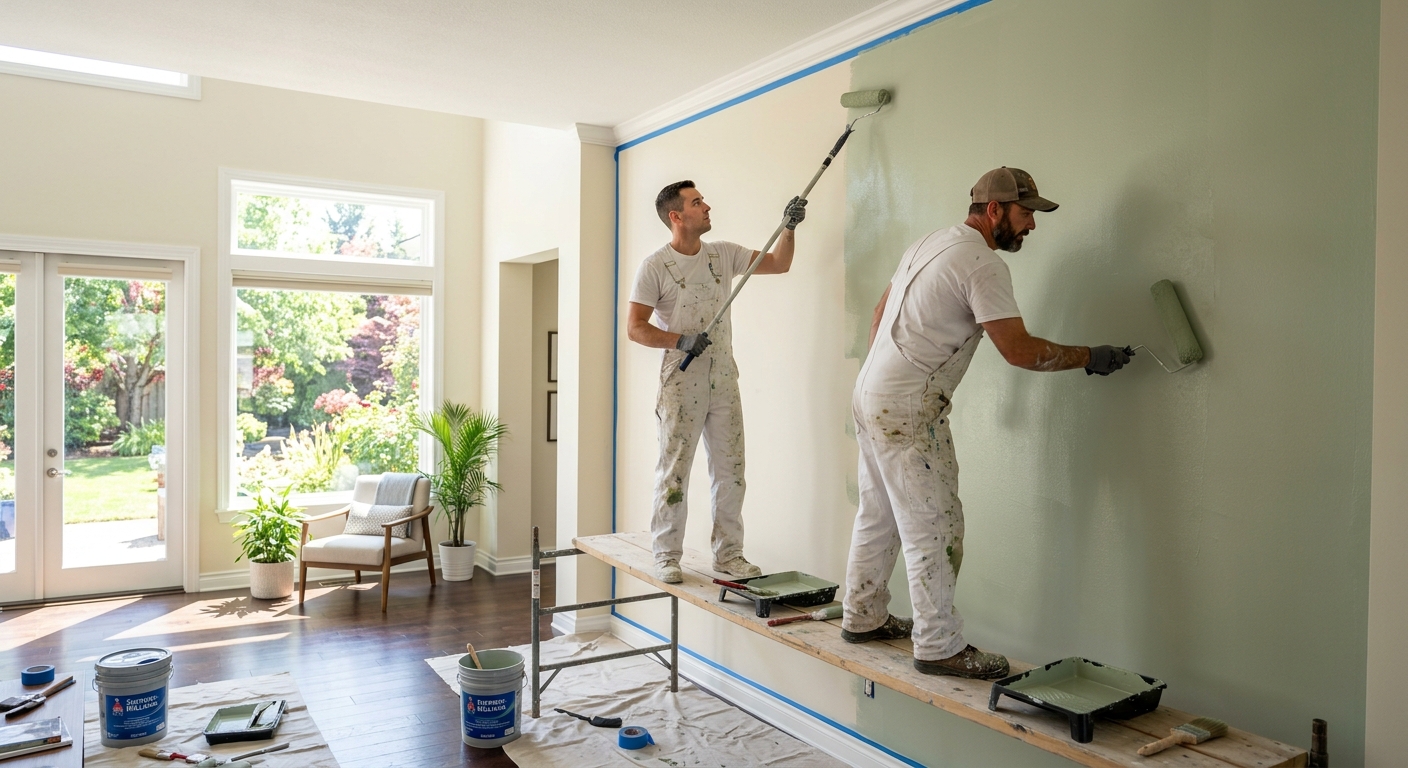
Painting options and costs in Windsor
Painting in Windsor is shaped by both the region’s housing mix and the short, workable weather window. With 229,660 people in Windsor (Statistics Canada, 2021 Census) and 62.5% of households owning their homes, many homeowners are repainting older properties rather than moving—especially in neighbourhoods with established streetscapes like South Windsor. Adding to that pressure, 68.0% of homes in the area were built before 1981 (Statistics Canada, 2021 Census), which usually means more time for scraping, patching, caulking and priming to stabilize aged substrates. On pre-1978 homes, lead-safe work practices may also be needed before any aggressive sanding or scraping.
In the Windsor–Sarnia economic region, exterior painting is highly seasonal. Contractors generally target late May through early October because temperatures should stay above roughly 10°C and humidity needs to be low enough for proper curing and dry-to-recoat conditions. This tight window compresses demand into summer, so exterior schedules can tighten faster than interior. Labour availability also shifts as more crews chase exterior work, while interior projects can be scheduled more consistently year-round.
For budgeting, you’ll typically see interior projects land in a wider range (often $800 – $3,500) while exterior work tends to cost more due to prep complexity and weather timing (often $1,500 – $6,000). The table below breaks out common Windsor scope options so you can compare quotes side-by-side before scheduling.
| Service |
What's Included |
Typical Duration |
Price Range |
| Interior — whole home (walls, ceilings, trim) |
Protection, surface prep (fill/sand), prime where needed, paint walls/ceilings, paint doors/trim baseboards; light touch-ups |
6–12 days |
$1,800–$4,800 |
| Interior — per room (standard bedroom or living room) |
Prep, prime as required, walls and ceiling; includes door trim and caulking/spot patching |
1–3 days |
$800–$1,900 |
| Exterior — full house (siding, trim, soffits) |
Powerwash/clean, scrape/sand where needed, caulk, prime bare/spot areas, 2-coat exterior paint system; includes minor spot repairs |
7–15 days |
$2,800–$6,000 |
| Exterior — trim and accent colours only |
Prep on trim areas, caulking, prime bare spots, paint trims/accents; excludes full siding repaint |
3–7 days |
$1,500–$3,900 |
| Kitchen cabinet painting (doors, frames, spray finish) |
Degrease, sand/scuff, prime, spray doors/frames, install-ready dry times; hardware masking; finish durability plan |
5–10 days |
$2,200–$4,500 |
| Specialty / faux finish (accent wall, texture) |
Surface preparation tailored to the finish, base coat(s), specialty application, topcoat protection |
2–6 days |
$900–$2,900 |
Prices are estimates only and vary by project scope, site access and material selection.
What affects the price of painting in Windsor
If you’re comparing quotes for the “same” painting job in Windsor–Sarnia, it’s normal to see 30–50% differences. The big reason is that the labour behind a durable finish—especially prep—can vary a lot between contractors. Exterior work is the most sensitive to this: in Southern Ontario, the practical window for exterior painting runs roughly late May to early October, when temperatures are consistently above 10°C and surfaces can dry properly between coats. When that window is short, summer crews charge more to secure schedule certainty and because demand concentrates in a few months. Coastal regions such as British Columbia can run longer but come with persistent humidity and rain, so they often lean on mildew-resistant systems and more strict timing; that’s why “average” pricing doesn’t transfer well.
Older housing stock across the region matters too. With a large share of homes built before 1981 (Statistics Canada, 2021 Census), many repaint jobs include scraping peeling paint, sanding rough edges, caulking gaps, and priming stabilized surfaces—often where prep becomes 50–70% of total labour. In Windsor, a home with multiple failed paint layers might still fall near interior repaint pricing bands ($800 – $1,900 per typical room), but exterior scopes often push toward higher bands (commonly $2,800 – $6,000) because of prep time, elevated access and longer drying considerations.
Two common Windsor examples: (1) trim repainting only can cost less than a full exterior repaint, but only if siding prep is genuinely excluded from the scope; (2) a mid-century single-detached in South Windsor with weathered soffits and missing caulk typically needs more time for spot priming and sealing than a newer, well-maintained home. Those differences show up quickly in a quote.
| Price Factor |
Why It Matters |
Cost Impact |
| Surface prep — scraping, sanding, patching drywall or wood |
A durable film depends on stable adhesion; prep often determines longevity. |
+10% to +40% |
| Number of coats — 2-coat system over primer vs. 1 coat over existing |
Existing paint sheen/porosity can’t always be “covered” with one layer. |
+5% to +25% |
| Paint quality tier — contractor-grade vs. premium (Benjamin Moore, Sherwin) |
Higher-grade paints typically improve coverage, colour stability and scrub resistance. |
+5% to +20% |
| Ceilings and trim — adds significant time vs. walls-only |
Trim needs cutting-in detail, sanding/caulk for smoothness, and careful masking. |
+15% to +35% |
| Exterior season window — short season raises summer rates |
Scheduling pressure during late spring to early fall can increase daily rates. |
+10% to +30% |
| Lead-safe precautions — required for pre-1978 homes with lead paint |
Containment, HEPA cleanup and compliant disposal add time and materials. |
+15% to +50% |
| Surface material — drywall vs. plaster vs. wood vs. stucco |
Each substrate needs different primer and prep to prevent flashing, peeling or bubbling. |
+10% to +35% |
| Height and access — multi-storey exterior requires scaffolding or lifts |
Access changes labour time and sometimes requires equipment rental. |
+10% to +45% |
Permits & regulations in Ontario
In Ontario, painting itself typically does not require a permit for homeowners. However, rules and best practices can apply based on what’s being altered (for example, demolition or major renovations may trigger other steps). For painting, the key compliance area for many Windsor homes is lead-safe work practice rather than permitting.
For homes built before 1978, health guidelines recommend testing for lead paint before sanding, scraping or disturbing old paint layers. If lead is present, professionals follow lead-safe methods such as wet methods to reduce dust, HEPA-filter vacuuming, proper containment and proper disposal. This isn’t generally “legally mandated for homeowners” in the same way it is for contractors doing regulated lead work, but it is standard practice for professional painters because it protects workers and occupants.
Before work starts, confirm your contractor carries liability insurance and has WSIB/WCB workers’ compensation coverage. Ask for a written contract that clearly states the paint brand (or approved equal), sheen level, number of coats, and which prep activities are included (scrape/sand/caulk/prime/spot repair). For neighbours in Windsor, that paper trail matters just as much as the finish.
To verify Ontario compliance step-by-step: (1) request their insurance certificate (liability) and confirm it matches the company name; (2) ask for WSIB/WCB coverage proof; (3) check their contractor listing/credentials through the Ontario business registry resources they provide; and (4) request a written scope with product details and disposal/cleanup responsibilities.
Interior vs exterior painting — getting the best result in Windsor
The difference between a paint job that lasts and one that fails early in Windsor is usually prep quality and correct product choices, not just paint brand. For interiors, surface prep comes first: filling dents, sanding to a smooth profile, removing dust, and priming problem areas (water stains, bare drywall, patched spots). Then match sheen to the room and lifestyle. Bedrooms typically look good with flat or eggshell walls, while kitchens and hallways often need easier-clean coatings and practical sheens like eggshell or satin. In practice, two coats over a proper primer always outlast one thick coat—especially on patched drywall, where absorption can cause flashing.
For exteriors, the climate pressure is more direct. Late spring to early fall drying helps, but Ontario’s freeze-thaw cycles and wind-driven rain can stress edges. Start with cleaning and prep: scrape loose paint, sand edges smooth, and caulk before painting to prevent water ingress behind trim and siding lines. Primer matters by substrate: different primers help adhesion on wood, fibre cement and repaired areas. In Windsor, the right system is typically temperature- and moisture-tolerant for our conditions, not the same as a marine-mildew approach used in coastal climates.
Cabinet painting is a strong value option when frames and doors are in decent condition—replacing kitchens usually costs far more than refinishing. For example, if cabinet painting is within roughly $2,200 – $4,500, it can be a sensible alternative to replacement, provided the prep is thorough (degreasing, sanding/scuffing, priming) so the finish bonds.
For pre-1978 homes, plan for lead-safe precautions before scraping or sanding. That extra preparation time is one reason professional repainting can come in at the higher end of the local exterior range.
| Project Type |
Key Prep Step |
Recommended Coats |
Price Band |
| Interior — fresh drywall (new construction) |
Prime all new drywall to seal absorption and reduce flashing |
1 primer + 2 topcoats |
$900–$2,500 |
| Interior — repaint (good condition, no repairs) |
Clean, lightly scuff/sand, caulk minor gaps, spot-prime if needed |
1 primer spot + 2 topcoats (or 2 topcoats if manufacturer allows) |
$800–$2,000 |
| Interior — repaint (patching and priming needed) |
Fill, sand feathered edges, prime patches to match porosity |
1 primer + 2 topcoats |
$1,100–$3,000 |
| Exterior siding (wood or fibre cement) |
Scrape loose paint, sand edges, caulk seams, prime bare/spot areas |
1 primer (as needed) + 2 topcoats |
$2,800–$6,000 |
| Exterior trim and accents only |
Remove failing coating, prep trim profiles, caulk joints before painting |
1 primer spot + 2 topcoats |
$1,500–$3,900 |
| Kitchen cabinets (spray finish) |
Degrease thoroughly, sand/scuff for bond, prime all surfaces |
1 primer + 2 topcoats |
$2,200–$4,500 |
How to choose a painting contractor in Windsor
Choosing a painting contractor in Windsor starts with verification. First, ask for proof of liability insurance—request an insurance certificate showing the company name and coverage effective dates. Second, confirm WSIB/WCB workers’ compensation coverage with documentation; if they can’t provide it, that’s a major risk. Third, check their business credentials and ask for a contactable address and written scope—reputable contractors will have consistent documentation.
Next, collect 2–3 itemised written quotes, not just a lump sum. You want labour and materials separated: prep (scraping/sanding/patching/caxulking), primer requirements, number of coats, specific paint products or approved equals, and equipment/access costs. Clarify what’s excluded: disposal, protection of landscaping and windows, and whether powerwashing is included for exteriors.
Warranty should be in writing. Ask for the workmanship warranty length and whether manufacturer paint warranties apply as well. Also confirm whether warranties are transferable if you sell your home—many homeowners in Windsor repaint to improve curb appeal and resale.
For payment schedule, never agree to more than 10–15% upfront. Use holdback—release the remainder after completion and walkthrough. Finally, get a start date and completion estimate in writing so you’re not left waiting during Windsor’s tight exterior window.
- Request liability insurance and verify the certificate is current.
- Confirm WSIB/WCB coverage before any work begins.
- Get 2–3 itemised quotes (labour + materials), not only total price.
- Check the scope: scraping/sanding, caulking, priming, and spot repairs listed.
- Ask how they protect floors, railings, landscaping and exterior lights.
- Confirm cleanup and disposal are included (not “as time allows”).
- Require product/specs: paint brand, colour code, sheen level, and primer type.
- Verify number of coats and recoat timing rules are included.
- Ask about how they handle moisture delays during exterior work (re-scheduling policy).
- Ensure lead-safe precautions are addressed for pre-1978 homes (testing/containment if needed).
- Confirm warranty details in writing, including workmanship and any paint manufacturer terms.
- Use a payment schedule with no more than 10–15% upfront and a holdback on completion.
Red flags I see in Windsor: (1) quotes that don’t spell out prep and primer (just “paint walls”); (2) refusal to provide insurance/WSIB/WCB proof; (3) high upfront payments with no signed contract; (4) vague warranty language; and (5) rushing exterior work without discussing drying conditions and caulking/priming before topcoats.
Frequently asked questions — painting in Windsor
How do I choose a painting contractor in Windsor?
Start by verifying that the contractor in Windsor can provide current liability insurance and WSIB/WCB coverage before the first brush touches your home. Then request 2–3 itemised quotes that break down labour and materials (prep, primer, number of coats, paint brand/approved equals, and cleanup/disposal). For many Windsor projects, preparation is the real cost driver—especially for older homes; 68.0% of dwellings were built before 1981 (Statistics Canada, 2021 Census), so scraping, sanding, caulking and priming are common. For pre-1978 homes, ask how they handle lead-safe work practices if old paint is disturbed. Finally, choose a contractor who schedules with Windsor’s practical exterior window (late spring through early fall) rather than promising unrealistic dates. Even a good interior quote should still specify sheens and priming strategy.
How many coats does an exterior repaint need in Windsor?
In most Windsor exterior repaint projects, you should plan for a 2-coat system over properly prepared surfaces. That usually means: clean, scrape/sand loose or failing paint, caulk where needed, then prime bare or spot-damaged areas, followed by two finish coats. The exact primer approach depends on substrate and repair type (wood, fibre cement, or patched areas). If a contractor quotes “one coat” without a primer plan, that’s a common reason for premature peeling in Ontario weather cycles. Budget-wise, many full-house exteriors land around the local exterior band of $2,800 – $6,000 when prep is thorough. If only trim and accents are changing, costs can be lower, commonly in $1,500 – $3,900. Your quote should clearly list prep and coasting so you’re comparing like-for-like.
What is the best primer for older Windsor homes?
For older Windsor homes, “best primer” depends on what you’re priming—bare wood, previously painted metal, patched drywall, or spots where old coatings were scraped back. Generally, a quality bonding primer plus spot priming for repairs reduces flashing and improves adhesion. If you’re repainting after scraping failing paint, primer selection should match the substrate and the paint system being used for the topcoats. For pre-1978 homes, the priority before primer is lead-safe preparation if older lead paint is present or likely to be disturbed. That means careful dust control and safe cleanup practices before any sanding or scraping. Because 68.0% of area homes were built before 1981 (Statistics Canada, 2021 Census), most contractors build quotes around significant prep and priming; cutting corners here can cost more later when adhesion fails.
Should I paint or wallpaper my Windsor home?
In Windsor, many homeowners choose paint because it’s easier to maintain in high-traffic areas and provides consistent touch-up results. Wallpaper can look great, but it often demands a very smooth, stable wall surface; older homes with patched or uneven drywall/plaster can require more prep than you’d expect. Paint is also more flexible if you plan changes later. If you have moisture-prone spots (near bathrooms, windows, or older exterior walls), a proper primer system and patch work are crucial either way. From a budget perspective, interior paint often starts in the local per-room range around $800 – $1,900, while wallpaper varies widely based on labour complexity and material. In a region where 62.5% of households own their homes (Statistics Canada, 2021 Census), long-lasting repainting is a common, practical upgrade—especially for families who want durability.
How do I fix peeling exterior paint in Windsor?
Peeling exterior paint in Windsor usually isn’t fixed by “painting over it.” The proper approach is to remove all loose coating back to sound edges, then sand to smooth transitions so the next coating bonds. Next, address the cause: check caulking gaps at trim joints, look for moisture intrusion, and make sure the surface was dry enough during the prior season. Then clean, prime bare spots and any areas where adhesion is compromised, and apply two finish coats. If your home is pre-1978, ask for lead-safe handling guidance before scraping—professionals typically test when there’s a reasonable likelihood lead paint is present and then use dust-control methods if needed. A thorough repair is part of why many exterior projects fall into the wider exterior pricing band of $2,800 – $6,000. Cutting out the peel removal step can lead to re-peeling during the next weather cycle.
What colours add the most resale value in Windsor?
For resale value in Windsor, the safest colour strategy is “timeless neutrals with clear contrast.” Warm whites, soft greiges, and light earth tones tend to photograph well and appeal to buyers who want to move in and live with fewer changes. You’ll also get better consistency if you limit high-chroma colours to accents (like trim or a single feature wall), especially in older homes where wall texture and lighting vary. For exterior, classic trim colours paired with deeper siding tones often help curb appeal without looking trendy. Consider sheens too: semi-gloss or satin on trim reads clean and crisp in Ontario daylight. If you’re choosing between upgrades, interior painting typically sits around $800 – $3,500 depending on scope, so selecting colour schemes early helps avoid change orders. Since 62.5% of households own their homes (Statistics Canada, 2021 Census), many renovations aim for broad buyer appeal rather than bold, personal-only palettes.