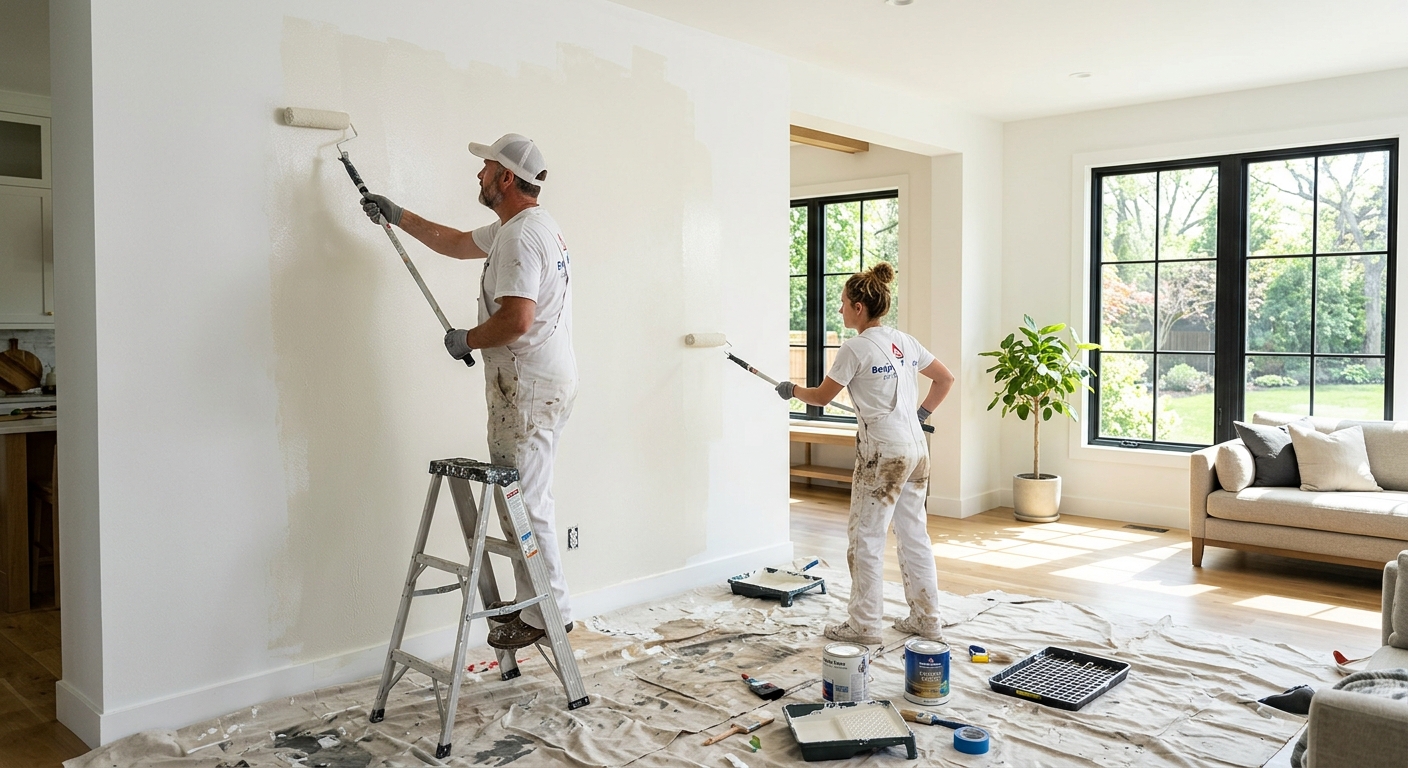
Painting options and costs in Chase
In Chase, BC, painting projects range from quick touch-ups to full home transformations, and the right option depends on your surfaces, timeline, and how much prep is required. With 49.4% of homes built before 1981 in the area (Statistics Canada, 2021 Census), many residents are repainting older siding, trim, or interior walls that have accumulated chalking, hairline cracking, and multiple paint layers. That matters because prep—scraping, sanding, patching, caulking, and priming—often takes longer than the actual rolling and spraying. For pre-1978 trim or exteriors, responsible pros also plan for potential lead-safe work practices, which can add labour and cleanup time.
Chase sits in the Thompson–Okanagan market, where exterior painting demand is tightly shaped by weather. In higher-elevation communities and the broader interior region, crews typically book exterior work in the late spring to early fall window when surfaces are reliably dry. That compressed season concentrates demand, so exterior rates can rise in peak summer or when jobs run short on schedule. Around town, neighbourhoods near the Central Plateau and along busy corridors (including areas people refer to as “downtown Chase”) tend to see steady walk-up interest in interior refreshes between exterior jobs.
Below is a practical cost comparison to help you match scope with budget. Use it alongside an on-site inspection—because in Chase, two “same-size” jobs can differ sharply once we assess condition and access.
| Service |
What's Included |
Typical Duration |
Price Range |
| Interior — whole home (walls, ceilings, trim) |
Surface cleaning/degreasing, patching, sanding (as needed), caulking, primer on repaired areas, 2 coats of topcoat, tape/protect floors & fixtures, basic spot-issues touch-up at close-out |
4–10 days (depends on size and repairs) |
$2,500–$6,000 |
| Interior — per room (standard bedroom or living room) |
Prep and protection, patch/sand small defects, prime if required, 2 coats on walls and ceiling, light trim touch-up (or full trim if included in quote) |
1–3 days |
$450–$1,800 |
| Exterior — full house (siding, trim, soffits) |
Pressure-wash or cleaning plan, scrape/sand loose paint, caulk joints, stain-blocking or adhesion primer where needed, 2-coat exterior system, protection of landscaping/windows, minor wood repairs if scoped |
5–14 days (weather and prep drive timeline) |
$3,000–$10,500 |
| Exterior — trim and accent colours only |
Cleaning, scrape/sand required areas, spot-prime, 2 coats on trim/accents, caulking at painted joints, protection and cleanup |
2–6 days |
$1,200–$4,800 |
| Kitchen cabinet painting (doors, frames, spray finish) |
Degrease, light abrasion, sanding, priming, spray finish on doors, back-rolling as needed, hardware removal and re-install, protective coverings for counters/floors |
5–12 days (including dry/cure time) |
$1,200–$4,500 |
| Specialty / faux finish (accent wall, texture) |
Surface prep for the specific technique, application of specialty product, multiple passes to match finish level, colour mixing, final protective topcoat where appropriate |
1–5 days |
$450–$3,600 |
Prices are estimates only and vary by project scope, site access and material selection.
What affects the price of painting in Chase
In Chase and across the Thompson–Okanagan region, you can see the same “paint the house” request come back with quotes that vary by about 30–50%. That range isn’t just guessing—it’s typically the difference between minimal prep versus restoration-level prep, plus scheduling pressure during the exterior season. Interior work can also swing in price depending on ceiling height, how many coats are required, and whether trim and doors are included.
Exterior painting is especially climate-bound. In the Thompson–Okanagan interior, exterior work is usually most practical when daytime temperatures are consistently above freezing and the surfaces are dry. That narrow late-spring to early-fall window concentrates demand in summer, so exterior crews can price higher when they’re booked solid. In coastal BC, the season can be longer but humidity and intermittent rain often push contractors toward mildew-resistant primer and topcoats, with careful scheduling to prevent adhesion issues. The net effect is similar: weather controls labour time, and labour time controls cost.
Older housing stock throughout the region drives a second cost driver. With 49.4% of homes built before 1981 (Statistics Canada, 2021 Census), repainting often means more than two coats of paint—more scraping, caulking, and priming. Prep can represent 50–70% of labour on repaints, which is why an “interior refresh” at a mid-range price can climb toward the upper end if patching and priming expand. For example, a typical room repaint might land around the mid interior band near $450–$1,800 per room, but a full interior home job can quickly move from entry-level to upper-tier once ceilings, trim, and repairs are included—matching why interior whole-home estimates commonly run within the $2,500–$6,000 band.
In Chase specifically, cost also shifts based on height and access (scaffolding or lifts), paint adhesion history, and whether you need lead-safe work planning for pre-1978 surfaces. A little extra containment and HEPA cleanup can add cost, but it protects your household and helps the job stay compliant with best practices.
| Price Factor |
Why It Matters |
Cost Impact |
| Surface prep — scraping, sanding, patching drywall or wood |
Prep determines adhesion and how smoothly finish coats level out |
Often +20% to +60% versus “minimal prep” quotes |
| Number of coats — 2-coat system over primer vs. 1 coat over existing |
Coverage and durability depend on correct layering |
Can shift pricing by 10%–30% |
| Paint quality tier — contractor-grade vs. premium (Benjamin Moore, Sherwin) |
Premium systems typically hide better and resist scuffing/chalking |
Material price changes, often +5% to +20% total |
| Ceilings and trim — adds significant time vs. walls-only |
Ceilings require edge control; trim needs careful masking and detail work |
+15% to +40% on interior scopes |
| Exterior season window — short season raises summer rates |
When weather cooperates, crews are booked and labour is tighter |
Can add +10% to +35% on exterior projects |
| Lead-safe precautions — required for pre-1978 homes with lead paint |
Containment, HEPA vacuuming, and disposal increase labour and equipment |
May add +10% to +50% depending on extent of disturbance |
| Surface material — drywall vs. plaster vs. wood vs. stucco |
Porosity and movement affect primer choice and prep intensity |
Often +10% to +30% based on substrate condition |
| Height and access — multi-storey exterior requires scaffolding or lifts |
Access equipment increases setup time and safety requirements |
Can add +15% to +45% for two-storey work |
Permits & regulations in British Columbia
In British Columbia, painting typically does not require a permit. Where rules matter most is health and safety planning, not municipal approval. For homes built before 1978, guidelines recommend testing for lead paint before sanding, scraping, or using tools that create dust. If lead is present, standard professional lead-safe work practices include wet methods to reduce airborne dust, HEPA vacuuming, careful containment when needed, and proper disposal of debris. This isn’t legally mandated for homeowners in the same way it is for contractors, but it is common best practice in the trade, and it’s the approach I recommend in Chase to protect your family and avoid mess settling in vents and carpets.
Also confirm your contractor carries proper insurance. Painting workers should have liability insurance, and workers’ compensation coverage through the appropriate system for BC employers (often referred to as WCB in Canada). Ask for a certificate of insurance and ensure the policy covers the work being performed at your address.
Step-by-step, here’s how a homeowner in Chase can verify credentials:
- Ask the contractor for their liability insurance certificate (you can request it by email before the job starts).
- Ask how their workers’ compensation coverage is handled; request confirmation for the work crew that will be on site.
- Get the written contract with paint brand, sheen level, number of coats, and which prep steps are included.
- If lead-safe work is relevant, ask whether they will use wet methods and HEPA cleanup if they disturb pre-1978 coatings.
- Confirm start date and completion estimate in writing so schedule changes don’t become “scope changes.”
Interior vs exterior painting — getting the best result in Chase
In Chase’s Thompson–Okanagan climate, the difference between a long-lasting job and a premature failure usually comes down to preparation, correct sheen/product choices, and how the work matches the season. For interiors, the topcoat brand is important, but surface prep is more important: filling holes and cracks, sanding to smooth repairs, and priming areas that are porous or exposed. If you skip primer on patched drywall, you often get flashing, uneven sheen, or faster scuffing in hallways and kitchens.
Sheen choice matters too. In kitchens and family rooms, satin or eggshell on walls typically withstand cleaning better than flat paint. On ceilings, a flat or ceiling paint is common, but the key is still even coverage and proper prep at edges. In most cases, two coats over a suitable primer system outlast one thick coat, because the film forms more evenly and holds its uniform finish longer.
For exteriors, BC conditions make caulking and primer type critical. Caulk painted joints before the final paint system so water pathways are blocked—especially around trim, corners, and transitions. Primer selection should match the substrate (wood vs. fibre cement vs. previously painted surfaces), and product performance should account for local mildew risk. In Chase, that means using exterior systems that are built for interior-BC weather swings: solid adhesion, temperature-stable application, and resistance to mildew staining where moisture lingers.
Cabinet painting is a smart alternative to replacement when boxes are solid and the existing finish is stable. A good spray finish can refresh your kitchen without the cost of new cabinetry, but it’s still prep-heavy: degreasing, abrasion, priming, and careful dry time. If your home is pre-1978, build lead-safe precautions into the plan for any sanding or scraping on trim that could contain lead-based coatings.
To put it in dollars: spending the extra labour to prep and prime repaired drywall can be the difference between a basic interior room repaint and a properly leveled finish. When a per-room job sits in the $450–$1,800 band, that higher end is often justified by patching, priming, trim detailing, and more time to ensure the sheen looks uniform—not by “buying expensive paint” alone.
| Project Type |
Key Prep Step |
Recommended Coats |
Price Band |
| Interior — fresh drywall (new construction) |
Prime bare drywall and sand for even texture before topcoat |
1 coat primer + 2 coats topcoat |
$650–$2,400 |
| Interior — repaint (good condition, no repairs) |
Clean, scuff-sand lightly, and tape/protect for crisp edges |
2 coats topcoat over properly prepared surface |
$450–$1,800 |
| Interior — repaint (patching and priming needed) |
Patch, sand smooth, and spot-prime repairs to prevent flashing |
Spot primer + 2 coats topcoat |
$700–$2,900 |
| Exterior siding (wood or fibre cement) |
Scrape loose paint, caulk joints, and use adhesion primer where needed |
2 coats exterior system (primer as required by prep) |
$3,000–$10,500 |
| Exterior trim and accents only |
Clean and spot-prepare for adhesion; don’t skip caulking at joints |
2 coats on trim/accents (spot-prime as needed) |
$1,200–$4,800 |
| Kitchen cabinets (spray finish) |
Degrease thoroughly, abrade, prime, then spray doors for uniform finish |
Primer + 2 finish coats (system-dependent) |
$1,200–$4,500 |
How to choose a painting contractor in Chase
Choosing the right painter in British Columbia starts with verification and documentation. First, ask about licensing and insurance. While many residential painting jobs don’t require a “construction permit,” a reputable contractor should still provide proof they can operate safely and responsibly on your property. Verify liability insurance by requesting a certificate of insurance that lists your contractor and shows coverage amounts. Then confirm workers’ compensation coverage (WCB coverage) for their employees—ask for confirmation that applies to the crew performing the work in Chase.
Get 2–3 itemised written quotes. A good quote separates labour and materials and states what’s included in prep: cleaning, scraping, sanding, patching, caulking, priming, and how many coats. Be especially careful with exclusions—ask whether window/door detailing, disposal of paint and debris, and protective masking is included. Also check whether there’s a lead-safe plan for pre-1978 coatings if your exterior or trim may be disturbed.
Warranty is another differentiator. Ask for (1) workmanship warranty length and what it covers (peeling, adhesion failure, rework timelines), (2) product/manufacturer warranty details, and (3) whether the warranty is transferable to future owners if you sell.
Payment schedule matters. Never pay more than 10–15% upfront. Hold back payment until the job is complete, cleaned, and touch-ups are verified. Finally, request timeline details in writing: start date, estimated completion, and what triggers rescheduling (weather, cure time, material lead times).
- Confirm liability insurance certificate before work begins.
- Ask for workers’ compensation (WCB) confirmation for the painting crew.
- Request 2–3 itemised quotes (labour + materials), not one lump-sum.
- Ensure the quote specifies paint brand, sheen, and exact number of coats.
- Verify prep scope: cleaning, scraping, sanding, patching, caulking, priming.
- Ask whether disposal and dumpster/hauling are included.
- Confirm how windows, landscaping, and siding are protected.
- Clarify if trim work is included (doors, baseboards, casing edges).
- Get the schedule in writing, including weather-based contingencies for exterior work.
- Ask about lead-safe practices if your home has pre-1978 surfaces.
- Review warranty terms in writing, including workmanship and how claims are handled.
- Set payment milestones with a holdback until final walkthrough and touch-ups.
Red flags I commonly see around Chase include: quotes that skip scraping/sanding and rely on “one-coat coverage,” refusal to provide insurance proof, vague scope wording like “prep as needed” without details, high upfront deposits beyond 10–15% with no written milestones, and warranties that cover product defects but not workmanship (or don’t specify duration).
Frequently asked questions — painting in Chase
How much does interior painting cost per room in Chase?
In Chase, per-room interior painting typically falls into a mid-range band of about $450–$1,800 depending on condition and scope. If the room is in good shape—clean walls, minimal repairs, and straightforward masking—quotes often land closer to the lower end. If there’s patching, new drywall sections, staining issues, or extra trim work, expect the upper end because prep and priming take time. With many local homes showing older construction patterns (49.4% built before 1981, Statistics Canada, 2021 Census), repainting can involve more patching and spot-priming than people expect. For best accuracy, ask for an itemised quote that breaks out repairs and priming separately.
When is the best time for exterior painting in Chase?
For exterior painting in Chase and the broader Thompson–Okanagan interior, the best time is usually late spring through early fall—when temperatures stay reliably above freezing and surfaces dry out consistently between morning dew and afternoon heat. In this region, exterior work demand is compressed into that window, so summer scheduling can carry premiums if crews are booked. Plan ahead: a quote in winter or early spring often gets you a better slot, especially if you want a full house repaint. Weather-driven delays are common, so choose a contractor who schedules responsibly around drying time and respects cure windows for adhesion and durability.
How many coats of paint do I need?
Most interior repaints in Chase are done with 2 coats of topcoat over proper prep. If you’re painting fresh drywall or have patched areas, you typically need primer first—often 1 coat primer plus 2 coats topcoat. For exteriors, the normal approach is a 2-coat exterior system, but primer or adhesion-promoting primer may be required depending on what you find during prep (loose paint, stains, chalking, or substrate changes). The exact number of coats can change if you’re covering a drastic colour shift or dealing with repairs, but a professional should explain the layering plan in writing. As a reference point, interior whole-home estimates often land within the $2,500–$6,000 band when priming and full coverage are included.
What paint is best for Chase's climate?
For British Columbia’s interior conditions around Chase, the “best” paint is the right system for the surface, not a single magic product. On interiors, choose a wall sheen based on room use—often eggshell or satin for living areas and kitchens because they resist scuffs and clean better. For exteriors, pick products rated for adhesion and mildew resistance where moisture can linger, and ensure primers are matched to the substrate (wood vs. fibre cement vs. previously painted surfaces). Because Thompson–Okanagan scheduling is weather-sensitive, contractors also consider temperature-stable application windows and dry times between coats. If your home has older trim and could include pre-1978 coatings, ask about lead-safe work practices before sanding or scraping.
How long does exterior paint last here?
Exterior paint life in Chase varies widely based on surface prep, material type, sun exposure, and how well caulking and primer were handled. When prep is thorough—scraping loose paint, addressing adhesion issues, caulking joints before painting, and applying the right primer—many homeowners see multi-year durability rather than quick failure. When prep is rushed, early peeling or blistering can appear sooner, especially if moisture paths weren’t sealed. The Thompson–Okanagan interior also has a tight practical exterior season, so rushing application during suboptimal conditions increases risk. If your home is older—remember 49.4% were built before 1981 (Statistics Canada, 2021 Census)—expect that repainting often needs more labour to stabilize the surface before finish coats, which supports longer-lasting results.
Should I paint or replace my cabinets?
In many Chase kitchens, painting cabinets is the better value when the cabinet boxes and doors are still solid and aligned. Replacement is expensive and creates more demolition and dust. Cabinet painting—especially with a proper spray finish—can refresh the look at a fraction of full replacement cost, provided the contractor does the hard prep: degreasing, abrasion, priming, and controlled dry time. Typical cabinet painting budgets often sit in the $1,200–$4,500 band depending on number of doors/drawers, finish level, and how much repair and sanding is needed. Choose painting when the existing structure is usable; choose replacement when boxes are damaged, swollen, or the hardware layout makes repainting impractical.