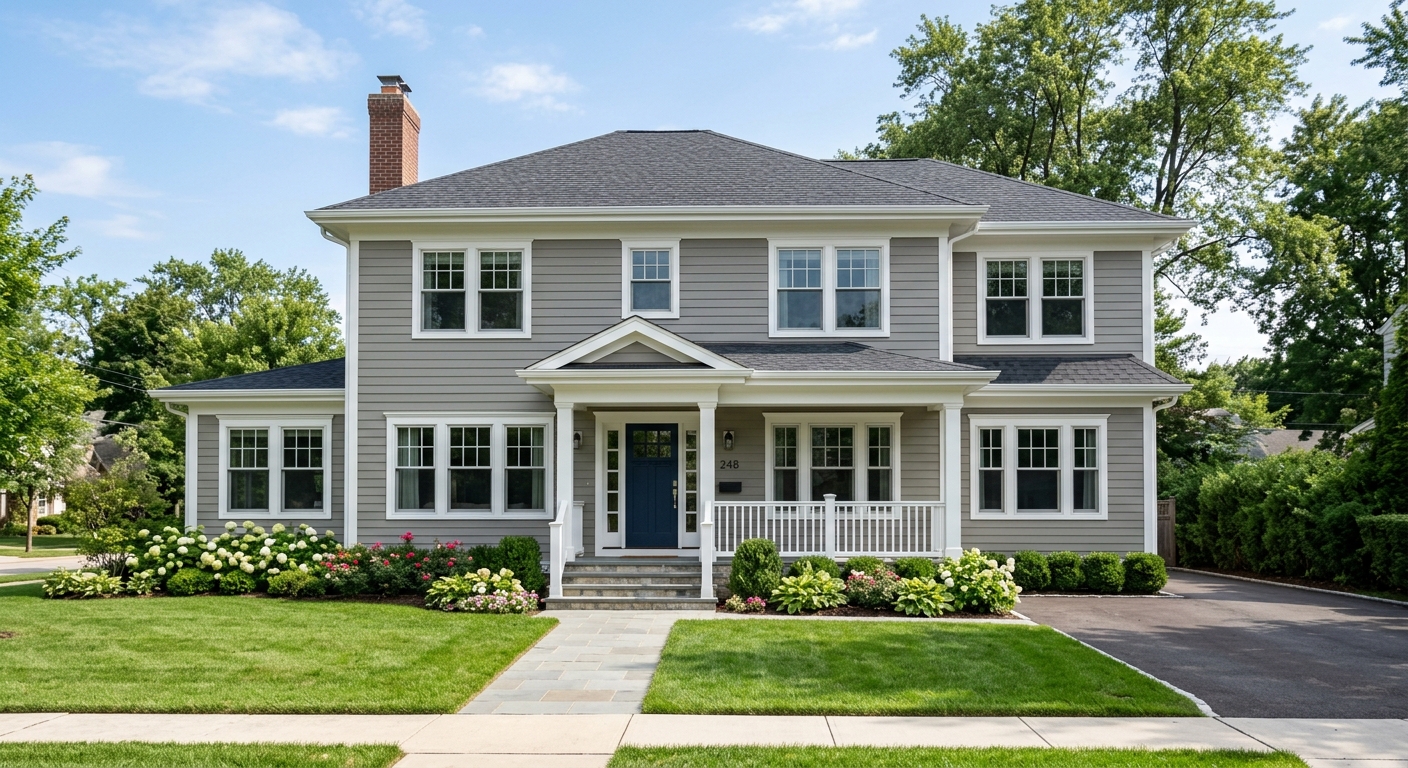
Painting options and costs in Thunder Bay
Thunder Bay homeowners have a lot of choice in paint systems, but the cost can swing quickly depending on how much prep and detail work your place needs. With 72.9% of homes built before 1981, many projects start with scraping and repair work rather than “just rolling paint,” and older trim/windows may require lead-safe work practices when surfaces contain lead-based paint. That prep intensity is one reason homeowner households—32,765 of them—often plan painting as part of broader maintenance cycles (Statistics Canada, 2021 Census).
In Northwest Ontario, pricing is also shaped by a tight exterior schedule. Most exterior work needs to be finished in a relatively short warm-weather window—typically late spring through early fall—when temperatures are consistently high enough for proper application and curing. Scheduling is competitive, especially in neighbourhoods with older housing and lots of curb appeal refreshes, such as Westfort, where detailed trim and siding repainting is in steady demand.
Inside the home, the season matters less because you’re not waiting on drying temperatures outside, so interior projects usually fit more predictably into the calendar. Still, two homes with the same square footage can land in different price bands because surface condition, coat count, and the amount of trim and ceilings change labour time. To give you a realistic starting point, the table below compares common project types and the typical timeframes contractors plan for in Thunder Bay.
| Service |
What's Included |
Typical Duration |
Price Range |
| Interior — whole home (walls, ceilings, trim) |
Prep (patch/sand where needed), prime as required, caulking, 2 finish coats, protect floors and furniture, clean-up |
5–10 days |
$4,000–$8,000 |
| Interior — per room (standard bedroom or living room) |
Prep for typical wear, spot-priming, 2 finish coats, cut-ins and trim touch-up as scoped |
1–3 days |
$900–$2,200 |
| Exterior — full house (siding, trim, soffits) |
Wash/degrease, scraping/sanding, repair/caulking as needed, prime bare/weathered areas, 2-coat finish system |
7–18 days |
$3,500–$10,000 |
| Exterior — trim and accent colours only |
Surface prep to prep points, prime where required, 2 finish coats for accents/trim |
3–10 days |
$1,800–$6,000 |
| Kitchen cabinet painting (doors, frames, spray finish) |
Degrease/decontaminate, sanding/sizing, spot prime, spray finish on doors, hardware masking, install back |
5–14 days |
$1,500–$4,000 |
| Specialty / faux finish (accent wall, texture) |
Surface prep and leveling as needed, texture/faux application, topcoat for durability, protective finishing |
1–7 days |
$800–$5,000 |
Prices are estimates only and vary by project scope, site access and material selection.
What affects the price of painting in Thunder Bay
For the same-looking job, quotes in Thunder Bay and the wider Northwest can vary by 30–50% because contractors price risk: what they discover after prep, how much access they’ll need, and how long cures/conditions will keep them waiting. In Ontario and Alberta, the exterior window is usually late May to early October—temperatures must be above 10°C and rising during application, and coatings need time to set before cold snaps. Coastal British Columbia differs: there, frequent rain and higher humidity extend timelines and often push crews toward mildew-resistant products and more careful staging, which raises material and labour in a different way. Either way, weather dictates availability and labour cost.
Another major driver is older housing stock. Across the Northwest, many homes are older than late-1980s builds, which typically means more prep: scraping failing coatings, sanding, caulking, repairing wood or stucco, and spot-priming. On repaints, surface preparation can account for roughly 50–70% of total labour depending on how sound the existing finish is. That’s why two houses “both need an exterior repaint” can land far apart—one only needs caulking and a paint system, while another needs aggressive prep and additional primer to stop adhesion failures.
Concrete examples from Thunder Bay: (1) If your siding is peeling in multiple sections, labour jumps because every failing edge has to be sanded back to sound substrate, not just painted over. (2) If you’re adding trim colours on a one-and-a-half-storey home, scaffolding time can add days—pushing projects from the mid interior band (for example, approaching $4,000–$8,000 for a whole home) toward higher ends when ceilings and trim are included. (3) For kitchen cabinets, choosing a spray finish is worth it when you want a uniform look, but it costs more than rolling because of masking, ventilation, and door-by-door prep.
| Price Factor |
Why It Matters |
Cost Impact |
| Surface prep — scraping, sanding, patching drywall or wood |
Prep determines adhesion and long-term durability; older surfaces often need more repair. |
Often +20–60% depending on failures and patching |
| Number of coats — 2-coat system over primer vs. 1 coat over existing |
Correct systems cover better and resist peeling, chalking, and colour fade. |
Can change the job by ~10–25% |
| Paint quality tier — contractor-grade vs. premium (Benjamin Moore, Sherwin) |
Premium lines often spread better, last longer, and handle temperature/humidity swings. |
Typical +5–20% for materials |
| Ceilings and trim — adds significant time vs. walls-only |
Ceilings and detailed trim increase cut-in time, masking, and sanding/priming. |
Usually +15–40% vs. walls-only |
| Exterior season window — short season raises summer rates |
Fewer weeks for exterior crews mean higher demand and tighter scheduling. |
Can add +10–30% vs. shoulder-season work |
| Lead-safe precautions — required for pre-1978 homes with lead paint |
Safe containment, HEPA methods, and special cleanup add labour and disposal costs. |
Can add +10–40% depending on findings |
| Surface material — drywall vs. plaster vs. wood vs. stucco |
Each material needs the right primer and prep to prevent flashing or adhesion failure. |
Commonly +5–25% |
| Height and access — multi-storey exterior requires scaffolding or lifts |
Access gear increases setup time, safety steps, and protection requirements. |
Can add +15–50% on exteriors |
Permits & regulations in Ontario
In Ontario, painting typically does not require a permit for residential work—there’s usually no city permit required to paint an interior or repaint an exterior. What does matter is lead-safe practice for homes built before 1978. In Thunder Bay, where a large share of the housing stock is older, professionals often test or assume potential lead risk on trim, windows, and exterior facings, then follow lead-safe work practices if lead is present. This isn’t something homeowners are legally forced to do, but it is standard practice for contractors because it reduces exposure and controls dust during scraping and sanding.
Step 1 for verifying a contractor: confirm they carry liability insurance. Ask for a Certificate of Insurance and check that it’s current and includes residential construction work. Step 2: confirm workers’ compensation coverage—WSIB/WCB—so you aren’t stuck if someone is injured on-site. Step 3: make sure the scope is written clearly: paint brand, sheen, number of coats, prep included (scrape/sand/prime/caulk), and what’s excluded (removal of heavy rot, structural repairs, replacement siding, disposal). A detailed written contract helps prevent “quote creep.”
Also insist on start and completion dates, and confirm disposal of debris and masking materials is included. If lead-safe containment is required, ask how dust control is handled (wet methods, HEPA vacuuming, sealed containment areas) before work begins.
Interior vs exterior painting — getting the best result in Thunder Bay
The difference between a long-lasting paint job and a premature failure in Thunder Bay is mostly prep quality and correct systems—not just the topcoat brand. For interiors, surface prep is the foundation: filling nail pops and cracks, sanding smooth, and priming where stains, repairs, or uneven patches are present. Sheen matters too. In living areas and bedrooms, many homeowners do well with eggshell or satin on walls; kitchens and bathrooms typically need more scrub resistance. The big rule I follow: two proper coats over the right primer system outlast one thick coat—especially on patchwork or areas with previous stains.
For exteriors, Thunder Bay’s cycle of freeze-thaw and short application windows makes prep even more critical. Any loose paint needs to be scraped back to sound edges; caulking should be applied before painting so joints seal properly and water ingress is addressed. Primer choice depends on the substrate—wood and bare areas usually require correct bonding primer, and repairs should be primed so finish coats don’t flash through. Since Thunder Bay’s weather isn’t like coastal BC, you don’t automatically need mildew-focused “marine” coatings, but you do need temperature-stable products and a plan that accounts for curing time.
Cabinet painting is a smart, budget-conscious option compared to replacement. If you want the look of new cabinets, a spray finish is often justified because it’s more uniform than brushing, and it costs less than full replacement. For an honest cost example: if an exterior full-house repaint lands closer to $3,500–$10,000, a trim-and-accent refresh may bring the visual upgrade down into the lower range—while still keeping the underlying prep honest.
For pre-1978 homes, lead-safe precautions should be planned into the timeline, because containment and dust control can change how fast a crew can safely progress.
| Project Type |
Key Prep Step |
Recommended Coats |
Price Band |
| Interior — fresh drywall (new construction) |
Prime entire surface to seal, then caulk seams and sand smooth |
2 finish coats over primer |
$4,000–$8,000 |
| Interior — repaint (good condition, no repairs) |
Wash/scuff-sand where needed, spot-prime any marks |
2 finish coats |
$900–$2,200 |
| Interior — repaint (patching and priming needed) |
Skim/patch, sand, prime repairs and any stain-bleed areas |
2 finish coats over proper primer |
$900–$2,500 |
| Exterior siding (wood or fibre cement) |
Scrape to sound edges, caulk joints, prime bare/weathered areas |
2-coat exterior system |
$3,500–$10,000 |
| Exterior trim and accents only |
Targeted scraping/sanding and spot-priming so adhesion is consistent |
2 finish coats |
$1,800–$6,000 |
| Kitchen cabinets (spray finish) |
Thorough degreasing, sanding for adhesion, and prime for uniform hold |
1 primer + 2 finish coats (typically spray), plus cure time |
$1,500–$4,000 |
How to choose a painting contractor in Thunder Bay
Choosing the right painter in Thunder Bay starts with proof. First, verify Ontario coverage: ask for a current Certificate of Liability Insurance and confirm workers’ compensation (WSIB/WCB). If a contractor can’t provide both, I wouldn’t book them—because if there’s an injury or property damage, homeowners shouldn’t absorb the risk. Next, request 2–3 itemised written quotes, not a single lump sum. A good quote breaks out labour and materials and clearly lists prep tasks (scraping, sanding, patching, priming, caulking), number of coats, and the paint line being used.
Read the scope carefully for exclusions and “gotchas.” Does the quote include disposal of sanding dust/debris? Is permit paperwork included (usually not required for painting, but if anything non-standard is needed, it should be stated)? Are windows/rails/protected surfaces prepped and masked properly? For workmanship, ask for the warranty length and what it covers—peeling, adhesion failures, colour mismatch—and whether the warranty is tied to the homeowner or transferable if you sell.
Payment schedule matters. A homeowner should never pay more than about 10–15% upfront. Hold back the balance until completion and touch-ups are done. Finally, timeline: get the start date and an estimated completion window in writing, especially because Thunder Bay exteriors are weather-dependent and the crew may need to pause during cold/wet spells.
- Request liability insurance and confirm the certificate is current.
- Verify WSIB/WCB coverage for every crew member.
- Get 2–3 itemised quotes (labour + materials), not just a single price.
- Confirm the paint brand and sheen in writing (not “equivalent” only).
- Ask how many coats are included and whether primer is included where needed.
- Review prep scope: scraping, sanding, caulking, patching, and spot-priming.
- Check protection duties: floors, landscaping, railings, and fixtures.
- Confirm disposal and clean-up are included.
- Ask about lead-safe approach for pre-1978 areas (containment, dust control, cleanup).
- Get warranty terms in writing (workmanship + product/manufacturer warranty details).
- Use a safe payment schedule—small deposit, holdback until finish acceptance.
- Require a written timeline and plan for rain/cold delays on exteriors.
Red flags I see too often in Thunder Bay include: a quote that’s only a lump sum with no prep/detail list, refusing to provide WSIB/WCB or liability proof, promising “one-coat coverage” over questionable surfaces, starting without a written contract and clear paint system, and pushing for large upfront payments beyond 10–15%.
Frequently asked questions — painting in Thunder Bay
What colours add the most resale value in Thunder Bay?
In Thunder Bay, resale-friendly colours tend to be timeless and bright enough to handle long winter darkness, without feeling “too trendy” for 2026 style changes. Popular homeowner picks usually include warm whites, soft greiges, and light greys for walls, paired with a cleaner trim white or a slightly cooler trim tone. For accent walls, muted colours (like deep navy, forest green, or clay tones) can work well when used sparingly—especially in rooms with natural light. Because 72.9% of homes here are built before 1981, many buyers expect classic finishes that match older architectural details. That’s why “safe” neutrals often help when you’re selling. If you’re planning to repaint interiors as part of preparation, remember interior whole-home pricing typically falls within $4,000–$8,000.
How much does it cost to paint a house in Thunder Bay?
For Thunder Bay homeowners, “painting a house” can mean very different scopes, so costs vary more than people expect. A full interior refresh for a whole home (walls, ceilings and trim) commonly lands in the $4,000–$8,000 band depending on the number of rooms and the amount of repair/priming required. Exterior repainting for a full house (siding, trim and soffits) typically sits in the $3,500–$10,000 range because Northwest Ontario’s older housing stock often demands intensive prep—scraping, sanding and spot-priming. You also pay for access and weather planning; the exterior season is tightly climate-bound late spring through early fall, so scheduling pressure can push pricing up. Expect more prep costs on older facades and trim, particularly where peeling or failed coatings are present.
How much does interior painting cost per room in Thunder Bay?
Interior painting per room in Thunder Bay depends on ceiling height, the amount of trim, and whether repairs are required. For a standard bedroom or living room in good condition, many projects end up around the $900–$2,200 range when the scope includes prep, cut-ins, and two finish coats. If you’re dealing with patching, staining, or significant sanding/priming, quotes can move closer to the upper end because primer and labour time increase. The main cost driver is prep—filling, sanding, priming repairs, and creating a smooth surface for the topcoat. With older homes being common across the region (and many homes built well before the late 1970s), plan for more time spent on patching and spot-priming than you’d see in brand-new drywall installs.
When is the best time for exterior painting in Thunder Bay?
The best time for exterior painting in Thunder Bay is when temperatures stay reliably above 10°C and rising during application, with enough time for coatings to cure before cold or damp weather. Practically, that means late spring through early fall—typically from late May into September, depending on conditions. If you paint too early (or right before a cold/wet stretch), you risk poor adhesion, long drying times, and premature failure. Because exterior demand is compressed into a short window across Northwest Ontario, scheduling can tighten, especially for detailed work like trim and multi-storey elevations. If you’re planning a repaint on siding and trim, I recommend booking while crews are available—rather than waiting for a “perfect week,” because that’s when availability and pricing can shift.
How many coats of paint do I need?
For most painting projects in Thunder Bay, the standard is a two-coat finish system, with primer included where the substrate requires it. A common failure pattern is “one coat over old paint” when coverage isn’t adequate or when repairs weren’t sealed with primer. For interiors, two finish coats over a correct primer generally gives the most uniform look and better durability—particularly in patched areas. For exteriors, two coats over primer is essential for even colour and protection against Ontario’s freeze-thaw cycles. If you’re budgeting, it helps to view your quote in terms of the full system. Exterior full-house painting typically sits in $3,500–$10,000, and the higher cost usually reflects the prep and primer necessary to justify proper coat counts, not just extra product.
What paint is best for Thunder Bay's climate?
For Thunder Bay, the “best paint” is the one built for exterior protection and the right temperature window for application, applied over the correct primer and prep. In our climate, the biggest risks are adhesion issues, moisture getting into failed coatings, and breakdown during freeze-thaw. That’s why choosing a durable exterior line matters, but prep matters more: scrape back loose paint, prime bare/weathered areas, caulk joints, and use products compatible with your substrate (wood, fibre cement, and patched areas). While mildew-resistant coatings are more critical in coastal, high-humidity conditions like British Columbia, Thunder Bay still needs a proper exterior system designed for Ontario weather swings. If you’re doing a trim refresh and want longevity without overbuilding your budget, targeted exterior trim work may fit within the lower part of $3,500–$10,000 depending on scope and prep severity.