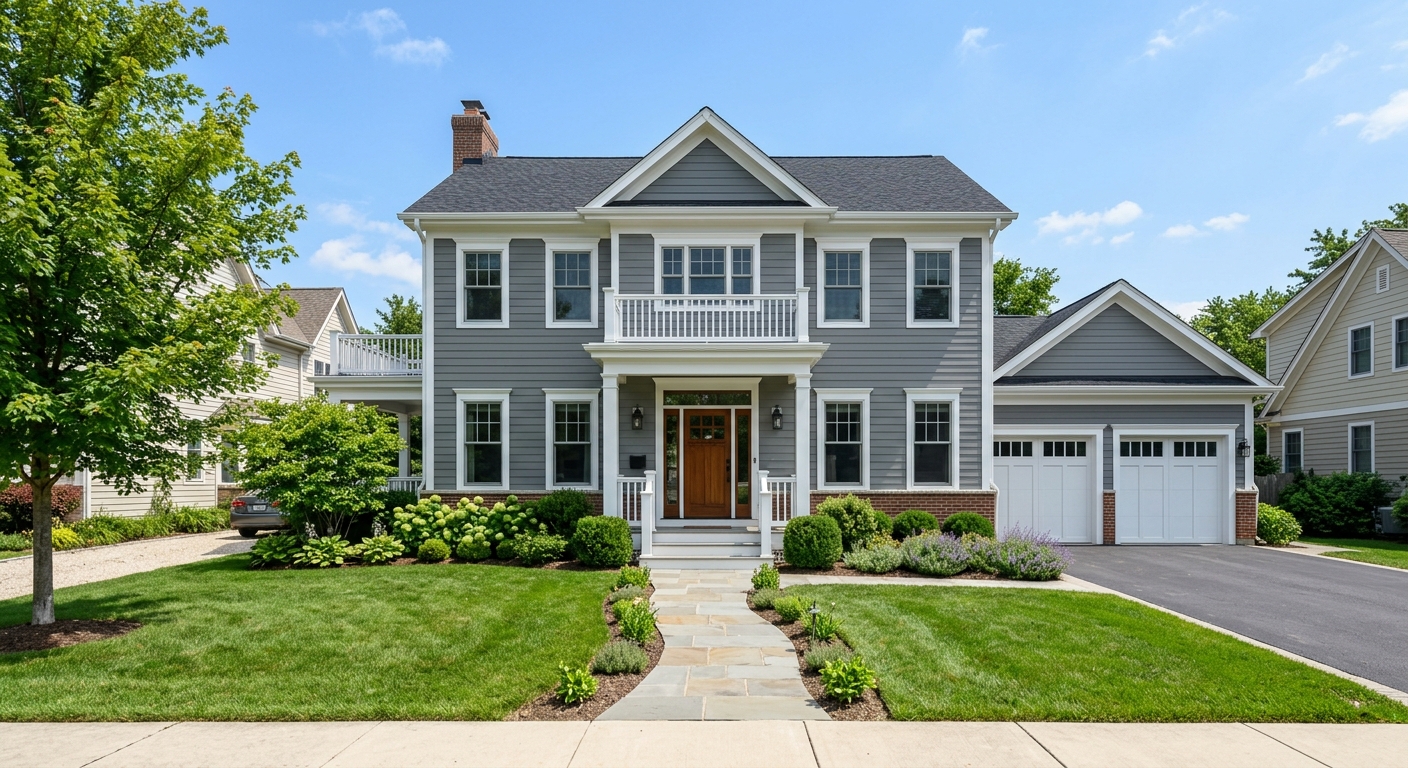
Painting options and costs in Pembroke
Pembroke homeowners typically have a few clear painting paths: interiors, exteriors, and specialty work like cabinets or faux finishes. In Pembroke’s housing stock, many homes are older—73.3% were built before 1981—so expect more surface prep (scraping, patching, caulking, and priming). That matters because pre-1978 surfaces may also trigger lead-safe work practices if existing paint is present, even when permits aren’t required for painting in Ontario. In 2021, Pembroke had 14,364 people and 3,780 homeowner households (57.8% of households own), which keeps steady demand for repainting between spring and fall.
In the Kingston–Pembroke market, exterior pricing is shaped by Ontario’s shorter, warmer application window: crews usually aim for late May through early October when temperatures stay above 10°C and surfaces can dry properly between coats. Because older homes are common, labour often shifts from “painting” to “getting the surface ready,” and that can push exterior projects into the upper end of the regional bands. Around Pembroke, the trade is especially busy in areas with established housing and active turnover, including the west end and near the downtown core, where many homes are older and multiple coats or trim repairs are common.
If you’re comparing quotes, use the ranges below as your first filter—then match your scope (repairs, prep level, materials, and access) to what you’re being sold.
| Service |
What's Included |
Typical Duration |
Price Range |
| Interior — whole home (walls, ceilings, trim) |
Move-protect, prep/patch, prime where needed, paint walls/ceilings, caulking at trim/wet areas, brush/roll finish on trim |
4–10 days |
$1,500–$7,000 |
| Interior — per room (standard bedroom or living room) |
Protect floors, prep/patch, prime as required, 2-coat paint system on walls, light trim touch-ups |
1–3 days |
$1,200–$3,500 |
| Exterior — full house (siding, trim, soffits) |
Pressure wash (as needed), scrape/sand, patch wood, caulk, prime bare areas, 2-coat exterior system, detail work on trim/soffits |
1–3 weeks |
$3,000–$10,000 |
| Exterior — trim and accent colours only |
Prep targeted to trim, scrape/sand affected areas, caulk gaps, prime spots, 2-coat finish on trim/accents |
3–7 days |
$1,800–$6,500 |
| Kitchen cabinet painting (doors, frames, spray finish) |
Remove/label doors, degrease, sand/prime, spray cabinet system (or equivalent), re-install hardware as applicable, touch-up after curing |
5–14 days |
$1,200–$4,500 |
| Specialty / faux finish (accent wall, texture) |
Design prep/colour testing, surface sealing, texture or faux application, protective topcoat where required |
2–7 days |
$2,000–$8,000 |
Prices are estimates only and vary by project scope, site access and material selection.
What affects the price of painting in Pembroke
In Kingston–Pembroke, it’s common to see quotes for the same “type” of job differ by 30–50%. The reason usually isn’t the paint brand—it’s the prep intensity, how many coats are truly included, what’s being repaired, and how risk is managed on older homes. When two contractors quote “exterior repaint” but one includes full scraping, caulking and spot priming while the other only paints over sound surfaces, the difference can quickly land in the thousands.
Seasonality also tightens scheduling. Exterior painting tends to run from roughly late May to early October in Ontario, with work needing temperatures above 10°C and reliable drying time between coats. When crews are fully booked in summer, labour rates can rise even if your house doesn’t look “hard.” By contrast, coastal regions can have longer calendars but deal with humidity and rainfall, which is why mildew-resistant products and timing become non-negotiable. In Pembroke, we’re often balancing short weather windows with older siding and trim that need more labour—surface prep can be 50–70% of total labour on repaints.
Two practical Pembroke examples: (1) a brick/wood transition line with deteriorated caulking often increases time because gaps must be cleaned and filled before priming and finish coats; skipping that step risks early peeling. (2) repainting over stained, chalky older trim typically forces a better bonding primer and more sanding—so even staying within the “low thousands” exterior band can move toward the upper end if primer and scraping are extensive.
That’s why an interior whole-home scope may land anywhere from the lower end of the interior band to the top end (for ceilings, trim, and multiple rooms), and why an exterior job can shift within the exterior band based on repairs, height/access, and prep.
| Price Factor |
Why It Matters |
Cost Impact |
| Surface prep — scraping, sanding, patching drywall or wood |
Determines adhesion and longevity; often where labour time goes |
Can swing 20–40% of labour cost |
| Number of coats — 2-coat system over primer vs. 1 coat over existing |
Coverage and durability depend on correct layering |
Often +$300–$1,500+ depending on size |
| Paint quality tier — contractor-grade vs. premium (Benjamin Moore, Sherwin) |
Hiding, washability, and block resistance vary by tier |
Typical delta of a few hundred to >$1,000 |
| Ceilings and trim — adds significant time vs. walls-only |
Ceilings and trim require more masking, cutting-in, and detail work |
Can add 10–30% to the job |
| Exterior season window — short season raises summer rates |
Higher demand for limited weather-appropriate days |
May increase labour pricing in peak weeks |
| Lead-safe precautions — required for pre-1978 homes with lead paint |
Safer handling methods take extra time and materials |
Often +$300–$1,200+ |
| Surface material — drywall vs. plaster vs. wood vs. stucco |
Different porosity and prep needs affect primer and repair work |
Can add 5–25% depending on substrate |
| Height and access — multi-storey exterior requires scaffolding or lifts |
Access changes safety, pace, and protective measures |
Can move projects toward the top end of the band |
Permits & regulations in Ontario
In Ontario, painting typically does not require a permit. That said, certain health and safety practices apply—especially for older homes. For homes built before 1978, health guidance recommends testing for lead paint before sanding or scraping, and using lead-safe work practices if lead is present. For professional contractors, that usually means wet methods to minimize dust, HEPA vacuuming, proper containment/cleanup, and compliant disposal. While this is not generally a legal permit requirement for homeowners, it’s the standard approach we use on older Pembroke properties to protect occupants and crews.
Separately, what does require permitting is usually not the paint itself, but related structural or electrical work: for example, permits may be needed if you’re doing window/door replacements, major renovations, or altering electrical systems. Painting-only scopes (interior re-coats, trim repainting, exterior repainting with approved products) typically do not.
When you hire a painter in Pembroke, confirm they carry liability insurance and workers’ compensation coverage (WSIB/WCB). Then ask for: (1) a certificate of insurance showing current coverage, (2) confirmation of WSIB/WCB number, and (3) a written contract that lists paint brand, sheen, number of coats, and the surface prep included.
Step-by-step check: verify the contractor’s registration/licensing details online through Ontario’s consumer/contractor-facing resources (based on the trade and firm), request the insurance certificate directly from the contractor, and ensure the WSIB/WCB coverage is active. If the contractor can’t provide paperwork promptly, that’s a red flag before work begins.
Interior vs exterior painting — getting the best result in Pembroke
In Pembroke’s climate, the difference between a paint job that looks great for a year and one that holds up for many seasons is usually prep and correct product selection—not colour. For interiors, surface prep is the foundation: filling cracks, sanding high spots, removing loose paint, and priming stains or repaired areas. Sheen choice matters too. Flat paint hides wall imperfections but can mark more easily; eggshell and satin usually perform better for living areas and hallways, while semi-gloss on trim withstands cleaning. Also, two coats over a proper primer generally lasts longer than a single “thick” coat, because coverage and film build are consistent across patches and transitions.
For exteriors, Ontario’s freeze-thaw cycles and wet-dry swings put more stress on the coating system. Caulking before painting is critical—clean gaps first, then fill so water can’t track behind trim. Primer type matters for adhesion on wood, previously painted surfaces, and areas where bare material is exposed. In older homes (73.3% pre-1981), there’s often peeling or chalking that needs proper scraping and priming. If lead paint is a possibility, use lead-safe precautions before sanding.
Cabinet painting can be a smart alternative to replacement, especially when you’re keeping the existing layout. A paint-and-spray finish can bring a dated kitchen up to modern look at a fraction of replacement costs, but it only works if cabinets are degreased, sanded, and primed correctly and then protected during curing.
Budget reality example: if a full exterior is quoted in the exterior band (for instance, around $3,000–$10,000), spending an extra amount for more scraping, caulking, and primer at the start is usually justified. Skipping prep to land near the lower end often leads to faster peeling, especially on trim edges where water lingers.
| Project Type |
Key Prep Step |
Recommended Coats |
Price Band |
| Interior — fresh drywall (new construction) |
Seal/dust-free primer to control suction and reduce flashing |
1 prime + 2 topcoats |
$1,500–$7,000 |
| Interior — repaint (good condition, no repairs) |
Clean, light scuff-sand, spot-prime any marks |
2 topcoats (with spot prime as needed) |
$1,500–$4,500 |
| Interior — repaint (patching and priming needed) |
Patching compound cure, sanding, full spot-prime transitions |
1 primer + 2 topcoats |
$2,500–$7,000 |
| Exterior siding (wood or fibre cement) |
Scrape/sand, caulk gaps, prime bare/affected areas |
1 primer spot + 2 topcoats exterior system |
$3,000–$10,000 |
| Exterior trim and accents only |
Remove failing paint, caulk and prime edges/joins |
1 spot-primer + 2 topcoats |
$1,800–$6,500 |
| Kitchen cabinets (spray finish) |
Degrease + proper sanding + bonding primer for adhesion |
1 primer + 2 coats sprayed (with cure time) |
$1,200–$4,500 |
How to choose a painting contractor in Pembroke
Choosing a painter in Pembroke is mostly about verification and clarity. Start with insurance: request the contractor’s liability insurance certificate and confirm the coverage is active. Then check workers’ compensation coverage (WSIB/WCB) so you’re not left responsible if an accident happens on your property. If they can’t provide paperwork within a day or two, move on.
Next, get 2–3 itemised written quotes. You want a breakdown that separates labour and materials, and lists prep tasks (scraping/sanding, patching drywall, caulking, priming) rather than just a single “paint” line. Ask whether disposal is included (drop cloth disposal, sanding dust bags, leftover materials handling) and whether a permit pull is included—painting itself usually doesn’t require it in Ontario, but the contractor should clearly state what they do and don’t handle.
Warranty matters: ask for workmanship warranty length (how long the contractor stands behind peeling, bubbling, or adhesion failures), product/manufacturer warranty details, and whether warranties are transferable to the next homeowner if you sell. For payment schedule, never pay more than 10–15% upfront; hold back a portion until the job is complete and cleaned. Finally, insist on a written timeline with a start date and a completion estimate. On older homes, winter-cured materials and lead-safe prep can add time, so a real schedule should reflect that.
- Verify liability insurance certificate (current dates, correct legal name)
- Verify WSIB/WCB coverage is active before work begins
- Request an itemised quote with prep, prime, coat count, and surface repairs
- Confirm what “2 coats” means (system-based, not just one thick pass)
- Ask which areas are included in trim work (all doors, casing, baseboards, soffits)
- Check whether caulking and sanding failures are corrected as part of scope
- Confirm disposal and cleanup methods (sanding dust containment, vacuuming)
- Ask how colours are tested (sample boards on your walls/exterior)
- Get start date and completion estimate in writing
- Clarify protection: drop cloths, ventilation, and how floors are secured
- Review warranty terms in plain language (duration and coverage)
- Avoid cash-only deals and vague scopes without brand/sheens
Red flags in Pembroke: “paint-over” promises without any scraping/sanding plan on older exteriors, quotes that don’t specify primer or number of coats, no proof of insurance/WSIB/WCB, no written contract with surface-prep and cleanup details, and pressure to pay most of the total upfront.
Frequently asked questions — painting in Pembroke
How do I choose a painting contractor in Pembroke?
Choose a contractor in Pembroke by verifying three things early: liability insurance, workers’ compensation coverage (WSIB/WCB), and a clear, written scope. Request an itemised quote that separates labour and materials and explicitly states surface prep (scraping, sanding, patching, caulking, priming), number of coats, and paint brand/sheens. For older housing—Pembroke has many homes built before 1981—ask how they handle lead-safe practices if there’s older flaking paint. Prices in this region often land inside interior ranges like $1,500–$7,000, so you should expect detail, not just a single total. Finally, confirm a workmanship warranty and a reasonable payment schedule (10–15% max upfront).
How many coats does an exterior repaint need in Pembroke?
In Pembroke’s Ontario climate, an exterior repaint typically uses a 2-coat topcoat system over appropriate primer. The exact primer situation depends on the substrate and what you’re covering: scraped bare areas and patched wood should be spot-primed, and any chalky or stained sections may need a bonding/stain-blocking primer before the finish coat. Most contractors will plan for 1 primer stage (spot or total, based on condition) plus 2 finish coats to ensure full colour uniformity and adhesion through wet-dry cycles. If a quote only includes “one coat,” especially on older homes (73.3% pre-1981), ask for the written paint system and coverage expectations. Exterior budgets often run around $3,000–$10,000 depending on prep and access.
What is the best primer for older Pembroke homes?
There isn’t one primer for every older Pembroke house, but the “best” primer is the one matched to the condition. If surfaces are chalky or have staining, a stain-blocking or bonding primer is usually needed before finish coats. If you’re exposing bare wood or patch compound, you’ll generally need a primer that seals properly so finish paint doesn’t flash or peel at edges. For older homes where lead-paint risk is possible, lead-safe practices should guide how primers and coatings are applied after proper testing/handling—wet methods and HEPA cleanup reduce dust exposure. Your contractor should name the primer type (and where it’s used) in the contract. For context, exterior repaint budgets like $3,000–$10,000 often reflect how much primer is required by prep findings.
Should I paint or wallpaper my Pembroke home?
For most Pembroke homeowners, paint is the safer, more predictable choice, especially when walls have been patched or the home is older. Paint lets you control sheen and washability room-by-room (eggshell/satin in living spaces, semi-gloss on trim). Wallpaper can look great, but it depends heavily on wall flatness, moisture history, and whether seams will remain tidy through temperature swings. If your walls have cracks, uneven drywall tape, or old patch repairs, proper sanding, patching, and priming for paint usually costs less than preparing walls for wallpaper adhesion and seam alignment. If you’re choosing between options, ask for a surface assessment first. In Ontario’s freeze-thaw conditions, exteriors are the bigger stress point—interior decisions should still prioritize prep quality within your interior budget range such as $1,500–$7,000.
How do I fix peeling exterior paint in Pembroke?
Peeling exterior paint is usually a prep-and-adhesion problem, not a colour problem. The correct fix starts with removing loose paint back to sound edges (scrape and sand), cleaning the surface, and addressing the cause—often failed caulking, water intrusion at trim joints, or inadequate primer on chalky surfaces. After that, patching bare spots or damaged wood (if present) should be followed by the right primer type, then 2 properly applied exterior topcoats. Don’t just scrape small flakes and paint over the rest; the paint film can fail again at the boundary. Because Pembroke homes are commonly older (73.3% built before 1981), make sure your contractor follows lead-safe practices if older lead paint is present. Exterior repainting budgets typically start around $3,000–$10,000 once full prep and priming are included.
What colours add the most resale value in Pembroke?
In Pembroke, resale-friendly colours are usually “classic with contrast”: warm whites, soft greiges, and light neutral palettes on large surfaces, with natural-looking trim contrast (for example, crisp white trim against a warmer wall tone). If you’re updating an older home, neutrals help buyers see the architecture instead of focusing on dated colour choices. For accents, choose one controlled feature wall or entry/trim colour rather than colouring every room. In kitchens, cabinet painting in off-whites or light greys often refreshes the space without looking trendy. The best advice is to tie your selections to existing flooring and exterior elements so the colour story feels cohesive. If you’re planning a full interior refresh, costs commonly sit in the $1,500–$7,000 range depending on number of rooms and trim work—so choosing a widely appealing palette helps protect that investment when you sell. (Statistics Canada, 2021 Census)