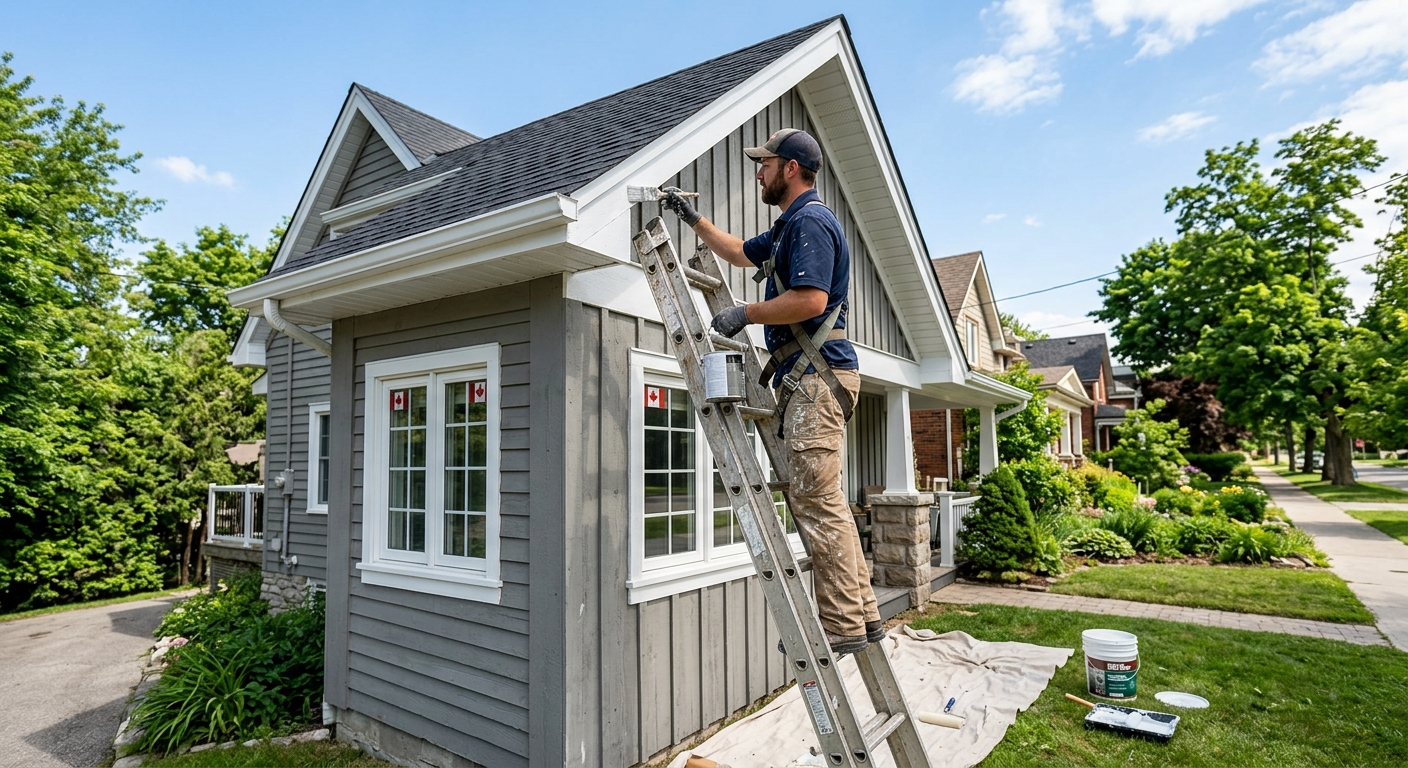
Painting options and costs in Danforth
Danforth homeowners have a wide range of painting options, but the “best” choice usually comes down to prep time and timing—not just the colour on the sample card. With Danforth’s older housing stock (Statistics Canada, 2021 Census), many jobs involve more scraping, patching, caulking, and priming than newer builds. In practice, that extra prep can make the difference between a finish that looks great for years and one that fails early (peeling, flashing, or joint cracking). For pre-1978 homes, professionals also commonly use lead-safe work practices before sanding or scraping—particularly around trim, window components, and railings—so plan for that labour to be reflected in the quote.
In Toronto’s market, exterior painting costs are shaped by a short, climate-dependent season. Contractors typically target late May through June and again September into mid-October, when temperatures stay above about 10°C for proper adhesion and curing. Demand peaks in the June–August window, which often pushes exterior pricing 10–15% higher. Interior painting is less weather-bound and can be scheduled throughout the year, but stairwells, ceiling height, and the level of finish you want still drive labour.
If you’re in the East Danforth or around Greenwood Avenue, you’ll often see crews booked quickly because repainting tends to be concentrated between ideal “dry” weeks. Below are realistic Toronto-region cost ranges so you can compare like-for-like before you book site visits and colours.
| Service |
What's Included |
Typical Duration |
Price Range |
| Interior — whole home (walls, ceilings, trim) |
Move/cover protection, patching and caulking, sanding, 2-coat wall system (with primer where needed), basic trim finish, cleanup and touch-ups |
3–10 days |
$2,000–$6,000 |
| Interior — per room (standard bedroom or living room) |
Prep and masking, patching (as required), primer if needed, 2-coat walls, spot-prime trim, final cleanup |
1–3 days |
$400–$1,500 |
| Exterior — full house (siding, trim, soffits) |
Power washing, scraping/sanding, caulking, spot-priming bare areas, 2-coat exterior system, spot touch-ups, surface protection and cleanup |
5–14 days |
$3,500–$8,000 |
| Exterior — trim and accent colours only |
Targeted prep of trim/sculpted areas, sanding and caulking, primer where required, 2-coat finish on accents |
2–6 days |
$1,500–$4,500 |
| Kitchen cabinet painting (doors, frames, spray finish) |
Degreasing, sanding/scuffing, repairs as required, primer, sprayed lacquer-style finish, installation hardware handling and cleanup |
6–15 days (including cure time) |
$1,800–$4,000 |
| Specialty / faux finish (accent wall, texture) |
Surface leveling/priming as needed, texture or decorative system, 1–2 test sections, protective topcoat, final cleanup |
1–5 days |
$300–$5,000 |
Prices are estimates only and vary by project scope, site access and material selection.
What affects the price of painting in Danforth
In the Toronto area, it’s common to see quotes for the “same” painting job vary by 30–50%. The usual reason isn’t the paint colour—it’s what’s happening before the first coat lands: the hours spent on prep, how many coats are genuinely required, the quality tier of products, and how efficiently the crew can access the job (ladders vs. lift/scaffolding). Labour and scheduling also play a role; when crews are booked solid during the best exterior weeks, availability tightens and costs climb.
Exterior painting is tightly climate-bound in the Greater Toronto Area. Unlike coastal BC (where persistent dampness drives mildew-resistant choices and very careful timing), the GTA’s main constraints are frost, rain, and humidity spikes. Still, the effective work window is limited: roughly late May to early October, with temperatures above about 10°C for proper application and curing. Short ideal weeks concentrate demand, so exterior pricing often runs about 10–15% higher in June–August. On top of that, pre-1980 homes across the region (Statistics Canada, 2021 Census) typically require more scraping, patching, caulking and priming—often 50–70% of total labour on a repaint. That prep burden can move a job from an interior-grade budget to an exterior-grade budget quickly; for example, a “trim-only” refresh might fit around the $1,500–$4,500 range, while a full repaint with heavy prep commonly lands in the $3,500–$8,000 band.
Two Danforth examples that often change the number: (1) older wood soffits and railings that are flaking need more scraping and bonding primer; (2) multi-storey facades around main streets often require lift/scaffold time, adding labour even if the paint count stays the same. If your exterior is mostly sound and the caulking line is intact, costs can come down noticeably; if the paint system is failing across many elevations, costs rise because the prep can’t be skipped.
| Price Factor |
Why It Matters |
Cost Impact |
| Surface prep — scraping, sanding, patching drywall or wood |
Prep determines adhesion and smoothness; damaged areas must be cleaned and levelled. |
Can be 50–70% of labour on repaints; skipping it leads to faster failure |
| Number of coats — 2-coat system over primer vs. 1 coat over existing |
Coverage and durability depend on primer use and coat count. |
Switching to a true 2-coat system typically raises cost but extends life |
| Paint quality tier — contractor-grade vs. premium (Benjamin Moore, Sherwin) |
Premium products often cover better and resist scuffing, staining and colour fade. |
Higher material tier can add cost, but reduces “recoat” risk |
| Ceilings and trim — adds significant time vs. walls-only |
Trim edges and ceilings increase cutting-in, masking and per-square-foot labour. |
Often shifts an interior quote upward even if walls colour stays the same |
| Exterior season window — short season raises summer rates |
Contractors must work around rain/frost and temperature cure windows. |
Scheduling pressure can push costs 10–15% in peak weeks |
| Lead-safe precautions — required for pre-1978 homes with lead paint |
Safe handling increases labour time and disposal requirements. |
May add prep cost on older trim, windows and railings |
| Surface material — drywall vs. plaster vs. wood vs. stucco |
Different substrates need different primers, patching methods and adhesion systems. |
Right primer reduces failures; wrong primer can require redo |
| Height and access — multi-storey exterior requires scaffolding or lifts |
Access affects setup time, safety and productivity. |
Can add significant labour per day on multi-storey elevations |
Permits & regulations in Ontario
In Ontario, painting itself doesn’t generally require a permit for typical residential interior or exterior repainting. The main regulatory “boundary” is health and safety—especially for older homes. For homes built before 1978, health guidelines strongly recommend testing for lead paint before sanding or scraping, and using lead-safe work practices if lead is present (wet methods to reduce dust, HEPA vacuuming, proper disposal, and containment). This isn’t typically something homeowners must complete on their own, but it is standard practice for professional contractors to reduce risk for occupants and workers.
Some work scenarios may trigger permitting requirements indirectly—for example, if your project includes major structural changes or regulated abatement activities beyond normal painting. For straightforward painting, what’s expected is documentation and process, not a paint permit.
When you hire a contractor in Danforth, confirm they carry liability insurance and have workers’ compensation coverage (WSIB/WCB, depending on the arrangement). Ask for a written contract that spells out: paint brand and sheen, the number of coats, surface prep tasks (power washing, scraping, patching, priming and caulking), and what cleanup and disposal are included.
How to verify coverage step-by-step:
- Check the contractor’s listing in the Ontario licensing/registry sources they provide (and verify the exact company name matches the quote and invoice).
- Request a Certificate of Insurance and ensure it’s current and lists the correct insured parties.
- Ask for WSIB/WCB proof (a clearance letter or coverage confirmation) for their workers.
- Confirm subcontractors are covered too—don’t accept “our guy is independent” without proof.
- Make sure the contract matches the site scope you agreed to (prep level is the biggest cost driver).
Interior vs exterior painting — getting the best result in Danforth
Danforth’s climate rewards the basics: thorough prep, correct primer, and timing around Ontario’s moisture and temperature swings. A long-lasting job usually fails only when one step is rushed—most often surface prep and caulking. For interiors, brand matters less than prep discipline: filling, sanding, and priming repaired spots makes the finish uniform. Sheen choice also affects longevity in daily life; flat finishes hide wall imperfections but scuff more, while eggshell or satin tend to balance washability with a clean look. Two coats over a properly primed surface almost always outlast one “heavy” coat because coverage and durability come from correct layering.
For exteriors, the critical difference is that Ontario weather tests the whole system. Caulking before painting helps prevent water ingress behind trim lines and helps stop recurring cracks from showing. Primer type depends on the substrate: sound wood and composite materials may need bonding/adhesion primers, while other surfaces require systems designed for adhesion and stability. In the GTA, you don’t need BC-style mildew product choices by default, but you do need temperature- and humidity-tolerant products that cure reliably during the late May–June and September–mid-October window when temperatures stay above about 10°C for 24–48 hours and rain risk is manageable.
Kitchen cabinet painting is a strong alternative to replacement: it’s often a better value when boxes are structurally sound. It also highlights why prep is everything—degreasing and sanding determine whether the spray finish adheres and stays smooth.
For a specific example: an exterior trim refresh might run around $1,500–$4,500 if prep is light and the caulking lines are intact. If the siding and soffits show widespread flaking and you need more scraping and priming, a full house repaint commonly moves into the $3,500–$8,000 band—because the real work is the prep that creates a stable base.
| Project Type |
Key Prep Step |
Recommended Coats |
Price Band |
| Interior — fresh drywall (new construction) |
Prime all bare drywall and sand for uniform texture |
1 primer + 2 finish coats |
$1,200–$4,000 |
| Interior — repaint (good condition, no repairs) |
Clean and degloss if needed; minimal patching |
2 finish coats |
$400–$2,500 |
| Interior — repaint (patching and priming needed) |
Patch, sand, spot prime repaired areas |
1 spot primer + 2 finish coats |
$800–$6,000 |
| Exterior siding (wood or fibre cement) |
Scrape/clean properly and prime bare spots |
2 finish coats (plus primer where required) |
$3,500–$8,000 |
| Exterior trim and accents only |
Caulk and bond primer on distressed trim edges |
2 finish coats |
$1,500–$4,500 |
| Kitchen cabinets (spray finish) |
Degrease, scuff-sand and prime for adhesion |
1 primer + 2 sprayed finish coats |
$1,800–$4,000 |
How to choose a painting contractor in Danforth
Choosing a painter in Danforth should start with verification, not a friendly estimate. In Ontario, confirm the contractor has current liability insurance and workers’ compensation coverage (WSIB/WCB) for their workers. Next, request evidence of capability: comparable residential work photos, a clear scope, and a written contract that lists prep steps and materials—not just “two coats.”
Get 2–3 itemised written quotes. Look for a breakdown that separates labour and materials, and that specifies what prep is included (power washing, scraping, sanding, patching, caulking, priming). A lump-sum number is harder to compare because one quote may quietly exclude disposal, surface repairs, or protective masking. Ask whether a permit is needed for any related work (for standard painting, it generally isn’t), and whether the quote includes surface protection and proper disposal of debris and paint waste.
Warranty and payment terms matter. Ask for a workmanship warranty period and confirm whether it’s tied to the installed system and if it’s transferable to a new owner. For payment schedule, never pay more than 10–15% upfront, and use a holdback until the job is complete and cleaned. Finally, get a start date and a completion estimate in writing—especially for exterior work, where the weather-dependent season can compress timelines.
- Verify liability insurance is current and matches the named company on the quote.
- Request WSIB/WCB proof (clearance letter or coverage confirmation) before work starts.
- Ensure the scope includes surface prep details (scraping, sanding, patching, priming, caulking).
- Confirm the paint brand and sheen for each area (walls, trim, doors, ceilings).
- Ask how they protect floors, stairs, and landscaping (drop cloths, barriers, cleanup).
- Get a written list of exclusions (e.g., lead testing, structural repairs, rotten trim replacement).
- Confirm disposal is included for prep debris and paint waste.
- Require a stated number of coats and where primer is applied.
- Ask about how they handle older pre-1978 surfaces and dust control practices.
- Use a payment schedule with a holdback (10–15% upfront maximum is a good rule).
- Require a job schedule with weather contingencies for exterior work.
- Get a written warranty in plain language (workmanship and any material-related coverage).
Red flags I see in Danforth: “We’ll just paint over peeling areas,” quotes that don’t define primer/coat count, refusal to provide insurance or WSIB/WCB documentation, payment demands that exceed 10–15% upfront, and contracts that exclude caulking, sanding, or cleanup while still listing a “full exterior repaint.”
Frequently asked questions — painting in Danforth
What's the difference between paint quality tiers?
In Danforth and across Ontario, paint “tiers” mainly reflect how the coating performs in coverage, durability, and consistency—not just colour. Contractor-grade products can work well when prep is excellent, but premium lines usually provide better hiding power and smoother application, which can reduce the temptation to cut corners on coat count. For high-touch areas (hallways, trim around doors, kitchen spaces), premium paints tend to scuff less and wash better, which matters after daily life and cleaning. For exteriors, quality tier often influences how the paint system handles Ontario temperature swings and humidity during the late May–June and September–mid-October working windows. When you see a budget exterior band like $3,500–$8,000, it’s usually because the contractor is matching primer and topcoat performance to the prep condition.
How do I compare painting quotes?
To compare quotes in Danforth, force them to match scope. The biggest differences are prep and materials: does the quote include scraping/sanding, caulking, and spot priming bare or flaking areas? Ask for the number of coats and the primer plan, especially on exteriors where failures often come from skipped preparation. Compare the written breakdown: labour hours, materials, and whether disposal and cleanup are included. If one quote is lower but doesn’t specify primer or patching, it may lead to a premature repaint and higher total cost later. For interiors, compare whether ceilings and trim are included and whether they’re using a primer for repaired spots. As a reference point, a single room repaint might land anywhere in the $400–$1,500 range depending on prep and trim, while whole-home interior work can climb into the $2,000–$6,000 band when ceilings and trim are involved.
What paint sheen should I use in different rooms?
Sheen choice in Ontario isn’t just aesthetic; it affects how walls handle cleaning and light. For many Danforth living rooms and bedrooms, eggshell is a common balance: it hides small imperfections better than satin but still cleans reasonably. Kitchens, hallways, and bathrooms often do best with satin or a washable eggshell finish because these areas see more fingerprints and frequent wiping. Ceilings are typically flat to help hide roller marks and reduce sheen glare. Trim and doors usually perform better with semi-gloss or satin for easier cleaning and more durable touch-up. If your walls have visible repair marks, slightly lower sheen can visually mask them, but you still need proper patching and priming. If a contractor suggests “skip primer—just use a high-sheen paint,” that’s usually a shortcut that can undermine longevity.
Can I paint my house exterior in spring or fall in Danforth?
Yes, spring and fall can work in Danforth, but success depends on the weather window and surface conditions. Exterior painting is tied to temperature and curing: contractors aim for periods when temperatures stay above about 10°C for 24–48 hours and rain/humidity spikes are manageable. In spring, late May is usually more reliable than early April, because surfaces must be dry and warming to allow proper adhesion. In fall, September into mid-October is often the sweet spot—still warm enough for curing before nights drop. If you paint too early, you can get poor adhesion or longer drying times; too late can mean paint failure if frost occurs before the system cures. Plan scheduling early because demand often peaks in June–August, and the limited ideal weeks can push exterior pricing upward within the $3,500–$8,000 band for full repaints.
How do I choose a painting contractor in Danforth?
Start by checking proof—not promises. In Ontario, you want a contractor who can provide current liability insurance and workers’ compensation coverage (WSIB/WCB) before any work begins. Then request 2–3 itemised written quotes with matching scope: prep tasks, number of coats, primer plan, paint brand and sheen, and what disposal/cleanup is included. Read the contract carefully for exclusions (for example, whether rotten wood replacement, lead-safe dust control in pre-1978 homes, or additional caulking is covered). Ask about warranty: workmanship duration, whether it covers adhesion/peeling tied to prep, and whether the warranty is transferable if you sell. For payment, keep it reasonable—never more than 10–15% upfront—and hold back until the job is complete. For exterior timelines, insist on a written start date and completion estimate that considers the GTA’s limited season.
How many coats does an exterior repaint need in Danforth?
Most Danforth exterior repaints are planned as a 2-coat system over the correct primer strategy: primer is applied to bare or distressed areas (and sometimes across more porous substrates), then two finish coats follow for durable colour and protection. The exact requirement can change if the existing paint is well-bonded and properly prepared versus if there’s widespread peeling or chalking, which often requires more thorough prep and more primer coverage. Skipping primer or reducing coat count can look fine initially but tends to fail sooner with Ontario weather cycles—rain, humidity spikes and seasonal temperature changes. If you’re budgeting, full exterior repaint pricing often sits in the $3,500–$8,000 band because correct prep and two finish coats drive labour and material usage. Trim-only accents may be less extensive but still usually require two finish coats for uniform sheen and protection.