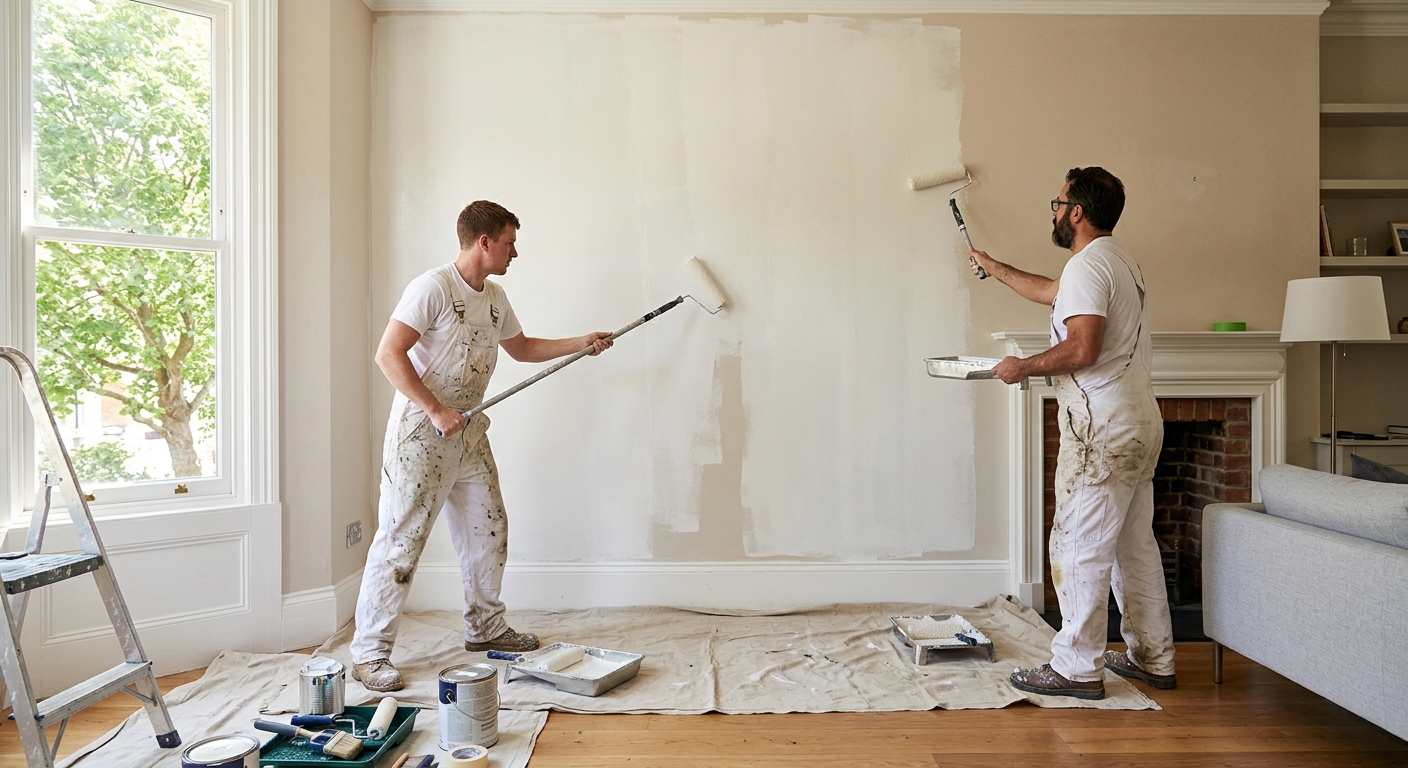
Painting options and costs in Milton
Milton homeowners have plenty of painting options, but the true “cost” is usually decided by how much prep your surfaces need and how tight the calendar is. With 132,979 people in Milton (Statistics Canada, 2021 Census), the housing market is active and contractor scheduling can get busy. Just as important, 18.9% of homes in the area were built before 1981 (Statistics Canada, 2021 Census), which often means more layers of paint on trim and railings, more caulking work, and—on older components—extra care around lead-safe practices if pre-1978 materials are disturbed.
In the Greater Toronto Area, exterior painting is a short, climate-dependent season. Contractors typically target late May through June, and then again from September to mid-October, when temperatures stay above about 10°C for at least 24–48 hours and humidity is manageable. In June–August, demand spikes in the same “ideal” weeks, so exterior pricing commonly runs 10–15% higher during those peak months. Interior work is far less seasonal, but labour is still driven by prep time (patching, sanding, priming), the number of rooms, and how clean you want the finish to look.
If you’re in older pockets like parts of Campbellville (and other established Milton areas with mature streetscapes), expect more time for scraping, sanding, and priming than you’d see on a brand-new subdivision. With that in mind, the next step is comparing common project types and budget ranges so you can match your scope to what’s realistic for Milton timelines and pricing.
| Service |
What's Included |
Typical Duration |
Price Range |
| Interior — whole home (walls, ceilings, trim) |
Move/cover furniture, protect floors, caulk where needed, patch & sand, prime repaired areas, paint walls/ceilings, paint trim/doors as per scope, clean-up |
5–12 business days |
$2,200 – $6,000 |
| Interior — per room (standard bedroom or living room) |
Protect floors, patch/sand minor defects, prime stained/porous areas, paint walls, include 1 coat touch-ups on trim as specified |
1–3 business days |
$400 – $1,600 |
| Exterior — full house (siding, trim, soffits) |
Pressure wash/surface cleaning, scrape & sand, caulk, prime where needed, paint siding/trim/soffits, protect landscaping and windows, final clean-up |
2–4 weeks (weather-dependent) |
$3,000 – $8,000 |
| Exterior — trim and accent colours only |
Clean, spot scrape/sand, caulk, prime exposed areas, paint trim/accent surfaces, protect surfaces not being painted |
5–10 business days |
$1,500 – $4,500 |
| Kitchen cabinet painting (doors, frames, spray finish) |
Remove hardware (or mask), degrease/clean, sand/prime, spray cabinets for a uniform finish, re-install hardware, light touch-ups |
1–3 weeks including dry time |
$1,600 – $4,000 |
| Specialty / faux finish (accent wall, texture) |
Surface prep for texture/faux, base coat and specialized layers as required, protective topcoat as applicable |
2–6 business days |
$300 – $2,500 |
Prices are estimates only and vary by project scope, site access and material selection.
What affects the price of painting in Milton
In Milton and across the Toronto economic region, two quotes for the “same” job can differ by 30–50% because painting isn’t just the topcoat—it’s the preparation and labour details that make or break adhesion and longevity. Exterior projects are especially sensitive to scheduling and weather, while interior projects are more influenced by how much repair work you have and how long you need the crew to protect and clean up. Even when paint brands are similar, prep standards (and how many products are used—primer, bonding primer, stain-blocking primer, caulk types) can materially change the total.
For exteriors in this region, the season is tightly climate-bound: late May to early October is the practical window when temperatures are above about 10°C and rising during application. Contractors also need humidity spikes to stay moderate so coatings cure evenly. That short window concentrates demand; when crews are booked, labour rates and scheduling surcharges often lift exterior budgets. In contrast, coastal areas with persistent dampness can drive costs differently (more mildew-resistant systems and meticulous timing), but the GTA’s main constraints are frost, rain and humidity spikes rather than year-round dampness.
Older Milton homes also raise prep costs. With 18.9% of homes built before 1981 (Statistics Canada, 2021 Census), you may see more flaking paint, rough trim edges, and caulking failures that require scraping, patching, and priming—work that can represent roughly 50–70% of total labour on a repaint. As a simple example, if a full exterior repaint is at the $3,000 – $8,000 band, moving from “light prep” to “full scrape + prime in problem areas” often explains a few thousand dollars quickly. Similarly, interior whole-home refreshes can range broadly within the $2,200 – $6,000 band when ceilings, multi-room trim, and repair levels increase time on ladders and scaffolding.
| Price Factor |
Why It Matters |
Cost Impact |
| Surface prep — scraping, sanding, patching drywall or wood |
Determines adhesion and smoothness; includes repairing cracks, holes, and failing layers |
High (often 40–70% of labour) |
| Number of coats — 2-coat system over primer vs. 1 coat over existing |
Dark stains, scuffed drywall, and bare wood typically need a full primer and two finish coats |
Medium to high |
| Paint quality tier — contractor-grade vs. premium (Benjamin Moore, Sherwin) |
Premium lines often cover better and reduce re-coat issues, but prep still controls the finish |
Low to medium (usually materials-driven) |
| Ceilings and trim — adds significant time vs. walls-only |
Ceilings require more cutting-in and protection; trim includes more caulking and finer brushwork |
Medium to high |
| Exterior season window — short season raises summer rates |
Weather and curing requirements compress the work calendar |
Medium (seasonal scheduling premium) |
| Lead-safe precautions — required for pre-1978 homes with lead paint |
Wet methods, HEPA vacuums, containment and proper disposal increase prep time |
Medium to high depending on scope |
| Surface material — drywall vs. plaster vs. wood vs. stucco |
Different porosity and flexibility require different primers and patching systems |
Medium |
| Height and access — multi-storey exterior requires scaffolding or lifts |
Access constraints add setup time, safety measures, and labour hours |
Medium to high |
Permits & regulations in Ontario
In Ontario, painting generally does not require a permit for typical interior and exterior paint work. Homeowners can usually arrange the job without municipal approval. Where regulation and compliance matter is with hazardous materials and contractor responsibilities—not with the act of painting itself.
For homes built before 1978, health guidelines recommend testing for lead paint before sanding, scraping or dry removal, and using lead-safe work practices if lead is present. Professional contractors typically follow lead-safe methods such as wet methods to control dust, HEPA vacuuming during prep, containment where needed, and proper disposal of debris. While this is not usually a legal “permit” requirement for homeowners, it’s the standard approach that reduces risk and protects your household.
Also confirm your painter is properly insured. A reputable contractor should carry liability insurance, and they must have workers’ compensation coverage (WSIB/WCB) for employees performing the work. For a smooth project, ask for a written contract that clearly states paint brand and sheen (including any primer), number of coats, surface prep scope (scrape/sand/prime/caulk), and what’s included for protection and disposal.
How to verify before you book (Milton/ON): start with the contractor’s Ontario business profile/registration details, request a certificate of insurance (liability) and WSIB/WCB clearance, and make sure those documents show the correct business name and address. Then, request the contract to match the proposal line-by-line—especially for prep, caulking and trim work—so there are no surprises after crews arrive.
Interior vs exterior painting — getting the best result in Milton
In Milton’s GTA climate, the biggest difference between a long-lasting paint job and a premature failure is preparation quality and the right coating system for the surface. For interiors, prep matters more than brand. That means filling and sanding properly, priming stained or porous drywall, and caulking gaps so the finish stays clean. Choose sheen based on how the room is used: flat is often used on ceilings, eggshell is a common choice for bedrooms and living rooms, and satin or semi-gloss is typically better for kitchens, trim, and high-touch areas. A common rule we follow is that two coats over proper primer outlast “one thick coat,” especially when colours are changing or when repairs are involved.
For exteriors, Ontario’s freeze-thaw cycles and rain episodes make surface prep non-negotiable. Scrape loose material, sand feathered edges, and caulk before painting so water doesn’t creep behind the coating system. Primer selection is also substrate-specific: some oil-based primers are used to lock down stains or problematic surfaces, while latex systems are common where appropriate for bonding and recoat timing. Unlike BC where mildew resistance and persistent dampness often lead product decisions, the GTA focus is temperature stability, rain timing, and curing conditions during application.
Cabinet painting is a smart alternative to replacement when boxes and doors are in good shape—expect a higher “labour per hour” due to degreasing, sanding, priming, and spray finishing. And in pre-1978 homes, lead-safe precautions are critical if sanding or scraping will disturb older trim or railings.
Here’s a practical budget example: a room repaint in the $400 – $1,600 range can often look great with standard patching and two-coat coverage. If you move into premium custom work or extensive repair/priming across multiple rooms, you can quickly shift toward the higher end of the interior whole-home band (up to $2,200 – $6,000), and that difference usually reflects prep and detail—not just the paint colour.
| Project Type |
Key Prep Step |
Recommended Coats |
Price Band |
| Interior — fresh drywall (new construction) |
Prime before topcoat to seal and prevent flashing |
1 coat primer + 2 finish coats |
$800 – $3,000 |
| Interior — repaint (good condition, no repairs) |
Light scuff/sand and spot-prime any stains |
1–2 finish coats (commonly 2 for colour change) |
$400 – $1,800 |
| Interior — repaint (patching and priming needed) |
Patch, sand, and spot-prime repairs to eliminate sheen differences |
1 coat primer (repairs only) + 2 finish coats |
$900 – $2,800 |
| Exterior siding (wood or fibre cement) |
Scrape/sand loose paint, caulk gaps, prime exposed areas |
2 finish coats over correct primer system |
$3,000 – $8,000 |
| Exterior trim and accents only |
Feather-sand and spot-prime bare or stained trim |
2 finish coats where colour/stain bleed exists |
$1,500 – $4,500 |
| Kitchen cabinets (spray finish) |
Degrease thoroughly and use proper primer for bonding |
Primer + 2 spray finish coats |
$1,600 – $4,000 |
How to choose a painting contractor in Milton
Choosing a contractor in Milton is mostly about verifying three things: competence, insurance, and clarity. First, licensing in Ontario for painting work is tied to the contractor’s business status and (where applicable) trade requirements; don’t assume—ask for proof and confirm details through Ontario business resources. Next, request liability insurance documentation (a certificate of insurance) and confirm the WSIB/WCB coverage for employees. How to check: look for the correct legal business name on the certificate, confirm the policy is active, and ensure WSIB/WCB clearance references the same employer name that will be on your job site.
Then get 2–3 itemised written quotes. A solid quote breaks labour and materials apart (prep time, primer, caulking, paint quantities, number of coats, and protection). Avoid lump-sum quotes that don’t spell out surface preparation and exclusions. Carefully read what’s not included: removal/reinstallation of fixtures, interior furniture moving, window/door hardware coverage, disposal, power washing method and surface repairs, and whether they include primer on repaired areas.
Warranty matters too. Ask for the length of workmanship warranty and whether product/manufacturer warranties apply to your specific paint system. Also ask if warranty coverage is transferable if you sell your home.
Finally, payment schedules: never pay more than 10–15% upfront; hold a balance until key milestones are complete. Ask for a written timeline with a start date and completion estimate, and confirm the plan for weather delays—especially for exterior work in the late May–June and September–mid-October window.
- Request insurance certificate (liability) and confirm it’s current.
- Verify WSIB/WCB clearance in writing.
- Get the quote in writing with an itemised scope (prep, primer, coats, caulking).
- Confirm exact paint brand, line name, and sheen/finish level.
- Ask how they handle surface damage: patching, sanding, and prime repairs.
- Clarify protection details (floor coverings, masking, ventilation for interiors).
- Confirm exterior details: cleaning method, scrape/sand standard, and caulking plan.
- Ask whether disposal is included (paint waste and debris).
- Make sure lead-safe practices are discussed if your home is pre-1978.
- Set a payment schedule with no more than 10–15% upfront.
- Get a written start/completion estimate and a weather-delay plan.
- Ask who your point of contact is for changes during the job.
In Milton, common red flags include: “we’ll skip primer” on repainting repairs, vague prep language (no mention of scraping/sanding/caulking), quotes that don’t list coats or paint types, no proof of insurance/WSIB/WCB, and crews asking for large upfront payments without a written schedule and scope.
Frequently asked questions — painting in Milton
What paint sheen should I use in different rooms?
In Milton (and across Ontario), sheen choice is about cleanability and how light shows surface imperfections. Ceilings are commonly finished in flat or ceiling paint to reduce glare. For living rooms and bedrooms, eggshell is a popular balance—washable enough for everyday scuffs while still hiding wall defects. In kitchens, bathrooms, and hallways where cleaning is frequent, satin or semi-gloss on trim typically holds up better. Trim and doors usually look best in semi-gloss or satin because they’re more durable and wipe-clean. If your walls have patching, remember that two coats over proper priming is what keeps sheen differences from showing—especially in older homes where prep issues are common (Statistics Canada, 2021 Census).
Can I paint my house exterior in spring or fall in Milton?
Yes—spring and fall can work in Milton, but timing matters because exterior paint needs suitable conditions for curing and adhesion. In the GTA region, the practical exterior window is typically late May through June, plus September to mid-October when temperatures are above about 10°C for at least 24–48 hours and humidity is moderate. Spring can be earlier, but if nights are still near freezing or rain is frequent, you risk poor cure and peeling at edges and caulk lines. Fall often works well because you can hit stable stretches before colder weather returns. If your quote is in the exterior band of $3,000 – $8,000, make sure the scope includes surface prep standards so delays don’t lead to rushed re-coats.
How do I choose a painting contractor in Milton?
Start with verification and clarity. Ask for the contractor’s current liability insurance certificate and WSIB/WCB coverage, and confirm the documents match the legal name that will be working on your Milton home. Then compare 2–3 written quotes that are itemised: prep labour, caulking, primer type, number of coats, and paint line names. Look for a contract that explains what’s included for protection, disposal, and cleanup—especially for exterior jobs. A good contractor will also discuss lead-safe practices for pre-1978 homes and won’t minimize prep needs. Finally, payment should be staged; avoid paying more than 10–15% upfront. This approach helps keep you within the expected pricing bands, like interior rooms at $400 – $1,600.
How many coats does an exterior repaint need in Milton?
Most exterior repaints in Milton are planned as a 2-coat finish system. The exact number can vary with colour change, existing sheen/condition, and how much primer is required after scraping and repairs. If bare wood, staining, or repaired areas are present, you typically need a primer before the finish coats so the new paint bonds and stays uniform. On a full exterior scope (often in the $3,000 – $8,000 range), we typically budget for thorough prep plus primer where needed, then two finish coats to ensure durability through Ontario’s rain and freeze-thaw cycles. The “hidden” determinant is prep quality and curing time—if the weather window is too tight, recoating too early can shorten service life.
What is the best primer for older Milton homes?
For older Milton homes—especially those with paint layers on trim—there isn’t one universal “best” primer; it depends on what you’re priming (bare wood, patched drywall, stained areas, or questionable adhesion). The goal is to create a stable, uniform surface that the topcoat can bond to. After scraping and sanding, spot-prime stained or problematic sections with the appropriate stain-blocking primer, and use bonding primer when adhesion is an issue. For exteriors, primer selection also ties to substrate type (wood vs. fibre cement) and how much prep was needed to remove failing material. Since 18.9% of homes were built before 1981 (Statistics Canada, 2021 Census), proper primer choice is often a major reason estimates differ. And if materials are pre-1978, contractors should follow lead-safe dust controls when disturbed.
Should I paint or wallpaper my Milton home?
Painting is usually the better choice in Milton when you want predictable timing, easier maintenance, and fewer surprises. Wallpaper can look amazing, but it’s less forgiving of uneven walls and seams—meaning your prep quality must be high. If you have older plaster, hairline cracks, or patchy drywall repairs, wallpaper may telegraph imperfections and become harder to remove later. Paint also makes it easier to choose room-specific sheens (like eggshell vs. satin) and to refresh colour without fully redoing finishes. That said, wallpaper can be a great option for a single accent wall if the wall condition is sound and the pattern is planned carefully. If you’re budgeting, a room repaint in the $400 – $1,600 band often competes well against wallpaper plus labour and prep, particularly when multiple walls need work.