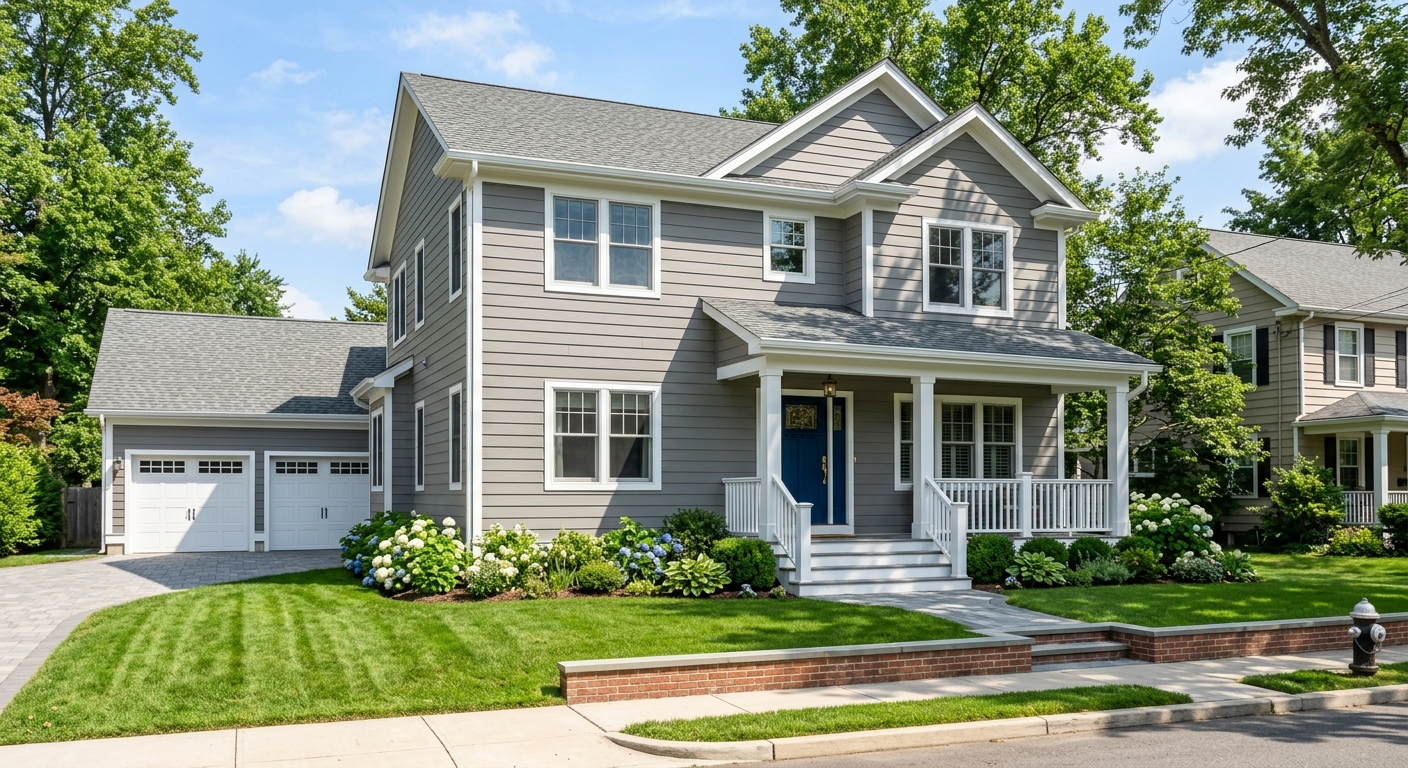
Painting options and costs in Victoria
In Victoria, choosing the right painting option is really about matching scope to the island’s coastal conditions—especially on older homes. With 63.6% of housing stock built before 1981, many projects start with more than a “paint-and-go” approach: scraping failing coating, patching where siding or trim has weathered, caulking gaps, and then priming so the finish coats actually bond. On pre-1978 interiors and exteriors, lead-safe precautions are commonly planned for professionals if lead paint is suspected, which can add time and careful cleanup.
Costs on Vancouver Island and the Coast are tightly tied to a shorter, more changeable work window. Exterior crews typically aim for drier late-spring through early-fall stretches when temperatures stay roughly in the 10°C to 30°C range and humidity is manageable; even a small rain event can disrupt drying and cure. That weather compression, combined with steady demand around areas like Oak Bay and Fairfield, is a major reason Victoria pricing can look higher during peak months. Interior work is less season-bound, but labour rates remain elevated and many homeowners select mildew-resistant coatings for bathrooms, basements, and coastal humidity zones.
Below is a realistic range you can use to compare quotes before we break down what drives differences between estimates.
| Service |
What's Included |
Typical Duration |
Price Range |
| Interior — whole home (walls, ceilings, trim) |
Move light furnishings, prep and patch, sand and prime as needed, paint walls/ceilings, caulk where required, finish trim/doors (basic protection and cleanup) |
5–10 days |
$3,800–$9,500 |
| Interior — per room (standard bedroom or living room) |
Prep, patching/sanding, prime as needed, paint walls and ceiling, paint trim and doors (standard masking/protection) |
1–3 days |
$2,000–$4,500 |
| Exterior — full house (siding, trim, soffits) |
Pressure wash (where appropriate), scraping/sanding, caulking, repair of minor trim issues, prime bare/failed areas, 2-coat exterior system, protective masking and cleanup |
1–3 weeks |
$5,500–$12,000 |
| Exterior — trim and accent colours only |
Scrape/sand spot prep, caulk, prime spot areas, 2-coat finish on selected surfaces, protection and cleanup |
3–7 days |
$3,500–$7,800 |
| Kitchen cabinet painting (doors, frames, spray finish) |
Full disassembly (as needed), degrease and sanding, bonding primer, sprayed/rolled finish, hardware bagging, reinstall and touch-ups |
5–14 days |
$2,200–$5,000 |
| Specialty / faux finish (accent wall, texture) |
Surface prep for finish, base coats, custom finish application, protective topcoat, cleanup |
2–6 days |
$1,000–$4,500 |
Prices are estimates only and vary by project scope, site access and material selection.
What affects the price of painting in Victoria
In Victoria and across Vancouver Island and the Coast, you can see the same “interior repaint” or “exterior repaint” priced 30–50% differently from one contractor to another because labour intensity varies more than homeowners expect. The biggest drivers are surface condition and how the work is scheduled around the coastal climate. On exteriors, the weather window is tightly climate-bound: crews generally target late spring to early fall when temperatures are roughly 10°C and up during application and humidity is manageable enough for proper drying and cure. Coastal BC’s morning dew, frequent rain and mildew risk mean contractors often use mildew-resistant, high-quality systems—and they schedule carefully around forecasts—so premium coatings and planning both add cost. When demand compresses into a few months, peak-season scheduling pressure also pushes labour rates higher.
Prep is where older homes change the math. With 63.6% of Victoria-area homes built before 1981, many jobs require more than “two coats.” Scraping, sanding, caulking, wood hardening or patching, and then thorough priming can take 50–70% of total labour on a repaint. For example, an exterior that would land near the lower end of the $3,500–$12,000 band can move toward the high end if extensive trim repair and extra primer are required. Similarly, interiors often start near $2,000–$6,500, but cost increases when ceilings, doors, and detailed trim are included or when patching is extensive enough to require additional primer and dry time.
Two concrete Victoria examples: (1) a house in a wind-sheltered but high-humidity area may still need careful mildew control and extra prep on siding, even if it “looks okay”; (2) older stucco or wood trim frequently reveals adhesion issues, which forces more priming and can add days. The contractor who quotes the lowest number is usually assuming fewer repairs—so compare the scope line-by-line.
| Price Factor |
Why It Matters |
Cost Impact |
| Surface prep — scraping, sanding, patching drywall or wood |
Determines adhesion and longevity; older coatings often fail and must be stabilized |
High: can swing the quote by $1,000–$4,000+ |
| Number of coats — 2-coat system over primer vs. 1 coat over existing |
Proper coverage and colour uniformity usually require a true 2-coat finish |
Medium: typically $300–$1,500+ |
| Paint quality tier — contractor-grade vs. premium (Benjamin Moore, Sherwin) |
Better solids, washability, and durability reduce callbacks |
Medium: about $250–$900+ on many projects |
| Ceilings and trim — adds significant time vs. walls-only |
Masking, cut-in time, and multiple surfaces increase labour |
High: often $500–$2,500+ |
| Exterior season window — short season raises summer rates |
Scheduling around weather and curing time concentrates labour demand |
Medium–High: can add 10–25% in peak months |
| Lead-safe precautions — required for pre-1978 homes with lead paint |
Professional containment, HEPA vacuuming and careful cleanup increase labour |
Medium: commonly $300–$1,500+ depending on scope |
| Surface material — drywall vs. plaster vs. wood vs. stucco |
Different materials need different prep and primer bonding strategies |
Medium: varies widely; $200–$2,000+ |
| Height and access — multi-storey exterior requires scaffolding or lifts |
Safe access impacts labour time and equipment rental |
High: can add $800–$3,000+ |
Permits & regulations in British Columbia
In British Columbia, painting typically does not require a permit. You generally do not need a permit for routine interior and exterior painting, including wall and trim repainting, cabinet repainting, and exterior coating on siding and trim. Where permits can become relevant is usually not “painting” itself—it’s other work that sometimes comes with painting jobs (for example, if major structural repairs are planned) or if local bylaws affect specific buildings. For standard painting, the focus is instead on safe work practices and proper documentation.
For homes built before 1978, health guidelines commonly recommend testing for lead paint before sanding or scraping. If lead is present or suspected, professional lead-safe practices are standard: wet methods to reduce dust, HEPA vacuuming, proper containment and disposal, and careful cleanup. This is not typically legally mandated for homeowners, but it’s the professional expectation on Vancouver Island when older finishes are involved.
Before signing in Victoria, confirm your contractor carries liability insurance and workers’ compensation coverage through the provincial system. Then insist on a written contract specifying: paint brand/line and sheen, number of coats, the prep steps included (scraping, sanding, caulking, priming), and what happens to debris and masking materials. To verify, you typically check the contractor’s licensing status online (if applicable for their business category), request their certificate of insurance for liability, and confirm workers’ compensation coverage. A clearance letter is often used as proof—ask to see it and confirm the coverage is active for the dates of your project.
Interior vs exterior painting — getting the best result in Victoria
For a long-lasting result in Victoria, the “secret” is process, not just paint name. In interiors, proper surface prep usually matters more than the topcoat. That means filling and sanding bumps, addressing stains or water marks, priming any new patches, and then applying a consistent finish coat. Choose sheen based on how the room is used: kitchens and family rooms often do best with eggshell or satin for cleanability, bathrooms and coastal basements benefit from moisture-conscious coatings, and bedrooms can use flatter sheens for lower glare. In practice, two coats applied over a proper primer will outlast a single thick coat because coverage uniformity and adhesion are stronger.
Exteriors are even more process-dependent in British Columbia’s coastal climate. Caulking should be applied before painting to stop water ingress where gaps open up; ignoring this step is a common reason coatings fail early. Primer selection matters: different substrates (bare wood, previously painted surfaces, stucco, fibre cement) need the right bonding primer rather than “any primer.” Because humidity and dew are frequent, mildew-resistant products and temperature-stable systems designed for coastal conditions help. The exterior weather window still governs timing—crews typically schedule to maintain workable drying and curing conditions—so a rushed job can cost more later.
Cabinet painting can be a smart alternative to replacement, particularly when the box and layout are solid. For example, a cabinet spray finish project around the lower end of the $1,200–$5,000 range can be a fraction of a full kitchen reno, provided the prep and bonding primer are done carefully. For pre-1978 homes, plan for lead-safe precautions if sanding or scraping is required so the job stays safe and clean.
| Project Type |
Key Prep Step |
Recommended Coats |
Price Band |
| Interior — fresh drywall (new construction) |
Seal joints and prime entire surface so finish sheen is uniform |
Primer + 2 finish coats |
$2,800–$6,500 |
| Interior — repaint (good condition, no repairs) |
Light sanding, degrease, spot-prime where needed |
Spot primer + 2 finish coats |
$2,000–$5,500 |
| Interior — repaint (patching and priming needed) |
Fill, sand, prime patches and any stain-reject areas |
Primer + 2 finish coats (plus spot rework as needed) |
$2,800–$6,500 |
| Exterior siding (wood or fibre cement) |
Scrape failing paint, sand edges, caulk, prime bare areas |
Primer where required + 2 exterior coats |
$5,500–$12,000 |
| Exterior trim and accents only |
Caulk and spot-prime transitions and exposed spots |
Spot primer + 2 exterior coats |
$3,500–$7,800 |
| Kitchen cabinets (spray finish) |
D egrease, sand for bonding, prime and build a level surface |
Primer + 2 sprayed finish coats |
$2,200–$5,000 |
How to choose a painting contractor in Victoria
Choosing the right painting contractor in Victoria comes down to verification and clarity. Start with insurance: ask for a current certificate of liability insurance and proof of workers’ compensation coverage (the provincial system coverage document). If a contractor is working on roofs, siding, or multi-storey elevations, you want to know the coverage is active for the dates of your project.
Then compare quotes properly. Get 2–3 itemised written quotes that separate labour and materials, and that list the included prep steps (scraping, sanding, caulking, priming, stain blocking) rather than vague phrases like “prep and prime.” Confirm whether disposal is included, what protection is provided for floors and landscaping, and whether a permit pull is required for anything beyond painting (most painting itself does not require one). Ask for brand and line details for paint, and whether the contractor will match sheen consistently across surfaces.
For warranties, look for a workmanship warranty length (for example, against peeling or adhesion failures under normal conditions) and understand product/manufacturer warranty terms. Clarify if the warranty is transferable and whether it requires documented maintenance.
Payment terms should be reasonable: never pay more than about 10–15% upfront, and use a holdback until the work is fully complete, cleaned, and corrected. Finally, require a written timeline with start date and completion estimate so delays due to weather windows and curing times are communicated early—important for exterior work in coastal BC.
- Ask for liability insurance certificate with your address/project noted if possible
- Verify workers’ compensation coverage is active (not expired) and ask for clearance proof
- Request an itemised quote (labour + materials) rather than a single lump sum
- Confirm exact prep steps: scraping scope, drywall/plaster patching, priming rules
- Ask what protection is used (masking, floor coverings, landscaping shielding)
- Confirm caulking type and where it will be applied before painting
- Ask for paint brand/line, sheen, and number of coats included
- Confirm disposal and clean-up responsibilities for prep debris
- Request a clear schedule that accounts for drying and cure time
- Get photos of similar past work in Victoria’s coastal climate (not only distant cities)
- Review warranty terms in writing (workmanship vs. product warranty)
- Ensure the contract states payment schedule and holdback amount until final walk-through
Red flags in Victoria include: (1) quotes that promise “no prep, just paint,” (2) refusal to provide insurance/coverage proof, (3) no written scope for priming and caulking, (4) asking for large deposits upfront, and (5) vague timelines that ignore exterior weather windows and curing needs.
Frequently asked questions — painting in Victoria
What's the difference between paint quality tiers?
Paint “tiers” usually refer to how the formula performs in real use. Higher-tier coatings tend to have better pigment and binder performance (often meaning fewer coverage problems, stronger washability, and improved colour stability). On Vancouver Island, that matters because coastal humidity and frequent dews can stress poorly prepared surfaces. Premium lines also generally dry and cure with more consistent film build when applied correctly. In Victoria projects, you’ll typically see better results when high-quality exterior systems are used within the exterior $3,500–$12,000 band—especially where prep is extensive. The key is that tier won’t fix failed adhesion; proper scraping, sanding, caulking and priming still drive longevity.
How do I compare painting quotes?
Comparing quotes is easiest when you compare scope, not just totals. Ask each contractor to itemise labour and materials and to specify prep steps: what they will scrape, what they will sand, where caulking will be applied, and when priming is required. Make sure they name the paint line and sheen and state the number of coats included (for example, a true 2-coat finish over primer where needed). For interiors, confirm whether ceilings, trim, and doors are included; for exteriors, confirm whether soffits and full trim are covered. If one quote sits in the lower part of the interior $2,000–$6,500 range but excludes patching, that’s why it’s lower. Finally, check disposal and clean-up, plus the payment schedule and warranty language.
What paint sheen should I use in different rooms?
In Victoria interiors, sheen is about cleanability and light reflection. Flat/“eggshell” style finishes can work in bedrooms and low-traffic rooms to reduce glare, but they’re less forgiving for scuffs. Eggshell or satin are common choices for living rooms and hallways because they balance appearance with wipeability. Kitchens and family spaces often need satin or even a higher-scrub option for areas that get grease or frequent cleaning. Bathrooms and basements on Vancouver Island should use coatings intended for moisture and mildew resistance. Trim and doors are typically finished in semi-gloss or a durable trim sheen because it handles frequent touch and cleaning. If you’re repainting patched areas, insist on proper priming so sheen doesn’t look blotchy.
Can I paint my house exterior in spring or fall in Victoria?
Yes, but timing is everything in British Columbia’s coastal climate. Exterior painting is most reliable in drier late spring to early fall stretches when temperatures remain roughly around or above 10°C and humidity is manageable so coats can dry and cure properly. In spring, you may catch good days, but morning dew and cool nights can slow drying. In fall, rain likelihood rises and the curing window shortens, which can create issues if you paint right before weather turns. A good contractor will schedule based on forecast and work in sections so drying time is respected. The bigger risk is rushing: a rushed exterior that looks fine can fail sooner, especially on older homes where prep is already labour-intensive.
How do I choose a painting contractor in Victoria?
Start by verifying insurance and coverage before you compare pricing. Ask for a current liability insurance certificate and proof of workers’ compensation coverage, and confirm it’s active for the dates of your job. Then request 2–3 itemised written quotes with labour and materials breakdowns and clear scope: scraping/sanding, caulking, priming rules, and the number of coats. Exterior work should also include an approach to weather windows and drying/cure time. Ensure you get warranty terms in writing (workmanship warranty, plus manufacturer warranty details) and a sensible payment schedule—typically no more than 10–15% upfront, with a holdback until completion. If you’re choosing between options that fall within the exterior $3,500–$12,000 band, use scope quality as the deciding factor, not just the lowest number.
How many coats does an exterior repaint need in Victoria?
Most exterior repaints in Victoria use a 2-coat finish system over primer where required. In practical terms, that means priming bare or weathered areas after scraping/sanding (and spot-priming where adhesion or stains require it), then applying two exterior finish coats for uniform coverage and durability. If the existing coating is intact and properly prepared, you may not need full priming everywhere—but you still need the correct number of finish coats. Coastal conditions make it especially important to follow dry and cure expectations; if humidity stays high or rain hits before the coating sets, the job can underperform. On older homes with more prep needs, you’ll typically see the project priced higher within the $5,500–$12,000 range because priming and longer prep time are part of the system.