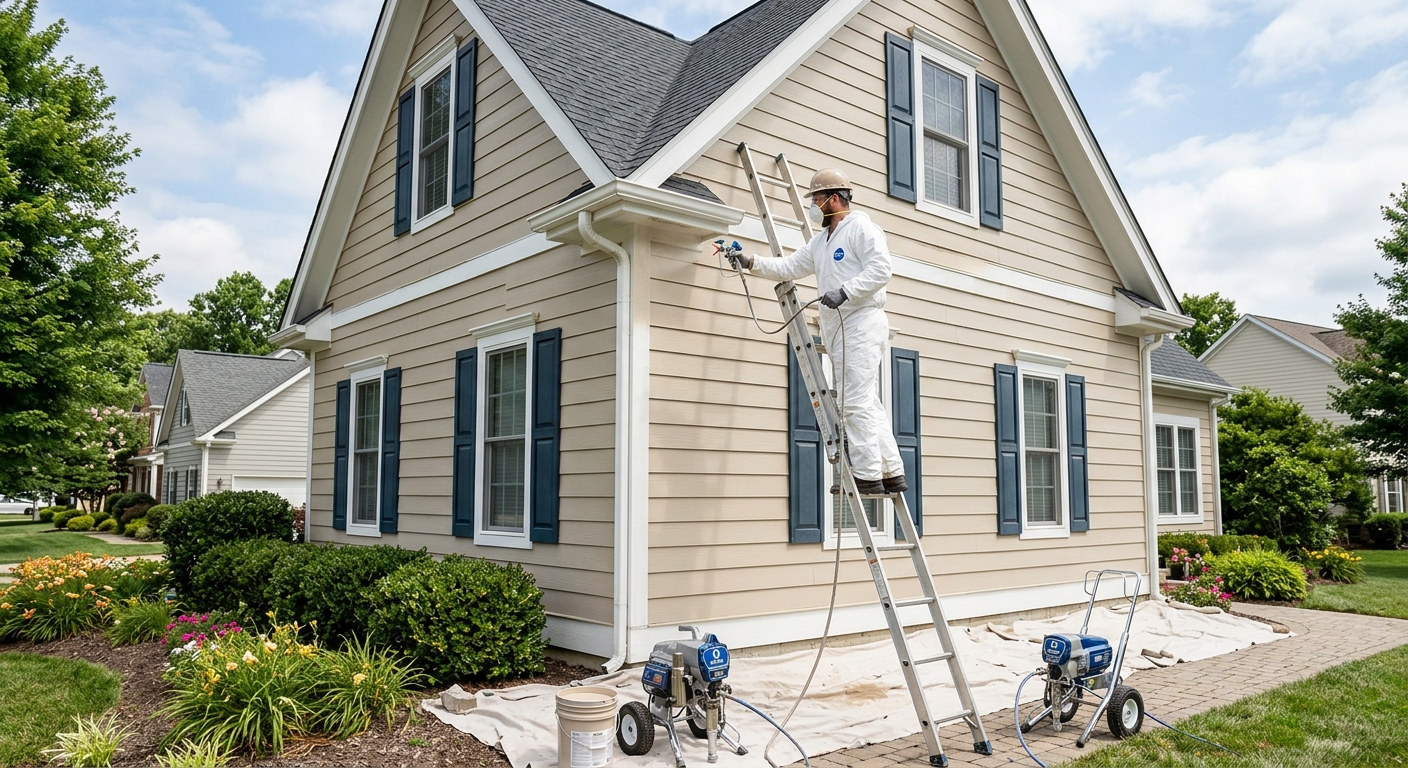
Painting options and costs in Mount Pleasant
Painting in Mount Pleasant starts with the realities of our neighbourhoods—most homes are mid-build, and a meaningful portion were built before newer finishing standards. With a population of about 33,000 (Statistics Canada, 2021 Census), there’s steady demand for both interior refreshes and exterior repaints, especially in established pockets. On older homes, expect extra prep work like scraping failing coatings, patching settlement cracks, stain blocking for nicotine or wood tannins, and thorough priming—prep can make up a large share of the labour. If the home is pre-1978, lead-paint–safe practices may be required depending on conditions; many contractors handle this with containment, HEPA cleanup, and careful disposal even when homeowners aren’t legally obligated to test.
In the Lower Mainland–Southwest, costs are shaped by our coastal climate. Exterior painting is constrained less by deep cold than by rain, high humidity, and mildew pressure during damp stretches. That means painters often plan for dry windows, use mildew-resistant high-adhesion products, and allow extra drying and re-mobilization time between weather breaks. Interior work is generally more flexible, which helps crews stay active through fall and winter.
Trade demand is especially strong around central Mount Pleasant areas with older housing stock and active renovation turnover, where repainting often lines up with seasonal listings and contractor scheduling.
Below are realistic Mount Pleasant price bands you can use to compare quotes, whether you’re budgeting for a full refresh or targeting higher-detail work like cabinets and trim.
| Service |
What's Included |
Typical Duration |
Price Range |
| Interior — whole home (walls, ceilings, trim) |
Cut-in and roll/brush walls and ceilings, prep/patching, caulking where needed, priming for repairs, paint on trim and doors as specified |
5–12 days |
$3,000–$8,000 |
| Interior — per room (standard bedroom or living room) |
Prep, patch/sand spots, prime as required, 2-coat wall system; trim and doors included if in the room scope |
1–3 days |
$700–$1,800 |
| Exterior — full house (siding, trim, soffits) |
Power washing (or appropriate cleaning), scrape/sand loose coating, patch and caulk, prime bare spots, 2-coat exterior system suited to substrate |
7–18 days |
$6,000–$15,000 |
| Exterior — trim and accent colours only |
Surface prep on trim/accent only, prime as needed, 2-coat finish; protects eaves/edges from moisture exposure where feasible |
3–8 days |
$1,500–$4,500 |
| Kitchen cabinet painting (doors, frames, spray finish) |
Removal/labeling, surface degrease and sanding, bonding primer, sprayed finish coats, hardware masking, re-install |
5–12 days |
$2,000–$6,500 |
| Specialty / faux finish (accent wall, texture) |
Surface preparation for the specialty finish, application of the chosen technique, sealing for durability |
2–6 days |
$800–$4,500 |
Prices are estimates only and vary by project scope, site access and material selection.
What affects the price of painting in Mount Pleasant
Even when homeowners agree on “the same job,” quotes across the Lower Mainland–Southwest and the rest of British Columbia can vary by 30–50% because the big cost driver isn’t paint—it’s prep, risk management, and finishing time. In Mount Pleasant, exterior work is tightly climate-bound by coastal rain and humidity. While we often avoid Ontario-style deep-freeze constraints, painters still need reliable dry stretches to apply coatings and achieve proper cure. That drives scheduling pressure and can raise summer rates when crews have more demand than weather windows. In Ontario and Alberta, exterior work is commonly framed around late May to early October with temperature stability; in coastal BC the “longer season but damp shoulder periods” can still create costly delays if moisture interrupts application.
Prep matters because many Mount Pleasant homes fall into the mid-century to 1990s range, where repainting typically involves more than a quick scuff. Scraping failed coatings, sanding edges, caulking gaps, patching drywall, and spot-priming can account for 50–70% of labour on repaints—especially when old finishes must be made paint-compatible. For example, a whole-home interior repaint that might land in the $3,000–$8,000 band can creep upward if extensive patching and priming are needed, even if the wall area is the same. Similarly, a full exterior often sits in the $6,000–$15,000 band when moisture-safe caulking, mildew-resistant systems, and weather-window remobilization are required.
Concrete examples in Mount Pleasant: (1) peeling or blistering exterior paint on wood trim usually means additional scraping and priming to stop future failure, not just a topcoat; (2) a cabinet refresh with an uneven finish can require extra sanding and higher-build primer for adhesion, which is why cabinetry often sits in the $2,000–$6,500 range. Your housing material also changes the equation—drywall vs. plaster vs. stucco behaves differently under prep and primer systems.
| Price Factor |
Why It Matters |
Cost Impact |
| Surface prep — scraping, sanding, patching drywall or wood |
Determines adhesion and hides defects; older coatings often need extra stabilization |
+10% to +40% |
| Number of coats — 2-coat system over primer vs. 1 coat over existing |
Proper coverage and sheen uniformity require the right film build |
+5% to +25% |
| Paint quality tier — contractor-grade vs. premium (Benjamin Moore, Sherwin) |
Higher-end coatings can improve coverage, durability, and colour stability |
+3% to +20% |
| Ceilings and trim — adds significant time vs. walls-only |
Ceilings and detailed trim increase cut-in time and finishing passes |
+15% to +35% |
| Exterior season window — short season raises summer rates |
Weather breaks control mobilization, drying/cure, and re-visit scheduling |
+10% to +30% |
| Lead-safe precautions — required for pre-1978 homes with lead paint |
Containment, HEPA cleanup, and disposal add time and special materials |
+5% to +25% |
| Surface material — drywall vs. plaster vs. wood vs. stucco |
Each substrate needs compatible primers and different sanding/patching methods |
+5% to +30% |
| Height and access — multi-storey exterior requires scaffolding or lifts |
Safety equipment and set-up extend labour and overhead |
+10% to +40% |
Permits & regulations in British Columbia
In British Columbia, painting typically does not require a permit. That said, for homes built before 1978, health guidelines recommend testing for lead paint before sanding or scraping. If lead is present, pro-standard lead-safe work practices are expected in the field, such as wet methods to reduce dust, HEPA vacuuming, containment where appropriate, and proper disposal. Homeowners are not generally mandated to follow these steps for their own DIY work, but professional contractors in the Mount Pleasant area commonly do because it reduces risk and protects indoor air and nearby surfaces.
What usually DOES require permits is not painting itself, but other related work types—e.g., electrical, structural changes, or specific asbestos/abatement-type activities when required by scope and hazard findings. For a standard paint job, the “compliance” is mostly about safe handling, not municipal approvals.
When hiring in Mount Pleasant, confirm your contractor carries liability insurance and workers’ compensation coverage (WSIB/WCB) for their employees. Ask for a written contract that spells out the paint brand and sheen, number of coats, and exactly which prep steps are included (scraping, sanding, caulking, patching, priming). For verification, you can: (1) check licensing/registration details through the appropriate provincial online registry (the contractor should have a public listing), (2) request a certificate of insurance and ensure it’s current and matches your address/term, and (3) ask for proof of workers’ compensation coverage—then verify it’s active for the work period. If you’re dealing with pre-1978 surfaces, insist on a lead-safe plan in the written scope.
Interior vs exterior painting — getting the best result in Mount Pleasant
The difference between a durable paint job and a premature failure in Mount Pleasant is usually surface preparation and timing—not “better paint” alone. For interiors, long-lasting results depend on filling, sanding, priming and proper adhesion prep more than the marketing name on the can. Choose sheen by the room and how the space is used: flat hides wall imperfections but marks more easily; eggshell and satin are typically better for living areas, hallways, and kitchens, while semi-gloss is often used on doors, trim, and higher-touch surfaces. Practically, two coats over a properly primed base generally outlast one heavy coat, because coverage is more even and the film build is consistent.
For exteriors, BC climate makes the prep and moisture management non-negotiable. That means cleaning, scraping loose material, caulking gaps correctly before painting to prevent water ingress, and using the right primer for the substrate. Oil-based primers may be specified for certain stain-blocking and adhesion scenarios, while latex primers are often used for many siding and drywall-like systems where compatible. In the Lower Mainland–Southwest, mildew-resistant, high-adhesion coatings help manage coastal dampness and reduce staining, but only if the surface is sound and properly primed.
Cabinet painting is a smart budget alternative to replacement when boxes and doors are in decent condition. A well-prepped spray finish can restore a clean look without the demolition and downtime, and it’s often priced around the $2,000–$6,500 range depending on scope. For pre-1978 homes, lead-safe precautions for scraping/sanding are part of doing it right.
Where does the money difference make sense? If your exterior quote is higher by a few thousand dollars but includes aggressive prep (scrape to sound edges, spot prime correctly, caulking and mildew-resistant system) versus a “topcoat only” approach, that premium is usually justified in Mount Pleasant’s damp conditions—because repainting twice is more expensive than doing the first job properly. Interior projects show similar logic: a whole-home refresh in the $3,000–$8,000 band is often worth it when it includes repair/prime work, not just colour application.
| Project Type |
Key Prep Step |
Recommended Coats |
Price Band |
| Interior — fresh drywall (new construction) |
Skim/patch tape joints, sand smooth, prime to seal drywall |
2 coats (primer + topcoats) |
$3,500–$7,500 |
| Interior — repaint (good condition, no repairs) |
Light sanding and spot-priming stained or glossy areas |
2 coats |
$2,000–$5,500 |
| Interior — repaint (patching and priming needed) |
Patch settlement cracks, sand feather edges, prime repairs thoroughly |
2 coats (with added primer on repairs) |
$2,800–$6,800 |
| Exterior siding (wood or fibre cement) |
Scrape to sound substrate, caulk gaps, prime bare spots with compatible primer |
2 coats |
$6,000–$15,000 |
| Exterior trim and accents only |
Degrease/clean trim and prime any bare or weathered edges before finish |
2 coats |
$1,500–$4,500 |
| Kitchen cabinets (spray finish) |
Degrease, bond primer, sand for adhesion, controlled spray application |
2–3 coats (primer + finish system as specified) |
$2,000–$6,500 |
How to choose a painting contractor in Mount Pleasant
Start by verifying licensing and insurance the right way. In British Columbia, confirm the contractor’s provincial business/contractor information is active through the relevant online registry, and that the work is within their scope. Next, ask for a certificate of insurance for liability coverage and make sure it lists coverage that matches your job’s timing and address. Finally, request proof of workers’ compensation coverage (WSIB/WCB) so you’re not exposed if someone is injured on-site. These items are not “nice to have”—they’re how you protect your home and your budget.
Then get 2–3 itemised written quotes (not lump sums). A good quote breaks out labour and materials, including prep steps: scraping, sanding, patching, caulking, priming and the number of coats. Clarify inclusions and exclusions in plain language: is disposal included for old paint debris? Is masking/protection of floors and landscaping included? Is permit pull required for any related work (typically not for painting itself), and is the work area protected for dust control? Ask for paint brand and sheen, and whether the contractor specifies the exact coating system for your substrate.
Warranty matters too: a workmanship warranty (often 1–2 years, but confirm) should cover adhesion and peeling caused by prep failures, while product/manufacturer warranties usually depend on correct application. Payment should be staged—never more than 10–15% upfront; hold back until completion and touch-ups are done. Insist on a start date and completion estimate in writing.
- Written quote with line items for prep, prime, and coat count
- Paint brand + sheen specified (not “equivalent” only)
- Caulking method and which joints are included
- Scope for repairs: crack patching, drywall skim, stain blocking
- Protection plan for floors, cabinets, landscaping and windows
- Disposal and cleanup wording (haul-away vs homeowner responsibility)
- Lead-safe approach included for pre-1978 homes where applicable
- Insurance certificate date matches the scheduled work
- Workers’ compensation proof provided before work starts
- Colour prep and sheen testing (especially trim and feature walls)
- Scheduling plan that accounts for BC rain/humidity windows for exteriors
- Clear warranty terms for workmanship and how claims are handled
Red flags I see in Mount Pleasant: (1) quotes that skip or minimize prep (“just paint over it”), (2) no written scope or no specified coat count/primer, (3) reluctance to provide insurance and workers’ compensation proof, (4) a request for large upfront payments beyond 10–15%, and (5) vague warranty language or “best effort” guarantees.
Frequently asked questions — painting in Mount Pleasant
What is the best primer for older Mount Pleasant homes?
For older Mount Pleasant homes, the “best” primer depends on what’s failing underneath—peeling, stains, tannin bleed, or loose coatings. Commonly, contractors use a stain-blocking primer on areas affected by water marks, nicotine, or wood tannins, and a bonding primer where existing paint needs adhesion re-established. If the home is pre-1978, professional lead-safe practices are often used before sanding or scraping, because dust control and cleanup matter even if a permit isn’t required for painting itself. In practice, a proper primer plus two topcoats helps keep interior work in the $3,000–$8,000 whole-home range more consistent with expectations, rather than turning into repeated patch-and-recoat work.
Should I paint or wallpaper my Mount Pleasant home?
In Mount Pleasant and across the Lower Mainland–Southwest, most homeowners choose paint for speed, easier maintenance, and better touch-up control—especially in homes where drywall repairs or patchwork are ongoing. Wallpaper can look fantastic, but it demands very smooth, well-prepared surfaces; if you have settlement cracks, uneven texture, or inconsistent moisture history, paint often performs more reliably. That said, a specialty finish or feature-wall option can give you the design impact you want without the same long-term seam and moisture considerations. If you’re comparing budgets, interior painting typically runs within the $300–$8,000 range depending on scope—while wallpaper removals and rework can become costly when prep is underestimated.
How do I fix peeling exterior paint in Mount Pleasant?
Peeling exterior paint usually means adhesion breakdown—often from moisture intrusion, failed caulking, or coating mismatch. The fix isn’t a quick topcoat; it’s a repair-and-recoat process: clean the surface, scrape back to sound edges, sand feathered areas smooth, patch wood where needed, and caulk joints before painting. Then use the correct primer for the substrate (and in coastal BC, you’ll want systems that resist mildew staining and hold adhesion through humidity swings). After prep, painters apply a two-coat exterior system in a dry-enough window. If your quote is in the $6,000–$15,000 band for a full repaint, it’s often because these moisture-safe prep steps are included—skipping them is what leads to repeat failures.
What colours add the most resale value in Mount Pleasant?
Resale value usually comes from buyer-friendly neutrality and consistent sheen. In Mount Pleasant, many homeowners do best with warm whites, soft greiges, and muted taupes that work with natural light and exterior landscaping. For trims and doors, a clean white or warm off-white tends to read fresh without looking stark. If you add accent colours, keep them contained—an entry door, a small exterior trim band, or one interior feature wall. Also consider sheen: semi-gloss or satin on trim and doors looks crisp in inspections, while flat isn’t as forgiving in high-touch areas. While colour selection is personal, staying within tasteful, modern palettes often helps projects land comfortably inside your budget—like an exterior refresh in the $1,200–$15,000 range depending on scope.
How much does it cost to paint a house in Mount Pleasant?
For Mount Pleasant, “paint a house” depends heavily on whether you mean interior only, exterior only, or a full combined job. Typical interior whole-home painting often falls in the $3,000–$8,000 range for walls, ceilings and trim, with higher costs when patching and priming are extensive. Exterior full-house painting generally sits around $6,000–$15,000 because prep work and weather-window scheduling in coastal BC add time and risk management. If you’re focused on trim and accents only, trim pricing can be materially lower—often $1,500–$4,500—but it won’t fix failing siding coatings. To get accurate numbers, ask for an itemised quote that breaks out prep, caulking, primer spots and coat count.
How much does interior painting cost per room in Mount Pleasant?
Per-room interior painting in Mount Pleasant commonly lands around $700–$1,800 for a standard bedroom or living room when prep is reasonable and you’re including paint on walls (and often trim/doors if that’s in scope). Your cost moves up if there’s patching for cracks, stained ceilings that require stain-blocking primer, or if there are multiple sheen changes (for example, semi-gloss on trim plus eggshell on walls). If the room has heavy repair needs, the project can start to resemble a repaints-with-priming scenario that pushes closer to whole-area averages. When you compare quotes, make sure each estimate includes the same coat count and specifies whether primer is included for repairs, because that’s where “cheap” numbers often break.