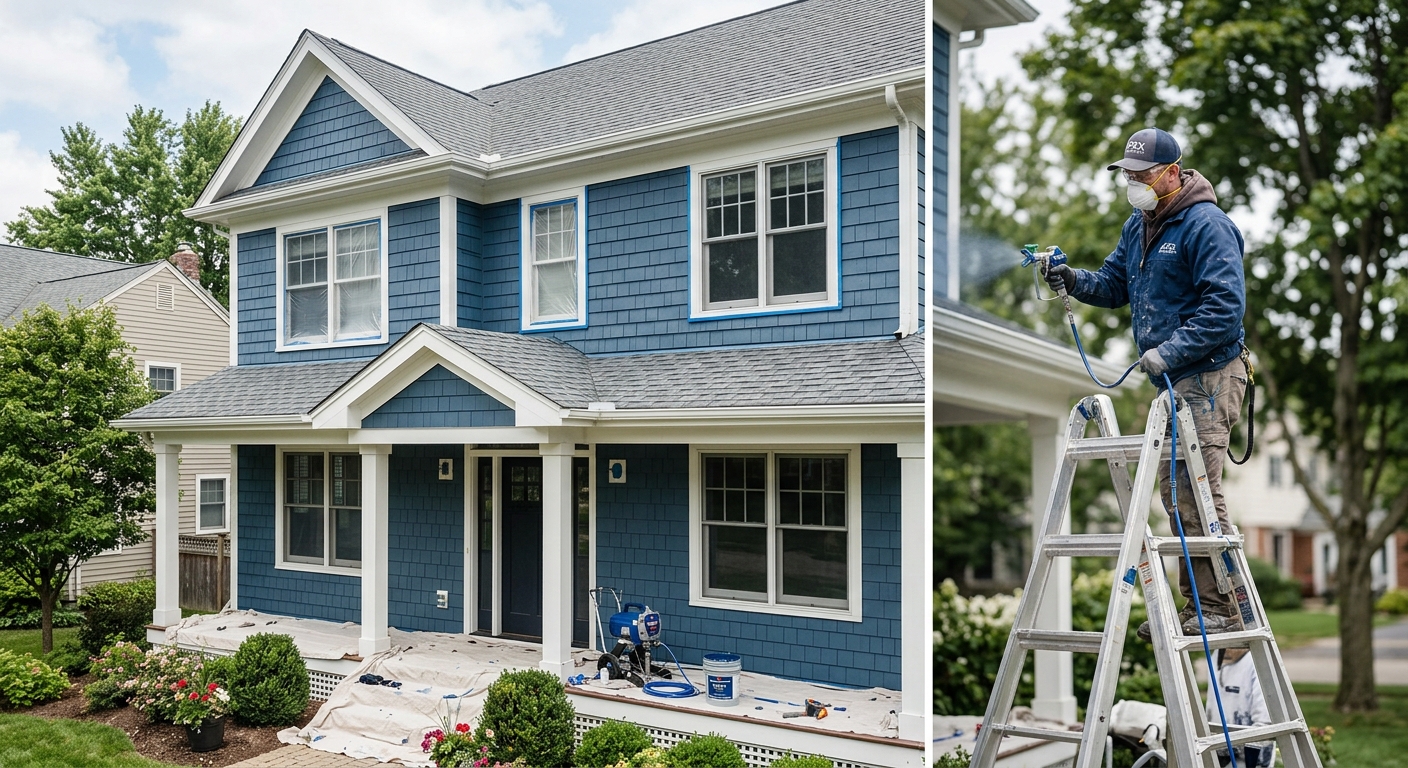
Painting options and costs in Maple Ridge
Painting in Maple Ridge is driven by both housing age and the way Lower Mainland–Southwest weather behaves through the year. With 28.6% of homes built before 1981, many properties need more than just a “topcoat”—expect scraping, patching, spot-priming, and sometimes stain-blocking before paint goes on. If your place dates further back into the pre-1978 era, contractors often use lead-paint–safe work practices during disruptive prep to manage dust, disposal, and cleanup.
In this coastal region, exterior pricing is shaped by rain and humidity rather than extreme cold. Painters need dry stretches to apply and cure coatings properly, and they build in re-mobilization time when weather windows close. Interior work is steadier year-round, so crews commonly rotate toward indoor jobs in fall and winter to keep schedules moving. Demand is especially high in parts of Maple Ridge with more older housing stock and active renovations, such as Hammond, West Maple Ridge, and Albion—where whole-home repaints and trim upgrades are common.
Because prep can be 50%–70% of labour on a repaint, two contractors may quote the same paint “brand” yet price very differently based on what they include in sanding, caulking, priming, and surface conditioning. Use the ranges below as a realistic starting point, then match the quote to your actual scope.
| Service |
What's Included |
Typical Duration |
Price Range |
| Interior — whole home (walls, ceilings, trim) |
Protective masking, wall/ceiling prep, caulking as needed, primer where required, 2-coat finish to walls/ceilings, wash/clean, and basic trim work (not including major carpentry) |
4–10 days |
$2,200–$8,000 |
| Interior — per room (standard bedroom or living room) |
Prep and patching, prime bare spots, 2-coat finish to walls; trim/door touch-ups as described; cleanup and light protection |
1–3 days |
$300–$1,900 |
| Exterior — full house (siding, trim, soffits) |
Thorough surface prep, scrape/sand failing areas, caulking, mildew-resistant coating system, priming appropriate substrates, 2-coat exterior finish, and final cleanup |
7–16 days |
$1,500–$15,000 |
| Exterior — trim and accent colours only |
Spot prep on trim, sanding, caulking, primer where needed, 2-coat application, and protection of siding surfaces |
3–8 days |
$1,200–$6,000 |
| Kitchen cabinet painting (doors, frames, spray finish) |
Door removal/labeling where feasible, cleaning/de-greasing, sanding, bonding primer, spray-applied enamel finish (multiple coats), hardware masking, and re-install |
5–12 days |
$2,000–$6,500 |
| Specialty / faux finish (accent wall, texture) |
Surface sealing, specialty texture or faux technique, multiple steps for effect, and topcoat for durability |
2–7 days |
$500–$12,000 |
Prices are estimates only and vary by project scope, site access and material selection.
What affects the price of painting in Maple Ridge
Even when homeowners request the “same” job, quotes in Maple Ridge can land 30%–50% apart because the true drivers aren’t just paint—they’re prep depth, product system, scheduling pressure, and risk management. In the Lower Mainland–Southwest, exterior work is climate-bound by rain and humidity, and crews must apply coatings when surfaces are dry and temperatures are suitable for curing. That’s different from Ontario and Alberta, where the exterior window is often roughly late May to early October and contractors can plan around more predictable cold-to-warm swings. In coastal BC, crews may have longer overall flexibility than many inland areas, but humidity and mildew risk require high-adhesion, mildew-resistant systems and careful pacing.
For many homes here—especially those painted in the last 10–20 years—surface prep can dominate cost. With older stock (28.6% built before 1981), you’ll often pay for scraping, caulking, patching, and priming before the final 2-coat finish. On a repaint, that prep can represent 50%–70% of labour. A budget interior refresh might start around the low end of interior per-room pricing, while a full-home interior at the higher end typically reflects extensive patching, ceiling work, and trim detail. Exterior budgets can similarly swing: “trim-only” can be several thousand dollars less than a full house because the prep and coordination are smaller.
Concrete examples from Maple Ridge: (1) fibre cement or older wood siding with chalky areas usually needs more sanding and a stronger primer system; (2) sun-faded trim often requires additional stain-blocking/spot-priming to prevent bleed-through; and (3) multi-storey access can add scaffolding or lift time.
| Price Factor |
Why It Matters |
Cost Impact |
| Surface prep — scraping, sanding, patching drywall or wood |
Prep determines adhesion and long-term durability; in older homes it’s often the largest labour component |
+15% to +40% |
| Number of coats — 2-coat system over primer vs. 1 coat over existing |
Proper coverage and even sheen require planned coat counts; “one-coat” shortcuts cause flashing |
+5% to +25% |
| Paint quality tier — contractor-grade vs. premium (Benjamin Moore, Sherwin) |
Higher-tier coatings often hide better and resist scuffing/fading; may reduce rework |
±5% to ±20% |
| Ceilings and trim — adds significant time vs. walls-only |
Cutting in, masking, and detail work take longer than large wall areas |
+10% to +30% |
| Exterior season window — short season raises summer rates |
When dry-weather windows shrink, crews charge for scheduling pressure and faster mobilization |
+10% to +35% |
| Lead-safe precautions — required for pre-1978 homes with lead paint |
Containment, HEPA cleaning, and disposal increase prep time and costs if lead is present or suspected |
+5% to +25% |
| Surface material — drywall vs. plaster vs. wood vs. stucco |
Different substrates absorb differently and may need different primers and sealing steps |
±10% to ±30% |
| Height and access — multi-storey exterior requires scaffolding or lifts |
Access tools, safety measures, and protection increase labour and logistics |
+15% to +50% |
Permits & regulations in British Columbia
In British Columbia, painting typically does not require a permit for standard interior or exterior repainting. However, homes built before 1978 fall into a category where health guidelines recommend lead-paint testing before sanding or scraping. If lead is found (or if layers are suspected), professional lead-safe work practices are standard: wet methods to minimize dust, HEPA vacuuming, proper contained cleanup, and correct disposal of debris. This is generally not legally mandated for homeowners, but it’s the expectation for contractors doing prep that can generate dust.
What can require permits is usually outside the “painting” scope—examples include certain structural repairs, window replacements, or work that changes a building permit path. For typical painting, the main compliance items are contractor insurance and safe work practices.
Before signing, confirm your painter carries liability insurance and workers’ compensation coverage (WSIB/WCB coverage). Then get a written contract that clearly lists the paint brand/line, sheen, number of coats, and what surface prep is included (scraping, sanding, patching, priming, caulking). To verify coverage in Maple Ridge, ask for (1) a current insurance certificate naming you as additionally insured (where applicable), (2) proof of workers’ compensation account/coverage, and (3) product/material details so the quote matches your finish expectations. For licensing, use British Columbia’s contractor licensing/consumer protection listings (or the provincial registry your contractor provides) and ensure the individual/company name matches the quote and invoices.
Interior vs exterior painting — getting the best result in Maple Ridge
In Maple Ridge’s Lower Mainland–Southwest climate, a long-lasting paint job is less about chasing the highest brand name and more about controlling prep, moisture exposure, and application details. For interiors, surface prep is usually the make-or-break factor: filling holes, sanding edges smooth, and priming stained or porous areas. Sheen choice matters too—flat or matte often hides wall imperfections, but it’s less forgiving in high-touch areas; eggshell or satin tends to work better for family rooms and hallways; and semi-gloss on trim makes wiping and maintenance easier. Practically, two coats over a proper primer system almost always outlasts one “heavy” coat because coverage and film build are more consistent.
For exteriors, the failure points in BC are frequently moisture and adhesion. In practice, caulking before painting is critical to prevent water ingress behind trim and into building seams. Primer type matters by substrate: some wood or chalky surfaces require bonding or stain-blocking primers, while other areas need systems designed for fibre cement or masonry. Because mildew risk is higher with humidity, contractors should use mildew-resistant products and plan around dry weather windows so coatings cure properly. Lead-safe precautions also apply for pre-1978 homes when disruptive prep is required during scraping/sanding.
Cabinet painting is often the best value alternative to replacement when the cabinet boxes are solid. If your kitchens are structurally sound, spending on a spray-finish cabinet process (multiple coats plus sanding and primer) can deliver a major refresh without the full demolition and installation costs.
Where money is justified: for example, moving from trim-only exterior work into a full-house repaint can be worth it when you have widespread chalking or failed coatings—skipping prep on larger surface areas can cost more later due to premature peeling. Conversely, if your siding is intact and only trim is faded, trim-only pricing can avoid unnecessary prep and still deliver the curb appeal boost.
| Project Type |
Key Prep Step |
Recommended Coats |
Price Band |
| Interior — fresh drywall (new construction) |
Sealing and priming to uniform absorbency, plus caulking gaps |
Primer + 2 finish coats |
$1,200–$5,000 |
| Interior — repaint (good condition, no repairs) |
Light sanding, cleaning, spot-priming only where needed |
1–2 finish coats (often 2) |
$300–$3,200 |
| Interior — repaint (patching and priming needed) |
Patch drywall, sand smooth, prime repaired areas and stains |
Primer + 2 finish coats |
$800–$8,000 |
| Exterior siding (wood or fibre cement) |
Scrape/sand failing areas, caulk, and bond with correct primer |
Primer where required + 2 exterior finish coats |
$1,200–$15,000 |
| Exterior trim and accents only |
Strip failing edges, sand, prime spots, and caulk joints |
2 finish coats (with primer on bare/failed areas) |
$1,200–$6,000 |
| Kitchen cabinets (spray finish) |
Degreasing, sanding for bonding, bonding primer |
Primer + 2–3 enamel coats |
$2,000–$6,500 |
How to choose a painting contractor in Maple Ridge
Choosing the right contractor in Maple Ridge starts with verifying the basics: British Columbia licensing status where applicable, liability insurance, and workers’ compensation coverage (WSIB/WCB). Here’s how to check each in practice. First, request a current proof-of-insurance document (certificate of insurance) and confirm it’s in the same legal name as the quote and invoice. Second, ask for workers’ compensation proof (often shown as a coverage number/status). Third, verify licensing/standing using the relevant provincial online registry information your contractor provides, and match the company name, phone number, and address.
Next, get 2–3 itemised written quotes. You want a breakdown that separates labour and materials and clearly lists prep work, primer type, paint brand/line, sheen, caulking, and cleanup. Avoid quotes that are a single lump sum without describing what’s excluded. Ask whether permits are required for any ancillary work (usually not for painting itself), and confirm what happens with disposal and hazardous waste from prep (especially for pre-1978 homes where dust control and disposal procedures matter).
Warranty matters: ask for a workmanship warranty length and whether it covers peeling, bubbling, and adhesion failures due to prep/application (and for how long). Product/manufacturer warranty also matters, but it typically requires correct surface prep and product use. For payment, never pay more than 10%–15% upfront; hold back a portion until the job is complete and inspected. Lastly, get start date and completion estimate in writing, because weather windows affect exterior work timing.
- Insist on written scope: surfaces included, sheen/finish type, and number of coats
- Confirm primer system (bonding, stain-blocking, mildew-resistant) and where primer is required
- Ask how they protect landscaping, vehicles, and windows during exterior prep
- Request details on sanding/scraping methods and dust control
- Verify disposal is included for paint scrapings and contaminated debris
- Check they address caulking before exterior paint (not after)
- Ask who is doing the work (crew lead, trades involved) and whether subcontractors are used
- Confirm warranty terms in writing and what triggers a call-back
- Review prep exclusions: “as-is” doesn’t mean they can skip sanding or priming
- Confirm they’ll match sheen on trim (commonly semi-gloss) and maintain consistent finish
- Verify insurance and workers’ compensation coverage before work starts
- Schedule for exterior around dry stretches and ask how they handle weather delays
In Maple Ridge, red flags I’ve seen repeatedly include: (1) quotes that won’t specify paint line, primer, sheen, or coat count; (2) promises of “we’ll apply paint over anything” without discussing prep; (3) no proof of insurance/workers’ compensation when requested; (4) asking for a large deposit beyond 10%–15% upfront; and (5) refusing a walkthrough that measures walls/trim, photos existing conditions, and explains likely prep needs.
Frequently asked questions — painting in Maple Ridge
How do I compare painting quotes?
Start by lining up the scope line-by-line: surface prep (scraping, sanding, patching drywall), caulking, primer type, paint brand/line, sheen, and the exact number of coats. In Maple Ridge, prep is often where quotes diverge, especially on older homes (28.6% built before 1981) where adhesion and stain-blocking matter. Compare how each contractor addresses mildew risk for exteriors in the Lower Mainland–Southwest climate and whether they’ll schedule around dry weather windows. Also ask for an itemised labour + materials breakdown instead of a lump sum. A “cheaper” quote can become more expensive if it skips priming or doesn’t include disposal/cleanup for prep debris. Finally, check payment terms and warranty wording—those often signal whether the contractor is set up for quality workmanship.
What paint sheen should I use in different rooms?
In British Columbia homes in Maple Ridge, sheen choice is mostly about washability and light reflection. Many homeowners choose flat or matte on low-traffic ceilings and sometimes bedrooms where minor wall imperfections need hiding. For living areas and hallways, eggshell or satin often balances cleanability with appearance. Trim is commonly semi-gloss because it wipes easily and holds up to daily contact—especially around doorways, baseboards, and stair rails. If you’re doing cabinets, a higher-build enamel (often satin/semi-gloss depending on your style) is typical for durability. If you’re comparing quotes, ask for the exact sheen on each surface—interior “one product fits all” shortcuts can lead to inconsistent look and premature wear.
Can I paint my house exterior in spring or fall in Maple Ridge?
Yes, but timing is everything in Maple Ridge’s coastal conditions. Spring can work if you have a reliable stretch of dry weather and temperatures allow proper curing; fall can also work but humidity and rain return sooner than homeowners expect. For exterior work, painters must apply coatings when surfaces are dry, and they plan for slower drying in damp shoulder seasons. That’s why you’ll often see contractors concentrate exterior crews during the more stable dry windows rather than treating spring/fall as equal. If your goal is a fresh look without disruption, trim and accents may be easier to schedule than full-house siding repaint. If you’re planning full exterior work, budgets often fall into the broader exterior band—commonly around the middle range for a typical home—such as $1,500–$15,000, depending on prep and weather management.
How do I choose a painting contractor in Maple Ridge?
Choose the contractor who can prove readiness and match your scope. In Maple Ridge and the Lower Mainland–Southwest, I recommend verifying three things before you sign: (1) liability insurance, (2) workers’ compensation coverage, and (3) the appropriate provincial licensing/standing details the contractor provides. Then ask for 2–3 itemised written quotes with prep steps and material specifics. The best quotes clearly state whether scraping/sanding, patching, priming, and caulking are included, and how they handle disposal of prep debris. Ask for workmanship warranty terms and how product warranties apply. Pay smart: keep upfront payment to about 10%–15% and hold back a portion until you’ve inspected the completed work. A solid timeline in writing matters too—exterior jobs depend on dry-weather windows.
How many coats does an exterior repaint need in Maple Ridge?
Most exterior repaints require a 2-coat finish system, but the exact total can vary based on substrate condition and primer needs. In Maple Ridge, if there’s chalking, aged coatings, bare wood, or repairs, proper adhesion often requires priming before the finish coats. That means the contractor may apply primer where required, then 2 exterior finish coats for uniform coverage and durability. In humid coastal conditions, skipping primer or reducing coats can increase the risk of flashing, poor bonding, and earlier peeling. When you compare quotes, ask specifically: how many finish coats, where primer is included, and whether mildew-resistant products are used. For context, typical full-house exterior repaint pricing can fall within $1,500–$15,000, which reflects prep depth and weather scheduling as much as paint quantity.
What is the best primer for older Maple Ridge homes?
There isn’t one single “best” primer—older Maple Ridge homes need the right primer for the surface condition. If your siding has chalky residue, you typically need a bonding primer to create adhesion. If there are stains (water marks, tannins on some woods), stain-blocking primer may be required to prevent bleed-through. For patched drywall or damaged areas, a primer formulated for the substrate is essential before topcoating. Homes built before 1978 may also involve lead-paint–safe practices during scraping or sanding, and primer selection still has to be paired with proper dust control and cleanup. A good contractor will identify what’s on your surface now (and what failed previously) and then choose primer accordingly. If you’re budgeting, interior repaint projects can range widely (for example, per-room work may start around $300–$1,900), and primer coverage is one reason quotes differ.