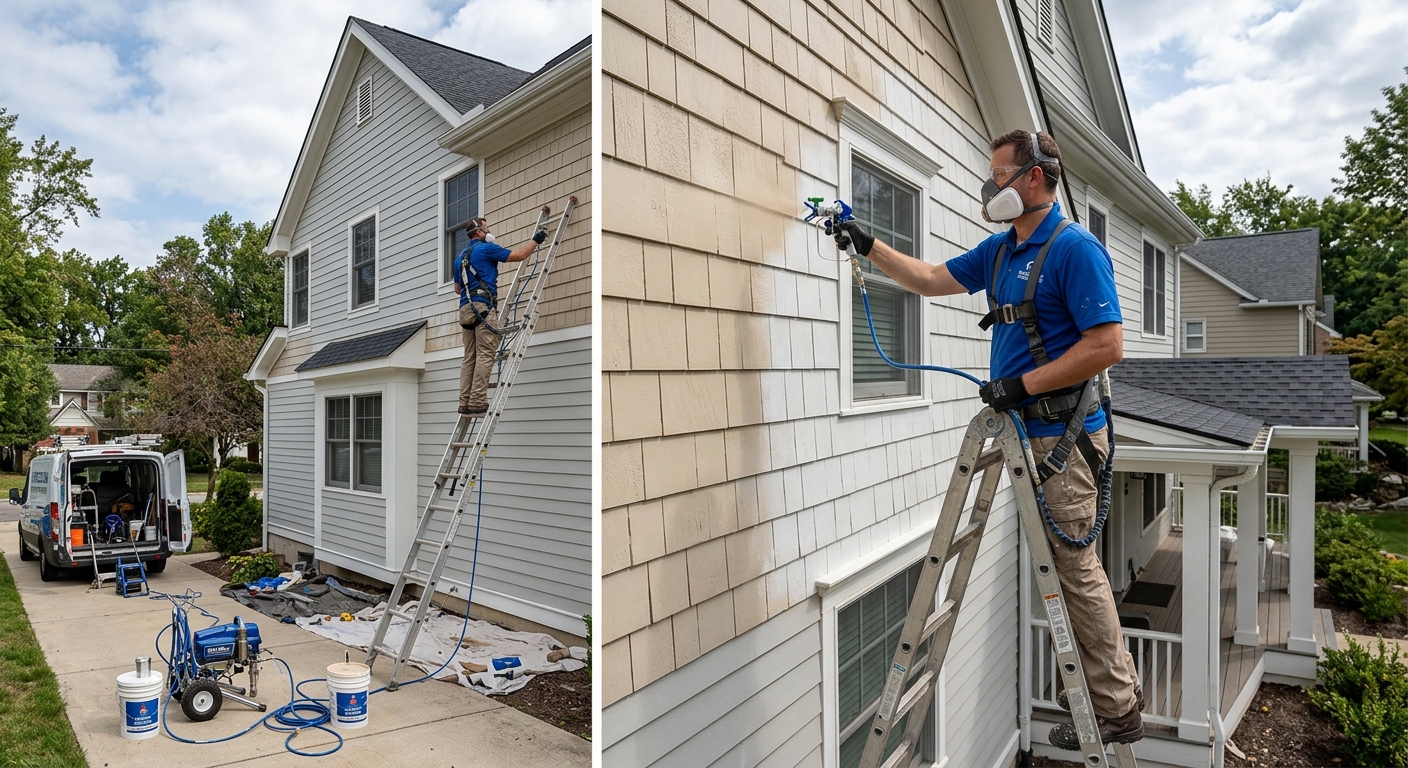
Painting options and costs in Westbrook Estates
Westbrook Estates painting projects range from quick refreshes to full prep-and-protect work, and your quote depends on how much surface labour the home demands. In a small community setting (population 1,225 in 2021, (Statistics Canada, 2021 Census)), trades can be in-demand when multiple neighbours start the same season—so early scheduling matters. A key cost driver is housing age: much of the Calgary region’s stock dates back decades, and pre-1978 homes can mean extra testing and lead-safe prep before sanding, scraping, or patching old trim and siding. Even when lead is not present, that careful approach often increases prep time.
In the Calgary area, exterior painting costs are shaped by the weather window. We typically plan workable exterior work from mid-May to late September when daytime highs stay above 10°C and surfaces can dry properly; hail, strong UV, and rain showers add planning and product requirements. Interiors are less season-sensitive, but costs still move with labour (prep complexity, ceiling height, access), product choices (primer and topcoat system), and whether you need trim, doors, or specialty texture work. For many homeowners, the highest-impact decisions happen in prep—patching, caulking, stain blocking, and sanding—before we ever discuss the final colour.
In Westbrook Estates, demand is especially steady around local streets with older bungalow styles and mature trees, where careful exterior masking and touch-up detailing are often requested to keep overspray off landscaping and entryways. Once those site realities are understood, we can estimate your budget range and compare options in the table below.
| Service |
What's Included |
Typical Duration |
Price Range |
| Interior — whole home (walls, ceilings, trim) |
Moveable items protected, surface cleaning, patching, sanding, caulking as needed, primer where required, two-coat finish on walls/ceilings, painting doors and trim, walkthrough touch-ups |
5–12 days |
$1,200–$7,500 |
| Interior — per room (standard bedroom or living room) |
Protect floors and fixtures, prep/sand, spot-prime, two-coat finish on walls, basic trim painting, cut-ins at edges |
1–3 days |
$400–$1,800 |
| Exterior — full house (siding, trim, soffits) |
Thorough wash/degrease, scrape/sand loose paint, patch and caulk, prime bare/damaged areas, elastomeric/flexible exterior coating system where needed, paint siding/trim/soffits, final cleanup |
1–3 weeks (weather-dependent) |
$2,500–$9,000 |
| Exterior — trim and accent colours only |
Prep of trim and accent surfaces, spot prime, caulk where needed, paint trim and selected elements, masking of siding, final walkthrough |
3–8 days |
$1,200–$4,500 |
| Kitchen cabinet painting (doors, frames, spray finish) |
Degreasing, sanding and bonding primer, cabinet box and hardware-area prep, spray finish on doors/frames, clear coat as required for durability, reinstallation touch-ups |
5–12 days |
$800–$7,000 |
| Specialty / faux finish (accent wall, texture) |
Surface conditioning, base coat, texture/faux application, sealing/protection coat, patching where required, colour matching and final finish inspection |
1–5 days |
$600–$6,000 |
Prices are estimates only and vary by project scope, site access and material selection.
What affects the price of painting in Westbrook Estates
The same “paint the house” job can land 30–50% apart across Calgary and Alberta because painters price risk and preparation—especially when surfaces have old paint, uneven previous DIY work, or failing caulking. Labour is also not uniform: in peak summer, the short exterior season compresses scheduling, so crews charge more to secure dependable weather-dependent production. When you’re comparing quotes, treat the labour-and-prep line items as the real apples-to-apples measure, because product-only differences rarely explain the full gap.
For the region, exterior work is tightly climate-bound: we need temperatures reliably above 10°C and enough drying time between rain events. In Ontario and Alberta, the workable stretch is roughly late May to early October, and strong UV plus freeze–thaw cycles make durability a priority. Coastal BC can have longer calendar time, but higher humidity and frequent precipitation drive mildew-resistant systems and more cautious scheduling. In Westbrook Estates, that shortened window means fewer vacant slots in summer, which keeps exterior pricing firmer than shoulder months.
Older homes across the Calgary region also push costs upward. On repaints, surface prep can be 50–70% of labour—scraping loose paint, sanding edges, patching drywall or wood rot, priming stains, and recaulking joints. A “trim-only” exterior refresh might start around the $1,200–$4,500 range, but a full exterior repaint typically climbs into the $2,500–$9,000 band once we’re dealing with widespread patching and a full siding/soffit system. For interiors, ceilings, lots of trim, and access (stairs, tight hallways) can nudge a standard room job toward higher per-room pricing even before we select premium paints.
Concretely for Westbrook Estates: if your facade has cracked caulking around windows, we’ll spend more on removal and re-caulking before coatings go on. If there are hail-damaged areas, we often need extra spot-priming and careful blending to prevent flashing. And if your last coat was applied over unprepared glossy surfaces, adhesion prep adds time but prevents peeling—protecting the budget you’ll spend today.
| Price Factor |
Why It Matters |
Cost Impact |
| Surface prep — scraping, sanding, patching drywall or wood |
Prevents peeling and helps new paint bond to aged substrates |
+20% to +60% on repaints |
| Number of coats — 2-coat system over primer vs. 1 coat over existing |
Hides old colour and ensures uniform film build |
+10% to +40% depending on existing condition |
| Paint quality tier — contractor-grade vs. premium (Benjamin Moore, Sherwin) |
Impacts coverage, durability, washability and UV performance |
+5% to +25% (often offsets with fewer labour hours) |
| Ceilings and trim — adds significant time vs. walls-only |
More cutting-in, masking, and careful application to avoid lap marks |
+15% to +55% |
| Exterior season window — short season raises summer rates |
Weather dependency compresses crew availability |
+10% to +35% vs. off-season scheduling |
| Lead-safe precautions — required for pre-1978 homes with lead paint |
Safe controls increase prep time and disposal requirements |
+5% to +30% when applicable |
| Surface material — drywall vs. plaster vs. wood vs. stucco |
Different bonding and priming needs for adhesion and durability |
+10% to +45% |
| Height and access — multi-storey exterior requires scaffolding or lifts |
More setup time and safer application workflow |
+10% to +50% |
Permits & regulations in Alberta
In Alberta, painting typically does not require a permit for standard residential interior or exterior work. What does change is the required work practice when you’re dealing with older homes. For houses built before 1978 in Westbrook Estates and across Calgary, health guidelines recommend testing for lead paint before sanding, scraping, or aggressive prep. If lead is present, contractors use lead-safe work practices such as wet methods to control dust, HEPA vacuuming, proper containment, and correct disposal. Homeowners aren’t usually legally required to do lead testing themselves, but professional contractors standardly plan for it to keep the job safer for occupants and workers.
Step 1 (licensing): In Alberta, verify the contractor’s licensing status through the appropriate provincial registry information available online for their business category, and confirm they’re operating as a properly registered trade entity. Step 2 (insurance): ask for a current Certificate of Liability Insurance naming you as the client (if your contract requires it) and confirm coverage dates and limits. Step 3 (work coverage): request proof of WSIB/WCB workers’ compensation coverage for their employees and subcontractors.
Also insist on a written contract that lists the paint brand/line and sheen, the number of coats, which surfaces receive primer, and which prep activities are included (scrape/sand, caulking, patching, stain blocking). Clarify what’s excluded—like furniture relocation, asbestos/major remediation, or additional repairs—and note disposal and cleanup responsibilities.
What typically does NOT require a permit: interior repainting, drywall patch-and-finish, trim/door painting, exterior repainting, and caulking replacement when tied to the paint system.
What typically DOES require permits: major structural changes, electrical/plumbing modifications, or work that triggers separate building approvals (painting itself usually isn’t the trigger).
Interior vs exterior painting — getting the best result in Westbrook Estates
In Westbrook Estates, long-lasting paint is mostly about preparation and matching the paint system to how Alberta behaves on your surfaces. Interiors fail less often from weather and more often from poor substrate prep, wrong sheen choices, or skipping the primer step. The rule I follow: fill, sand, and prime what needs it—filling hairline cracks, smoothing patchwork, and priming stains or uneven repairs—before anyone applies topcoat. Then choose sheen by room use. Flat hides wall imperfections but marks more easily; eggshell and satin handle daily life better in living areas, and semi-gloss is ideal for trim, doors, and frequently touched areas because it cleans well. Two coats over the correct primer outlast one thick coat, especially when going over patched areas that absorb differently.
Exteriors are more unforgiving. Alberta’s freeze–thaw cycles, UV intensity, and wind-driven rain mean caulking is not optional—it’s part of the waterproofing strategy. We remove failing caulk, then install new exterior-grade caulk before painting so water can’t work its way behind the coating. Primer type matters too: we use the right primer for wood, fibre cement, or previously painted surfaces to ensure adhesion and to block tannin or stains where they bleed. Unlike BC, where humidity and mildew resistance are major concerns, we still plan around rain and overnight lows to keep application and dry times within product specs.
If you’re thinking of kitchen upgrades, cabinet painting can be a smart alternative to replacement. It’s often the most cost-effective way to change the whole look—while a full cabinet replacement can significantly outpace the $800–$7,000 cabinet painting band. For example, if your home’s interior repaint estimate falls within the $400–$8,000 interior band, spending extra on prep and proper priming is usually where the return is. Trying to “save” by skipping spot-prime on repaired drywall or leaving glossy patches un-sanded tends to cost more later.
For pre-1978 homes, we also plan lead-safe precautions for sanding or scraping so the end result isn’t just attractive—it’s responsibly built for your family and your budget.
| Project Type |
Key Prep Step |
Recommended Coats |
Price Band |
| Interior — fresh drywall (new construction) |
Prime properly to unify absorbency, then sand for a smooth finish |
2 coats finish over primer |
$1,000–$6,000 |
| Interior — repaint (good condition, no repairs) |
Clean and degloss lightly; spot-prime any scuffs or patches |
2 coats on walls/ceilings; 2 coats on trim as needed |
$400–$4,500 |
| Interior — repaint (patching and priming needed) |
Fill, sand, spot-prime repairs to prevent flashing |
2 coats over primered areas; blend to match existing finish |
$700–$8,000 |
| Exterior siding (wood or fibre cement) |
Scrape/sand loose paint, address caulking and prime bare/damaged spots |
2 coats exterior system (primer + finish where required) |
$2,500–$9,000 |
| Exterior trim and accents only |
Mask siding cleanly; prep trim edges and replace cracked caulk |
2 coats on trim after spot priming |
$1,200–$4,500 |
| Kitchen cabinets (spray finish) |
Degrease, sand/bond primer, and control finish for durable adhesion |
Primer + 2 finish coats (spray), plus protection as required |
$800–$7,000 |
How to choose a painting contractor in Westbrook Estates
Choosing the right painter in Westbrook Estates is mostly about verification and clarity. First, confirm Alberta coverage and accountability. For licensing, check the contractor’s registration and business details in the relevant Alberta registry information available online for their trade category. Next, ask for a Certificate of Liability Insurance and verify it’s current, with adequate limits for residential work. Then confirm WSIB/WCB workers’ compensation coverage—request proof that applies to their employees and any subcontractors who will be on your property.
Second, get 2–3 itemised written quotes, not “one number.” You want labour and materials broken out so you can compare prep work (scrape/sand, caulking removal/replacement, patching, stain blocking), the paint system (primer type, topcoat line), and protection/masking procedures. Third, read exclusions: disposal included or not, furniture relocation responsibilities, what happens if weather delays exterior work, and whether permit pull is required (most painting doesn’t need one, but the contract should still state responsibilities clearly). Warranty matters: ask for a workmanship warranty length, what it covers (peeling, flaking, adhesion), whether product/manufacturer coverage applies, and if it transfers if you sell your home.
Finally, protect your cash flow. Never pay more than 10–15% upfront. Hold back a portion until final cleanup and punch-list items are complete. Get a written start date and a realistic completion estimate that acknowledges Calgary’s weather variability for exteriors.
- Ask for proof of Alberta business registration and relevant trade standing.
- Request a current Certificate of Liability Insurance (and confirm coverage dates).
- Confirm WSIB/WCB coverage for the painters who will be on-site.
- Require itemised quotes with labour + materials (not lump sum only).
- Make sure prep steps are specified: scrape/sand, patching, caulking replacement.
- Confirm primer type and where it will be used (spot vs full prime).
- Clarify paint brand/line and sheen for each room or surface.
- Ask how colours are matched and what happens if you change your mind mid-job.
- Check whether disposal, drywall dust cleanup, and final wash-down are included.
- Verify their exterior schedule plan (how they manage rain and overnight lows).
- Confirm warranty terms in writing, including what “defect” means.
- Agree on a payment schedule with a holdback until completion.
Red flags I see too often in the Westbrook Estates area: quotes that don’t describe prep or caulking; promises of “two coats no primer” over repaired surfaces; refusal to provide insurance/WSIB/WCB proof; asking for large upfront deposits (beyond 10–15%); and contracts with vague language that omits materials, warranty, or exclusions for weather-delayed exterior work.
Frequently asked questions — painting in Westbrook Estates
What's the difference between paint quality tiers?
In Alberta, the “tier” usually comes down to coverage, film build, and how well the paint holds up to UV, scuffs, and cleaning. Contractor-grade paints can be fine for budget refreshes, but you may get less coverage per coat or more visible roller texture, meaning extra labour time. Premium lines (commonly selected in the Calgary market, such as Benjamin Moore or Sherwin) often hide better and resist scuffing, which can reduce rework when walls are high-traffic or when you’re repainting ceilings and trim. For homeowners in Westbrook Estates, the best value is usually when higher-tier paint is paired with correct prep and primer—because that combination protects the work. If your interior project is within the $400–$8,000 range, the biggest difference often shows up after the job when you’re cleaning and living with the finish.
How do I compare painting quotes?
Start by comparing the scope line by line, not the total price. Ask each contractor the same questions: what prep is included (scraping, sanding, patching, caulking removal), what primer is used and where, and how many coats are applied to which surfaces. For exteriors in Westbrook Estates, confirm how they handle the short exterior season around mid-May to late September, and what they’ll do if rain or overnight lows affect dry times. Look for itemised labour and materials—particularly the difference between “walls only” and “walls + ceilings + trim,” and whether stain blocking is included for repaired or previously marked areas. If one quote lands closer to the lower end of the interior $400–$8,000 band but omits prep, it often catches up with you later through peeling, flashing, or adhesion problems.
What paint sheen should I use in different rooms?
Sheen choice affects both appearance and cleanability. In Westbrook Estates, most homeowners prefer flat or matte only on low-touch ceilings (and sometimes very low-traffic walls), while eggshell or satin works well for living rooms and bedrooms because it balances washability with a soft look. Kitchens, hallways, and bathrooms typically do better with satin or semi-gloss on trim—semi-gloss is more forgiving for cleaning around doors and frequently touched edges. For woodwork and trim, semi-gloss or high-durability trim finishes usually look crisp and stand up to scuffs. A common mistake is using a high-gloss sheen on walls: it can show imperfections. Another mistake is using flat paint in high-touch areas, which can mark easily. A professional quote should specify sheen per surface so you don’t guess after the fact.
Can I paint my house exterior in spring or fall in Westbrook Estates?
Yes, but in Westbrook Estates (and the Calgary region), timing is everything. Exterior work generally needs temperatures above 10°C and enough dry time for the coating system to cure properly. Spring can be workable late May onward when days warm consistently; fall can be workable only if conditions stay warm enough and rain/overnight lows don’t interfere with drying. The short, weather-dependent window means scheduling can be tighter, which affects exterior pricing—full exterior repaints commonly fall into the $2,500–$9,000 band because prep and product selection are critical. If you paint too early in spring or too late in fall, you risk poor adhesion, longer cure times, or uneven finish due to moisture and temperature swings.
How do I choose a painting contractor in Westbrook Estates?
Choose based on verification and clarity. In Alberta, ask for proof of liability insurance and WSIB/WCB workers’ compensation coverage, and confirm their business registration through available provincial information online. Then request 2–3 itemised written quotes that spell out labour and materials, including what’s included in surface prep (scraping, sanding, patching, caulking), primer type, paint brand/line, and number of coats. For pre-1978 homes, professional contractors should plan for lead-safe work practices if lead testing indicates it’s needed—at minimum, they should explain their dust control and safety approach. Make sure your contract includes workmanship warranty terms, product/manufacturer warranty details (where applicable), and a payment schedule that doesn’t start with more than about 10–15% upfront. A detailed timeline for weather-sensitive exterior work is a good sign.
How many coats does an exterior repaint need in Westbrook Estates?
Most exterior repaints in Westbrook Estates are planned as a 2-coat system after primer where needed. The exact breakdown depends on substrate condition: if we’re scraping back to bare spots, addressing damaged areas, and properly priming, the topcoat typically gets two coats for durability and uniform colour. If you’ve got heavily stained or patched areas, primer and stain-blocking may add steps even though the final number of finish coats remains part of the 2-coat plan. For many full exterior projects, this is why budgets often land in the $2,500–$9,000 band—prep and priming are the difference between a finish that lasts and one that peels or flashes. A contractor should document how many coats are planned per surface (siding vs trim/soffits) and specify the product system.