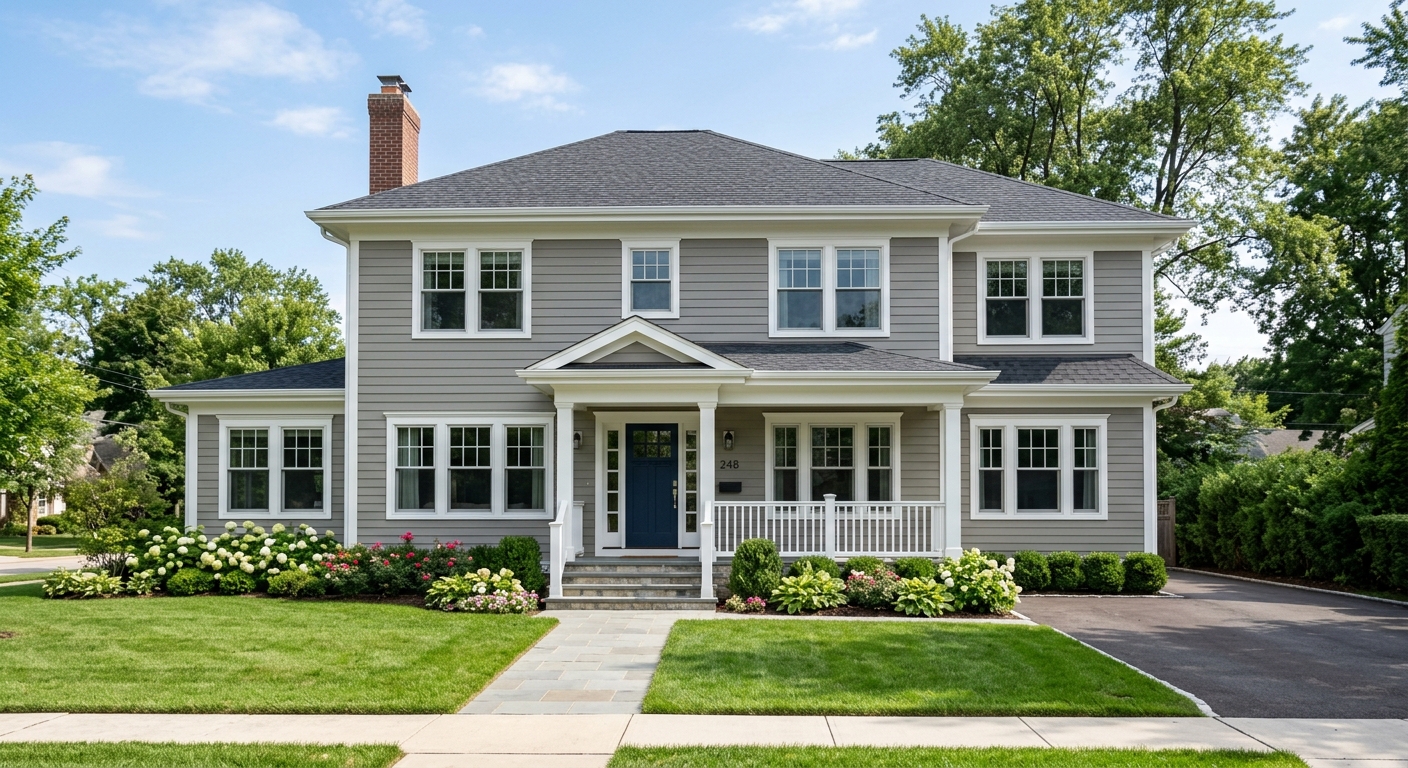
Painting options and costs in Fort Macleod
Fort Macleod homeowners usually have a clear split between interior and exterior painting because the summer season in the Lethbridge–Medicine Hat area is short and weather-sensitive. That matters more here than many people expect: with 60.8% of homes built before 1981, a lot of properties come to market with older siding and interior finishes, which typically means more prep—scraping, sanding, patching, caulking and priming—before any colour change can last. In these older homes, lead-safe work practices may also be needed if you’re disturbing older coatings (especially on windowsills, trim, or exterior surfaces where heavy scraping is planned). (Statistics Canada, 2021 Census)
On the exterior side, daytime conditions must stay suitable for application and drying, and contractors can only operate in that late-spring through early-fall stretch. That compressed schedule concentrates demand into a few months, so even “same-size” houses can come in at different totals depending on whether crews are booking quickly or further out. For the interior, Alberta’s dry conditions can help paint dry reliably, but the real driver of cost is still prep quality and the sheen and durability you choose—particularly around kitchens, trim, and high-touch areas.
In Fort Macleod, trade demand is often strongest in older neighbourhood pockets where repainting cycles are due—places like the Castleton Avenue and surrounding central residential blocks—because many homes are set up for repainting after long winters. Once you decide whether you’re pricing an interior refresh or a full exterior repaint, the next step is comparing typical scopes and budgets, which is easiest to see in the table below.
| Service |
What's Included |
Typical Duration |
Price Range |
| Interior — whole home (walls, ceilings, trim) |
Surface prep (patch/sand/caulk as needed), prime where required, two topcoats on walls/ceilings, clean edges around trim/doors; protective floor/fixture coverings |
5–10 days |
$1,600–$4,800 |
| Interior — per room (standard bedroom or living room) |
Prep, spot-prime, two topcoats on walls; light trim touch-ups as specified; patching included for minor dings/holes |
1–2 days |
$800–$1,650 |
| Exterior — full house (siding, trim, soffits) |
Power-wash/clean, scrape/sand flaking areas, caulk gaps, prime bare/spot areas, two coats for colour surfaces and appropriate system for trim/soffits |
7–14 days |
$3,500–$9,000 |
| Exterior — trim and accent colours only |
Clean prep, scrape/sand where needed, prime bare spots, caulk where required, two coats on selected trim/accent areas |
3–7 days |
$2,500–$5,400 |
| Kitchen cabinet painting (doors, frames, spray finish) |
Degrease/clean, sand for adhesion, prime/spot-prime, spray finish system, hardware masking/removal as agreed |
5–12 days |
$2,000–$4,000 |
| Specialty / faux finish (accent wall, texture) |
Prep to substrate, base coat system, texture/faux application, protective clear where needed, finish blending and edge work |
1–4 days |
$900–$3,800 |
Prices are estimates only and vary by project scope, site access and material selection.
What affects the price of painting in Fort Macleod
Even when two homeowners think they’re getting the “same job,” painting quotes across Lethbridge–Medicine Hat can swing by 30–50%—mostly because prep and weather scheduling aren’t line items you can ignore. In southern Alberta, exterior painting is tightly tied to temperatures and drying time: crews generally need sustained conditions when daytime temps are around 10°C+ and nights are warm enough to avoid freezing during cure. That’s different from coastal BC, where humidity and rain drive the need for mildew-resistant products and stricter dry-day timing. Here, the risk is more about sun and wind affecting drying and how quickly surfaces skin over, plus winter freeze–thaw in the long term. The shorter, more concentrated season means labour costs and calendar pressure often push exterior pricing toward the upper end of the local band—especially for full houses.
Older housing stock is another cost driver. In our area, older homes often require extensive scraping and priming because coatings can be uneven, previously patched, or failing. Surface prep frequently represents a big share of total labour—commonly 50–70% on repaints—so a “colour change” can become a repairs-and-adhesion job. For context, an interior repaint for a whole home can fall anywhere from the lower band into the high end (roughly $800–$5,000), while exterior work is more likely to start around the mid-range when extensive prep is involved (roughly $2,500–$9,000).
Concrete examples in Fort Macleod: (1) If your siding shows blistering or peeling near caulking joints, we typically need extra scrape/sand/prime steps before topcoats—this is where quotes diverge. (2) If your house has multi-storey access requiring scaffolding or lifts, labour time increases even when the surface area is similar. (3) If there’s a pre-1980 component and we must do heavy scraping, lead-safe containment procedures can add time and cost, even when the final painted look is straightforward.
| Price Factor |
Why It Matters |
Cost Impact |
| Surface prep — scraping, sanding, patching drywall or wood |
Adhesion and longevity depend on removing loose coatings and repairing defects before paint goes on |
Often +20% to +60% versus light prep |
| Number of coats — 2-coat system over primer vs. 1 coat over existing |
Coverage and durability depend on correct build; one thick coat usually fails faster |
Typically +10% to +35% depending on substrate |
| Paint quality tier — contractor-grade vs. premium (Benjamin Moore, Sherwin) |
Premium coatings usually cover better and resist fading/marking longer in Alberta sun |
Material upcharge often +5% to +20% |
| Ceilings and trim — adds significant time vs. walls-only |
Edging, cutting-in, and protecting floors increases labour, especially around window/door trim |
Commonly +15% to +40% |
| Exterior season window — short season raises summer rates |
Weather windows and crew schedules can compress availability |
Often +10% to +30% for late-season bookings |
| Lead-safe precautions — required for pre-1978 homes with lead paint |
Special containment, wet methods and cleanup planning add time for heavy scraping |
Often +5% to +25% depending on extent of scraping |
| Surface material — drywall vs. plaster vs. wood vs. stucco |
Each substrate needs different primers and prep (bonding, sealing, or patching) |
Can change the job by +10% to +50% |
| Height and access — multi-storey exterior requires scaffolding or lifts |
Safety setup and equipment time increases labour regardless of material costs |
Often +15% to +60% |
Permits & regulations in Alberta
In Alberta, painting work generally does not require a permit for typical interior or exterior repainting. Where rules show up is in safe work practices and contractor paperwork. For homes built before 1978, health guidelines recommend testing for lead paint before sanding or scraping, and using lead-safe work practices if lead is present—wet methods to reduce dust, HEPA vacuuming, and proper disposal. This is not usually something homeowners must self-enforce legally, but it is standard professional practice when we encounter conditions that can create airborne dust during preparation.
Licensing and coverage are also critical. Painting contractors should carry liability insurance and have workers’ compensation coverage (WSIB/WCB) for employees. Before work starts, insist on a written contract that specifies the paint brand and sheen (or sheen type), the number of coats, and exactly which prep steps are included (e.g., caulking, spot-priming, sanding loose material, minor drywall patching). Also confirm whether disposal/cleanup is included.
How you verify in Fort Macleod: (1) Ask for the contractor’s insurance certificate—make sure it names your business/project as appropriate and includes liability coverage. (2) Confirm workers’ compensation coverage by requesting proof for their firm and employees. (3) For Alberta licensing and compliance, check the contractor registry where applicable and confirm the business name matches the quote and the insurance documentation. (4) Finally, keep copies of the certificate and contract on file before any prep begins.
Interior vs exterior painting — getting the best result in Fort Macleod
In Fort Macleod, the difference between a long-lasting job and a premature failure is usually not the “brand name”—it’s the prep and the system you apply for the conditions. Inside, the biggest durability factors are filling, sanding, and priming before topcoat. If you skim over dents, patched spots, or uneven drywall paper, your finish will telegraph those issues and can peel at edges. Sheen choice matters too: flat/eggshell is forgiving for walls with less light reflection, while satin or semi-gloss is better for trim, doors, and doorscapes because it cleans more easily. A practical rule: two coats over a proper primer generally outlasts one heavy coat because it builds uniform coverage and reduces thin areas that fail early.
Outside in Alberta, surface prep is the foundation. Power-washing and removing chalking matter because sun and wind can leave exterior films dusty or inconsistent. Caulking should be completed before painting so you don’t trap old gaps under new colour—otherwise water can still work its way behind the coating system. Primer selection changes by substrate: wood and repaired sections may need different priming approaches than previously coated metal or engineered materials. The right product for local conditions also matters—while mildew-resistant products are more emphasized in damp coastal climates, Alberta’s sun and freeze–thaw cycles make adhesion and flexibility important.
Cabinet painting is often the best budget alternative to replacement if your boxes are structurally sound. For example, repainting kitchen cabinets can land around the cabinet band (roughly $2,000–$4,000) while a full replacement can exceed that by a lot—so long as the prep and spray finish system are done correctly. For pre-1978 homes, lead-safe precautions during sanding or scraping should be treated as part of prep scope, not an afterthought.
| Project Type |
Key Prep Step |
Recommended Coats |
Price Band |
| Interior — fresh drywall (new construction) |
Prime bare drywall properly, fill seams and sand smooth for even sheen |
Primer + 2 topcoats |
$1,200–$3,200 |
| Interior — repaint (good condition, no repairs) |
Light scuff-sand, clean marks/grease, spot-prime if needed |
Spot-prime + 2 topcoats (or primer needed only on stained areas) |
$800–$2,600 |
| Interior — repaint (patching and priming needed) |
Patch/sand transitions, seal repaired areas to prevent flashing |
Primer + 2 topcoats (with sealed repairs) |
$1,200–$3,800 |
| Exterior siding (wood or fibre cement) |
Scrape loose coating, sand edges, caulk gaps, prime bare spots |
Primer/spot-prime + 2 full coats |
$3,500–$9,000 |
| Exterior trim and accents only |
Prep and feather edges; clean and prime where old coating is compromised |
Spot-prime + 2 topcoats on trim surfaces |
$2,500–$5,400 |
| Kitchen cabinets (spray finish) |
Degrease, sand for adhesion, prime evenly to avoid flashing |
Primer + 2 coats (spray system) |
$2,000–$4,000 |
How to choose a painting contractor in Fort Macleod
Choosing a contractor in Fort Macleod comes down to documentation, clear scope, and realistic scheduling. First, verify Alberta coverage: request a certificate of liability insurance and proof of workers’ compensation coverage (WSIB/WCB) for their employees. Then compare business names across documents—your quote, contract, and insurance certificate should match. If they can’t provide recent paperwork quickly, treat that as a sign to pause.
Next, get 2–3 itemised written quotes. “Itemised” means labour and materials are separated and the scope is spelled out—surface prep, caulking, priming, number of topcoats, and protection/cleanup. Watch for vague language like “as required,” which can shift costs later. Confirm disposal is included, and whether any permits or assessments are required for the specific job (painting itself typically doesn’t require a permit in Alberta, but lead-safe handling for pre-1978 conditions may affect the work plan).
Warranty matters: ask for the workmanship warranty length (and what it covers), and whether the product/manufacturer warranty applies through that contractor. Also ask if warranties are transferable if you sell the home. For payment schedule, never pay more than 10–15% upfront; hold back a portion until the final walkthrough. Finally, require a written timeline with a start date target and a completion estimate so you can plan around the short exterior season.
- Confirm liability insurance and workers’ compensation coverage (ask for current certificates).
- Use a written contract with paint brands, sheen types, and number of coats.
- Ensure surface prep steps are explicit (scrape, sand, patch, prime, caulk).
- Ask how they handle primer on stained/patch areas to prevent flashing.
- Request an itemised labour/materials breakdown (not one lump-sum number only).
- Clarify what’s excluded (moving heavy furniture, structural repairs, drywall replacement).
- Confirm disposal and site cleanup are included.
- Verify lead-safe procedures for pre-1978 homes if scraping/sanding is required.
- Get details on protective measures for floors, landscaping, and exterior fixtures.
- Ask about prep time and how they’ll avoid painting over contamination (dust/grease).
- Confirm the warranty: workmanship length and product warranty process.
- Agree to a payment schedule with a holdback until job completion.
Red flags in Fort Macleod: (1) quoting exterior work without discussing prep/caulking, (2) no insurance or no workers’ compensation proof, (3) “we’ll just paint over it” on peeling or chalking surfaces, (4) vague contracts with no paint/coat details, and (5) demands for large upfront payments beyond 10–15%.
Frequently asked questions — painting in Fort Macleod
How do I prep walls before painting?
In Fort Macleod, good prep is what keeps interiors looking clean through Alberta’s dry heating seasons and everyday cleaning. Start by removing dust and residue (wipe with a damp cloth, then let dry). Fill nail holes and minor dents with lightweight spackle, then sand smooth and remove sanding dust completely. For marks—water stains, nicotine, or stubborn grease—use a stain-blocking primer on those spots so the topcoat doesn’t lift or “flash.” If you’re repainting over a glossy surface, a light scuff-sand helps adhesion. If the wall has bubbling paint or flaking edges, scrape back to sound material and spot-prime exposed areas before topcoats.
Do I need to worry about lead paint in an older Fort Macleod home?
It’s smart to plan for lead-safe practices in older Fort Macleod homes, especially those built before 1978. Health guidelines recommend testing for lead before sanding or scraping when you’re dealing with older coatings that may contain lead. For homeowners, it’s not always a legal requirement to do the testing yourself, but professional contractors commonly follow lead-safe work practices if lead is present: wet methods to reduce dust, HEPA vacuuming, and correct disposal of debris. If your contractor has to scrape or sand aggressively, this prep work can add time and cost—often reflected in the higher end of interior repaint scopes and the prep-heavy exterior bands. If your quote doesn’t mention lead-safe handling on pre-1978 homes, ask directly.
How long does it take to paint a house?
Timelines vary in Alberta based on prep, number of rooms, and drying/cure conditions, but you can use local typical ranges. For an interior refresh, a whole-home job is often about 5–10 days depending on how many repairs are needed and whether ceilings/trim are included. A single room commonly takes 1–2 days. Exterior painting is more time-sensitive because the workable season is shorter; full exterior houses are often 7–14 days of on-site time, with schedule shifts if weather changes. If your job is scraping-heavy on older siding, expect more prep days. When planning, treat painting as a sequence: prep, prime where required, and then two topcoats—so your contractor should be able to outline a day-by-day approach in the written timeline.
What's the difference between paint quality tiers?
Paint “tiers” usually refer to coating quality and performance. Premium coatings (including well-known lines from suppliers like Benjamin Moore or Sherwin) typically cover better, resist fading longer in Alberta sun, and are formulated for smoother application and durability. That can reduce the need for excessive coat thickness and help prevent early scuffing around high-touch areas like hallways or doorways. Contractor-grade products can still look great when the prep is correct, but you may see differences in how evenly the paint lays down and how easily it cleans later. For homeowners, this shows up in the cost spread: interior whole-home estimates can range widely (for example, approximately $1,600–$4,800), while exterior full-house budgets (roughly $3,500–$9,000) often reflect both prep intensity and how robust the coating system needs to be for sun and winter freeze–thaw.
How do I compare painting quotes?
To compare quotes in Fort Macleod, focus on scope and system—not just the total number. Ask each contractor for an itemised breakdown of labour and materials and confirm: what surfaces are included, what prep steps are included (scraping/sanding, patching, caulking, priming), and how many coats you’ll receive. Make sure the paint brand and sheen are stated. Check whether disposal and cleanup are included. If one quote is noticeably lower, it may be skipping priming on repairs, reducing coats, or not including prep—issues that cause peeling or flashing later. Also verify documentation: liability insurance and workers’ compensation coverage, and confirm the contract includes a workmanship warranty. If you’re comparing exterior options, ask how they plan around the short late-spring to early-fall season so you understand schedule pressure.
What paint sheen should I use in different rooms?
Sheen choice helps your paint look good and stay easy to clean in Fort Macleod’s day-to-day life. Common guidance: flat or eggshell on many living areas and bedrooms (helps hide minor wall imperfections), satin on family rooms and hallways where scuff resistance matters, and semi-gloss on trim and doors for wipe-ability. Kitchens and areas near food or moisture often benefit from higher-cleanability finishes; even when the topcoat is washable, proper priming and cleaning before paint is what really makes it last. If you’re getting a room-by-room repaint, ask how the contractor will handle sheen transitions around window trim and ceilings. If you’re budgeting, remember that sheen doesn’t usually change pricing as much as prep and coat count—so prioritize correct prep before deciding on a glossy finish.