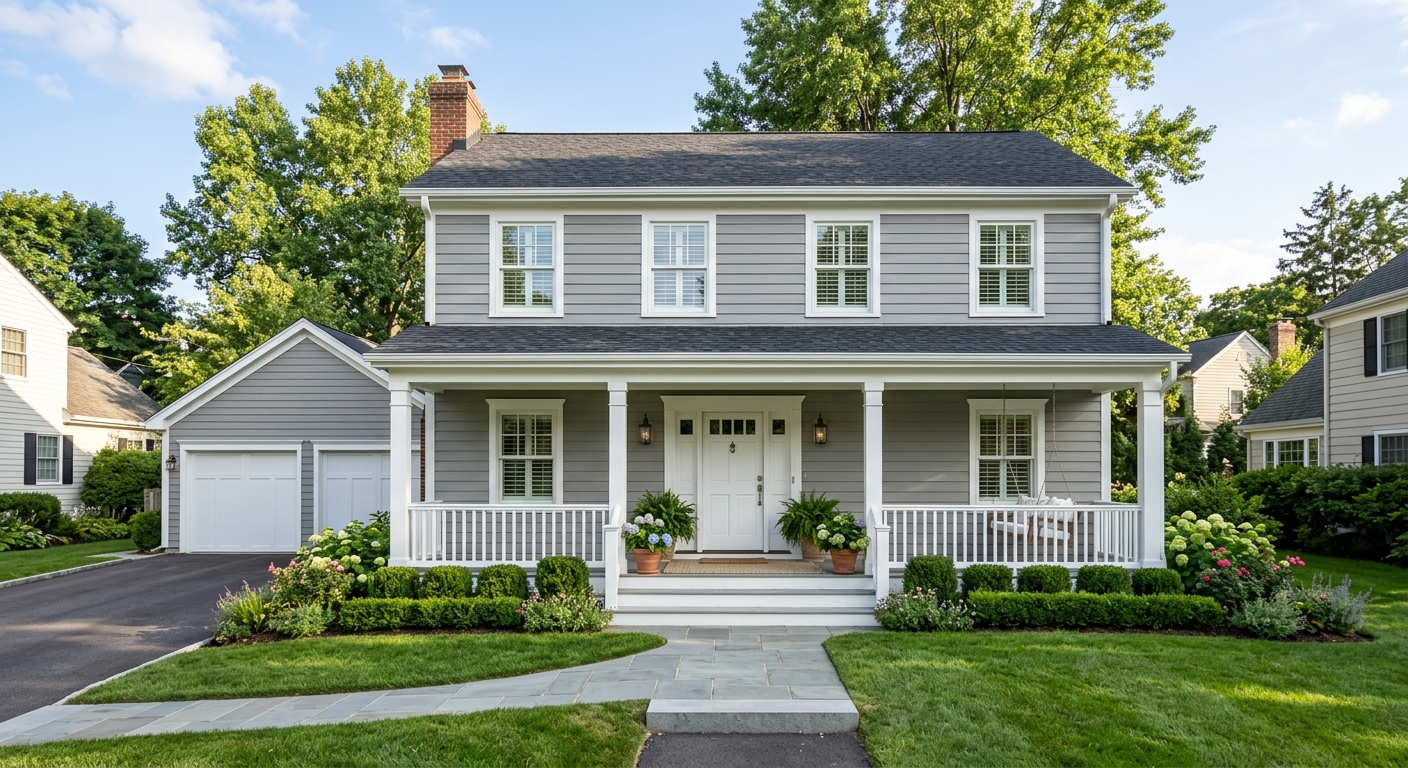
Painting options and costs in Redcliff
Redcliff homeowners usually have a few practical painting paths to choose from, but costs can swing based on prep and weather timing. With 54.7% of homes in this area built before 1981, many projects involve heavier surface preparation—scraping loose paint, sanding rough areas, patching, and priming to lock down older substrates before topcoat goes on. In a repaint, that prep often determines whether the finish lasts through Alberta’s sun exposure and winter freeze-thaw.
In the Lethbridge–Medicine Hat economic region, exterior painting is tightly tied to the season. Contractors typically target late spring through early fall when daytime temperatures are consistently above about 10°C and nights stay well above freezing, so schedules in Redcliff often book early. The region also has a lot of older, mixed materials (wood, fibre cement, and older siding types), and that drives more labour for scraping, caulking, and primer selection—especially compared with newer, smoother walls.
Interior work is less weather-dependent, but it’s still affected by housing stock and how quickly you want the space back. In neighbourhoods like Downtown Redcliff and the River Valley area, demand tends to spike during the same late-spring window when families want rooms refreshed before summer visitors, so crews can prioritize projects that are already cleared, protected, and ready.
Use the table below as a realistic starting point, then we’ll break down what changes the price the most and how to keep results looking sharp longer.
| Service |
What's Included |
Typical Duration |
Price Range |
| Interior — whole home (walls, ceilings, trim) |
Patch/caulk as needed, sand/scuff prep, prime bare spots, 2-coat coverage in most areas; includes trim work and cut-in around openings |
5–10 days |
$2,000–$5,500 |
| Interior — per room (standard bedroom or living room) |
Prep, patching to a “ready to paint” level, prime where required, 2-coat paint; includes ceiling and walls, plus light trim touch-ups |
1–3 days |
$800–$1,800 |
| Exterior — full house (siding, trim, soffits) |
Scrape/sand, patch and caulk, prime bare/damaged areas, 2-coat exterior system; includes trim/soffits and standard site protection |
7–14 days (weather permitting) |
$4,500–$9,000 |
| Exterior — trim and accent colours only |
Surface prep focused on trim/accents, spot prime, 2-coat application for accent areas; typically excludes re-siding or full body repaint |
3–7 days |
$2,500–$5,200 |
| Kitchen cabinet painting (doors, frames, spray finish) |
Degrease, sand/scuff, prime (bonding system), spray or roll finish, re-install/handle hardware handling (as agreed); includes basic surface protection |
4–8 days |
$1,200–$4,000 |
| Specialty / faux finish (accent wall, texture) |
Surface preparation to accept decorative finish, custom texture/faux application, topcoat protection where needed |
1–5 days |
$600–$3,500 |
Prices are estimates only and vary by project scope, site access and material selection.
What affects the price of painting in Redcliff
Even when two homeowners ask for “the same” paint job in Redcliff, bids can differ by 30–50% because the labour behind prep, product choice, and scheduling is rarely identical across the Lethbridge–Medicine Hat region. The biggest drivers are usually exterior timing, how much surface correction is needed, and whether the quote includes proper priming and caulking—not just topcoat.
For exteriors, the season is climate-bound in this region. Crews generally need late spring through early fall conditions when daytime temps are above about 10°C and the surface can stay dry enough for application and curing. Coastal BC often allows a longer calendar, but humidity and mildew pressure push contractors toward specialized mildew-resistant coatings and more careful staging; in southern Alberta, mildew risk is lower, yet sun and wind, plus rapid curing, make technique and sequencing critical. Because demand concentrates into a short window, summer scheduling pressure can raise rates compared with shoulder months.
Redcliff’s older housing stock matters too: with 54.7% of homes built before 1981, repaint prep frequently becomes a large cost line. In many cases, scraping, sanding, patching, and priming can be a majority of labour on a repaint, which is why exterior full-house bids can land in the broader band of $4,500–$9,000 depending on what’s found during surface inspection.
Concrete examples: a home with failing caulk at window and trim joints typically adds labour for caulking removal and re-sealing before coating. A straightforward trim-only refresh may stay closer to $2,500–$5,200 because you avoid full siding prep and primer coverage. Meanwhile, interior repainting in a room with multiple hairline cracks and patched drywall can push from a “paint-and-go” feel toward a repaint that needs extra sanding and primer, nudging the job upward versus a clean, ready surface.
| Price Factor |
Why It Matters |
Cost Impact |
| Surface prep — scraping, sanding, patching drywall or wood |
Determines adhesion and smoothness; damaged areas require correction before paint |
Often +15–40% depending on condition |
| Number of coats — 2-coat system over primer vs. 1 coat over existing |
Proper systems hide better and resist early wear and peeling |
Commonly +10–25% if repaint requires extra coat/primer |
| Paint quality tier — contractor-grade vs. premium (Benjamin Moore, Sherwin) |
Better pigments and binder systems improve coverage, durability, and colour stability |
Usually +5–20% based on product choice |
| Ceilings and trim — adds significant time vs. walls-only |
Ceilings and detailed trim increase cut-in time, masking, and cleanup |
Often +10–30% for full interior scopes |
| Exterior season window — short season raises summer rates |
Less scheduling flexibility and higher labour demand during peak months |
Can add +10–25% during peak weeks |
| Lead-safe precautions — required for pre-1978 homes with lead paint |
Safe containment and clean-up increases labour and set-up time |
Often +10–30% for heavy scraping/older surfaces |
| Surface material — drywall vs. plaster vs. wood vs. stucco |
Different substrates need different primers and prep methods for adhesion |
Varies widely; commonly +10–25% when multiple materials exist |
| Height and access — multi-storey exterior requires scaffolding or lifts |
Access equipment and safety procedures increase labour and time |
Often +15–35% for more than one storey |
Permits & regulations in Alberta
In Alberta, painting work typically does not require a permit for homeowners or contractors. The key compliance topic is usually not permits—it’s safe work practices, especially for older homes. For homes built before 1978, health guidelines recommend testing for lead paint before sanding or scraping, and using lead-safe work practices if lead is present (wet methods to reduce dust, HEPA vacuuming, proper disposal of debris, and good containment). This is not typically “homeowner legally mandated” like a permit, but it is standard practice for professional contractors because lead dust is a serious exposure risk.
For contractors, the checks that matter in Redcliff are coverage and paper trail. Make sure the painter carries liability insurance and has WSIB/WCB workers’ compensation coverage for employees. Ask for a written contract that specifies the paint brand and sheen, the number of coats, and the surface preparation scope included (scraping, sanding, caulking, priming). A clear contract prevents the most common cost surprises.
Step-by-step for homeowners: (1) verify the contractor’s registration/licence information through the province’s public business/contractor listing, (2) request a certificate of insurance and confirm it’s active for the project period, and (3) request confirmation of WSIB/WCB coverage—then match the name on the certificate to the contractor/crew who will be on site. Finally, get all agreed scope details in writing before work starts.
Interior vs exterior painting — getting the best result in Redcliff
In Redcliff, the difference between a long-lasting paint job and an early failure comes down to prep discipline and the right product system for how the surface behaves. For interiors, many call-backs are avoidable. Filling and sanding to remove imperfections matters more than chasing the most expensive topcoat. Choose sheen based on traffic: flatter paints help hide wall imperfections, while satin/eggshell are typically better for hallways and living areas because they clean more easily. The other rule I won’t compromise on is coverage: two coats over a proper primer system almost always outlasts one thick coat, especially when you’re covering patched drywall or stain-prone spots.
For exteriors, preparation is even more critical in southern Alberta’s climate swings and strong sun. Caulking must be handled correctly—remove failing caulk at joints and apply quality exterior-grade caulk before painting to reduce water ingress behind trim. Primer type matters too: the substrate (wood, fibre cement, previously painted surfaces) determines whether you need a bonding primer, an appropriate stain-blocking primer, or a primer that promotes adhesion. Unlike coastal BC—where mildew resistance is a major driver—your priority in Alberta is temperature-stable application and ensuring the surface is dry and ready to bond and cure.
Cabinet painting is a cost-smart alternative to replacement when you want a refreshed kitchen without full demolition. If you’re choosing between options, consider value: a cabinet repaint might be a mid-range investment (often around the $1,200–$4,000 band) compared to replacing cabinetry, and it’s justified when the boxes are structurally sound.
For pre-1978 homes, lead-safe precautions should be built into planning and cleanup during sanding or scraping. This can add labour, but it protects your family and keeps the finish system safer and cleaner to work with—especially around older trim and cabinet areas.
| Project Type |
Key Prep Step |
Recommended Coats |
Price Band |
| Interior — fresh drywall (new construction) |
Prime new drywall thoroughly, sand minor roughness, caulk gaps and nail/screw pops |
2 topcoats (often after primer), spot prime as needed |
$1,200–$3,000 |
| Interior — repaint (good condition, no repairs) |
Degloss/clean, light sanding/scuff, spot-prime minimal marks |
2-coat finish coverage |
$800–$2,000 |
| Interior — repaint (patching and priming needed) |
Patch, sand flush, prime repaired areas and any stain-prone sections |
2-coat finish plus primer/spot primer |
$1,200–$2,800 |
| Exterior siding (wood or fibre cement) |
Scrape/sand, repair cracks/holes, caulk joints, prime bare substrate |
2-coat exterior system over primer |
$4,500–$9,000 |
| Exterior trim and accents only |
Mask carefully, prep trim edges, spot prime where needed |
2-coat finish over spot prime |
$2,500–$5,200 |
| Kitchen cabinets (spray finish) |
Degrease and sand for bonding, prime for adhesion, protect surrounding counters/floors |
Primer + 2-coat finish (or equivalent system) |
$1,200–$4,000 |
How to choose a painting contractor in Redcliff
Choosing the right painter in Redcliff starts with verifying the basics: licensing/registration where applicable, liability insurance, and workers’ compensation. Start by asking for the contractor’s Alberta registration details and confirm the certificate of insurance is current for your project dates. Next, request proof of WSIB/WCB coverage for employees (not just subcontractors). If they can’t provide clear documents right away, move on—reputable crews have no problem sharing them.
Then get 2–3 itemised written quotes. I recommend insisting on a breakdown that separates labour versus materials and lists what surface prep is included. A lump-sum quote without prep details is where “scope creep” happens. Also confirm whether disposal is included (brushes, drop cloths, scrape debris) and whether any permits are required for your specific situation (most painting doesn’t require them, but if there are special circumstances, it should be addressed in writing).
Warranty is another differentiator. Ask for a workmanship warranty length and clarify whether product/manufacturer warranty applies to the specific coating system being installed. Also check if the warranty is transferable if you sell the home.
Payment schedule matters: never pay more than 10–15% upfront, and hold back a portion until the job is complete and you’ve done your walk-through. Lastly, request a start date and completion estimate in writing, since Redcliff’s exterior demand can tighten the schedule in peak weeks.
- Confirm Alberta registration/licence details and match the company name to documents
- Request a current certificate of liability insurance (with project dates)
- Verify WSIB/WCB coverage for the people who will be on site
- Ask for 2–3 itemised quotes: labour, materials, primer/caulking inclusions
- Read exclusions: is lead-safe prep included for pre-1978 surfaces if needed?
- Confirm number of coats and primer requirements in the written scope
- Ask whether paint-sheen selection is included by room/traffic level
- Ensure caulking replacement at exterior joints is listed (not “as needed” only)
- Verify prep standards: scraping, sanding, patching level, and dust control
- Check cleanup and disposal: debris removal from scraping/patching included?
- Look for a workmanship warranty and confirm what it covers
- Use a payment schedule with a small deposit and a holdback at substantial completion
Red flags I commonly see in Redcliff include: quotes that don’t mention primer or number of coats, ignoring surface prep (especially exterior scraping/caulking), “too good to be true” pricing for a pre-1981 home’s condition, refusal to provide insurance/WSIB/WCB proof, and pressure to pay most of the balance before the final walk-through.
Frequently asked questions — painting in Redcliff
How do I compare painting quotes?
In Redcliff and the broader Lethbridge–Medicine Hat area, compare quotes the way you’d compare flooring installs: line-by-line. Ask each contractor to list labour and materials separately, including what surface prep is included (scraping, sanding, patching, and priming) and the exact number of coats. For exteriors, confirm caulking removal and re-application is stated in the scope—prep is often 50–70% of labour on repaints in older housing (54.7% of homes built before 1981). For price context, an interior room repaint can commonly land around the lower band (for example, $800–$1,800), while a full exterior repainter is usually several thousand more depending on condition. If one quote is much lower, look for what they removed—not just what they added.
What paint sheen should I use in different rooms?
Sheen is about cleanability and how light reflects, not just appearance. In Alberta homes in Redcliff, interiors often benefit from eggshell or satin on living rooms, hallways, and kids’ spaces because they wipe clean without looking overly glossy. Bedrooms and lower-traffic areas can use flat or matte on walls to hide minor imperfections, while ceilings are typically flat to avoid spotlighting patches. Kitchens and bathrooms generally do better with a higher-scrub rating, often satin or semi-gloss depending on ventilation and moisture. Trim is commonly semi-gloss for durability. If a contractor doesn’t ask about how rooms are used, that’s a sign the quote may be using a one-size-fits-all approach.
Can I paint my house exterior in spring or fall in Redcliff?
You can paint in spring or fall in Redcliff, but the schedule depends on surface and air conditions. For this region, crews generally need daytime temperatures consistently above about 10°C and nights staying well above freezing during application and curing. That’s why exterior painting is concentrated from late spring through early fall. If you try to start too early, paint can cure slowly, and you may end up with poor adhesion or streaking. If you’re planning around $4,500–$9,000 for a full exterior, it’s usually smarter to book for a reliable weather window and keep backup dates. Ask your contractor how they monitor temperature and dew conditions and whether they’ll pause work when curing conditions aren’t met.
How do I choose a painting contractor in Redcliff?
Choose contractors who will prove they’re set up to do safe, professional work—then confirm the scope is detailed. Start by verifying Alberta coverage documents: liability insurance and WSIB/WCB for the crew members who will be working at your home. Next, request 2–3 itemised written quotes (not just a number) that specify paint brand, sheen, surface prep, and number of coats. A written contract should also cover cleanup/disposal and what happens if unexpected repairs are discovered. In Redcliff, where many homes are older (Statistics Canada, 2021 Census shows population 5,581 and 54.7% of homes built before 1981), good contractors plan for prep time and, if necessary, lead-safe practices for older surfaces. Finally, confirm payment terms: keep deposits around 10–15% and hold back until the job is complete.
How many coats does an exterior repaint need in Redcliff?
Most exterior repaints in Redcliff require a 2-coat system over appropriate priming for bare spots and corrected areas. The exact count depends on what’s happening on the surface: if the contractor is priming new bare substrate, expect primer plus 2 topcoats; if it’s an older paint film in good condition with minimal repairs, they may still need 2 topcoats for even coverage and sheen uniformity. The real question is whether priming and caulking are included—those drive durability more than “extra thick” paint. In practical terms, a trim and accent-only refresh may stay around $2,500–$5,200 because the coating system area is smaller, while full-house exteriors often land in the $4,500–$9,000 band due to the amount of prep and primer required.
What is the best primer for older Redcliff homes?
For older homes in Redcliff (many built before 1981), the best primer is the one matched to the substrate and condition—because adhesion and stain blocking are what prevent peeling. If there are repairs and bare wood/fibre cement, a bonding primer designed for that material is typically required before topcoat. If the old paint has stains or tannins bleeding, contractors often use a stain-blocking primer to stop discoloration from telegraphing through. If you’re dealing with mixed surfaces (wood trim, older siding, sometimes different paint ages), the primer may differ by area. If your home is pre-1978, lead-safe work practices are important during scraping/sanding before any primer goes on. A good contractor will explain primer type per surface, list it in writing, and then apply the correct number of topcoats afterward.