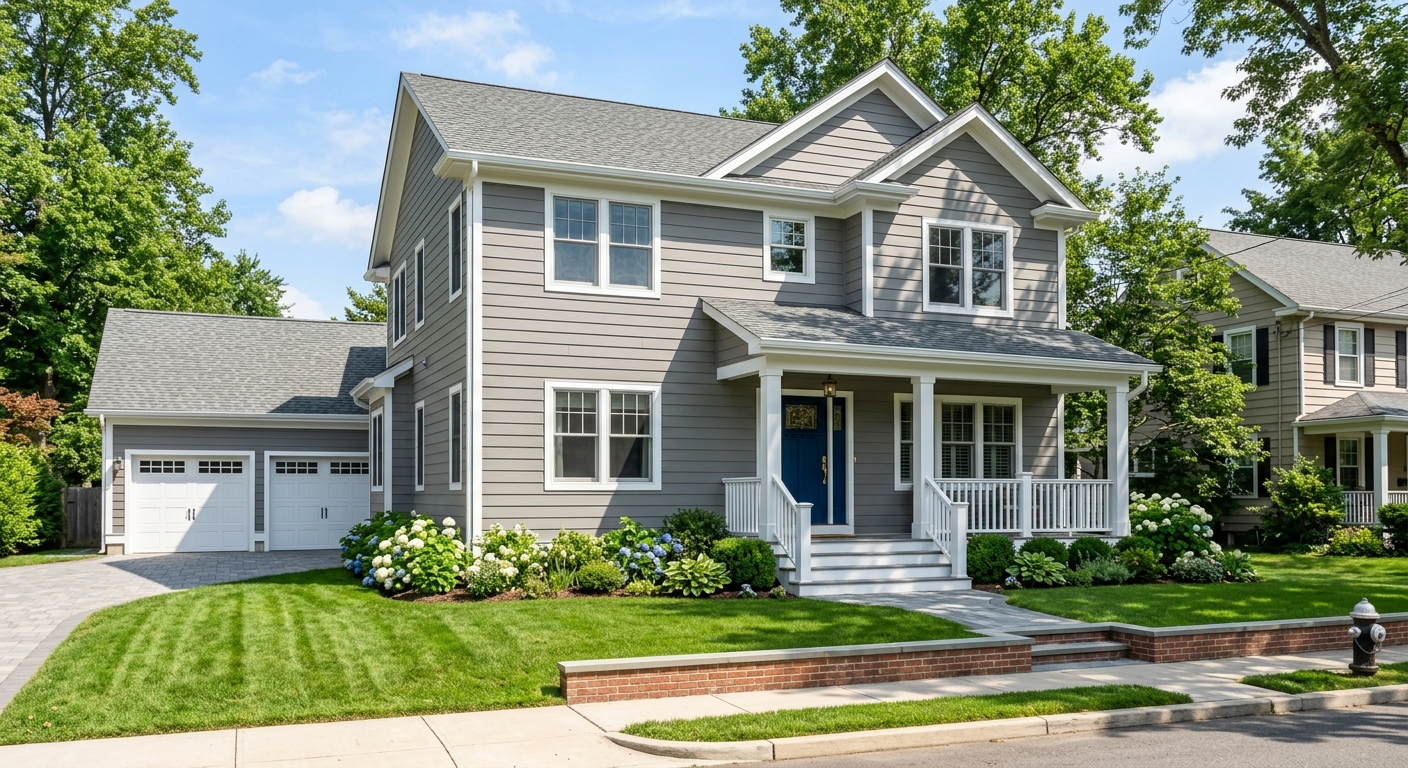
Painting options and costs in Binbrook
Painting in Binbrook is shaped by an older housing mix—many homes around the Hamilton–Niagara Peninsula were built well before 1980—so homeowners often spend more time and money on prep than on the “topcoat” itself (Statistics Canada, 2021 Census). With 8,796 residents in the area (Statistics Canada, 2021 Census), the local trade tends to be busy when the weather window opens, especially in well-established pockets where renovations and repainting renew curb appeal every few years. Neighbourhoods around Binbrook’s village core and the newer outskirts near the escarpment edge can see heavier demand because access for vehicles, staging, and walkways is different street-to-street.
On the Hamilton–Niagara Peninsula, exterior painting costs are compressed into roughly late May to early October. Painters need warm conditions, surfaces staying dry long enough for proper adhesion, and time to cure before the next rainy stretch. Interior work is more flexible—most homeowners schedule it for summer and shoulder months when drying time is faster and furniture planning is easier.
Choosing the right option is less about chasing the lowest number and more about matching prep level and coating system to your surfaces. A full repaint with extensive scraping and caulking can land closer to the upper interior band (or the mid-to-upper exterior band), while a straightforward refresh on well-maintained surfaces can come in near the low end. Use the table below as a grounded starting point for your Binbrook quote.
| Service |
What's Included |
Typical Duration |
Price Range |
| Interior — whole home (walls, ceilings, trim) |
Protect floors and fixtures, patch/fill, sand, caulk where needed, prime bare spots, paint walls and ceilings, paint doors and trim as specified, clean-up |
5–10 days |
$2,200 – $5,500 |
| Interior — per room (standard bedroom or living room) |
Protect areas, prep minor cracks/holes, patch and sand, prime as required, paint walls and one ceiling, include trim touch-up or full trim if noted |
1–3 days |
$700 – $1,800 |
| Exterior — full house (siding, trim, soffits) |
Wash, scrape/sand, caulk gaps, prime bare wood or problematic areas, paint siding and trim, spot wood repair where identified, debris clean-up |
1–3 weeks (weather-dependent) |
$3,500 – $8,000 |
| Exterior — trim and accent colours only |
Surface prep on trim only, caulking and priming for adhesion, paint selected elevations and accents, protect landscaping and openings |
3–7 days |
$1,500 – $4,500 |
| Kitchen cabinet painting (doors, frames, spray finish) |
Degrease, remove/label where applicable, light sanding, prime and spray finish or equivalent, re-install and hardware handling as agreed |
5–12 days |
$1,800 – $4,500 |
| Specialty / faux finish (accent wall, texture) |
Surface preparation for the finish system, base coat(s), specialty application as specified, sealing/clear coat if required |
2–6 days |
$1,000 – $6,000 |
Prices are estimates only and vary by project scope, site access and material selection.
What affects the price of painting in Binbrook
In Binbrook and across the Hamilton–Niagara Peninsula, two quotes for what looks like the same paint job can differ by 30–50% because the “real work” is in prep, access, and how the coating system is built for local conditions. One contractor may include more scraping, priming, and caulking to address older substrates; another may plan for quicker coverage on surfaces that still need patching or better adhesion preparation. That same pattern happens province-wide, but the exterior season constraint in Southern Ontario intensifies scheduling pressure and can raise labour rates in peak months.
For exterior work in this region, the window is tightly climate-bound—roughly late May to early October—because temperatures need to be above about 10°C and rising during application. Coastal British Columbia can have a longer season, but humidity and rainfall demand careful timing and mildew-resistant products, while Alberta’s narrower stretches can push costs when temperature stability matters for proper curing. In Ontario, shorter demand windows mean more crews competing for jobs, so a full exterior repaint can land toward the $3,500 – $8,000 end when scaffolding, wood repair, or heavy prep is required.
Older homes throughout the area often need extensive scraping, caulking, sanding, and priming. On repaints, surface prep commonly represents 50–70% of total labour. For interiors, that prep reality shows up too: a clean refresh on good walls can be near the low interior band, while patching and priming can pull it toward the mid-range. As a concrete example, a “trim-only” exterior change can stay closer to $1,500 – $4,500, but once you add significant siding-area prep (peeling paint, failing caulk joints, or soft wood), the same home can quickly move toward the full-house exterior range.
| Price Factor |
Why It Matters |
Cost Impact |
| Surface prep — scraping, sanding, patching drywall or wood |
Patching and adhesion prep can be the majority of labour on older surfaces. |
+15% to +40% |
| Number of coats — 2-coat system over primer vs. 1 coat over existing |
Coverage and durability depend on proper layering and primers. |
+10% to +25% |
| Paint quality tier — contractor-grade vs. premium (Benjamin Moore, Sherwin) |
Premium coatings often cover better and resist scuffing/fading longer. |
+5% to +20% (materials) |
| Ceilings and trim — adds significant time vs. walls-only |
Cutting in, protecting edges, and detailed work increase crew time. |
+10% to +30% |
| Exterior season window — short season raises summer rates |
Late May to early October constraints compress demand. |
+10% to +35% (labour timing) |
| Lead-safe precautions — required for pre-1978 homes with lead paint |
Containment, HEPA vacuuming, and disposal increase time and cost. |
+10% to +30% |
| Surface material — drywall vs. plaster vs. wood vs. stucco |
Different substrates require different primers and prep methods. |
+10% to +35% |
| Height and access — multi-storey exterior requires scaffolding or lifts |
Access equipment adds labour, staging time, and safety measures. |
+15% to +50% |
Permits & regulations in Ontario
For painting in Ontario, a permit is not typically required for standard interior and exterior repainting. That said, your contractor should follow health and safety guidance that matters to Binbrook homeowners—especially in older houses where paint may contain lead. For homes built before 1978, health guidelines recommend testing for lead paint before sanding or scraping. If lead is present, lead-safe work practices are the standard approach for professional contractors: wet methods to control dust, HEPA vacuuming, proper containment, and disposal of materials as required.
What DOES typically require a permit in Ontario: painting is usually not the trigger. However, related work like electrical/plumbing changes, structural alterations, or window/door replacement with building permit requirements can trigger permits depending on scope. If you’re only repainting, caulking, and doing surface repairs that don’t change building systems, permits are generally not part of the process.
Before signing, confirm your contractor carries liability insurance and WSIB (workers’ compensation) coverage for their painters. Then get a written contract that clearly lists paint brand and sheen, number of coats, surface preparation scope (including caulking, priming, and patching), and what happens with disposal and cleaning. To verify credentials from Binbrook, look at the certificate of insurance for liability coverage (request it directly), check WSIB status/documentation, and ensure the contractor provides business contact details and a signed agreement. For Ontario licensing, verify the contractor’s registration information using publicly available Ontario business resources where applicable for your trade—then cross-check it against what they provide in writing.
Interior vs exterior painting — getting the best result in Binbrook
In Binbrook, the difference between a long-lasting paint job and an early failure comes down to how each surface is prepared for our climate and how the coating system matches it. Interiors are forgiving compared to exteriors, but they still fail when prep is rushed. For interior walls and ceilings, filling cracks/holes, sanding edges smooth, and priming bare patches consistently matter more than brand alone. Sheen choice is also practical: flat or matte hides wall imperfections in low-traffic areas, eggshell works well in many living spaces, satin is a strong middle-ground for hallways, and semi-gloss is usually reserved for trim and doors because it’s easier to wipe down.
Remember that two coats over a properly primed surface typically outlast a “thick single coat.” The faster you try to rush opacity, the more likely you are to see flashing, uneven sheen, or premature scuffing—especially with darker colours or over recent patches.
For exteriors in Southern Ontario, surface prep is everything: wash thoroughly, scrape and sand failing paint, remove loose material, and prime bare wood. Caulking before painting is critical to prevent water ingress at joints, not after. Primer selection should match the substrate—wood versus masonry/stucco versus older coatings—so adhesion and compatibility aren’t guessed. Even though mildew-resistance is often discussed more with wetter regions, Lake Ontario humidity near the escarpment also makes careful product selection and timing important in our area. If your home has pre-1978 paint, lead-safe precautions should be planned before scraping starts.
Kitchen cabinet painting can be a smart budget alternative to replacement when the boxes are solid. If you’re considering options, a cabinet repaint often lands in the $1,800 – $4,500 range, while a full kitchen replacement is typically far beyond typical painting budgets—so it’s where painting can deliver value without compromising structure.
| Project Type |
Key Prep Step |
Recommended Coats |
Price Band |
| Interior — fresh drywall (new construction) |
Prime all drywall to unify suction before colour |
2 coats (plus primer) |
$1,200 – $3,500 |
| Interior — repaint (good condition, no repairs) |
Light sanding/scuff, spot prime minimal bare spots |
2 coats |
$700 – $2,800 |
| Interior — repaint (patching and priming needed) |
Patch/fill, sand smooth, prime all repaired areas |
2 coats (with primer on repairs) |
$900 – $4,000 |
| Exterior siding (wood or fibre cement) |
Scrape/scuff, caulk joints, prime bare substrate |
2 coats (system-based primer) |
$3,500 – $8,000 |
| Exterior trim and accents only |
Prep edges and caulk to stop future water paths |
2 coats |
$1,500 – $4,500 |
| Kitchen cabinets (spray finish) |
Degrease and prime for adhesion, controlled surface sanding |
2–3 coats (primer + 2 finish coats) |
$1,800 – $4,500 |
How to choose a painting contractor in Binbrook
Start by verifying the basics before you compare prices. In Ontario, confirm the contractor’s liability insurance (request the certificate of insurance and verify it matches the business name) and ensure they’re covered for workers’ compensation (WSIB) for their employees. In practice, you’ll want to see a current WSIB clearance document or proof of coverage upon request—don’t accept verbal assurances. Then ask for an itemised quote that breaks labour and materials separately instead of a single lump sum; this helps you see whether differences in prep time or coating system explain why one bid is cheaper.
Read the scope line-by-line. What’s excluded (window weep holes, difficult access points, lead testing, haul-away/disposal, minor drywall texture matching, hardware handling)? Ask whether they include permit pull—most painting doesn’t require one, but related work sometimes does—and confirm whether disposal, masking, and protective coverings are included. For warranty, request the workmanship warranty length and whether it covers peeling, blistering, or adhesion failure. Also ask if the product/manufacturer warranty is separate and whether it’s transferable to you if you sell the home.
For payment schedule, never pay more than about 10–15% upfront. Use a holdback until the job is complete and walkthrough items are addressed. Finally, insist on a written timeline: start date and completion estimate based on weather and curing requirements, especially for exteriors in the late spring–early fall window.
- Ask for liability insurance certificate and confirm coverage limits.
- Request WSIB proof/clearance for employees (not subcontract “hope”).
- Get 2–3 quotes that list labour steps: wash, scrape, sand, patch, prime, caulk, paint.
- Confirm paint brand and colour system (and whether it includes premium lines).
- Ask for the sheen schedule by room (walls/trim/ceiling) in writing.
- Confirm number of coats and where primer is required.
- Clarify disposal and protection: drop sheets, masking, and clean-up standard.
- For exteriors: ask how they’ll plan around rain and curing time.
- For pre-1978 homes: ask if lead-safe practices are included and how they handle dust.
- Check that prep includes caulking joints before exterior paint where needed.
- Review warranty terms for workmanship and product coverage.
- Use a written payment schedule with a holdback until walkthrough is signed off.
Red flags I see around Binbrook: (1) quotes that omit prep steps or primer and just promise “2 coats,” (2) no proof of WSIB or liability when asked, (3) heavy up-front payment beyond 10–15%, (4) vague timelines that ignore exterior weather limits, and (5) no written scope describing what’s included in disposal and protection. If you hear any of these, slow down and ask for clarification in writing.
Frequently asked questions — painting in Binbrook
How long does it take to paint a house?
In Binbrook, interior timing depends on room count and prep level. A whole-home interior repaint commonly takes about 5–10 days once materials are on site, assuming standard access and manageable furniture moves. Exteriors are more weather-bound in the Hamilton–Niagara Peninsula, so even a “full house” project typically spans 1–3 weeks in calendar time because work must fit into the late spring to early fall window when conditions stay suitable for adhesion and curing. Prep also drives schedule: scraping and caulking on older homes can add days, and lead-safe procedures for pre-1978 paint can extend timelines due to containment and HEPA cleanup. Plan for seasonal flexibility—start dates often shift if rainy stretches arrive.
What's the difference between paint quality tiers?
Paint quality tiers usually show up in coverage, durability, and how forgiving the product is on imperfect prep. Contractor-grade coatings often work fine for straightforward repaints, but they may require more effort to achieve uniform coverage—especially when switching colours or painting over patched areas—so the project can end up taking more time. Premium lines (like well-known brands carried by most reputable suppliers) generally provide better hiding power and longer-lasting scuff and fade resistance, which helps in busy areas. For budgeting, you’ll still want the prep and proper primer regardless of tier. If your quote sits closer to the interior low band (for example, around $700 – $2,800 for a good-condition repaint), confirm what primer and prep are included—quality tier alone doesn’t fix skipped surface work.
How do I compare painting quotes?
Comparing quotes in Binbrook is easiest when they’re itemised and comparable. Ask each contractor to list labour steps (wash, scrape, sand, patch, prime, caulk, paint) and the exact paint line/brand, sheen, and number of coats. Check whether they’re including trim/doors and ceilings or only walls. For exteriors, confirm how they handle caulking, spot wood repair, and surface primer requirements—these can swing cost dramatically. It’s normal for quotes to differ by 30–50% across the region because prep demands and access vary. A “trim-only” bid around $1,500 – $4,500 shouldn’t be compared directly to a full-house repaint near $3,500 – $8,000 without understanding prep scope and substrate condition.
What paint sheen should I use in different rooms?
Sheen selection is about cleanability and how it reflects light. In Ontario homes around Binbrook, matte/flat finishes can hide wall imperfections in lower-traffic rooms, but they’re less resistant to frequent wiping. Eggshell is a popular choice for many living areas because it balances washability with a softer look. Satin is often best for hallways and areas with more fingerprints, while semi-gloss is a go-to for trim, doors, and sometimes bathroom trim where you need easier wipe-down. Ceilings are commonly finished in flat. The most important point: sheen won’t compensate for poor prep—patches still need priming and smooth sanding so you don’t get flashing or uneven sheen lines.
Can I paint my house exterior in spring or fall in Binbrook?
You can, but the practical window is limited in Binbrook due to Ontario’s four-season weather. Exterior painting in the Hamilton–Niagara Peninsula is usually scheduled late May to early October because temperatures must be warm enough for proper application and curing (commonly above about 10°C and rising). Fall work can be risky if nights cool quickly or if rain arrives before coats have cured. Contractors may still plan limited trim touch-ups if conditions are suitable, but a full exterior repaint is often held to warmer periods. Also consider humidity near Lake Ontario—timing around wet stretches affects adhesion and mildew resistance. If your home has older siding or wood trim, prep time and dry surface conditions matter even more.
How do I choose a painting contractor in Binbrook?
Choose a contractor by verifying credentials and insisting on a clear, itemised scope. In Ontario, ask for proof of liability insurance and WSIB coverage before work begins, and confirm they’ll provide a written contract with paint brand, sheen, number of coats, and prep included. For homeowners in Binbrook—especially if your house is pre-1978—ask how they handle lead-safe practices: dust control, HEPA vacuuming, and proper disposal procedures if lead testing indicates it’s needed. Get 2–3 quotes that break down labour and materials so you can compare apples-to-apples. Watch payment terms: keep deposits around 10–15% max and request a holdback until the walkthrough is complete. Finally, choose someone who schedules for weather realities—exterior work must fit the season, not just the calendar.