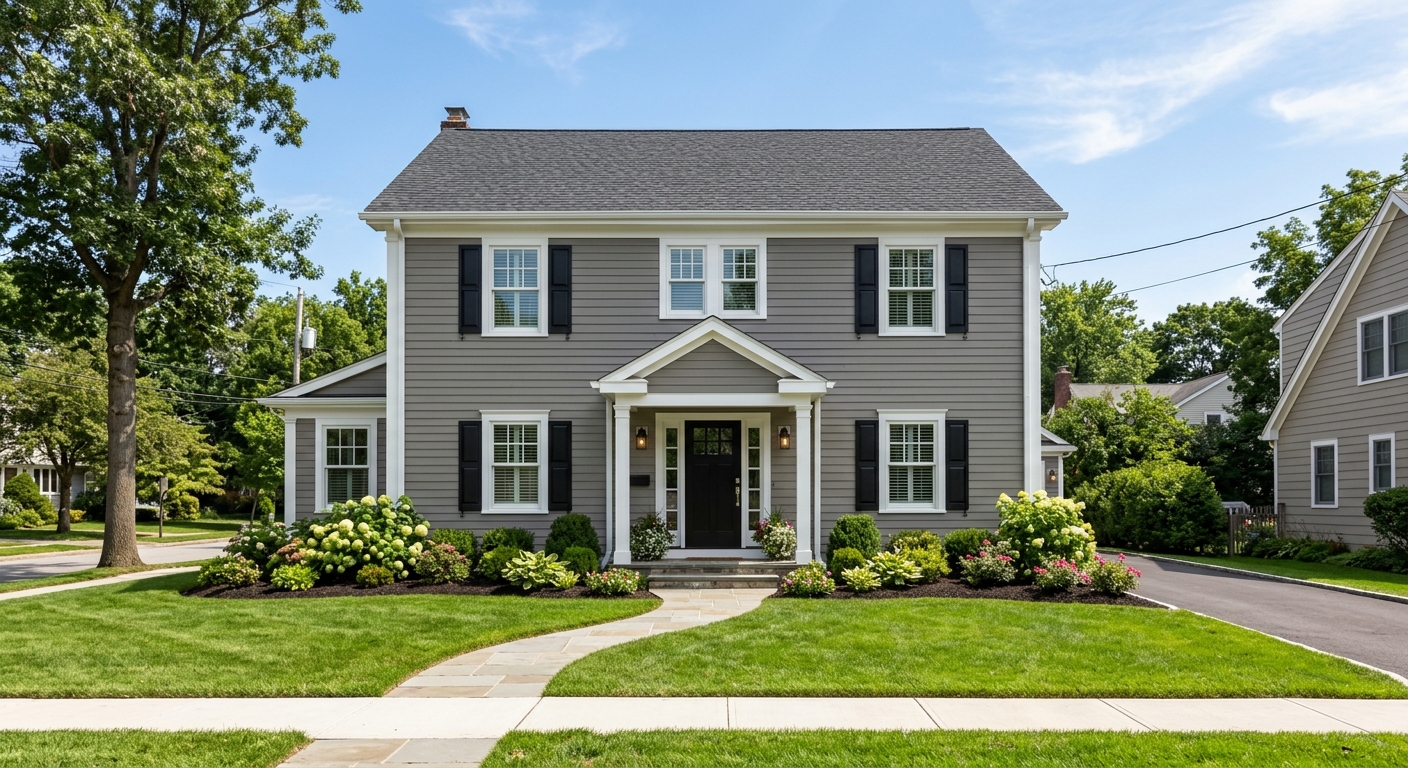
Painting options and costs in Surrey
Surrey homeowners usually choose between interior repainting, exterior refresh, and higher-detail upgrades like trim and cabinet work. Because Surrey has a sizable older housing stock—19.6% of homes were built before 1981 (Statistics Canada, 2021 Census)—many projects start with more prep than people expect: scraping failing coatings, patching settlement cracks, stain blocking when needed, and applying modern primer systems for proper adhesion. That “hidden labour” is often what separates a short-lived paint job from one that lasts.
In the Lower Mainland–Southwest (including Surrey), pricing is also shaped by coastal weather patterns. Exterior work doesn’t hinge on extreme cold the way it can in parts of Ontario and Alberta; it’s more about rain and humidity. Painters in Surrey must schedule around dry stretches, manage slower dry times, and use mildew-resistant, high-adhesion products suited to siding and trim. Demand is especially strong in areas where turnover and renovations are frequent—many contractors are busy around Fleetwood and Guildford, particularly in the spring and early summer when homeowners want curb appeal before summer.
To help you compare apples to apples, the table below shows typical inclusions, timeframes, and realistic Surrey price bands. Use it as a baseline, then expect your final estimate to tighten once your painter confirms wall condition, height/access, and product tier.
| Service |
What's Included |
Typical Duration |
Price Range |
| Interior — whole home (walls, ceilings, trim) |
Protection/masking, prep (patching, sanding), stain/spot priming as needed, 2-coat finish on walls/ceilings, priming/painting trim, caulking small gaps, cleanup |
5–12 business days |
$2,800–$8,000 |
| Interior — per room (standard bedroom or living room) |
Prep of walls, spot repair, sanding and dust control, prime where required, 2-coat finish, paint trim (where applicable), cleanup |
1–3 business days |
$600–$2,000 |
| Exterior — full house (siding, trim, soffits) |
Power wash (as needed), scrape/sand loose paint, caulking at transitions, prime bare/spot areas, 2-coat exterior system, mildew-resistant products, staging/edge protection, cleanup |
1–3 weeks (weather-dependent) |
$4,500–$15,000 |
| Exterior — trim and accent colours only |
Masking/protection, prep of trim/accents, prime bare spots, 2-coat finish, caulking small gaps, cleanup |
5–10 business days |
$1,200–$5,500 |
| Kitchen cabinet painting (doors, frames, spray finish) |
Remove/label doors (as feasible), degrease and sanding, primer + cabinet-grade topcoat, spray finish for doors/drawers, hardware masking, re-install and final touch-ups |
7–20 business days (includes cure time) |
$2,000–$7,500 |
| Specialty / faux finish (accent wall, texture) |
Surface prep, specialized base coats, application of decorative system, protective topcoat, cleanup |
2–10 business days |
$800–$12,000 |
Prices are estimates only and vary by project scope, site access and material selection.
What affects the price of painting in Surrey
In Surrey and across the Lower Mainland–Southwest, quotes for the same “paint the house” request can swing by 30–50% because the starting surfaces—and the amount of prep—are rarely identical. A repaint on well-maintained drywall costs very differently than a repaint where paint has peeled, stains have bled through, or older substrates need more primer. Labour and scheduling pressure also matter: exterior work in this region is weather-managed, not temperature-driven, so painters often charge more in peak windows when crews can’t easily pivot outdoors. For comparison, in some markets where exterior season is more predictable, contractors spread demand more evenly; here, humidity and rainfall can force pauses and remobilization, which adds cost.
Two common examples from Surrey: (1) On a pre-1981 home (19.6% built before 1981, Statistics Canada, 2021 Census), contractors may need lead-paint–safe practices if lead is present—extra containment, HEPA vacuuming, and proper disposal time can move a job into a higher band even before paint is purchased. (2) On exterior siding, a “quick repaint” gets expensive if caulking and primer selection are skipped; the coastal damp season increases mildew risk and adhesion failures, so mildew-resistant systems and better priming are often worth the added labour.
That’s why interior projects commonly land within the $300–$8,000 band depending on prep and sheen, while exterior full-house painting typically ranges within $1,200–$15,000 based on surface condition, height/access, and weather timing.
| Price Factor |
Why It Matters |
Cost Impact |
| Surface prep — scraping, sanding, patching drywall or wood |
Prep determines adhesion; in Surrey’s damp coastal climate, weak prep leads to early peeling and staining. |
Often the largest swing; can add several thousand dollars on repainting. |
| Number of coats — 2-coat system over primer vs. 1 coat over existing |
Most failures happen when coverage and film build are insufficient. |
Minor jobs: small increase; full-home repaints: can raise costs by 10–25%. |
| Paint quality tier — contractor-grade vs. premium (Benjamin Moore, Sherwin) |
Premium products typically offer better hiding, durability, and stain-blocking performance. |
Can move total cost by a few hundred to over a thousand dollars depending on area. |
| Ceilings and trim — adds significant time vs. walls-only |
Cut-ins, masking, and fine-detail brushwork are time-intensive. |
Commonly adds 15–35% on interior or increases exterior trim scope meaningfully. |
| Exterior season window — short season raises summer rates |
Dry application windows depend on rainfall and humidity; crews may stop/start. |
Can increase labour rates in peak weeks and add mobilization costs. |
| Lead-safe precautions — required for pre-1978 homes with lead paint |
Containment, HEPA cleanup, and disposal add time and overhead for safety. |
Can add a noticeable premium on older-surfaces repaint jobs. |
| Surface material — drywall vs. plaster vs. wood vs. stucco |
Different substrates need different primers and prep methods for consistent bonding. |
Changes primer type and prep time; can shift cost by hundreds to thousands. |
| Height and access — multi-storey exterior requires scaffolding or lifts |
Access equipment affects labour time, safety, and daily setup. |
Often increases exterior pricing substantially, especially for two-storey homes. |
Permits & regulations in British Columbia
In British Columbia, painting typically doesn’t require a permit. For homes built before 1978, health guidance recommends considering lead paint testing before sanding or scraping, and using lead-safe work practices if lead is present. That generally means wet methods to reduce dust, HEPA vacuuming, proper containment where needed, and correct disposal. It’s not usually legally mandated for homeowners to do this testing, but for professional contractors it’s standard safety practice—especially on older Surrey houses where previous repaint layers may be hiding older materials.
By contrast, permits are more commonly required for work that changes building systems (like certain plumbing/electrical alterations) or for structural renovations—not for painting itself. For your project, the key compliance items are insurance and safety documentation, not a paint permit.
To verify a Surrey contractor, start with licensing and business details (confirm they are in good standing and that the company matches the quote documents). Next, ask for a certificate of liability insurance—make sure the coverage is current and includes painting/contractor operations. Finally, verify workers’ compensation coverage (WCB/WSIB coverage for workers). Request the evidence in writing before work begins.
Also insist on a written contract that specifies the paint brand/line (not just “premium paint”), sheen levels, the number of coats, surface prep inclusions (scrape/sand/patch/caulk), and what happens to prep materials and waste.
Interior vs exterior painting — getting the best result in Surrey
In Surrey and the broader Lower Mainland–Southwest, the difference between a long-lasting paint job and an early failure is usually preparation and system selection—not just paint brand. For interiors, start with surface prep: filling and sanding drywall defects, cleaning residue, and priming stained or bare patches. Sheen choice matters too. In living areas and hallways, eggshell or satin often provides cleanability without looking flat; kitchens and bathrooms usually perform best with washable finishes. The biggest reliability rule is simple: two coats over a proper primer consistently outlast one thick coat, because coverage and film build are more even and less likely to miss edges.
For exteriors, British Columbia’s damp conditions make prep even more critical. Caulking at joints and transitions before painting helps prevent water ingress behind the coating system. Primer choice also matters: oil/alkyd primers or bonding primers may be required on specific substrates or where adhesion is a concern, while latex topcoats and mildew-resistant additives help with coastal moisture. In practice, that means a properly prepared siding system (including spot priming and full adhesion coverage) costs more up front but reduces the chance of peeling during wet shoulder seasons.
Cabinet painting is a budget alternative to replacement, but it’s only cost-effective when prep is thorough (degreasing, sanding, and correct primer/topcoat). On pre-1978 homes, lead-safe precautions can add cost; if you’re comparing options, the higher quote may be justified by added containment and cleanup rather than “more paint.” For example, moving from a basic repaint approach to a full prep + primer system can add several hundred dollars on interior rooms and more on exterior repaints—yet it’s often the difference between staying solid for years versus repainting sooner.
| Project Type |
Key Prep Step |
Recommended Coats |
Price Band |
| Interior — fresh drywall (new construction) |
Skim/spot fill and sand, seal bare drywall with primer before finish |
Primer + 2 coats finish |
$900–$3,500 |
| Interior — repaint (good condition, no repairs) |
Wash/clean, light sand, spot-prime any marks or sheen changes |
2 coats finish (primer only on spots as needed) |
$600–$2,500 |
| Interior — repaint (patching and priming needed) |
Patch and feather repairs, then prime repaired areas for uniform sheen |
Primer + 2 coats finish |
$800–$4,000 |
| Exterior siding (wood or fibre cement) |
Scrape/sand loose paint, caulk transitions, prime bare spots |
Primer + 2 coats exterior system |
$4,500–$15,000 |
| Exterior trim and accents only |
Prep edges and trim profiles, prime and caulk before topcoat |
2 coats exterior finish (primer where needed) |
$1,200–$5,500 |
| Kitchen cabinets (spray finish) |
Degrease, sand, prime for adhesion, meticulous masking |
Primer + 2–3 coats finish depending on sheen and coverage |
$2,000–$7,500 |
How to choose a painting contractor in Surrey
Start by confirming insurance and coverage. In British Columbia, painting itself generally doesn’t require a permit, but reputable contractors should still be properly insured and set up to work safely. Ask for a certificate of general liability insurance and review the effective dates—if they can’t provide current proof, that’s a red flag. Next, request workers’ compensation coverage documentation (WCB/WSIB). Even small crews should have appropriate coverage for their workers; you don’t want exposure if an accident happens on your property.
Then compare itemized quotes. You want a breakdown that separates labour and materials, with clear scope: wall prep (scrape/sand/patch), primer system type, number of coats, trim work, and whether caulking is included. Ask whether paint, brushes/rollers, masking, and disposal are included—or if those costs are “extras.” Permit pull is typically not part of painting, but disposal and waste handling should be clearly covered for prep materials.
Read the warranty terms carefully. A workmanship warranty should specify duration and what defects are covered (peeling, adhesion failure under correct application conditions). Also check whether the manufacturer’s paint warranty applies to your chosen product and whether it’s transferable to the property owner.
For payment schedule, use a sensible upfront amount—never more than 10–15%—and hold back the balance until the job is complete, cleaned, and your walkthrough is done. Get the start date and estimated completion timeframe in writing, especially for exterior work where rain/humidity can shift the calendar.
- Ask for proof of liability insurance and workers’ compensation coverage before booking.
- Require an itemised quote: labour vs materials, not a single lump-sum.
- Confirm surface prep scope (scrape/sand/prime/patch) in writing.
- Clarify caulking inclusion for exterior joints and trim edges.
- Confirm number of coats and sheen levels for each area.
- Ask how they control dust and protect floors/belongings during interiors.
- For older Surrey homes, ask about lead-safe practices if pre-1978 materials are suspected.
- Ensure primer type is stated (bonding/stain-blocking/exterior-rated as applicable).
- Verify cleanup and disposal are included (scrap, dust, and unused materials handling).
- Get a written timeline with start date and completion estimate.
- Review the workmanship warranty length and what triggers coverage.
- Use a payment schedule with a small deposit and a holdback until final walkthrough.
Red flags in Surrey include: quotes that don’t specify prep steps or primer, insisting on full payment upfront, avoiding proof of insurance/WCB coverage, vague warranties (“best effort” only), and skipping a site visit or paint-sample discussion while promising a fixed price for every scenario.
Frequently asked questions — painting in Surrey
How do I prep walls before painting?
If you’re painting in Surrey or elsewhere in British Columbia, homeowners can do light prep safely, but don’t skip the steps that affect adhesion. Start by clearing the room, protecting floors, and patching small holes with a proper compound. Once dry, sand smooth and wipe dust off. Clean greasy spots and handprints with a degreaser or warm soapy water, then let surfaces dry fully. If you have stained areas, water marks, or strong odours, those usually need spot priming (stain-blocking primer) before the finish coat. Avoid painting over loose paint or cracks that are moving—those require scraping, feathering, and priming first. A contractor’s quote may sit anywhere from roughly $600 to $2,500 for a typical room repaint depending on how much prep and priming is required (lower end for minimal repairs, higher end for sanding/priming and additional trim work).
Do I need to worry about lead paint in an older Surrey home?
It’s smart to worry about it in Surrey if your home was built before 1978, because older coatings can contain lead. In British Columbia, this isn’t typically a homeowner “permit” issue, but professional best practice is to test when sanding/scraping is planned and then use lead-safe work methods if lead is confirmed. For professionals, that often means wet methods, HEPA vacuuming, careful containment, and proper disposal. If your contractor quotes a normal repaint but doesn’t mention lead-safe precautions despite pre-1978 materials, ask direct questions. The cost impact can show up in labour and cleanup time rather than paint price—so comparing quotes without understanding prep and safety steps can be misleading. If you’re trying to stay within a budget, request a clear line item for containment and HEPA cleanup, especially for exterior scraping or interior sanding on older surfaces.
How long does it take to paint a house?
Timing depends heavily on interior vs exterior, condition, and weather windows. Interior repainting is usually more predictable because crews can work indoors through fall and winter—typical whole-home interiors often take about 5 to 12 business days, depending on whether there’s trim work and how many rooms need patching/priming. Exterior painting in Surrey is more weather-bound due to rain and humidity; contractors schedule around dry stretches and allow for slower drying. A full exterior repaint commonly takes 1 to 3 weeks of work activity, but the calendar can stretch if wet weather interrupts each coat. If your scope is trim and accent colours only, timelines are often shorter (often 5 to 10 business days). Cabinet painting takes longer than many expect because it involves careful prep, spray finishing, and cure time before reinstall. A clear written schedule is one of the best ways to reduce uncertainty.
What's the difference between paint quality tiers?
Paint “tiers” mostly differ in hiding power, durability, washability, and how well they handle stains and adhesion. Premium lines often provide better coverage per coat and more consistent colour depth, which can reduce the number of “touch-up passes” that otherwise add labour. Contractor-grade products can work well if the prep is correct, but if you’re dealing with repaired patches, smoke stains, or surfaces that need stain-blocking, higher-end primers and topcoats often perform better in British Columbia’s damp coastal conditions. Quality can also affect how smoothly trim looks—important when you’re repainting railings, casings, or kitchen cabinets. For budgeting, remember the scope drives the price more than the marketing: interior room repainting may land around $600 to $2,000, while specialty or whole-home work can extend toward $8,000 depending on coats, ceilings, trim, and prep intensity. Always ask your contractor which specific product line they’ll use, and confirm the number of coats.
How do I compare painting quotes?
In Surrey, comparing quotes is less about the bottom line and more about scope clarity. Ask for itemised estimates with labour and materials separated, and confirm: (1) exact prep steps (scrape/sand/patch/prime), (2) whether caulking is included for exterior transitions, (3) primer type and where it’s applied, and (4) number of coats on walls, ceilings, trim, and exterior surfaces. For older homes, ask what lead-safe practices are included if pre-1978 materials are likely. Also clarify exclusions: furniture moving, disposal, paint removal, scaffolding/lifts, and whether repairs beyond “small patching” will be billed separately. If one quote is within the interior band ($300–$8,000) and another is much lower, the cheaper option often omits priming, reduces prep, or assumes walls are already in excellent condition. Request a site visit or test patches if there’s uncertainty—then compare “like for like.”
What paint sheen should I use in different rooms?
Sheen selection is a major durability and appearance decision in Surrey’s homes, because sheen affects cleanability and how light shows imperfections. As a general guide: kitchens and bathrooms typically do well with satin or semi-gloss on trim and higher-traffic surfaces because they wipe clean and resist moisture better than flat finishes. Living rooms, bedrooms, and hallways often look best with eggshell or satin on walls—eggshell hides minor wall flaws more than satin while still being washable. Ceilings are commonly flat because they minimize sheen variation. Trim and doors usually benefit from semi-gloss or satin for durability and easy cleaning. Don’t rely on a contractor’s memory—ask that the sheen (and what sheen goes where) be written into your contract. If you’re budgeting, remember that specifying the correct sheen and doing full primer prep helps avoid early rework that can push your project outside the expected interior range (often $300–$8,000 depending on scope).