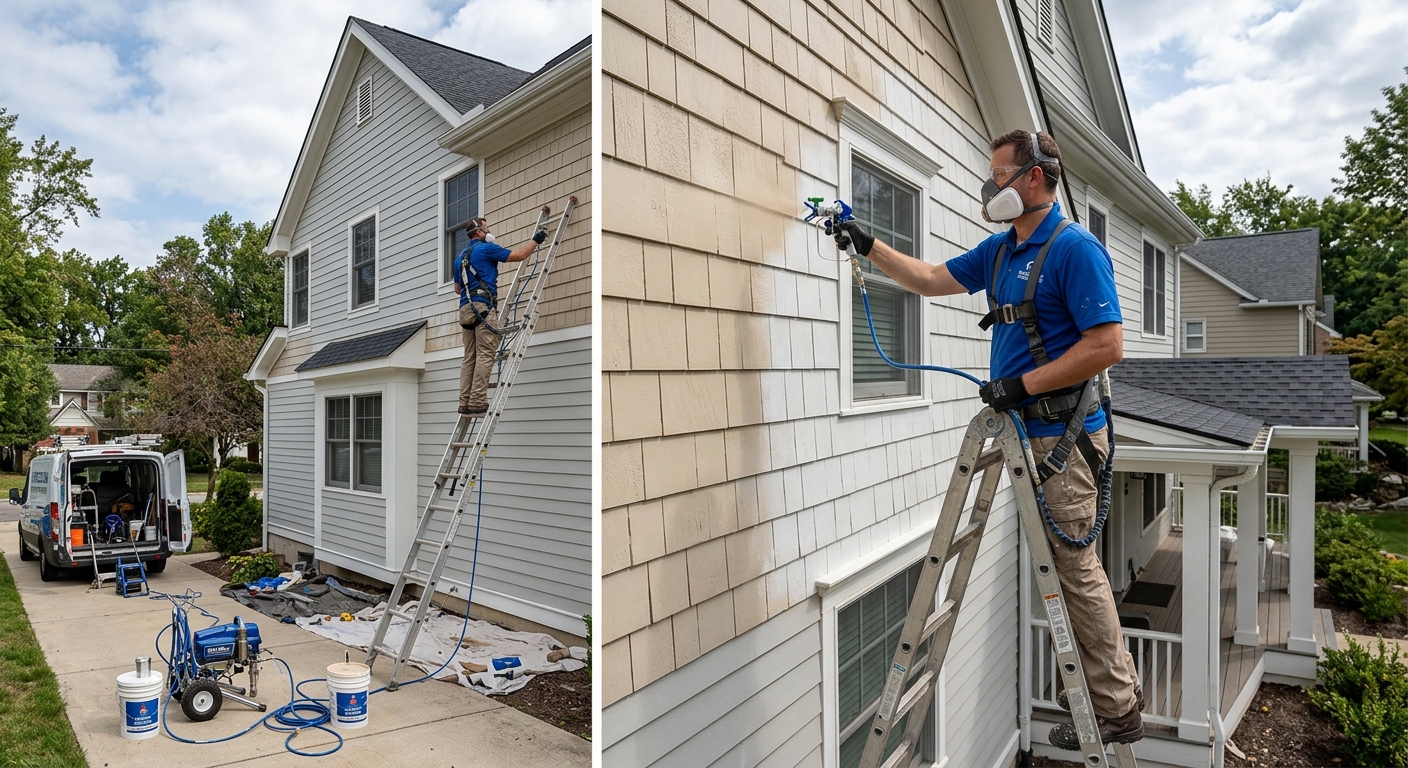
Painting options and costs in Shaughnessy
Painting in Shaughnessy means working with an older, character-rich housing mix and a very coastal climate. Shaughnessy’s population is 8,430 people (Statistics Canada, 2021 Census), and the neighbourhood’s housing stock commonly reflects earlier build eras than newer suburban areas—so many repaint projects start with more prep than homeowners expect. Across the Lower Mainland–Southwest, contractor estimates often hinge on whether your home needs scrape-and-stain blocking, drywall patching, and extensive primer work to stop tannins, nicotine, or old water stains from bleeding through. For pre-1978 homes, lead-paint–safe practices may also be required on the jobsite for sanding/scraping, which increases containment, cleanup, and disposal time.
In the Lower Mainland–Southwest, costs are shaped less by extreme cold and more by rain, humidity, and shoulder-season timing. Exterior work can be scheduled into dry windows, but painters must plan around re-mobilizing between weather stretches and use mildew-resistant, high-adhesion products that perform on BC siding and trim. Interior work is steadier year-round, so crews often shift capacity indoors through fall and winter. That’s why you’ll see different pricing pressure than in provinces where exterior work concentrates in a shorter, colder window.
In Shaughnessy, demand is especially high around the Broadway corridor and the pockets closest to South Granville access, where older homes and heritage-influenced finishes are common and timelines are tight. Use the table below to compare typical options and pricing, then we can narrow your range once we confirm prep needs, height/access, and your chosen finish level.
| Service |
What's Included |
Typical Duration |
Price Range |
| Interior — whole home (walls, ceilings, trim) |
Protection, surface prep, patching, caulking, primer where needed, 2-coat finish, brush/roll around fixtures, basic cleanup |
5–12 business days |
$4,000 – $8,000 |
| Interior — per room (standard bedroom or living room) |
Prep and patching, prime bare spots, 2-coat finish, ceiling usually included for “room” pricing, standard trim included |
2–5 business days |
$750 – $2,400 |
| Exterior — full house (siding, trim, soffits) |
Wash/degrease, scraping and sanding, patching, caulking, primer system, 2-coat exterior finish, attention to gutters/soffits, disposal |
7–18 business days (weather dependent) |
$6,500 – $15,000 |
| Exterior — trim and accent colours only |
Mask/protect, spot prep, prime bare areas, 2-coat finish on trim/accent zones |
3–8 business days |
$1,200 – $5,500 |
| Kitchen cabinet painting (doors, frames, spray finish) |
Hardware masking or removal, thorough degrease, sanding/scuffing, bonding primer, sprayed topcoats (finish grade), re-install |
5–14 business days |
$2,500 – $6,500 |
| Specialty / faux finish (accent wall, texture) |
Surface sealing, custom technique, multiple layers (base + glaze/texture), detailed cleanup and touch-ups |
2–8 business days |
$700 – $12,000 |
Prices are estimates only and vary by project scope, site access and material selection.
What affects the price of painting in Shaughnessy
Two quotes for the “same paint job” in Shaughnessy can differ by 30–50% across the Lower Mainland–Southwest versus other parts of British Columbia because labour, access, and prep intensity vary dramatically from one home to the next—and because coastal schedules can add time between workable weather windows. In practice, the gap usually comes down to surface condition (peeling, chalking, stains), the number of coats required by the paint system, and whether the job needs containment and lead-paint–safe steps on older homes.
Exterior painting is tightly climate-bound in the Lower Mainland–Southwest. While temperatures rarely force “no-work” like in colder provinces, rain and humidity still slow drying and increase mildew risk. That means crews may need to pause, return, and re-check moisture—built into the cost. In Ontario and Alberta, contractors often rely on a late May to early October style window where application temperatures must stay comfortably above 10°C and rising, but coastal BC can have longer calendar availability with more damp shoulder-season days. Either way, short windows concentrate demand, which can push labour rates higher in summer.
Older homes throughout the region typically need extensive prep—scraping, caulking, patching, and priming—and prep can be 50–70% of total labour on a repaint. For example, a straightforward interior refresh might sit around the $300 – $8,000 interior range depending on room count and trim, while an exterior that reveals failing coatings and stain bleed can move from the lower side of $1,200 – $15,000 to the upper bands once additional primer systems and weather remobilization are required.
In Shaughnessy specifically, the cost rises when homes have textured plaster, older wood trim that needs spot re-priming, or multi-storey facades that demand lifts/scaffolding. It can lower when your surfaces are already sound, caulking joints are intact, and the work is confined to trim accents rather than full siding.
| Price Factor |
Why It Matters |
Cost Impact |
| Surface prep — scraping, sanding, patching drywall or wood |
Determines adhesion and whether stains/old coatings telegraph through |
Often the largest driver; can swing 20%–40% on repaint jobs |
| Number of coats — 2-coat system over primer vs. 1 coat over existing |
Coverage and durability depend on the full paint system, not just topcoat |
Typically adds 10%–25% when full primer + 2 coats are required |
| Paint quality tier — contractor-grade vs. premium (Benjamin Moore, Sherwin) |
Premium lines often cover better and resist mildew/UV longer |
Material delta can be ~5%–15%, usually smaller than prep changes |
| Ceilings and trim — adds significant time vs. walls-only |
Ceilings require more cutting-in and rolling; trim needs careful masking |
Can add 15%–30% depending on trim density |
| Exterior season window — short season raises summer rates |
Weather interruptions mean crews lose productive hours |
Seasonal scheduling pressure can add 10%–30% on exterior |
| Lead-safe precautions — required for pre-1978 homes with lead paint |
Containment, HEPA cleanup, and disposal add time and materials |
Commonly adds 5%–20% depending on coating condition |
| Surface material — drywall vs. plaster vs. wood vs. stucco |
Different substrates need different primers and leveling methods |
Can swing 10%–25% based on primer and repair complexity |
| Height and access — multi-storey exterior requires scaffolding or lifts |
Safety setup and reach affect time, labour, and sequencing |
Often adds 15%–35% for taller facades |
Permits & regulations in British Columbia
In British Columbia, painting generally does not require a permit for typical residential interior or exterior painting. For homes built before 1978, health guidance strongly recommends considering lead-paint testing before sanding or scraping, and following lead-safe work practices if lead is present. That means using wet methods to minimize dust, HEPA-vacuum cleanup, proper bagging and disposal of debris, and preventing contaminated dust from spreading beyond the work area. While this is not usually mandated for homeowners, it is standard professional practice for contractors on older properties.
What does typically require a permit? Painting itself usually does not. However, related work can trigger permitting depending on scope—e.g., certain structural repairs, major renovations, or changes that require municipal review. Your painting quote should focus on paint scope, surface prep, and any necessary repair work, but we can flag anything that looks like it may be outside “paint-only.”
To verify a contractor in Shaughnessy, start with their credentials and paperwork: (1) confirm British Columbia licensing status using the appropriate online licence registry for trade categories they claim, (2) request a certificate of liability insurance showing active coverage and the correct business name, and (3) confirm workers’ compensation coverage via the workers’ compensation board record or documentation the contractor provides. Then insist on a written contract listing paint brand and sheen, number of coats, surface prep inclusions/exclusions, and disposal/cleanup responsibilities.
Interior vs exterior painting — getting the best result in Shaughnessy
The difference between a long-lasting paint job and a premature failure in Shaughnessy is usually the prep, not the marketing name on the can—especially in British Columbia’s coastal moisture regime. For interiors, filling and sanding first matter more than topcoat brand. Choose the right sheen by room and use: flatter sheens are more forgiving on minor wall imperfections, while higher-sheen paints wipe more easily in kitchens, hallways, and areas with daily contact. Just as important, two coats over a properly primed surface almost always outlasts one thick coat. When we’re dealing with nicotine, water marks, or patch repairs, primer selection (stain-blocking or bonding) is what prevents “ghosting” and uneven sheen.
For exteriors, the critical prep steps in the Lower Mainland–Southwest are washing/degreasing, scraping failing coatings, caulking correctly before painting, and using the right primer system for the substrate. Caulking before coating helps prevent water ingress into joints and reduces future blistering. Primer type matters: different products suit wood, fibre cement, stucco, and previously painted surfaces to ensure adhesion. Coastal BC also demands mildew-resistant, high-adhesion products and careful scheduling around dry windows so the coating can cure without trapping moisture.
Cabinet painting is a smart budget alternative to replacement when the box and doors are structurally sound. A good spray finish can transform kitchens within the $2,000 – $8,000 cabinet band, often costing far less than full cabinet replacement—so long as prep and bonding are thorough. For pre-1978 homes, lead-safe precautions during scraping/sanding protect you and the home while preventing dust spread.
If a home’s exterior paint is failing and bleeding stains, it’s usually worth paying for full prep rather than “touching up.” Example: moving from a trim-only refresh around the $1,200 – $5,500 band to a full-house repaint in the $6,500 – $15,000 band is often justified when the siding is chalking or when caulking and primer systems need to be renewed across the envelope.
| Project Type |
Key Prep Step |
Recommended Coats |
Price Band |
| Interior — fresh drywall (new construction) |
Seal/prime bare drywall to ensure even sheen and coverage |
1 primer + 2 finish coats |
$1,200 – $6,500 |
| Interior — repaint (good condition, no repairs) |
Light sanding, dust removal, spot-priming scuffs as needed |
1–2 finish coats (often 2 if sheen change or patching exists) |
$750 – $4,500 |
| Interior — repaint (patching and priming needed) |
Skim/patch, sand smooth, and prime repaired areas before finish |
1 primer + 2 finish coats (system approach) |
$1,000 – $8,000 |
| Exterior siding (wood or fibre cement) |
Scrape failing paint, caulk joints, and use the correct primer system |
Primer + 2 finish coats (where required) |
$6,500 – $15,000 |
| Exterior trim and accents only |
Masking/protection plus spot prep and prime bare areas |
2 finish coats (with primer on bare/sanded spots) |
$1,200 – $5,500 |
| Kitchen cabinets (spray finish) |
Degrease, scuff/sand, then bond with a proper primer system |
1 primer + 2 sprayed topcoats |
$2,500 – $6,500 |
How to choose a painting contractor in Shaughnessy
To choose a painting contractor in Shaughnessy, start by verifying three things: (1) licensing/registration for the trade category they operate under in British Columbia, (2) liability insurance, and (3) workers’ compensation coverage. In practice, you’ll want to see a certificate of liability insurance that matches their business name and shows active dates, not a lapsed document. For workers’ comp, ask for proof they’re covered; they should be able to provide the paperwork or reference the proper workers’ compensation record. Don’t accept “we’re covered” without documentation—your insurer may ask later if there’s an incident.
Next, get 2–3 itemised written quotes, not lump sums. The best quotes show labour and materials separately and specify what’s included: surface prep (scraping/sanding/patching), caulking, primer system, number of coats, disposal/cleanup, and whether furniture and floors are protected to a defined standard. Confirm if any permits are included—painting itself typically doesn’t need one in BC, but repair work might. Ask for the warranty details in writing: the workmanship warranty length and whether it covers touch-ups, peeling, or failure at prep seams, plus the manufacturer/product warranty terms if applicable.
For payments, use a schedule that protects you. Never pay more than 10–15% upfront; hold a portion back until the job is complete, cleaned, and reviewed. Also request the timeline: start date, estimated duration, and a plan for weather delays on exterior work so you know what happens if rain interrupts curing windows.
- Verify BC trade status/registration online using the contractor’s legal business name.
- Request and confirm an active certificate of liability insurance (correct name, coverage dates).
- Confirm workers’ compensation coverage with proof—before work begins.
- Insist on an itemised quote: labour hours, materials, primer/paint lines, and disposal.
- Confirm prep scope in writing (scrape vs. spot sand, patching included or not).
- Ask how they handle mildew risk: which product type and how they manage humid days.
- For older homes, ask their lead-safe approach if you suspect pre-1978 coatings.
- Check whether ceilings and trim are included or priced as add-ons.
- Confirm sheens by room (e.g., flat/eggshell/satin/semigloss) and list them.
- Require a written schedule with start date and completion estimate.
- Get the warranty in writing (workmanship duration, product coverage, transferability).
- Use a payment schedule with minimal upfront deposit and a final holdback.
Red flags in Shaughnessy include: vague scopes like “we’ll prep and prime” without explaining what gets scraped/primed; quotes that only reference paint colour and not the paint system (primer + coats); refusing to provide proof of insurance or workers’ compensation; demanding large upfront payments beyond 10–15%; and promising “same-week exterior curing” without accounting for coastal humidity and dry-window scheduling.
Frequently asked questions — painting in Shaughnessy
How much does it cost to paint a house in Shaughnessy?
For a typical Shaughnessy home, the full interior and exterior ranges depend heavily on prep and surface condition. Interior whole-home painting commonly lands around $4,000 – $8,000 when walls, ceilings, and trim are included. Exterior full-house painting is more variable because of scraping, caulking, primer system selection, and weather windows in the Lower Mainland–Southwest; a realistic band is $6,500 – $15,000. On older homes, extensive prep (and sometimes lead-paint–safe practices for pre-1978 coatings) can push the job toward the higher end. If your surfaces are sound and there are no stain issues, costs usually stay nearer the lower half.
How much does interior painting cost per room in Shaughnessy?
Per-room interior pricing in Shaughnessy is usually based on the size of the room plus whether ceilings and trim are included. For a standard bedroom or living room with typical trim, you’ll commonly see a range around $750 – $2,400. The biggest cost difference comes from repairs: if the room needs patching, sanding, and priming, expect to move toward the upper end. If it’s a straightforward repaint in good condition, cost is often closer to the lower half. Sheen choice also matters because higher-wear areas (like kitchens/hallways) may require satin/semigloss performance.
When is the best time for exterior painting in Shaughnessy?
The best time for exterior painting in Shaughnessy is during the driest stretches of the season—when crews can apply coating and allow proper cure without extended dampness. In the Lower Mainland–Southwest, you can often work longer than in provinces with harsher winters, but rain and humidity in shoulder seasons still affect drying and mildew risk. Practically, many projects schedule around reliable dry windows rather than just “summer dates.” The contractor should plan for re-mobilizing between weather windows and use mildew-resistant, high-adhesion products suited to coastal BC conditions. If you’re aiming for a whole exterior, it’s smart to book earlier so weather delays don’t leave you waiting.
How many coats of paint do I need?
Most quality systems use a primer (when bare or stain-prone surfaces exist) plus two finish coats, especially for exteriors and any interior patch areas. For interiors that are a direct repaint in good condition, you may sometimes get by with 2 coats of finish without a full primer—though spot-priming is still common for scuffs and repairs. For repainting that includes patching, priming is typically required and the system becomes 1 primer + 2 finish coats. On exteriors, failure-prone substrates often require primer plus 2 finish coats to ensure adhesion and uniform protection in the Lower Mainland–Southwest’s humidity and rain. Your quote should spell out the exact coat plan by surface.
What paint is best for Shaughnessy's climate?
In Shaughnessy and across the Lower Mainland–Southwest, the “best” paint is less about brand alone and more about the full paint system: correct primer for the substrate, the right sheen for the room, and exterior products designed for mildew resistance and adhesion in humid conditions. For exterior siding and trim, choose mildew-resistant coatings that tolerate coastal weather and maintain film integrity after damp shoulder-season days. For interiors, a durable interior line with appropriate sheen (flat/eggshell for lower-traffic rooms, satin or semigloss for higher-touch areas) helps walls wipe clean without streaking. If your home has older wood trim or stain-prone surfaces, the correct bonding/stain-blocking primer is often what determines whether the coating lasts.
How long does exterior paint last here?
Exterior paint life in Shaughnessy varies by prep quality, product system, and how well the job manages moisture exposure. When scraping is done correctly, caulking joints are addressed before coating, and the right primer is matched to the substrate, many well-executed repaint jobs can last multiple years—often around a decade for maintainable surfaces, with performance depending on sun exposure, north-facing walls, and how much moisture cycles the coating endures. If failing paint, chalking, or stain bleed exists before the job starts, skipping prep can shorten lifespan quickly. Because the Lower Mainland–Southwest has rain and humidity and a schedule shaped by dry windows, consistent workmanship and weather-aware application are key to achieving the longer end of expected durability.