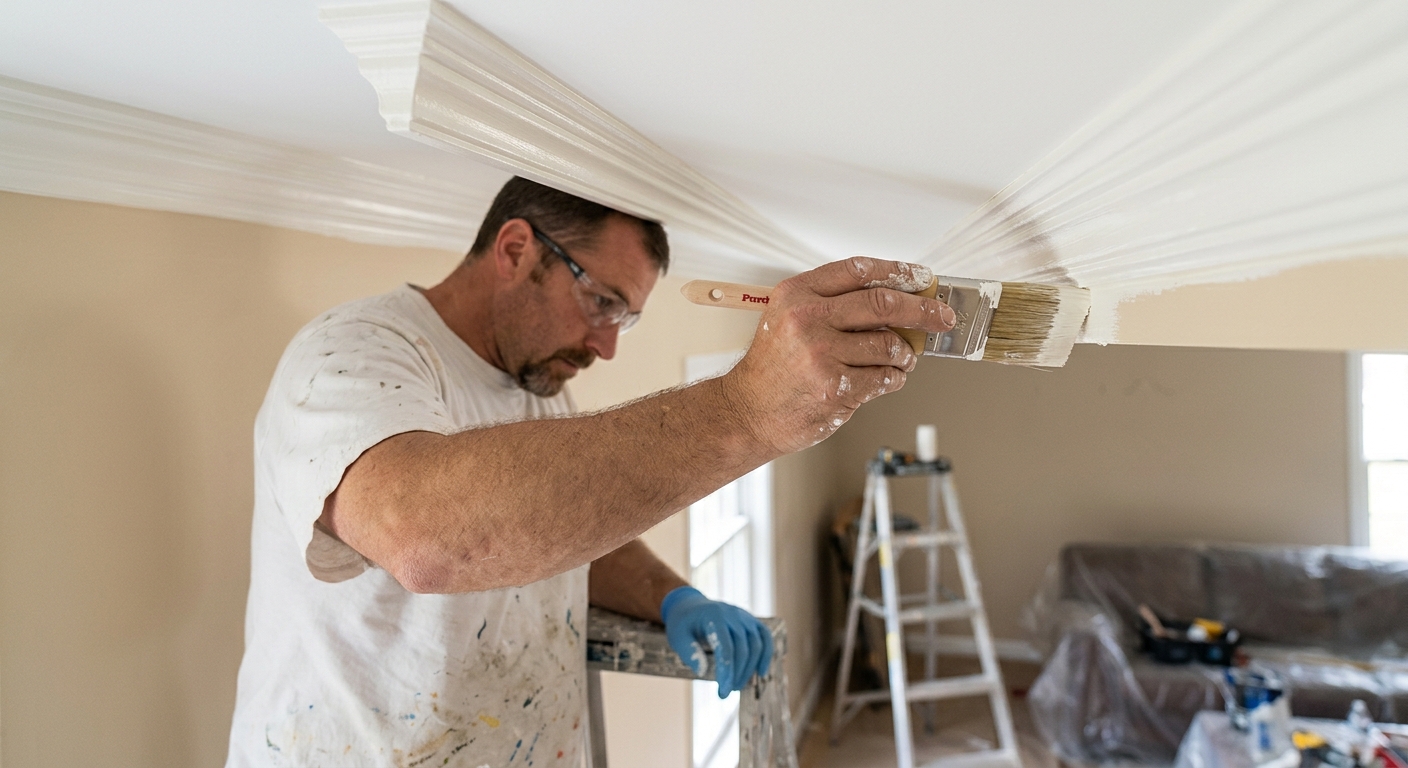
Painting options and costs in Radium Hot Springs
In Radium Hot Springs, painting choices usually start with one practical question: what can you realistically do this summer, and what will still look good next season? With a population of 1,339 (Statistics Canada, 2021 Census) and 475 homeowner households, many properties are owner-managed and repaints tend to be timed around the limited stretch of warm, dry weather. In the Kootenay region, a meaningful share of the housing stock is older—12.6% of homes were built before 1981 (Statistics Canada, 2021 Census). Older surfaces often need more scraping, sanding, patching, and priming, and pre-1978 coatings may require lead-safe work practices.
Cost in Radium Hot Springs is also shaped by the continental interior climate: cold, snowy winters mean exterior work must be concentrated into a tighter May–September window when temperatures stay warm enough for proper application and curing. That compressed schedule increases demand for reputable painters, so labour pricing can rise in peak weeks. At the same time, most homes here are not coastal exposed to persistent mist, so interiors and exteriors typically dry more predictably once weather cooperates—assuming prep and caulking are done correctly.
If you’re in the foothills and along routes that see more dust and wind-driven grit, such as the Radium Valley corridor and nearby hillside lots, expect additional prep and surface protection time. From there, the best way to compare quotes is to look at what’s included in each scope, then match the right option to your budget—see the comparison table below.
| Service |
What's Included |
Typical Duration |
Price Range |
| Interior — whole home (walls, ceilings, trim) |
Protect flooring; patch/sand; prime where needed; paint walls and ceilings; caulk trim/edges; paint interior doors and accessible trim; clean-up and dust control |
3–7 days |
$2,500–$5,500 |
| Interior — per room (standard bedroom or living room) |
Prep and protect; patch/sand; prime as required; paint walls and one ceiling; caulk corners/trim touch-ups; light clean-up |
1–3 days |
$500–$1,800 |
| Exterior — full house (siding, trim, soffits) |
Power-wash/spot clean; scrape/sand; patch caulking and repair minor failures; prime bare wood/problem areas; paint siding and trim; coat soffits/fascia as accessible; final wash-down and clean-up |
5–12 days |
$4,500–$7,000 |
| Exterior — trim and accent colours only |
Prep and protect; scrape/sand limited areas; caulk where needed; spot-prime; paint trim, rails, shutters/accents; exclude full siding repaint |
2–5 days |
$1,500–$4,000 |
| Kitchen cabinet painting (doors, frames, spray finish) |
Degrease and clean; remove hardware; sand and prep; prime; spray cabinet doors and frames for a uniform finish; reinstall hardware; interior/exterior protection |
4–10 days (including cure time) |
$2,000–$4,200 |
| Specialty / faux finish (accent wall, texture) |
Surface prep; texture repair where needed; apply specialty product/technique; seal/finish coats for durability; clean-up |
1–5 days |
$600–$3,800 |
Prices are estimates only and vary by project scope, site access and material selection.
What affects the price of painting in Radium Hot Springs
Even when two contractors are quoting the “same” repaint, you can see 30–50% differences across Kootenay communities and the broader British Columbia market. The main reason is prep and scheduling. In Radium Hot Springs and the wider Kootenay region, exterior painting is tightly climate-bound: most façade work has to happen during the warm, dry May–September period when surfaces are warm enough to apply and cure. In practice, that means fewer workable days and more short-notice demand, so crews charge more for peak-week availability—especially on full houses where siding, trim, and soffits all need coordinated coats.
Older homes add another cost lever. In Radium Hot Springs, 12.6% of homes were built before 1981 (Statistics Canada, 2021 Census), and older coatings often fail sooner if prep is rushed. Scraping, sanding, patching, caulking and priming can make up 50–70% of total labour on repaints. That’s why a trim-only refresh may land around the lower end of the exterior bands (for example, roughly $1,500–$4,000), while a full exterior (often $4,500–$7,000) reflects the reality that siding and trim require more prep, more primer, and more coordinated weather windows.
Concrete local examples: a two-storey hillside home frequently requires staging or a lift, which increases labour hours and material usage. Conversely, a bungalow with accessible eaves and minimal peeling paint can sometimes keep exterior costs closer to the mid-range. On the interior side, textured ceilings and mixed surface materials can extend drying and sanding time, pushing rooms toward the higher interior per-room band rather than the quicker lower estimate. Ultimately, your quote should show how much of the cost is prep and how much is painting time.
| Price Factor |
Why It Matters |
Cost Impact |
| Surface prep — scraping, sanding, patching drywall or wood |
Removes failing coatings and creates adhesion so paint doesn’t blister or peel |
+15% to +40% |
| Number of coats — 2-coat system over primer vs. 1 coat over existing |
Bond and hiding power depend on coverage; older colours often require more work |
+10% to +25% |
| Paint quality tier — contractor-grade vs. premium (Benjamin Moore, Sherwin) |
Higher solids and better durability reduce recoat risk and call-backs |
+5% to +20% |
| Ceilings and trim — adds significant time vs. walls-only |
Cutting in, edging, masking and more detailed painting increase labour hours |
+10% to +30% |
| Exterior season window — short season raises summer rates |
Weather days are limited; crews are reserved for curing and rain-risk windows |
+10% to +35% |
| Lead-safe precautions — required for pre-1978 homes with lead paint |
Protects occupants and workers; adds HEPA methods and disposal steps |
+10% to +25% |
| Surface material — drywall vs. plaster vs. wood vs. stucco |
Different substrates need different primers and porosity control |
+5% to +25% |
| Height and access — multi-storey exterior requires scaffolding or lifts |
Increases setup time, safety time, and protection measures |
+15% to +40% |
Permits & regulations in British Columbia
In British Columbia, painting itself typically doesn’t require a permit for homeowners or contractors in the way building or structural work can. Where the rules do matter is around hazardous materials and safety practices. For homes built before 1978, health guidelines recommend testing for lead paint before sanding, scraping, or aggressive prep. If lead is present, lead-safe work practices (such as wet methods to reduce dust, HEPA vacuuming, and proper disposal of debris) are standard professional practice. This isn’t usually something homeowners must handle the same way under a “permit” system, but it is a best-practice approach contractors follow to protect residents and workers.
Separately, always confirm your contractor carries the right coverage. Ask for proof of liability insurance and workers’ compensation coverage (commonly handled through WSBC/WCB). Then insist on a written contract that clearly states: the paint brand and sheen, the number of coats, surface prep tasks (scrape/sand/patch/prime/caulk), and what cleanup and disposal are included.
How to verify in Radium Hot Springs: check the contractor’s public registration/licensing details through the appropriate online registry for British Columbia before work starts; request a current certificate of liability insurance (with the project address or client named) and review expiry dates; and ask for confirmation of workers’ compensation coverage in writing. A simple call-back question—“Can you email your certificate and coverage proof today?”—quickly exposes whether a contractor is properly set up.
Interior vs exterior painting — getting the best result in Radium Hot Springs
In Radium Hot Springs, durability comes down to prep quality and product fit for the Kootenay climate swings—freeze-thaw winters, summer heat, and rapid drying during clear stretches. Premature failure usually looks like peeling at edges, flashing through on glossy areas, or cracking around poorly caulked transitions. The fix is rarely “better paint” alone; it’s the boring steps that control adhesion and moisture movement.
For interiors, surface prep matters more than the brand of topcoat. Filling, sanding, and spot-priming stains, patched areas, and glossy repairs are what prevent flashing and peeling in drywall joints. Choose sheen intentionally: flat hides wall imperfections, eggshell offers easy wipeability for living areas, satin is a common choice for hallways and kid zones, and semi-gloss is best for trim and doors because it resists scuffs. And yes—two proper coats over a correctly matched primer typically outlasts a “thick one-coat” approach, especially after repairs.
For exteriors, the climate makes caulking and primer critical. Proper prep (cleaning, scraping, sanding) plus caulking before painting helps stop water ingress behind trim lines where failures start. Substrate-appropriate primer—rather than a one-size-fits-all oil-or-latex choice—helps adhesion across wood, older paint films, and fibre cement. While coastal BC pushes mildew-resistant products due to damp air, Kootenay still benefits from mould-resistant systems in shaded or sheltered zones; the difference is that Kootenay dries faster when weather is fair, so your schedule must still protect surfaces from sudden rain.
Cabinet painting is a smart budget alternative to replacement when you want a quick refresh: for many homeowners, it can sit around the cabinet band (roughly $2,000–$4,200), while full replacement typically jumps far higher. For pre-1978 homes, lead-safe precautions should be built into the prep workflow—this is where you should expect a higher prep line item, not an after-the-fact surprise.
| Project Type |
Key Prep Step |
Recommended Coats |
Price Band |
| Interior — fresh drywall (new construction) |
Prime bare drywall evenly; caulk seams and trim edges; sand lightly for a uniform surface |
2 coats of wall paint (over primer); 2 coats on trim |
$500–$3,000 |
| Interior — repaint (good condition, no repairs) |
Degloss/clean; light scuff-sand; spot-prime if colour change or stains exist |
2 coats (common standard); primer optional for minor touch-ups |
$500–$5,000 |
| Interior — repaint (patching and priming needed) |
Patch and sand; prime repaired areas to prevent flashing; feather edges |
2 coats plus primer on repairs and stains |
$800–$5,500 |
| Exterior siding (wood or fibre cement) |
Wash, scrape/sand failing areas, caulk cracks/edges, and prime bare/problem zones |
2 coats over primer system |
$4,500–$7,000 |
| Exterior trim and accents only |
Spot prep and prime; caulk transitions before painting |
2 coats (trim typically benefits from a fuller system) |
$1,500–$4,000 |
| Kitchen cabinets (spray finish) |
Thorough degrease and sanding; prime for adhesion; proper cure time control |
2 finish coats after primer (doors/frames sprayed) |
$2,000–$4,200 |
How to choose a painting contractor in Radium Hot Springs
Choosing the right contractor in Radium Hot Springs starts with verification, not vibes. First, confirm British Columbia licensing/registration (and make sure it matches the work type they’re proposing). Next, ask for proof of liability insurance—read the certificate to confirm it’s current and that the project is covered. Then request workers’ compensation coverage documentation (WSIB/WCB equivalent). If a contractor can’t email these quickly, that’s a reliability red flag.
For quotes, get 2–3 itemised written estimates rather than a single lump sum. You want line items that separate labour and materials, specify prep tasks (scrape/sand/patch/prime/caulk), and identify what sheens and paint lines are included. Scope clarity matters: disposal included or extra? Masking and protection of floors and landscaping included? Number of coats clearly written? Also confirm whether matching and touch-up work after cure is included.
Warranty should be in writing: ask for a workmanship warranty term (often around the season or a set period), how product warranties work if paint fails due to application conditions, and whether the warranty transfers if you sell the home. Payment schedule should be conservative—never pay more than 10–15% upfront; hold back the remainder until the job is complete and final cleanup is done. Finally, insist on timeline details: a start date and a completion estimate in writing, especially for exterior work limited to May–September weather windows.
- Request proof of BC registration/licensing before they start.
- Verify liability insurance is current and project-relevant.
- Confirm workers’ compensation coverage paperwork is provided.
- Ask for a colour schedule and paint line/finish in the contract.
- Ensure the quote lists prep steps (wash, scrape, sand, patch, prime, caulk).
- Confirm how caulking is handled at trim edges and joints.
- Clarify disposal and recycling of waste paint/containers.
- Check the quote includes surface protection for floors and plants.
- Ask how long curing time affects access and re-occupancy.
- Make sure the number of coats is stated (and whether primer is included).
- Confirm warranty terms and whether they’re transferable.
- Use a payment schedule with a final holdback until punch-list completion.
Red flags in Radium Hot Springs include: refusing to provide insurance/coverage proof, quoting exterior work without explaining prep and caulking, offering “one coat over everything” promises, starting without a written scope (especially for pre-1978 homes where lead-safe prep may be needed), and asking for large upfront payments (more than 15%) before any work begins.
Frequently asked questions — painting in Radium Hot Springs
What colours add the most resale value in Radium Hot Springs?
In Radium Hot Springs and much of the Kootenay interior, resale-friendly colours tend to be timeless, light-to-mid neutrals that photograph well and don’t fight seasonal light. Popular choices include warm greiges, soft warm whites, and muted taupes for walls, with satin or semi-gloss in clean whites for trim. If you want contrast, keep it to accents like front doors or feature rails—think deep green or charcoal rather than bright, highly saturated colours. If your exterior is a trim repaint only, staying within a proven colour family often keeps costs closer to the exterior trim band (around $1,500–$4,000) because you reduce extensive colour-change prep. For homes built before 1981 (Statistics Canada, 2021 Census), consider whether older substrates show through; higher-quality primer and more prep protects your colour choice long-term.
How much does it cost to paint a house in Radium Hot Springs?
The total cost depends mostly on whether you’re painting interiors, the exterior, or both, and how much prep is required. For a full interior of a whole home, estimates commonly land between the interior whole-home range of about $2,500–$5,500, with prep (patching, priming, sanding) influencing the high end. Exterior painting is more season-pressured in the Kootenay because work must fit the May–September window when surfaces are warm and dry enough to cure properly, so full exteriors often fall around $4,500–$7,000. Homes built before 1981 (Statistics Canada, 2021 Census) can cost more if there’s failing paint or more repairs, because prep can represent a large share of the labour. A trim-and-accents-only refresh is usually the budget alternative, often around $1,500–$4,000.
How much does interior painting cost per room in Radium Hot Springs?
For a typical standard bedroom or living room, interior per-room estimates often fall between about $500–$1,800 depending on prep needs and whether ceilings and trim are included. If your room is in good condition with minimal patching, you can be closer to the lower end after cleaning and light sanding. If there are visible dents, nail holes, uneven repairs, or stained drywall, expect the price to climb because patching and spot-priming prevent flashing. Ceilings and trim add time because cutting in and masking is more labour-intensive than walls alone. In older homes—especially those with more dated paint films—prep can increase cost, even if the “look” is just a refresh.
When is the best time for exterior painting in Radium Hot Springs?
For Radium Hot Springs and the Kootenay interior, the best time for exterior painting is during the warm, dry May–September period. Exterior work depends on temperature and curing conditions: crews typically need surfaces warm enough for proper application and enough time for paint to cure before cooler nights arrive. Scheduling pressure is real—when a stretch of dry weather hits, demand rises quickly, which can affect availability and labour rates. Try to avoid late-season projects when temperatures drop, because inadequate curing can lead to early peeling or adhesion issues. A quality contractor will also consider wind-driven dust and rain risk around start dates and may recommend patch/caulk tasks first so the coating system goes on in the right order.
How many coats of paint do I need?
Most repaint jobs use a 2-coat system, because one coat rarely provides consistent hiding and durability—especially when colours, sheen, or wall conditions have changed. If you’re painting over bare drywall, repairs, or stained areas, primer is typically required before the finish coats. For exterior work, the standard approach is also usually 2 finish coats over the appropriate primer system, with spot-priming on bare or problem areas. Trim often benefits from a full system (primer plus two finish coats) because edges take more wear and moisture exposure. Your exact number of coats should be written in the contract along with what prep is included—so you’re not surprised if the job requires extra primer or additional coats for coverage.
What paint is best for Radium Hot Springs's climate?
For Radium Hot Springs in British Columbia’s Kootenay interior climate, “best” usually means the coating system that matches your substrate and tolerates freeze–thaw cycles, plus correct application conditions. For exteriors, choose a durable exterior product rated for exterior use and capable of handling temperature swings; colour stability and adhesion depend on proper surface prep, priming, and caulking. Mildew resistance is still helpful for shaded areas, but the key advantage over coastal BC is that Kootenay generally dries more effectively after rain—so timing matters. For interiors, low-VOC formulations and appropriate sheens (eggshell/satin for walls; semi-gloss for trim/doors) help in winter when indoor air is dry. If you’re comparing budgets, a well-prepped job in the exterior full-house band (about $4,500–$7,000) often outperforms a cheaper, lower-prep coating approach in the long run—especially on homes built before 1981 (Statistics Canada, 2021 Census).