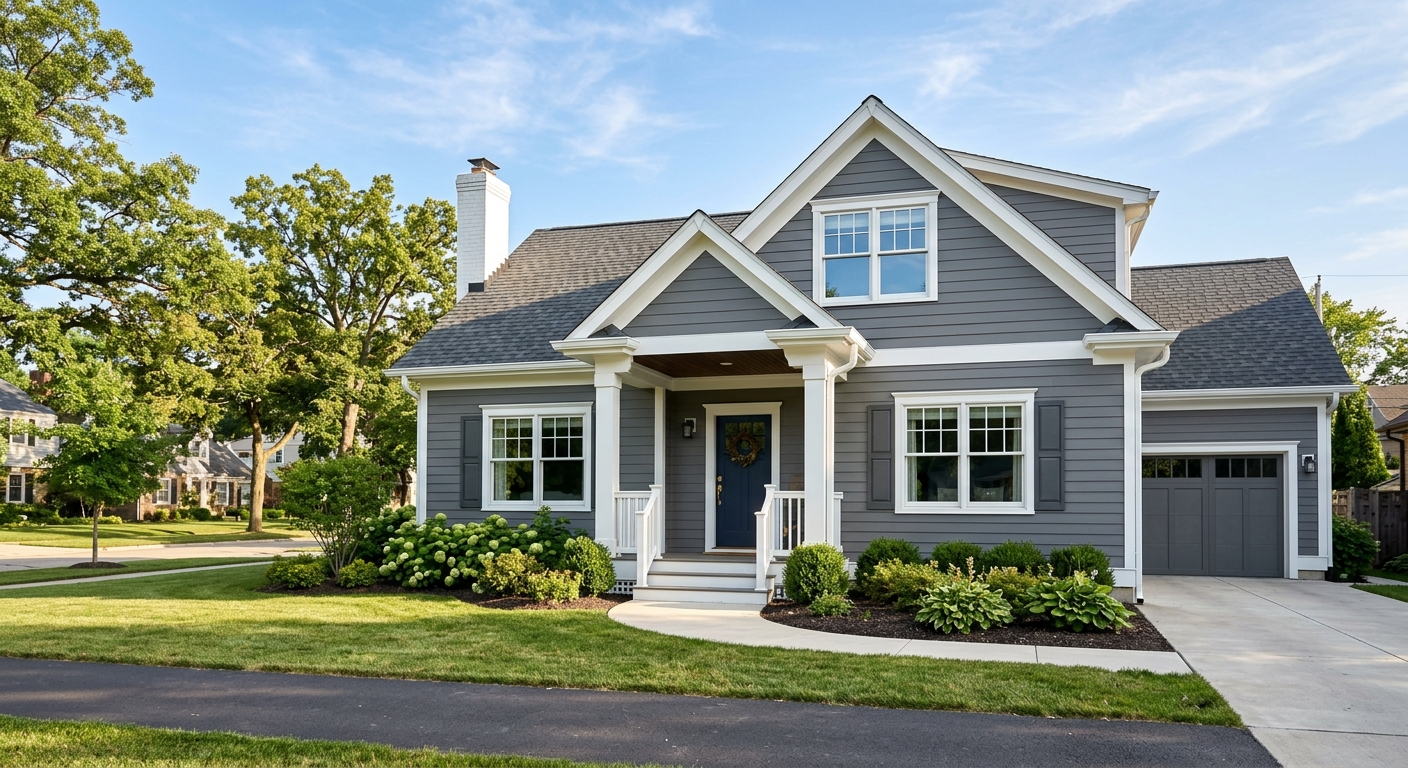
Painting options and costs in Nakusp
Nakusp homeowners usually have two big cost drivers when they’re planning a repaint: how much surface prep is needed and how much of the job falls inside the short, practical exterior window. In Nakusp, many properties are older—62.5% of homes were built before 1981—so expect more scraping, patching and priming than you would on newer drywall. That age profile also makes lead-safe practices a common part of the conversation, especially if original coatings are older (it’s a health guideline rather than a permit requirement for homeowners).
In the Kootenay region, the continental interior climate means exterior painting is highly season-dependent. You generally want warm, dry conditions for application and curing; that limits most façade work to roughly May to September. Even when the paint is the same brand, contractor availability and drying time can tighten pricing during peak months. Interior work is more forgiving, but in winter homes can be dry-heated and temperature swings can affect how quickly products level and cure, which is why prep and primer selection matter as much as the topcoat.
In Nakusp, demand is often especially strong around the downtown waterfront area and the older, street-facing homes where siding and trim detailing show wear first. From there, you can compare budget-friendly options to premium, longer-lasting systems in the table below.
| Service |
What's Included |
Typical Duration |
Price Range |
| Interior — whole home (walls, ceilings, trim) |
Protect floors/millwork, fill & sand, caulk, prime as needed, paint walls/ceilings, paint all accessible trim/doors; basic cleanup; colour consultation optional |
5–10 days |
$2,500–$5,500 |
| Interior — per room (standard bedroom or living room) |
Prep & protect, patch & sand minor defects, prime as needed, paint walls and ceiling; tape-off where required; trim touch-up unless stated |
1–3 days |
$600–$1,800 |
| Exterior — full house (siding, trim, soffits) |
Power-wash, scrape/sand, caulking at joints, spot prime, 2-coat finish system on siding/trim/soffits; protective masking; debris removal & site cleanup |
7–18 days (plus weather-driven gaps) |
$3,500–$7,000 |
| Exterior — trim and accent colours only |
Wash, sand/spot prep, prime bare areas, paint trim/doors/rail accents; limited access to siding areas as agreed |
3–8 days (weather permitting) |
$1,500–$3,800 |
| Kitchen cabinet painting (doors, frames, spray finish) |
Degrease, sand, prime, spray topcoat (doors/drawers) where possible, reinstall or keep hardware; light hardware handling; finish system for durability |
5–12 days (including dry/cure time) |
$2,200–$4,200 |
| Specialty / faux finish (accent wall, texture) |
Surface prep specific to finish, base coat(s), texture/faux application, seal/clear topcoat as required, cleanup |
2–7 days |
$900–$4,800 |
Prices are estimates only and vary by project scope, site access and material selection.
What affects the price of painting in Nakusp
In Kootenay communities around Nakusp, the same “paint the house” request can land 30–50% apart depending on prep depth, access and the coating system chosen. That spread happens because labour isn’t linear: the difference between a quick repaint and a full, durable repaint is often the prep. In Nakusp specifically, older housing stock (62.5% built before 1981) commonly means more cracking at joints, more chalking on old paint, and more patching on drywall or trim. Prep can easily become 50–70% of labour on a repaint, and that alone can move a project from a mid-range exterior band to the upper end.
Exterior work is also tightly climate-bound in the interior Kootenays. Most contractors plan application when temperatures are consistently above about 10°C and surfaces are warm and dry enough to cure properly; wet, cool stretches can force waiting and add cost. In Ontario and Alberta, the window is also generally late May to early October, with similar curing constraints. Coastal BC can sometimes allow earlier starts, but higher humidity and frequent rain mean mildew-resistant products and careful scheduling—so pricing can stay high even when “calendar time” is longer.
Two concrete examples from Nakusp: a full exterior at roughly the $3,500–$7,000 band will often hinge on whether power-washing reveals failing caulk and rotten trim that must be repaired or replaced. On the interior side, a simple walls-and-ceilings room can sit near the lower part of the interior range, but once trim and patching/priming are added, labour jumps toward the upper part of the interior bands like $600–$1,800 per room.
| Price Factor |
Why It Matters |
Cost Impact |
| Surface prep — scraping, sanding, patching drywall or wood |
Older coatings and damaged surfaces need more time to reach a paint-ready profile |
+15% to +35% |
| Number of coats — 2-coat system over primer vs. 1 coat over existing |
Good adhesion and coverage depend on proper layering, especially on stained or patched areas |
+10% to +25% |
| Paint quality tier — contractor-grade vs. premium (Benjamin Moore, Sherwin) |
Higher-solids products often level better and can improve durability and colour retention |
+5% to +20% |
| Ceilings and trim — adds significant time vs. walls-only |
Edge work, masking, and cut-ins are labour intensive and affect final quality |
+10% to +30% |
| Exterior season window — short season raises summer rates |
Short weather windows concentrate demand and can increase scheduling premiums |
+10% to +25% |
| Lead-safe precautions — required for pre-1978 homes with lead paint |
Proper containment, wet methods, and HEPA cleanup add time and disposal steps |
+5% to +20% (project-dependent) |
| Surface material — drywall vs. plaster vs. wood vs. stucco |
Each substrate needs different prep and primer compatibility |
+5% to +30% |
| Height and access — multi-storey exterior requires scaffolding or lifts |
Safe access increases labour and rental costs |
+10% to +40% |
Permits & regulations in British Columbia
In British Columbia, painting itself typically does not require a permit—meaning a homeowner generally does not need to obtain approvals just to repaint a home’s exterior or interior surfaces. However, health guidelines become important for older homes. For homes built before 1978, recommended practice is to test for lead paint before sanding, scraping or abrasive prep. If lead is present, professionals commonly follow lead-safe work methods such as wet sanding (to reduce dust), HEPA vacuuming, containment where appropriate, and proper disposal of debris. This is not commonly treated as a homeowner “permit” step, but it’s standard contractor best practice.
What does require attention is contractor compliance and documentation. A professional painting contractor should carry liability insurance, and for work that involves employees, workers’ compensation coverage (WSBC/WCB). Always use a written contract that specifies the paint brand and sheen (where applicable), the number of coats, the surface prep included, and what happens with repairs or unexpected substrate issues.
To verify eligibility in Nakusp, start by (1) confirming the contractor’s licence/registration status through the online provincial contractor directory if applicable in their trade category, (2) asking for a Certificate of Insurance and checking dates/coverage amounts, and (3) requesting proof of workers’ compensation coverage. If they can’t provide documentation up front, pause and request it in writing before work begins.
Interior vs exterior painting — getting the best result in Nakusp
In Nakusp’s interior climate swings and the Kootenay exterior weather pattern, the difference between a long-lasting paint job and early failure is usually not the brand—it’s the prep, product selection, and how the finish is applied. For interiors, surface prep is the foundation: filling holes and cracks, sanding smooth, caulking gaps, and priming properly should come before the topcoat. Sheen also matters by room and use—flat can hide wall imperfections but is less cleanable; eggshell or satin typically balances durability and appearance for living areas; semi-gloss is common for trim and higher-touch surfaces because it resists marks and washes better.
A practical rule: two coats over a proper primer almost always outlast one thick coat. Where people try to save money by skipping primer or doing a single coat, you often see flashing, uneven sheen, and faster wear—especially on patched areas and dark-to-light colour changes.
For exteriors, caulking before painting is critical in British Columbia conditions so water can’t migrate into joints. Primer type matters too: substrates like bare wood, glossy old paint, or fibre cement each need compatibility. Mildew resistance is important, but in Nakusp you’re generally working with drier air than coastal BC—so you’ll still want good exterior systems while relying more on correct curing and workmanship during the May–September window.
Cabinet painting is also a smart alternative to replacement when budgets are tight. For instance, a cabinet spray finish may land in the $2,200–$4,200 range, which can be justified versus replacing cabinetry—especially if you’re aiming for a refreshed kitchen without a full remodel.
In older Nakusp homes (62.5% built before 1981), lead-safe precautions may be part of the prep plan for disturbed surfaces, which can add labour but protects your household and supports better disposal practices.
| Project Type |
Key Prep Step |
Recommended Coats |
Price Band |
| Interior — fresh drywall (new construction) |
Prime new drywall properly to seal and prevent flashing |
1 coat primer + 2 coats finish |
$900–$3,200 |
| Interior — repaint (good condition, no repairs) |
Light scuff-sand, spot prime where needed, thorough cleaning |
2 coats finish (spot prime only if required) |
$600–$2,500 |
| Interior — repaint (patching and priming needed) |
Patch drywall/wood, sand smooth, prime repairs for uniform sheen |
1 coat primer on repairs + 2 coats finish |
$800–$3,500 |
| Exterior siding (wood or fibre cement) |
Power-wash, scrape loose paint, caulk joints, prime bare spots |
1 coat primer (as needed) + 2 coats exterior finish |
$3,500–$7,000 |
| Exterior trim and accents only |
Sand edges, spot prime, mask tightly to prevent bleed |
1 coat primer (as needed) + 2 coats finish |
$1,500–$3,800 |
| Kitchen cabinets (spray finish) |
Degrease, de-gloss, prime properly, then spray for an even film |
1 coat primer + 2 coats topcoat |
$2,200–$4,200 |
How to choose a painting contractor in Nakusp
When you’re hiring in Nakusp, focus on proof—not promises. For British Columbia work, verify the contractor’s licensing/registration status for their trade category (if applicable), then request their liability insurance certificate and confirm it covers property damage and bodily injury for work at your address. For workers’ compensation, ask for proof of workers’ compensation coverage (WSBC/WCB) so you’re not stuck with risk if an employee gets hurt on site.
Next, get 2–3 itemised written quotes. You want labour and materials broken out, not just a lump sum, and you want line items that show what’s included in prep: scraping, sanding, patching, caulking, primer types, and whether disposal is included. Confirm whether any permit work (if required for an unusual situation) is handled by the contractor—painting generally does not require a permit, but scope misunderstandings can happen for special coatings or renovations. Also check warranty details: workmanship warranty length, product/manufacturer warranty terms, and whether the warranty transfers to a new owner if you sell.
Payment scheduling matters. Avoid paying more than about 10% to 15% upfront. Hold back a portion until the final walkthrough and touch-ups are completed, especially for trim lines and exterior cut-ins. Finally, ask for the start date and completion estimate in writing; in the Kootenay exterior season, weather delays are normal, and a clear plan prevents disputes.
- Request proof of liability insurance (certificate of insurance) and verify active coverage
- Request proof of WSBC/WCB workers’ compensation coverage
- Confirm trade licence/registration status through the appropriate BC registry where applicable
- Get 2–3 quotes with labour and materials separated (not a single blended number)
- Ask what surface prep is included: scrape/sand extent, patching, and caulking
- Confirm primer type and where it’s applied (bare wood, stained areas, repairs)
- Clarify number of coats and sheen for each space (walls vs trim vs ceilings)
- Ask how colour changes are handled (dark-to-light coverage plan)
- Confirm site protection and cleanup: floors, landscaping, windows, and waste disposal
- Check warranty terms in writing and whether it’s workmanship-only or includes materials
- Use a payment schedule with minimal upfront and a holdback for final completion
- Get a written schedule with weather contingency for exterior projects
Red flags I see sometimes around Nakusp: they won’t show insurance or workers’ compensation proof; quotes don’t list prep steps (they say “prep as needed” without detail); they push for full payment upfront; they won’t specify paint brand/line, sheen, or number of coats; and they skip discussion of older-home risks like lead-safe prep practices where applicable.
Frequently asked questions — painting in Nakusp
What paint sheen should I use in different rooms?
In Nakusp and across British Columbia, sheen is mostly about cleanability and how lighting shows imperfections. For living rooms and bedrooms, eggshell or satin on walls is a strong balance—washes well but doesn’t glare like semi-gloss. Bathrooms and kitchens often benefit from a more scrubbable finish (commonly satin) because of moisture and frequent cleaning. Ceilings are typically flat to hide marks, while trim and doors usually go semi-gloss for wipe-ability. If you’ve got patched drywall from previous repairs in older homes (62.5% built before 1981), a contractor should prime repairs so the sheen looks even—otherwise you can see flashing even with the “right” sheen choice. For estimates, an interior per-room repaint commonly falls in the $600–$1,800 range depending on prep and sheen selection.
Can I paint my house exterior in spring or fall in Nakusp?
You can, but in Nakusp it’s all about temperature, dryness and cure time. The Kootenay interior climate is continental, with cold, snowy winters and a shorter, more predictable warm stretch. Spring work can be risky if surfaces cool down quickly at night or if there’s lingering damp—paint may not cure evenly and you can get adhesion problems. Fall is similar: even if it looks dry, cooler temperatures can slow cure and lead to early failures. Most exterior painting is scheduled for the May–September window when conditions support proper application and drying. If your contractor offers exterior work below the practical curing range, ask how they manage temperature and moisture (surface checks, dehumidification for enclosed areas, and realistic cure timing). A full exterior project typically sits around $3,500–$7,000 because scheduling and prep depth are built around weather constraints.
How do I choose a painting contractor in Nakusp?
Start with documentation and details. In British Columbia, ask the contractor for their liability insurance certificate and proof of workers’ compensation coverage (WSBC/WCB) before you sign anything. Then verify their trade licence/registration status where applicable. Next, request 2–3 itemised quotes that separate labour and materials and explicitly list prep: washing, scraping, sanding, caulking, patching and primer application. Make sure they specify paint brand/line, sheen, and the number of coats for each surface. A good exterior quote should also address the limited seasonal work window in the Kootenays and how weather delays are handled. Finally, confirm the workmanship warranty length and whether product warranties apply. For older Nakusp homes (62.5% built before 1981), you should also expect lead-safe prep practices to be discussed if coatings may contain lead—especially before sanding or scraping.
How many coats does an exterior repaint need in Nakusp?
Most exterior repaints in Nakusp are designed as a 2-coat finish system plus primer where needed. Practically, that means: prime bare or weathered spots (often after scraping and sanding), then apply two full finish coats to siding and trim. If the existing surface is in poor condition, if you’re changing colour substantially, or if repairs are extensive, your prep and primer coverage may increase—raising the job time and cost. In the Kootenay interior climate, the goal is uniform film build and good curing during the workable May–September weather window. That’s why skipping primer or trying to do “one thick coat” can cause early chalking, peeling at edges, and visible flashing around patched areas. For budgeting, a full house exterior often ranges around $3,500–$7,000, with smaller trim-only work typically lower (often $1,500–$3,800).
What is the best primer for older Nakusp homes?
There isn’t one single “best” primer—older Nakusp homes often have mixed substrates and older paint conditions, so the right primer depends on what you’re painting over. After scraping and sanding, professionals select primer for adhesion and uniformity: a bonding primer for chalky or glossy areas, an appropriate primer for bare wood or repairs, and spot-priming for stained patches. If your home has older, weathered coatings, primer becomes essential for consistent coverage and reducing bleed-through. Because many Nakusp homes were built before 1981 (62.5% per the 2021 Census), prep is usually more involved—expect caulking, patching and primer on repaired areas. Also, if coatings are pre-1978 and lead is suspected, lead-safe practices guide how sanding or scraping is done before primers and topcoats are applied. A well-detailed primer plan is usually one reason quotes in the exterior $3,500–$7,000 band can outperform cheaper “minimal prep” approaches.
Should I paint or wallpaper my Nakusp home?
In Nakusp and other parts of interior BC, painting is usually the safer choice for most homeowners because it’s more forgiving with temperature and humidity swings. Wallpaper can look great, but it depends heavily on wall condition: older drywall or plaster with cracks, patch marks, or uneven texture can telegraph through seams and pattern matching increases labour. Paint also lets you easily address small repairs—filling, sanding, and priming—before applying finish coats. If you’re considering wallpaper in high-traffic areas or rooms that see seasonal dryness from heating, wallpaper can show wear faster at edges and corners. That said, specialty finishes can work well in an accent area if the walls are properly prepped. If your walls are already in good condition, a per-room interior repaint often ranges around $600–$1,800, which can be easier to maintain and refresh than wallpaper when you want a colour change again.