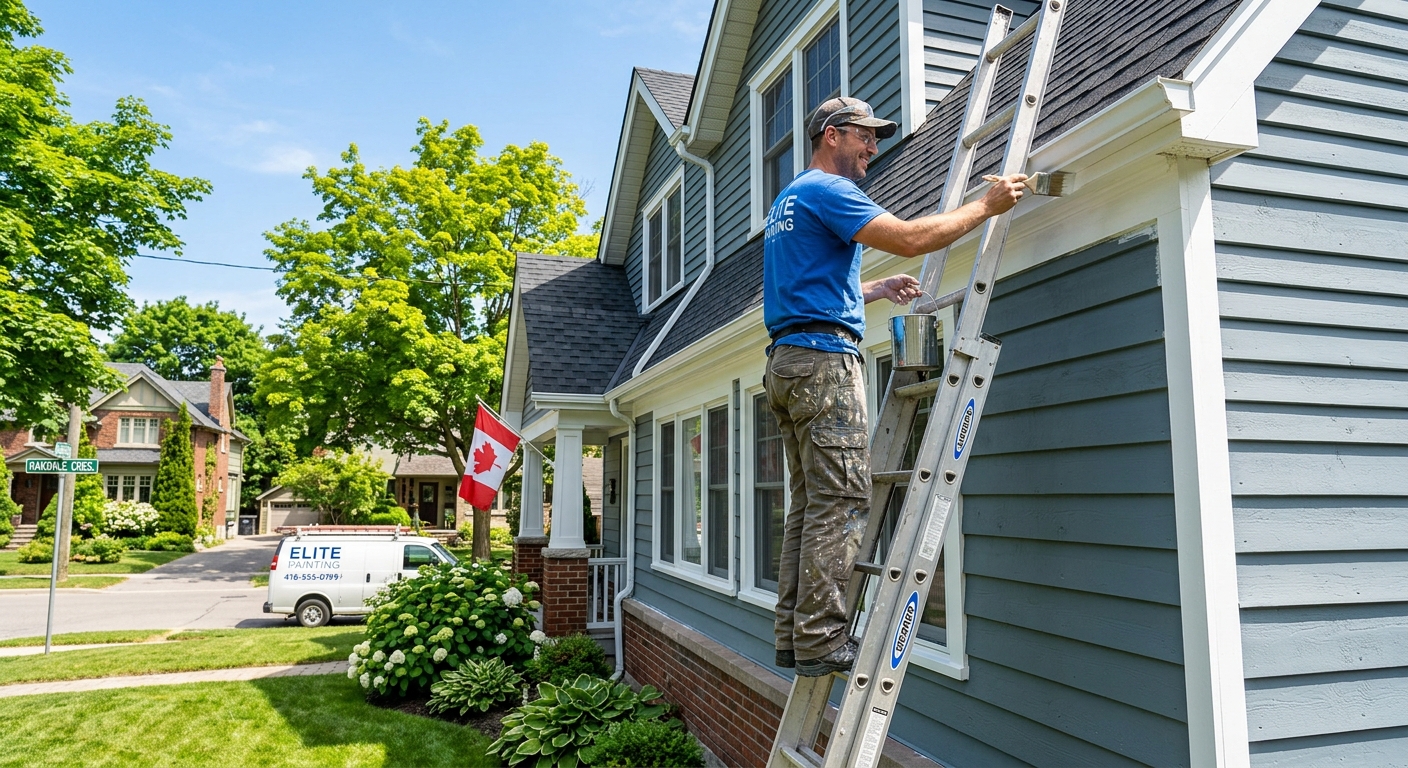
Painting options and costs in Invermere
In Invermere, painting budgets usually start with how much prep the surfaces need and how much of the job can realistically fit into the May–September stretch when Kootenay weather is warm and dry enough to cure well. With 40.7% of homes in the area built before 1981, many properties have older substrates, sun-faded coatings, and nail pops or small cracks that require scraping, sanding, caulking, and priming—prep that often costs almost as much as the paint itself on a repaint. On the climate side, Kootenay’s continental interior swings between cold winters and short, dry summers, so exterior schedules tighten and contractor availability can spike during peak weeks in the Invermere hamlet and nearby valley areas.
In practice, homes around Downtown/Invermere core and the busier lake-access corridors tend to see faster turnaround demand for exterior trim and façade updates, especially when people are timing projects between spring clean-up and late-summer travel. Interior projects have more flexibility year-round, but they still depend on ventilation and drying time—particularly in homes with older plaster or textured ceilings.
Below are realistic local ranges for common project types, so you can compare quotes apples-to-apples before we get into what drives pricing up or down.
| Service |
What's Included |
Typical Duration |
Price Range |
| Interior — whole home (walls, ceilings, trim) |
Prep (patch/sand), prime as needed, caulk where appropriate, paint walls/ceilings, paint trim/doors, masking and cleanup |
4–10 days |
$3,000–$6,500 |
| Interior — per room (standard bedroom or living room) |
Prep (patch/sand), prime as needed, paint walls, optional ceiling paint, basic trim/door touch-up |
1–3 days |
$600–$2,200 |
| Exterior — full house (siding, trim, soffits) |
Pressure wash (or equivalent), scrape/sand, patch and caulk, prime bare spots, paint siding/trim/soffits, basic site protection |
7–18 days |
$3,800–$7,000 |
| Exterior — trim and accent colours only |
Scrape/sand targeted areas, prime where needed, paint fascia/eaves/trim, spot caulking, masking |
3–8 days |
$1,500–$4,200 |
| Kitchen cabinet painting (doors, frames, spray finish) |
Removal where practical, degrease, sand/scuff, bonding primer, high-durability topcoat, re-install or re-hang |
5–14 days (including dry time) |
$2,500–$5,000 |
| Specialty / faux finish (accent wall, texture) |
Surface prep, basecoat, specialty application, protective topcoat (where required), design consultation |
1–5 days |
$900–$3,200 |
Prices are estimates only and vary by project scope, site access and material selection.
What affects the price of painting in Invermere
It’s common to see quotes for the “same” paint job swing by 30–50% across Kootenay contractors or between provinces, because the real variable is labour intensity: surface prep, number of coats, access challenges, and product choices that can hold up to winter freeze–thaw and summer sun. For example, exterior work is tightly climate-bound in the Kootenay interior; crews in Invermere generally concentrate façade work into a limited window when temperatures stay reliably above about 10°C and surfaces dry quickly enough to cure. In coastal BC, contractors often need mildew-resistant systems and more scheduling around rain and humidity. In Ontario and Alberta, there’s still a window for exteriors (often late May to early October) where crews depend on stable temperatures rising during application. Shorter seasons in the interior concentrate demand, pushing some summer labour rates up.
Older housing stock is another major pricing driver. With 40.7% of local homes built before 1981 (Statistics Canada, 2021 Census), repaints frequently require more scraping and priming because older coatings can be chalky, peeling, or inconsistently bonded. On a typical exterior repaint, surface prep can be 50–70% of total labour—so if one contractor budgets minimal sanding while another accounts for patching and multiple prime spots, the difference quickly becomes hundreds to thousands of dollars. In one common scenario in Invermere, a move from “trim-only” to “full house” shifts not just material but containment, masking, and staging time; that’s why many homeowners see trim and accent work in the $1,500–$4,200 range, while full exteriors land closer to $3,800–$7,000 once siding, soffits, and full caulking are included.
| Price Factor |
Why It Matters |
Cost Impact |
| Surface prep — scraping, sanding, patching drywall or wood |
Prep is where adhesion and longevity are won or lost; weathered surfaces need more labour |
Often +$700–$2,500 |
| Number of coats — 2-coat system over primer vs. 1 coat over existing |
Coverage varies with substrate and colour change; skipping coats can fail early |
Often +$300–$1,200 |
| Paint quality tier — contractor-grade vs. premium (Benjamin Moore, Sherwin) |
Higher-grade systems usually provide better hiding, washability, and durability |
Often +$150–$900 |
| Ceilings and trim — adds significant time vs. walls-only |
Ceilings require careful cutting-in and more protection; trim needs more detail work |
Often +$400–$1,500 |
| Exterior season window — short season raises summer rates |
Limited dry/warm days increase competition for crew time |
Often +$300–$1,800 |
| Lead-safe precautions — required for pre-1978 homes with lead paint |
More controls and disposal steps when lead is present or suspected |
Often +$250–$1,500 |
| Surface material — drywall vs. plaster vs. wood vs. stucco |
Different substrates demand different primers and prep profiles |
Often +$200–$1,400 |
| Height and access — multi-storey exterior requires scaffolding or lifts |
Access affects safety and production rate |
Often +$600–$2,500 |
Permits & regulations in British Columbia
In British Columbia, painting generally does not require a permit for typical residential work. However, health guidelines for homes built before 1978 recommend treating existing surfaces as potentially containing lead paint and using lead-safe work practices when sanding, scraping, or disturbing old coatings. This is not typically mandated for homeowners as a legal permit step, but it is standard professional practice for contractors—especially because lead dust risk increases with dry scraping. For lead-safe work, professionals use wet methods, HEPA-filtered dust control/vacuuming, proper containment, and compliant disposal of debris and masking materials.
What does require a permit is uncommon for painting scope itself; instead, permits usually come up only with broader changes (for instance, structural renovations, electrical/plumbing work, or building envelope alterations). The actual “regulatory” checks you should do for a painter are insurance and safe-work documentation, not a painting permit.
Step-by-step for Invermere homeowners:
- Confirm the contractor is operating legally in BC and can provide documentation on request (many painters belong to recognized trade networks, but the key is proof of coverage).
- Request a certificate of liability insurance showing the painter’s coverage and effective dates; verify it names you as applicable additional insured where your contract requires it.
- Ask for confirmation of WSIB/WCB workers’ compensation coverage for their employees (or proof of employer coverage where applicable).
- Get a written contract listing paint brand/line, sheen, number of coats, primer requirements, surface prep scope, and what’s included for disposal and site protection.
Interior vs exterior painting — getting the best result in Invermere
In Invermere’s interior climate—winter heating dries rooms and summer brings different humidity—durability is mainly about preparation and correct systems, not just the brand on the bucket. For interiors, start with filling, sanding, and priming: patched areas and stains often telegraph through if you skip primer or use the wrong stain-blocking product. Next, choose sheen thoughtfully. Flat (or “matte”) usually hides wall imperfections well but can scuff more in high-traffic areas; eggshell or satin is often a better balance for living rooms and hallways, while semi-gloss is typically reserved for trim and doors because it’s easier to wipe clean. A key rule: two coats over the proper primer generally outlast one thick coat, especially when you’re covering uneven repairs or colour changes.
For exteriors in the Kootenay interior, surface prep is the make-or-break step. Clean and profile the substrate, then caulk before painting to prevent water ingress—caulking after paint can trap moisture behind coatings. Primer selection also matters: different primers bond better to wood, fibre cement, and other siding types, and they help manage how the topcoat adheres through temperature cycling. While mildew-resistant coatings are commonly needed for damp, coastal conditions, Kootenay still benefits from good-quality exterior systems and careful scheduling in spring and early summer so coatings cure properly. On older pre-1978 homes, lead-safe precautions may be necessary for scraping/sanding work.
Budgeting wisely: kitchen cabinet painting is often a strong alternative to replacement. For instance, if a replacement project could push you into replacement-level costs, cabinet painting commonly lands in the cabinet range (often $2,500–$5,000 locally) while still delivering a refreshed look—provided the prep and topcoat system are done correctly.
| Project Type |
Key Prep Step |
Recommended Coats |
Price Band |
| Interior — fresh drywall (new construction) |
Drywall sealing and proper primer to prevent flashing |
2 coats over primer |
$2,000–$4,500 |
| Interior — repaint (good condition, no repairs) |
Light sanding/cleaning and spot-priming any stains |
2 coats (topcoat only with correct primer base) |
$1,200–$3,800 |
| Interior — repaint (patching and priming needed) |
Patch sanding + stain-blocking/spot primer for repairs |
2 coats with spot primer as required |
$1,800–$4,800 |
| Exterior siding (wood or fibre cement) |
Scrape/sand to sound material + caulking before topcoat |
2 coats over primer where needed |
$3,800–$7,000 |
| Exterior trim and accents only |
Targeted prep on edges, cracks, and nail/screw heads |
2 coats over spot-primer |
$1,500–$4,200 |
| Kitchen cabinets (spray finish) |
Degrease + bonding primer + controlled sanding |
2 coats topcoat after primer (system-dependent) |
$2,500–$5,000 |
How to choose a painting contractor in Invermere
Start by verifying coverage and legitimacy. In BC, a reputable painting contractor should be able to provide a certificate of liability insurance on request. When they have employees, ask how they’re covered for workplace injuries—confirm workers’ compensation coverage (WSIB/WCB) before any work begins. If a contractor can’t show documentation promptly, treat it as a serious warning.
Next, get 2–3 itemised, written quotes—not just a single lump sum. Look for a clear breakdown separating labour and materials, and specific notes about paint brand/line and sheen. Ask what’s included in prep (scraping, sanding, patching, caulking), whether primer is included for bare spots, and what “cleanup” and disposal covers. On the paperwork side, confirm timing: ask for a start date and estimated completion window in writing, particularly for exterior work because Invermere’s dry/warm curing window is limited.
Warranty matters too. Ask for (1) workmanship warranty length and what it covers, (2) manufacturer warranty for coatings if applicable, and (3) whether warranties are transferable if you sell the home.
For payment schedule, never agree to large upfront deposits. A common safe approach is 10–15% up front, with the balance tied to progress and a holdback until completion and walk-through.
- Request proof of liability insurance (certificate of insurance).
- Confirm workers’ compensation coverage (WSIB/WCB) for employees.
- Ask for an itemised estimate (labour vs. materials).
- Confirm paint brand/line, sheen, and the number of coats.
- Clarify what prep is included (patching, sanding, caulking, primer).
- Ask how they handle lead-safe procedures for pre-1978 homes (wet methods/HEPA).
- Verify disposal and waste handling is included, not “customer to arrange.”
- Confirm site protection: drop cloths, masking quality, and ventilation plans indoors.
- Get the timeline in writing (start date and completion estimate).
- Review the warranty in writing (workmanship vs. product/manufacturer).
- Agree on payment milestones; cap upfront at 10–15%.
- Require a final walk-through and snag list process before final payment.
Red flags I see in Invermere include quotes that omit primer and caulking details, contractors who won’t provide insurance/coverage proof, vague scopes like “paint as needed” without listing prep, and crews pushing for large upfront payments. Another warning sign: no clear timeline for exterior curing conditions in the Kootenay season, or no written warranty terms.
Frequently asked questions — painting in Invermere
How long does it take to paint a house?
Invermere timelines depend on whether you’re doing interiors, exteriors, or both. A whole-home interior repaint is commonly a 4–10 day window, assuming walls and trim are accessible and repairs aren’t extensive. Exteriors are more weather-dependent in the Kootenay interior—most crews try to schedule façade work during the May–September window when surfaces stay warm and dry enough for proper curing. A full exterior repaint typically takes 7–18 days of work, but dry/cure time and staging (especially on multi-storey lots) can extend the calendar. Many homeowners are surprised that drying time affects scheduling between coats. Also, older homes built before 1981 (Statistics Canada, 2021 Census) often need extra prep, which can add days.
What's the difference between paint quality tiers?
Paint “tiers” usually reflect how well a coating hides, resists scuffs/washing, and performs over time. Premium lines from brands commonly used in Canada (including Sherwin and Benjamin Moore) often provide better coverage and smoother application, which can reduce the risk of patchy appearance—especially when covering repaired drywall or older colour variation. Contractor-grade paints can be fine for budget projects, but you may need more careful application and possibly more coats to achieve the same look. Quality also ties into durability: high-quality exterior systems tend to hold up better to temperature cycling and sun exposure. Interior washability matters in Invermere because winter heating makes scuffing more noticeable. For reference, a room repaint can range widely (for example, interior per-room jobs often fall around the $600–$2,200 band), and paint tier is one reason the mid-range quotes can look “the same” on day one but age differently.
How do I compare painting quotes?
Comparing quotes is about scope, not just totals. Ask each contractor to list what’s included for prep (scrape/sand, patching, drywall repairs, and caulking) and whether primer is included for bare or stained areas. Confirm the paint brand/line and sheen, and the number of coats they’re planning. On exteriors, the season matters: if one quote assumes uninterrupted work during warm dry days and another doesn’t, the calendar can change even if the price stays similar. For homes built before 1978, reputable contractors should discuss lead-safe work practices before sanding/scraping. Also check whether disposal and site protection are part of the quote or “extra.” A quick way to sanity-check pricing: a trim-and-accent exterior job often lands around the $1,500–$4,200 band, while a full exterior can be closer to $3,800–$7,000 once siding and soffits are included. If the numbers don’t match that logic, ask for a written explanation.
What paint sheen should I use in different rooms?
Sheen choice affects both appearance and cleanability, and Invermere homes experience real day-to-day wear—especially in entryways and living areas where winter boots and seasonal traffic are common. Typically, flat/matte is best for low-traffic ceilings or to hide minor wall imperfections, but it’s more scuff-prone. EggshelI is a common choice for bedrooms and quieter living spaces, while satin is often a better balance for halls and family rooms because it withstands cleaning without looking too shiny. For trim, doors, and cabinets, semi-gloss is usually preferred for durability and wipe-ability. If you’re doing kitchen cabinet painting (often within the $2,500–$5,000 band), sheen and topcoat system matter even more because they’re touched constantly. The right sheen also depends on whether your walls have texture or previous patching—higher sheen can highlight repairs if prep wasn’t thorough.
Can I paint my house exterior in spring or fall in Invermere?
You can paint outside in spring or fall, but Invermere scheduling should be conservative. The Kootenay interior climate has cold snaps and shorter warm stretches, which affects curing and adhesion. Exterior work is generally most reliable when temperatures are consistently warm and rising during application and drying—this is why many crews focus the main window in late spring through summer. Fall painting can work if daytime temperatures stay suitable and there’s enough dry time before nighttime cooling; however, a sudden cold or damp period can cause finish issues. If your goal is a full house repaint, it’s often more cost-effective to plan around the dry/warm May–September curing window so you don’t pay for rework. For trim-only touch-ups, some homeowners choose earlier starts, but the same curing principles apply. A reputable contractor will assess the siding type, current moisture, and weather forecast before committing to exterior dates.
How do I choose a painting contractor in Invermere?
Choose a contractor the way you’d choose a good tradesperson: verify coverage, confirm the scope in writing, and compare apples-to-apples. In British Columbia, painting usually doesn’t require a permit, but professionals should still follow health guidelines for pre-1978 homes if lead paint is present or suspected (wet methods and dust control). Ask for a certificate of liability insurance and proof of workers’ compensation coverage (WSIB/WCB) for employees. Get 2–3 itemised quotes detailing labour and materials, including paint brand/line, sheen, primer requirements, caulking, prep steps, and disposal. Make sure there’s a workmanship warranty and that you understand what’s covered—then confirm whether the warranty is transferable if you sell. For scheduling, request a start date and completion estimate in writing because Invermere exteriors are season-dependent. Finally, payment should be structured so you never pay more than about 10–15% upfront; hold back until the walk-through is complete.