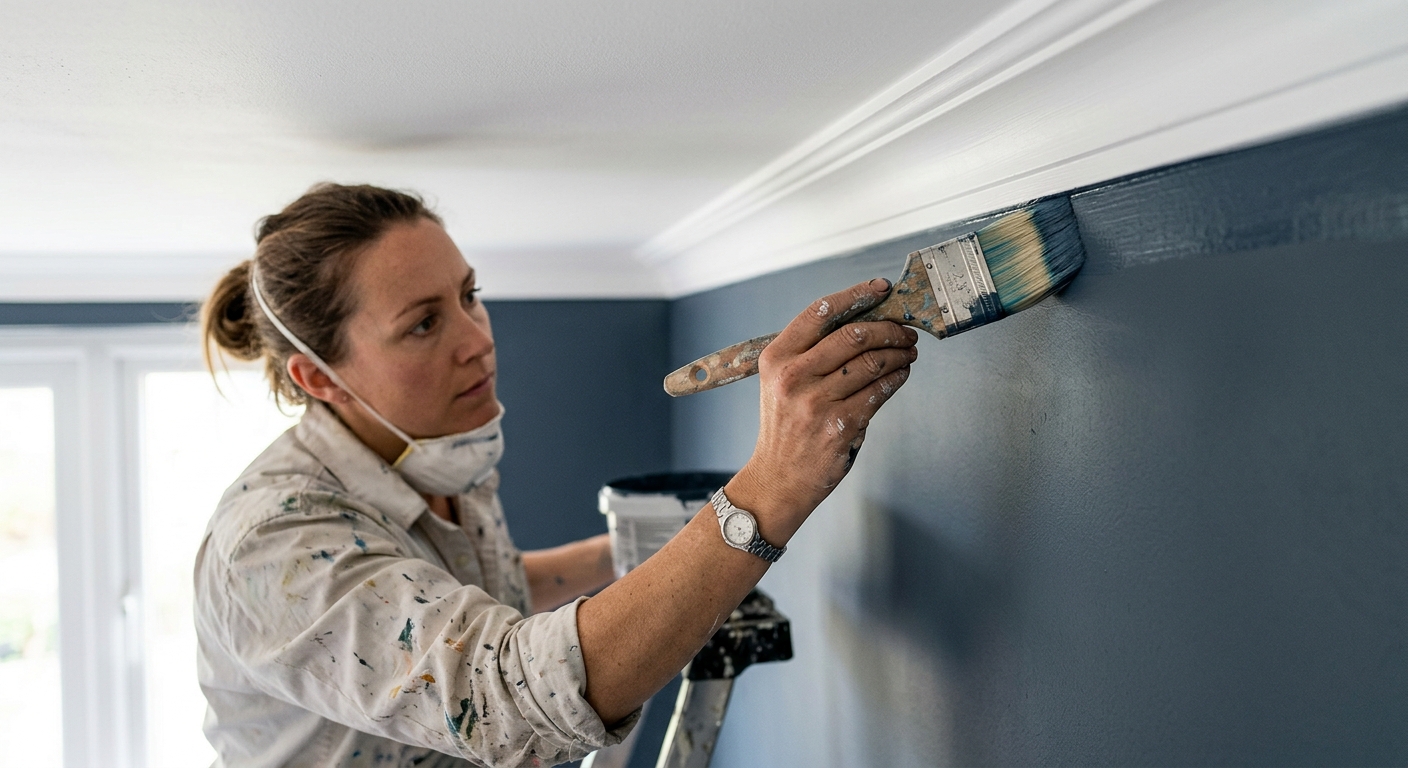
Painting options and costs in Wetaskiwin
Wetaskiwin homeowners can choose from a range of painting options, but the “right” cost depends on how much prep the surface needs and how much detail is involved. In Wetaskiwin, many houses are older—55.7% of homes were built before 1981 (Statistics Canada, 2021 Census)—and that typically means more time for scraping, patching, sanding, caulking, and primer before any topcoat goes on. Those steps matter because older siding, trim, and drywall don’t hold paint the same way as newer surfaces. You may also run into older colour changes, patched spots, and uneven texture that require extra labour to look uniform.
Pricing in the Edmonton economic region is heavily influenced by our shorter exterior season. In practical terms, contractors try to schedule exterior work from late spring through early fall when temperatures are workable and curing isn’t slowed by overnight lows, frost risk, and dew. That seasonality tightens demand, so summer scheduling can cost more than spring knock-on repainting. Interior work is steadier year-round, but labour availability still affects turnaround times.
In Wetaskiwin, areas like the downtown core and established residential pockets near Veterans Park often see frequent repainting and trim refreshes because many properties are owner-occupied and updated periodically. If your home is “mostly fine” and just needs a tidy recoat, you’ll usually land toward the lower end of the band. If surfaces are weathered and require full prep, you’ll be closer to the upper end.
Below is a realistic comparison of common services so you can align expectations before reviewing proposals.
| Service |
What's Included |
Typical Duration |
Price Range |
| Interior — whole home (walls, ceilings, trim) |
Protect floors and fixtures, patch & sand where needed, prime repaired areas, paint walls and ceilings, caulk trim, paint interior trim/doors where listed, cleanup |
5–10 days |
$2,800–$7,200 |
| Interior — per room (standard bedroom or living room) |
Protect and tape, patch/sand minor defects, prime as required, paint walls and one ceiling, basic trim touch-ups where accessible |
1–3 days |
$1,200–$3,200 |
| Exterior — full house (siding, trim, soffits) |
Surface inspection, scrape/sand and spot prime, caulk gaps, prime bare spots, paint siding and trim, protect landscaping/edges, final cleanup |
1–3 weeks |
$3,500–$11,000 |
| Exterior — trim and accent colours only |
Prep and prime weathered trim, caulk before paint, paint trim/soffits/accents as specified, masking and cleanup |
3–8 days |
$1,900–$6,800 |
| Kitchen cabinet painting (doors, frames, spray finish) |
Degrease, light sanding, repairs, prime, spray finish or brush/roll where needed, hardware handling and reinstall (as agreed) |
5–12 days |
$1,800–$6,500 |
| Specialty / faux finish (accent wall, texture) |
Surface leveling/primer where required, specialty system application, detailing, limited masking, cleanup |
1–5 days |
$1,200–$4,500 |
Prices are estimates only and vary by project scope, site access and material selection.
What affects the price of painting in Wetaskiwin
In Wetaskiwin and the wider Edmonton region, you can see the same “interior repaint” or “exterior repaint” quoted 30–50% apart because the scope often differs in prep, surface conditions, coatings, and access. Two contractors may both say “exterior paint,” but one may price a quick repaint while the other budgets for deeper scraping, patching, and primer on weathered siding and trim. On older homes—55.7% built before 1981 (Statistics Canada, 2021 Census)—prep can drive most of the labour, sometimes becoming 50–70% of total cost on a repaint.
Exterior costs are also tightly climate-bound in the Edmonton economic region. While coastal BC relies on moisture management and mildew-resistant products, our limiting factors are temperature, overnight lows, and dew that slow curing. In practice, that means contractors focus work from roughly late May to early October when temperatures are above about 10°C and rising during application. A shorter season concentrates demand, and that scheduling pressure can push projects toward the upper end of the exterior band—$3,500–$11,000—especially when scaffolding, lifts, or scheduling trades are booked out.
Concrete examples from Wetaskiwin: (1) A house with peeling trim and chalky siding typically needs more scraping and bonding primer, which pushes you closer to the higher exterior range; (2) a well-maintained home with solid caulking and minimal cracking can be more like a “recoat with touch-up,” keeping you nearer the lower end; and (3) multi-storey façades or narrow access near driveways can increase setup time and dust containment. Interior pricing similarly moves when ceilings are included and when sheen changes require extra attention to avoid flashing and lap marks. If you’re budgeting, think of interior whole-home painting as the band of $2,800–$7,200, but know that adding trim/doors and repairing wall damage can quickly shift the project upward.
| Price Factor |
Why It Matters |
Cost Impact |
| Surface prep — scraping, sanding, patching drywall or wood |
Paint bond depends on clean, sound surfaces; weathered materials need extra profile and repairs |
Often the largest driver: can add significant labour vs. a simple recoat |
| Number of coats — 2-coat system over primer vs. 1 coat over existing |
Uneven colour, stains, and bare spots usually require primer and two finish coats for uniformity |
Can increase total paint/labour enough to move you within the band range |
| Paint quality tier — contractor-grade vs. premium (Benjamin Moore, Sherwin) |
Higher-tier coatings often cover better and resist scuffs/UV longer, reducing rework risk |
Materials cost increases, but labour may decrease if coverage is improved |
| Ceilings and trim — adds significant time vs. walls-only |
Ceilings take longer to cut in cleanly; trim requires careful masking, sanding, and caulking |
Commonly shifts interior projects upward within the total quote |
| Exterior season window — short season raises summer rates |
When demand spikes in late spring/early summer, schedules get tighter |
Can raise labour day-rates and mobilization costs |
| Lead-safe precautions — required for pre-1978 homes with lead paint |
Special methods and cleanup reduce exposure risk when disturbing old paint |
Adds labour time and disposal costs in older homes |
| Surface material — drywall vs. plaster vs. wood vs. stucco |
Different substrates demand different primers and preparation approaches |
Primer selection and repair time can materially change the quote |
| Height and access — multi-storey exterior requires scaffolding or lifts |
Setup, safety procedures, and coverage at height increase time and equipment needs |
Often adds measurable cost even if square footage is similar |
Permits & regulations in Alberta
In Alberta, painting typically does not require a permit for a standard residential paint job (interior or exterior). There are exceptions for work tied to other regulated activities, such as large-scale structural changes, asbestos abatement, or major renovations—pure painting is generally not in that category. For homeowners in Wetaskiwin, the key “regulatory” reality is health and safety practice, especially in older houses.
For homes built before 1978, health guidelines recommend testing for lead paint before sanding, scraping, or using methods that create dust. If lead is present, lead-safe work practices are standard for professional crews: wet methods to suppress dust, HEPA vacuuming, proper containment and cleanup, and correct disposal. This is not usually framed as a homeowner permit requirement, but it is the responsible approach contractors follow to reduce risk during surface disturbance.
Even though painting doesn’t require a permit, your contractor should carry liability insurance and have workers’ compensation coverage (WSIB/WCB) for their workers. Before signing, request a written contract that specifies the paint brand and sheen, the number of coats, and the surface prep scope (what’s scraped, caulked, primed, patched, or repaired).
To verify coverage step-by-step: (1) confirm the contractor’s Alberta licensing/registration details using the appropriate provincial registry listing they provide; (2) request a current certificate of insurance and verify it lists your contractor as the insured and shows the coverage dates; (3) confirm WSIB/WCB coverage by asking for the clearance/coverage information and matching the business name; and (4) store these documents with your contract in case of any dispute.
Interior vs exterior painting — getting the best result in Wetaskiwin
Wetaskiwin’s climate rewards prep and product selection more than marketing. Interiors are less weather-limited than exteriors, but you can still get premature failures if walls are not properly filled, sanded, and primed. For interior work, surface prep is the difference between a finish that looks smooth and one that reveals every patch. Prime repaired drywall spots, fill nail pops and cracks, and sand to a consistent feel. Sheen matters by room: flat is forgiving on low-use ceilings, but higher-touch areas often hold up better with eggshell or satin. A common mistake is choosing one “thick coat” instead of two proper coats over a primer—two coats after correct priming typically outlast one coat and reduces flashing and streaking.
Exteriors, meanwhile, have to survive Prairie freeze-thaw cycles, wind-driven moisture, and the reality that dew can delay drying. In Alberta, caulk should be applied before painting to prevent water ingress at joints and trim lines. Substrate drives primer choice: wood and bare areas may need bonding primer to lock down chalky layers, while some repairs need dedicated adhesion systems so finish paint can form a durable membrane. While BC painters emphasize mildew-resistant products due to coastal dampness, Alberta projects need coatings that tolerate temperature swings and cure reliably when conditions are within range.
Cabinet painting is a strong value alternative to replacement for homeowners who like their layout. It’s often the most cost-effective “update” option—typically falling into the cabinet/trim range—without the demolition, dust, and lead-time of a full replacement. For older homes, if your surfaces could contain lead paint (pre-1978), lead-safe precautions should be included before scraping or sanding.
For example, if you’re choosing between exterior trim accents only versus a full house repaint, that decision can be justified. If your siding is stable but trim is failing, you might avoid the higher full-house labour and stay closer to the trim/accent band (often around $1,900–$6,800). But if siding is chalking and cracking, “accents only” can leave the house looking patchy and can cost more later when you still need the full prep.
| Project Type |
Key Prep Step |
Recommended Coats |
Price Band |
| Interior — fresh drywall (new construction) |
Seal/treat joints, sand smooth, prime properly before finish coat |
2 finish coats (with primer as required by drywall compound) |
$3,000–$6,800 |
| Interior — repaint (good condition, no repairs) |
Light scuff-sand, degrease and spot-prime only if needed |
2 coats on walls; ceilings typically 2 coats |
$2,800–$5,200 |
| Interior — repaint (patching and priming needed) |
Patch, sand, and prime repairs to stop colour variation |
1 primer coat on repairs + 2 finish coats overall |
$4,200–$7,200 |
| Exterior siding (wood or fibre cement) |
Scrape, sand, caulk gaps, spot prime bare areas, address adhesion |
2 coats over primer system (per product specs) |
$5,000–$11,000 |
| Exterior trim and accents only |
Thorough cleaning and bonding primer on weathered edges |
2 coats over spot-primed areas |
$1,900–$6,800 |
| Kitchen cabinets (spray finish) |
Degrease, sand to profile, prime, then spray for even build |
Primer + 2 finish coats (system-based) |
$3,000–$6,500 |
How to choose a painting contractor in Wetaskiwin
Choosing the right painter in Wetaskiwin comes down to verification and clarity. Start by confirming Alberta licensing/registration information (the contractor should be willing to provide their details). Next, verify liability insurance: ask for a current certificate of insurance, confirm the effective dates, and ensure the contractor’s legal business name matches the quote. Then check WSIB/WCB coverage—request clearance/coverage confirmation and match it to the business entity on your paperwork. If they can’t provide these quickly, treat that as a warning sign.
Get 2–3 itemised written quotes that separate labour from materials and list line items for prep. Avoid “lump sum only” proposals where you can’t tell whether scraping, sanding, caulking, priming, and cleanup are included. Pay attention to exclusions: for example, who supplies primer? Is disposal included? Is lead-safe work included for pre-1978 surfaces? Does the quote include masking, door removal, cabinet hardware handling, or equipment like lifts/scaffolding?
Warranty matters. Ask for a workmanship warranty length and what it covers (peeling, blistering, adhesion issues) and whether it’s transferable to a new owner if you sell. Also confirm manufacturer product warranty requirements (often tied to correct prep and application). Payment schedules should protect you: never pay more than 10–15% upfront; use a holdback until completion and walkthrough are signed off.
Finally, get a written start date and an estimated completion timeline tied to weather-dependent tasks—especially for exterior work in the Edmonton region’s short paint season.
- Request insurance and WSIB/WCB documentation before work starts.
- Verify the quote includes surface prep scope (scrape, sand, patch, caulk, prime).
- Confirm paint brand and sheen (walls/ceilings/trim) are named in the contract.
- Ask how colour matching will be handled for trims or previous mismatches.
- Ensure lead-safe precautions are addressed in the scope for pre-1978 homes.
- Check whether ladder work vs. lifts/scaffolding is included based on your height/access.
- Confirm furniture, flooring protection, and masking methods are included.
- Get disposal/cleanup expectations in writing (scraps, sanding dust, caulk waste).
- Request a walkthrough plan and final touch-up process.
- Confirm the number of coats is specified (and primer/spot primer when needed).
- Use an itemised quote with labour and material breakdown, not only total cost.
- Agree on a payment schedule: 10–15% max upfront, holdback until completion.
Common red flags in Wetaskiwin: (1) they won’t itemise prep steps, (2) they quote “one-coat” coverage over unknown conditions, (3) they’re vague about primer type or sheen, (4) they ask for large deposits up front, and (5) they cannot produce insurance and WSIB/WCB information promptly.
Frequently asked questions — painting in Wetaskiwin
What paint is best for Wetaskiwin's climate?
For Wetaskiwin and the Edmonton region, the “best” paint is the one matched to your surface, prep quality, and weather-tolerant curing window. For exteriors, coatings should be rated for temperature swings and designed for good adhesion after proper scraping and priming. A practical starting point is a durable exterior system with a proven primer/finish combination so chalky or weathered areas don’t fail early. If you’re budgeting, interior whole-home repainting often sits around $2,800–$7,200, but exterior systems typically land higher because of prep time. On older homes built before 1981, plan for extra bonding primer and caulking work, which is often more important than buying the most expensive topcoat. (Statistics Canada, 2021 Census)
How long does exterior paint last here?
In Wetaskiwin, exterior paint longevity depends heavily on prep and coating system, not just the brand. With solid substrate prep (scraping, sanding, caulking before paint, and correct primer on bare spots), many homeowners see service life in the “multiple-year” range—long enough to justify the cost rather than repainting every few seasons. Without thorough prep, failures like peeling or early chalking can start sooner, especially where water can get behind trim or joints. The Edmonton economic region’s short, weather-dependent season means painters must time application for proper drying and curing; if the schedule is forced into marginal conditions, results can degrade faster. For a well-prepped exterior project, exterior pricing typically falls within $3,500–$11,000, reflecting the labour-heavy work that helps extend life.
Should I paint or replace my cabinets?
If your cabinet boxes and layout are in good shape, painting is usually the cost-effective choice in Wetaskiwin. Replacement is expensive because it involves demolition, new hardware, re-installation, and longer disruption. Painting cabinets can refresh the look while keeping your existing storage configuration. A spray-finish cabinet job typically costs within the cabinet painting band—often around $1,800–$6,500—and the best results depend on degreasing, sanding to the right profile, priming, and then applying finish in even coats. If your cabinets are damaged (water swelling at the bottoms/sides, structural warping, or heavy delamination) or if hinges and boxes are failing, replacement may be more reliable. For pre-1978 homes, ensure the contractor addresses lead-safe prep if sanding or scraping is required.
How do I prep walls before painting?
For best results in Alberta, homeowners can do light prep, but professional-level surface preparation is usually where the longevity comes from. If you’re doing a quick interior prep: remove wall hangings, patch small holes with a drywall filler, and let it cure fully before sanding smooth. Clean greases and fingerprints—kitchen walls usually need more attention—using a proper degreaser and rinse/dry thoroughly. Scuff-sand glossy areas so paint can bond, then wipe dust off (a tack cloth or damp wipe works; avoid leaving residue). For major cracks, peeling paint, or stains, stop and have a contractor assess—those issues often require priming or targeted repairs. A well-scoped repaint with repairs included often shifts cost within the interior band of $2,800–$7,200, because priming and patch sanding are labour-intensive.
Do I need to worry about lead paint in an older Wetaskiwin home?
It’s wise to plan for lead safety in older Wetaskiwin homes, especially if they were built before 1978. Health guidelines recommend testing for lead paint before sanding or scraping because those processes create dust that can be a health risk. For homeowners, it may not be a “permit” issue, but reputable contractors typically follow lead-safe work practices if lead is present: wet methods to control dust, HEPA vacuuming, proper containment, and correct disposal. If your contractor is quoting an exterior repaint or interior repaint that involves scraping flaking paint, ask directly whether they will test and how the work area will be protected. Since Wetaskiwin has a substantial older housing stock—55.7% built before 1981 (Statistics Canada, 2021 Census)—it’s a common question and one that can affect labour and cleanup time in a quote.
How long does it take to paint a house?
Timing in Wetaskiwin depends on whether you’re painting interior, exterior, and how much prep is needed. For interiors, a good-condition repaint without major repairs might take roughly a few days per typical room, while whole-home work can run about 5–10 days depending on ceiling/trim scope and drying times between coats. If patching and priming are required, schedule time expands because repairs must cure and be sanded smooth. Exteriors are more weather-sensitive: in the Edmonton region, exterior work is concentrated from late spring through early fall to manage temperature, overnight lows, frost risk, and dew that can slow drying. A full exterior can take 1–3 weeks depending on prep depth, access (multi-storey), and crew scheduling. If you want a reliable estimate, ask for a written start date and completion target in your contract.