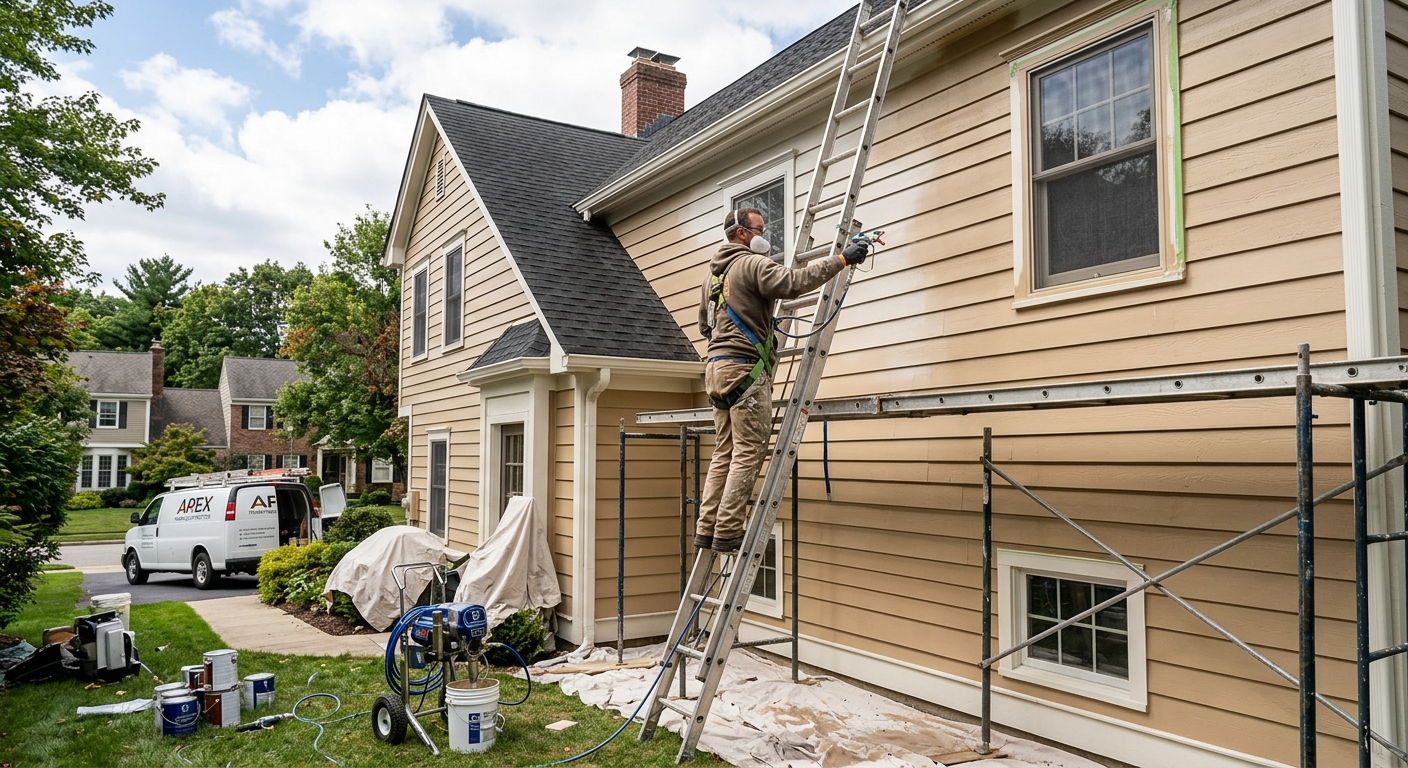
Painting options and costs in Varsity
Varsity, Alberta has a real mix of housing styles, and that matters for painting costs. With a total population of 12,040 in the area (Statistics Canada, 2021 Census), neighbourhood turnover is steady, so contractors stay busy—especially for exterior work in peak weeks. Many homes in Calgary’s established communities were built before 1980, which usually means older trim and siding, more joints to caulk, and additional priming before any top-coat will last. A repaint can start with scraping, patching, sanding, stain-blocking and spot-priming, rather than “just rolling paint,” and that prep time is where budgets often rise or fall. On interiors, labour concentrates around access (staircases, ceiling height, furniture moving) and the level of surface repair needed after years of wear.
Calgary’s climate also drives scheduling and pricing. For exterior projects, workable weather is typically mid-May through late September, when daytime temperatures are reliably above 10°C so coatings can cure properly. Freeze–thaw cycles, strong UV, and occasional hail mean we plan for durability using high-quality acrylics and flexible exterior systems. In Varsity, demand is especially strong around the shops and busier streets near 14 Street NW and the Foothills Hospital/University corridor area, where homeowners often want clean, curb-ready results before late-summer listings and events.
Below are practical cost ranges homeowners in Varsity commonly see, so you can compare like-for-like in quotes.
| Service |
What's Included |
Typical Duration |
Price Range |
| Interior — whole home (walls, ceilings, trim) |
Move light items, protect floors, prep/sand/patch, prime where needed, 2-coat finish, caulking, clean-up |
5–10 business days |
$2,000–$8,000 |
| Interior — per room (standard bedroom or living room) |
Protect floors, prep/sand/patch, prime as required, 2-coat walls, basic trim touch-ups |
1–3 business days |
$400–$2,000 |
| Exterior — full house (siding, trim, soffits) |
Pressure wash, scrape/sand, caulk joints, prime bare/failed areas, 2-coat exterior system, protect landscaping |
7–18 business days |
$2,500–$9,000 |
| Exterior — trim and accent colours only |
Clean and prep trim/accent areas, scrape/spot-prime, 2-coat finish, detail work and masking |
3–8 business days |
$800–$4,500 |
| Kitchen cabinet painting (doors, frames, spray finish) |
Degrease, sand/repair, bonding primer, spray finish for a smoother look, hardware masking, reassembly |
5–12 business days |
$800–$7,000 |
| Specialty / faux finish (accent wall, texture) |
Surface prep, basecoat, decorative application/texture, protective clear (if applicable), clean-up |
2–7 business days |
$600–$6,000 |
Prices are estimates only and vary by project scope, site access and material selection.
What affects the price of painting in Varsity
Even when homeowners request “the same job,” painting quotes in Calgary and Alberta can vary by 30–50%. The difference is usually the amount of preparation, the number of coats, the quality of the coating system, and how much time is spent protecting and accessing surfaces. Exterior work is tightly climate-bound in the Calgary region: workable conditions are typically mid-May to late September, when daytime highs stay above 10°C and surfaces can dry properly. That short window concentrates demand, so peak-season scheduling pressure can push labour rates and availability. Coastal BC often has a longer season, but higher humidity and more frequent rainfall require different product choices and careful timing—so cost shifts from “weather window” to “system complexity.”
Older homes around Varsity and across the Calgary area often need more surface prep. Scraping failing paint, sanding edges, patching drywall, caulking gaps and priming original trim or siding can account for roughly 50–70% of total labour on a repaint. Here are concrete examples of local cost drivers: if your exterior has peeling spots near soffits or eaves, we’ll spend extra time removing loose coating and spot-priming to prevent early blistering—this can move a job from an exterior band near $2,500–$5,000 up toward $5,000–$9,000 depending on area and prep extent. On interiors, if ceilings show water stains or require sanding and stain-blocking, a “single-room refresh” can step up into whole-home territory because priming and repair work multiplies time and materials.
In Varsity, access and housing layout (staircases, bay windows, attached garages) also affect labour. More masking, scaffolding/lifts for multi-storey work, and detailed trim coverage raise costs even when paint quantities look similar on paper.
| Price Factor |
Why It Matters |
Cost Impact |
| Surface prep — scraping, sanding, patching drywall or wood |
Determines adhesion and long-term durability; hidden failures get corrected |
Often 20%–70% of labour on repaint work |
| Number of coats — 2-coat system over primer vs. 1 coat over existing |
Coverage and uniformity; prevents flashing and premature wear |
Can swing total cost by 10%–30% |
| Paint quality tier — contractor-grade vs. premium (Benjamin Moore, Sherwin) |
Resists fading, scuffing and chalking better; covers more efficiently |
Material difference plus time changes; commonly 5%–20% |
| Ceilings and trim — adds significant time vs. walls-only |
Ceilings require more cutting/edge work; trim requires careful masking |
Frequently adds 15%–40% depending on house layout |
| Exterior season window — short season raises summer rates |
Weather-dependent curing and limited schedule slots |
Peak timing can add roughly 5%–25% |
| Lead-safe precautions — required for pre-1978 homes with lead paint |
Protects occupants and workers during sanding/scraping; controls dust |
Can add 5%–15% and increases labour time |
| Surface material — drywall vs. plaster vs. wood vs. stucco |
Each substrate needs different priming and application approach |
May increase prep complexity by 10%–35% |
| Height and access — multi-storey exterior requires scaffolding or lifts |
More safety time, setup, and protection |
Can shift exterior budgets by $500–$2,500+ |
Permits & regulations in Alberta
In Alberta, painting typically does not require a building permit. That said, the “rules” homeowners should care about are safety and contracting requirements. For homes built before 1978 (common across much of Calgary’s older housing stock), health guidelines recommend testing for lead paint before sanding or scraping, and using lead-safe work practices if lead is present. This usually means wet methods to reduce dust, HEPA vacuuming, containment where needed, and disposal handled according to the product safety requirements. It’s not normally legally mandated for homeowners to test, but for professional contractors it’s standard practice for risk control.
On the contracting side, confirm your painter is properly insured. Ask for proof of liability insurance and workers’ compensation coverage (WSIB/WCB), especially if anyone will be working in your home or on exterior scaffolding. Then insist on a written contract that spells out the paint brand or product line, sheen choices, number of coats, surface preparation scope (what gets scraped, patched, caulked and primed), and clean-up/disposal.
Step-by-step check (Varsity homeowner): (1) Ask for the contractor’s current business information and licence details if applicable; (2) request a certificate of insurance naming you/your property as needed by your agreement; (3) verify WSIB/WCB coverage—your contractor should provide current clearance/coverage evidence; (4) confirm lead-safe process in writing for pre-1978 homes—how they’ll control dust and what materials disposal is included; (5) review the contract for exclusions before signing.
Interior vs exterior painting — getting the best result in Varsity
In Varsity, the difference between a durable paint job and a premature failure usually comes down to prep quality and product selection, not just the brand on the label. For interiors, surface prep matters most: filling dents, sanding glossy patches, priming stains or repairs, and caulking tight corners. Then choose the right sheen by room. Flat/eggshell helps hide wall imperfections, but higher-moisture areas often do better with washable finishes. Reality check: two coats over a properly prepared primer line almost always outlast a “single thick coat” approach, because coverage consistency and film build affect scuffing and adhesion.
For exteriors in Alberta, the checklist gets stricter. We prioritize scraping and sanding to remove failing material, caulking before painting to prevent water ingress at joints, and using primer type matched to the substrate (for example, a suitable primer on wood versus bonding primer where adhesion is a concern). Temperature stability is crucial in Calgary—products must be applied and allowed to cure without cold nights or excessive heat swings. While mildew-resistant options are critical in humid climates like coastal BC, in Alberta we still plan for rain timing and overnight lows, and we use exterior systems built for UV and freeze–thaw.
Kitchen cabinet painting can be a strong budget alternative to replacement, especially when boxes are structurally sound. If your goal is an update without a full renovation, it’s often more cost-effective to refresh cabinets and trim than to rebuild. On price justification: moving from a basic interior repaint band toward $400–$2,000 for a room is usually worth it when prep is included. If you skip priming or caulking details to chase a lower number, you may be back in a year—so the “extra” prep is often the cheapest long-term option.
For pre-1978 homes, lead-safe precautions also matter. Proper dust control and surface readiness prevent contamination and help coatings bond, which is part of why a premium-result quote can cost more upfront but protects the investment.
| Project Type |
Key Prep Step |
Recommended Coats |
Price Band |
| Interior — fresh drywall (new construction) |
Prime properly and sand lightly for uniform absorption |
Primer + 2 top-coats |
$1,000–$4,500 |
| Interior — repaint (good condition, no repairs) |
Light scuff-sand and spot prime for any marks or stains |
2 top-coats (plus primer spots as needed) |
$400–$2,500 |
| Interior — repaint (patching and priming needed) |
Patch, sand, and full primer coverage where repairs changed porosity |
Primer + 2 top-coats (typical) |
$1,200–$6,000 |
| Exterior siding (wood or fibre cement) |
Scrape failing paint, caulk joints, prime bare/spot areas |
Primer/spot primer + 2 exterior top-coats |
$2,500–$9,000 |
| Exterior trim and accents only |
Mask carefully and prime bonding surfaces for clean edges |
2 top-coats over primer/spot primer |
$800–$4,500 |
| Kitchen cabinets (spray finish) |
Degrease thoroughly and use bonding primer for adhesion |
Primer + 2 finish coats (spray) plus cure time |
$800–$7,000 |
How to choose a painting contractor in Varsity
Choosing the right painter in Varsity comes down to verifying coverage, insisting on a clear scope, and making sure the quote is itemised. First, verify Alberta compliance through documentation you can actually read: ask for proof of liability insurance (current certificate of insurance), and ask for workers’ compensation coverage (WSIB/WCB) clearance or proof of coverage number/status. If they can’t provide these quickly, treat it as a major warning sign—painting is labour-intensive and often involves ladders, lifts, and dust control.
Next, get 2–3 itemised written quotes. You want a breakdown that separates labour, surface prep (scraping/sanding/patching/priming), paint system choices (product line and sheen), and any special work like caulking, stain-blocking or cabinet spray equipment. Avoid a “one-line lump sum” quote where you can’t tell what’s included. Confirm whether permits are needed (usually not for painting in Alberta), and whether disposal, dump fees, and clean-up are included.
Ask about warranties: workmanship warranty length (and what voids it), plus product/manufacturer warranty details. Clarify if the warranty is transferable if you sell the home. For payment, never pay more than 10%–15% upfront—then hold a meaningful portion back until completion. Finally, request a start date and an estimated completion timeline in writing, and make sure they can explain scheduling based on Calgary’s mid-May to late-September exterior window.
- Confirm liability insurance certificate is current and matches the correct legal business name.
- Verify WSIB/WCB coverage with proof, not just a verbal statement.
- Ask what prep is included: scraping, sanding, patching, caulking and priming boundaries.
- Require product specifics: paint line/brand and sheen, not just “premium paint.”
- Make sure the quote states number of coats for each area (walls, ceilings, trim, exterior).
- Clarify masking and protection (floors, landscaping, fixtures) and how it’s cleaned up.
- Ask about lead-safe process for pre-1978 homes (dust control, HEPA vacuuming, disposal).
- Check whether repairs are included for drywall damage or rot, or if that’s a separate line item.
- Confirm warranty terms for workmanship and whether manufacturer coverage applies to finish failures.
- Set payment milestones: small deposit, then progress payments, then final on completion.
- Get a written timeline with start date, estimated finish date, and any cure-time constraints.
- Ask how change orders are handled if hidden damage is discovered.
In Varsity, red flags include: quoting a low price but omitting primer or coat counts; refusing to provide insurance/WSIB/WCB proof; promising “paint over anything” without discussing surface prep; starting mid-week without protecting floors/landscaping or a dust-control plan for older homes; and asking for a large deposit (more than 10%–15%) before any work begins.
Frequently asked questions — painting in Varsity
How long does it take to paint a house?
In Varsity, timelines depend heavily on prep and how many surfaces you’re covering. A typical interior room can be 1–3 business days when walls are in good condition; a whole-home interior is commonly 5–10 business days once patching, sanding, priming and trim work are included. For exteriors, the calendar matters: the workable window is usually mid-May to late September when daytime temps stay above 10°C so coatings can cure properly. A full exterior can take 7–18 business days because of scraping, caulking, priming and multiple coats. If your home needs lead-safe preparation for pre-1978 areas, add time for dust control and safe cleanup. (Statistics Canada, 2021 Census)
What's the difference between paint quality tiers?
Paint “tiers” usually reflect how the coating is formulated for coverage, durability, and how it behaves on your specific substrate. Contractor-grade products can work well for many interiors, but premium lines typically offer better colour retention, scuff resistance, and smoother application—especially important on trim and high-touch walls. For exteriors in Alberta’s UV and freeze–thaw conditions, topcoat quality and the right system (primer + coating) affect how quickly you’ll see fading, cracking, or early peeling. That’s why a room repaint might stay in the $400–$2,000 range when surface prep is straightforward, while larger exterior systems move toward $2,500–$9,000 when premium durability and correct primer choices are included. Your quote should specify the product line, not just “premium.”
How do I compare painting quotes?
Comparing quotes in Varsity gets easier when you insist on itemised scopes. Use the quote to match prep steps first: does it include scraping/sanding, patching drywall, caulking, stain-blocking, and spot-priming or full priming? Next, compare coat counts—two coats over primer is not the same as one coat over existing paint. Verify whether trim and ceilings are included, since that’s a frequent source of difference. For exteriors, make sure the quote addresses pressure washing, eaves/soffit details, and how they’ll manage weather windows when temperatures are above 10°C. Finally, confirm materials: paint brand and sheen. If one quote is much lower but missing primer or prep, it may not meet the long-term performance you expect in Calgary’s climate.
What paint sheen should I use in different rooms?
Sheen choice is practical in Alberta homes because walls pick up fingerprints, scuffs and condensation spots. For most living rooms and bedrooms, eggshell or satin on walls is common because it balances washability with an attractive finish; flat paint can hide imperfections but is less forgiving for cleaning. Kitchens and bathrooms typically benefit from a more washable sheen (often satin/semigloss depending on trim and moisture levels) because of grease and humidity. Trim and doors usually look best in semi-gloss or higher sheen because it’s easy to wipe and stands up to daily use. If you’re comparing quotes, check that sheen is specified room-by-room—otherwise you might get a “cheaper sheen” that looks fine at first but doesn’t hold up as well.
Can I paint my house exterior in spring or fall in Varsity?
You can sometimes paint exterior surfaces in spring or fall in Varsity, but it depends on temperature, wind and drying time. In Calgary’s region, exteriors are usually scheduled from mid-May to late September when daytime highs consistently support proper curing—generally staying above 10°C. Spring may be too cool early on, and fall nights can drop quickly, risking poor film formation and adhesion. Rain also matters: coatings need time to dry before precipitation and before overnight lows. If a contractor can plan around short weather windows with the right products and cure expectations, you may get results; otherwise, delaying to the main season helps protect your investment. That’s one reason peak-season slots book faster and pricing can be firmer for exterior work.
How do I choose a painting contractor in Varsity?
Start with verification. In Alberta, painting itself typically doesn’t require a permit, but a reputable contractor should carry liability insurance and WSIB/WCB workers’ compensation coverage—ask for proof and check expiry dates. Next, require 2–3 itemised written quotes with labour + materials breakdown and clear prep scope (scraping, patching, caulking, priming). Make sure the contract lists paint brand/product line, sheen, number of coats, and what’s included in clean-up and disposal. For pre-1978 homes, discuss lead-safe precautions and dust control—especially if scraping or sanding is involved. Finally, watch pricing logic: a full exterior budget often sits in the $2,500–$9,000 band, while whole-home interiors can span $2,000–$8,000. If the numbers don’t line up with the prep scope, ask questions before signing.