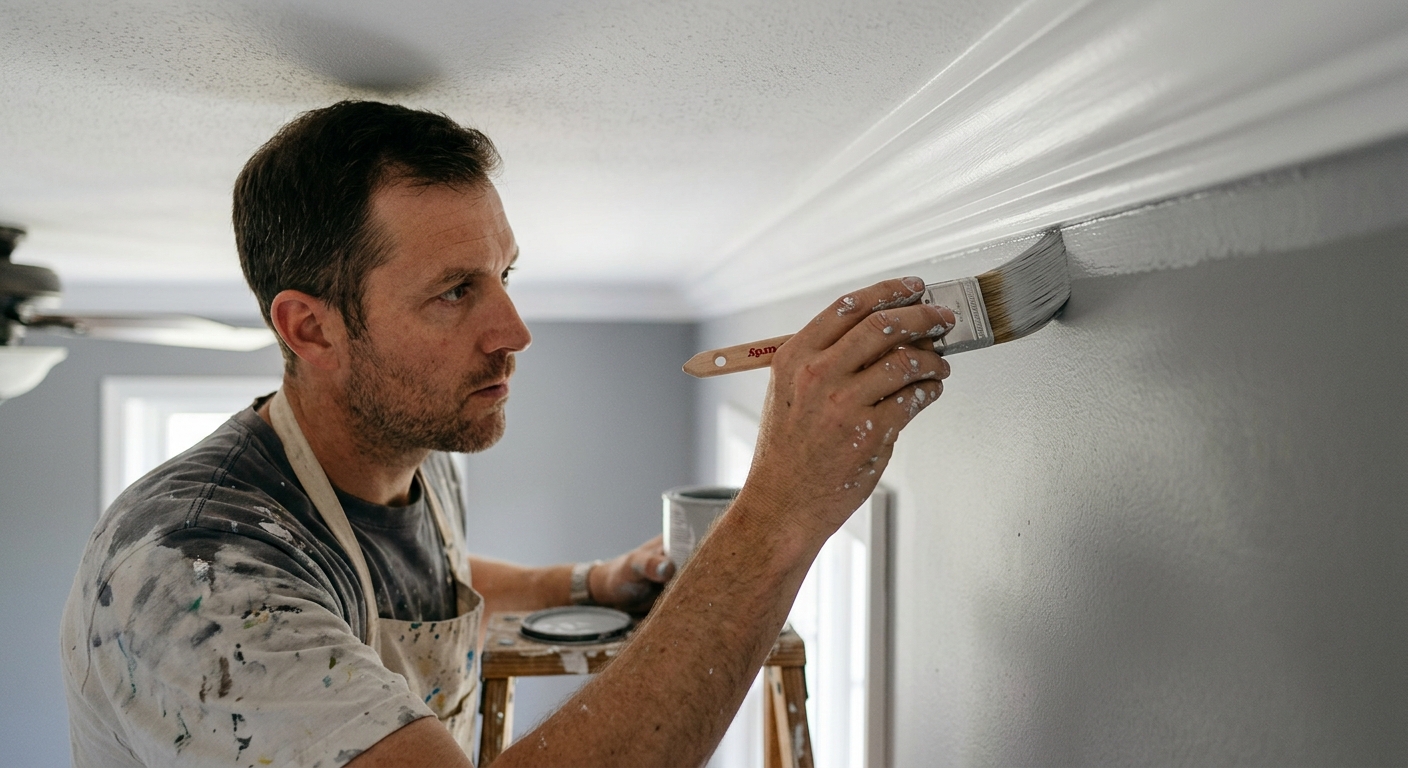
Painting options and costs in Springbank Hill
Springbank Hill has a mix of newer infills and established communities, and that variety shows up in painting quotes. With a local population of 9,840 (Statistics Canada, 2021 Census), neighbourhood demand is steady, and summer exterior slots can tighten quickly. Just as important, many homes in the Calgary area reflect build eras where older trim and siding are common, so repaints often involve more prep—scraping, patching, caulking, and priming—before any top-coat goes on. For properties built before 1978, contractors typically plan for lead-safe work practices when sanding or scraping, even though homeowners aren’t usually the ones legally tasked with lead compliance.
In the Calgary region, exterior pricing is shaped by our short, weather-dependent workable season—roughly mid-May to late September—when daytime temperatures are reliably above 10°C and surfaces can dry properly. That compressed window increases labour pressure and can make pricing firmer than shoulder months. Interior work is less weather-bound, but labour still depends on access, ceiling heights, and how much drywall repair is needed. If you live near shopping and services in the Springbank Hill area, we tend to see higher call volume from busy households wanting scheduling around school and work commitments.
Use the guide below to compare typical scopes and timelines, then we’ll fine-tune your estimate once we confirm condition, surface materials, and finish selections.
| Service |
What's Included |
Typical Duration |
Price Range |
| Interior — whole home (walls, ceilings, trim) |
Move/cover light furnishings, protect flooring, clean & patch, sand where needed, prime repaired areas, cut-in + roll, caulk trim where appropriate, finish coats on walls/ceilings, finish coat on interior trim |
4–10 days |
$3,500–$8,000 |
| Interior — per room (standard bedroom or living room) |
Prep & clean, patch/prime minor repairs, protect floors, paint walls and ceilings, basic trim touch-ups; includes standard masking and cleanup |
1–3 days |
$500–$1,800 |
| Exterior — full house (siding, trim, soffits) |
Pressure wash (as appropriate), scrape/sand loose paint, patch & caulk, spot prime bare areas, prime where required by substrate/condition, paint siding + trim + soffits; include surface protection and final cleanup |
5–14 days |
$5,000–$9,000 |
| Exterior — trim and accent colours only |
Protect/stage, careful masking, scrape/sand limited areas, spot prime and repaint trim and accents; excludes full siding repaint unless noted |
2–7 days |
$2,500–$5,500 |
| Kitchen cabinet painting (doors, frames, spray finish) |
Degrease, sand & lightly scuff, remove/label hardware as agreed, prime for bonding, spray finish for smoothness, reinstall hardware; includes basic touch-up |
5–12 days (including cure time) |
$1,800–$5,500 |
| Specialty / faux finish (accent wall, texture) |
Surface prep for the texture system, base coat, specialized application (e.g., Venetian/plaster look or stipple/texture), sealing where required |
1–5 days |
$600–$3,800 |
Prices are estimates only and vary by project scope, site access and material selection.
What affects the price of painting in Springbank Hill
In Springbank Hill and across the Calgary region, quotes for the “same” paint job can vary by 30–50% because labour and prep aren’t one-size-fits-all. Two contractors may both say “paint the exterior,” but one might include extensive scraping, caulking, stain-blocking and priming, while the other bases the price on paint coverage alone. Product choice (contractor-grade vs premium systems) and the sheen/finish plan also shift the budget. Finally, access and scheduling matter: if we can’t work efficiently around landscaping, eaves, or multiple levels, labour hours rise.
For exteriors, the season is tightly climate-bound in Alberta. In Ontario and Alberta, workable exterior work typically runs roughly late May to early October—daytime temperatures need to stay above about 10°C and rising enough for proper application and dry time. Short seasons concentrate demand, so summer labour rates are firmer than shoulder months. Coastal BC can have a longer calendar, but humidity and rainfall change the product requirements and sequencing, often requiring mildew-resistant coatings and extra timing. In Calgary, freeze–thaw cycles, strong UV, and hail risk drive us to specify high-quality acrylics and flexible coatings, which affects material cost.
Concrete examples in Springbank Hill: (1) a repaint on older trim often turns into a prime-and-spot-patch job, where prep can be 50–70% of labour—moving a project from a lower band into the higher end. (2) If your home is in a sun-exposed area and the existing coating is chalking, expect extra sanding and binder/spot-prime work, which is one reason exterior estimates within the $2,500–$5,500 range can move toward the $5,000–$9,000 range for full coverage. (3) Interior jobs swing based on ceiling height and repair needs: a quick repaint can land around $400–$8,000 overall, while patching and priming can push room-by-room budgets upward.
| Price Factor |
Why It Matters |
Cost Impact |
| Surface prep — scraping, sanding, patching drywall or wood |
Prep determines adhesion; without it, peeling or bubbling returns sooner |
Often the largest driver; can add +20% to +60% on repaints |
| Number of coats — 2-coat system over primer vs. 1 coat over existing |
Coverage and durability depend on doing the correct system, not just one thick coat |
Can shift price by +10% to +30% |
| Paint quality tier — contractor-grade vs. premium (Benjamin Moore, Sherwin) |
Premium systems tend to level better and offer stronger tint retention and washability |
Typically +5% to +20% depending on scope |
| Ceilings and trim — adds significant time vs. walls-only |
Ceilings require more cutting, protection, and care; trim needs caulking and detail work |
Commonly adds +15% to +45% if included |
| Exterior season window — short season raises summer rates |
Weather and scheduling compress the calendar and increase labour availability pressure |
Often +10% to +25% during peak demand |
| Lead-safe precautions — required for pre-1978 homes with lead paint |
Testing and containment add time and disposal steps when lead is present |
Can add +5% to +25% depending on findings |
| Surface material — drywall vs. plaster vs. wood vs. stucco |
Different materials need different primers and adhesion systems |
Variable; upgrades can add +10% to +35% |
| Height and access — multi-storey exterior requires scaffolding or lifts |
Access gear increases labour time and setup requirements |
Often +15% to +50% on multi-storey homes |
Permits & regulations in Alberta
In Alberta, painting itself doesn’t typically require a permit for the homeowner. That said, health and work-practice rules matter—especially for older housing. For homes built before 1978, health guidelines recommend testing for lead paint before sanding or scraping, and using lead-safe work practices if lead is present. This usually includes wet methods to control dust, HEPA vacuuming, proper sealing of the work area, and safe disposal of debris. While this is not normally “a permit” step for the homeowner, it’s standard practice for professional contractors because the risk isn’t worth cutting corners.
What DOES require a permit is not painting, but related municipal or building work like structural changes, exterior reconfiguration, or certain roof/window replacements under specific bylaw contexts. For typical interior repainting or exterior repainting/restoration, permits are generally not required, but correct product handling and safe containment still apply.
To verify a contractor in Springbank Hill, do it step-by-step before work starts:
- Confirm they carry liability insurance (ask for a current certificate).
- Ask for proof of WSIB/WCB workers’ compensation coverage for their employees.
- Request a written contract that specifies paint brands/lines, sheen, number of coats, and included prep/repairs.
- Check that they describe how they’ll protect landscaping, windows, and adjacent surfaces.
- If pre-1978 surfaces are involved, ask about their lead-safe process and disposal plan.
If anything is missing—no certificate, unclear scope, or vague prep language—pause and get it clarified in writing.
Interior vs exterior painting — getting the best result in Springbank Hill
In Springbank Hill, the difference between a long-lasting paint job and a premature failure is mostly prep discipline and correct systems—not just the brand on the label. For interiors, start with surface condition: filling, sanding, and priming repaired spots matter more than the topcoat’s marketing. Choose the right sheen by room and use—flat can hide wall imperfections but scuffs more; eggshell or satin holds up better in hallways and family rooms; and semi-gloss or higher on trim cleans easily. In practice, two coats over a properly primed surface outlast one heavy coat, because adhesion and coverage need to be built correctly.
For exteriors, Alberta weather adds extra stress through UV exposure, freeze–thaw cycles, and occasional hail impacts. Caulking before painting helps prevent water ingress at joints and trim lines; once water gets behind coating systems, bubbles and peeling follow. Primer choice also depends on substrate—fresh or bare wood, previously painted surfaces, and masonry all need the right bonding primer and timing. Unlike coastal BC where mildew management is a constant, Calgary’s risk is more about drying conditions and temperature stability; you still need durable, flexible exterior coatings that can handle movement.
Cabinet painting is often the best “budget alternative to replacement” when existing boxes are solid: the job becomes manageable if prep and bonding primer are done well, and the spray finish is planned for cure time. For pre-1978 homes, contractors should use lead-safe procedures during scraping or sanding; that’s both a safety issue and a quality issue because contamination and uneven prep can show through.
A simple price example: if an exterior trim-and-accent refresh sits in the $2,500–$5,500 range, but your siding has widespread chalking or failed caulk lines, a contractor may need to include more prep and primer to reach a durable finish—pushing the scope toward $5,000–$9,000. Paying for the prep is what actually prevents repainting early.
| Project Type |
Key Prep Step |
Recommended Coats |
Price Band |
| Interior — fresh drywall (new construction) |
Prime bare drywall and properly sand for uniform texture before finish |
2 coats over primer |
$800–$3,500 |
| Interior — repaint (good condition, no repairs) |
Clean, lightly scuff/sand, spot prime if needed, then top-coat |
2 coats |
$400–$2,500 |
| Interior — repaint (patching and priming needed) |
Patch + sand, prime repairs and stains to ensure uniform sheen/colour |
2 coats (often more at problem spots) |
$1,200–$6,000 |
| Exterior siding (wood or fibre cement) |
Scrape/sand to sound edges, caulk joints, prime bare areas, then top-coat system |
2 coats with primer where required |
$5,000–$9,000 |
| Exterior trim and accents only |
Mask clean lines, spot-prime repaired or weathered sections |
2 coats on trim/accents |
$2,500–$5,500 |
| Kitchen cabinets (spray finish) |
Degrease, bond-prime, and spray for a smooth, durable film |
2–3 coats depending on system |
$1,800–$5,500 |
How to choose a painting contractor in Springbank Hill
Choosing the right contractor in Springbank Hill comes down to verification and clarity. First, confirm Alberta licensing status and request insurance documentation: ask for their liability insurance certificate (showing the effective dates and coverage) and proof of WSIB/WCB workers’ compensation coverage. If they can’t provide these documents quickly, that’s a major quality and safety risk. Next, get 2–3 itemised written quotes that break labour and materials down—don’t accept vague lump sums with no details on prep, primers, or number of coats.
Read the scope carefully. What’s excluded from the estimate—window caulking, fixture removal, disposal, or pressure washing? Does the quote include paint, primer, caulking, sanding materials, and all top-coats, or only “labour”? For exteriors, ask how they’ll sequence work around rain and overnight temperature drops and how they’ll protect landscaping. Also confirm what warranty is provided: workmanship warranty length, and whether product/manufacturer warranties apply to the system they’re installing. Find out if the warranty is transferable if you sell the home.
Payment schedule matters: never pay more than about 10–15% upfront. Hold back the remainder until the job is complete, cleaned, and inspected. Finally, get a start date and estimated completion time in writing, including cure-time realities for cabinets and any multi-coat exteriors.
- Ask for a written contract with brand/line, sheen, and number of coats.
- Confirm prep steps: scraping/sanding, patching, caulking, stain-blocking.
- Verify liability insurance and WSIB/WCB coverage before work begins.
- Request an itemised breakdown (labour vs materials vs disposal).
- Check whether pressure washing is included for exteriors (as appropriate).
- Confirm window/door masking and trim protection methods.
- Ask who handles equipment: lifts/scaffolding and safety setup.
- Clarify colour selection responsibility and touch-up process.
- Make sure disposal and cleanup are explicitly included.
- Get details on lead-safe approach if pre-1978 surfaces are involved.
- Confirm warranty terms: start date, coverage, and exclusions.
- Set expectations for drying/cure time and access to cabinets/rooms.
Red flags I see in Springbank Hill: contractors who quote fast without walking the home, vague scope that omits primer or prep, no proof of WSIB/WCB or liability insurance, paying large deposits (more than 10–15% upfront) before any work, and “one-coat coverage” promises on difficult substrates.
Frequently asked questions — painting in Springbank Hill
How do I prep walls before painting?
If you’re doing your own prep in Springbank Hill, the goal is to make the surface dust-free, sound, and uniform. Start by cleaning (kitchen grime needs degreasing; scuffed areas need a thorough wash and dry). Patch holes or cracks, then sand smooth and remove dust with a vacuum and tack cloth. Prime where you’ve patched, where you’ve stained, or where drywall paper is exposed—otherwise your colour can look blotchy and fail early. If you’re repainting glossy trim, lightly scuff so paint can bond. Avoid sanding that creates a lot of airborne dust in older homes; if you have pre-1978 surfaces, consider having a lead test done before any scraping. Even a small room repaint can sit around $500–$1,800—bad prep is how projects creep upward through extra coats and rework.
Do I need to worry about lead paint in an older Springbank Hill home?
Potentially, yes—especially for homes built before 1978, which are more common in the broader Calgary region housing stock. In Alberta, homeowners aren’t usually issued permits for repainting, but health guidelines recommend testing for lead paint before sanding or scraping, and using lead-safe work practices if lead is present. A professional crew should be prepared to use wet methods to control dust, HEPA vacuuming, proper containment, and safe disposal. The practical reason to care is that lead hazards aren’t visible, and uneven prep from poor containment often shows up as peeling or failing patches later. When contractors plan correctly, it can add time and cost, but it protects your family and the quality of the coating system. If your job is moving into an exterior repaint budget like $5,000–$9,000, ask how lead-safe measures affect prep and disposal in the estimate.
How long does it take to paint a house?
Timing depends on scope, surface condition, and cure/dry times—plus our Springbank Hill schedule around weather for exterior work. For interiors, a typical repaint of a good-condition room often takes 1–3 days of on-site work, while whole-home interior projects commonly run 4–10 days depending on repairs and trim volume. Ceilings, lots of trim, and cabinet work extend timelines because prep and painting are more detail-heavy. For exteriors, our workable window in Alberta is roughly mid-May to late September, with daytime temps ideally above about 10°C for application and drying. A full house exterior repaint commonly takes 5–14 days of labour, but rain holds and cure time can shift completion. If you’re comparing bids, ask each contractor for an exact schedule in writing and whether they include prep steps like sanding, patching, and caulking—not just paint time.
What's the difference between paint quality tiers?
Paint quality tiers mainly change how reliably the coating performs over time. Premium systems often offer better coverage, more consistent tint retention, and improved durability—important with Calgary UV exposure and freeze–thaw cycles. Contractor-grade paints can be a good choice on some projects, but the overall result still depends heavily on prep: adhesion, priming of repairs, and using the correct system for the substrate. For example, a trim-and-accent exterior refresh in the $2,500–$5,500 range may look fine immediately even with mid-tier materials, but if the primer or caulking plan is weak, you’ll still see failure sooner. Conversely, a full exterior project in the $5,000–$9,000 range is often justified when the quote includes correct primer types, better binder systems, and thorough surface preparation. Ask what brands/lines are being used and whether the quote includes primer, not just “top-coat paint.”
How do I compare painting quotes?
Compare quotes like a “scope audit,” not like a race to the lowest number. Start by checking what’s included in prep: scraping/sanding to sound edges, patching and drywall repair, caulking, stain-blocking, and priming requirements. Next confirm number of coats (and where extra coats are applied). A quote that includes only one coat or doesn’t name primer is usually cheaper because it’s skipping labour that protects adhesion. For exteriors in Springbank Hill, confirm how they’ll handle weather holds and whether pressure washing (as appropriate) is included. Look for an itemised labour + materials breakdown and disposal/masking responsibilities. Ask about warranty and workmanship coverage details. As a reference point, interiors can range from about $400–$8,000 depending on scope, but a credible estimate should explain why it lands where it does. If one bid lands in the middle but omits key steps, it may not actually be “comparable.”
What paint sheen should I use in different rooms?
Sheen choice is about balance: appearance, durability, and cleanability. In most Alberta homes, flat (or “matte”) helps hide wall imperfections but can scuff more easily, so it’s best for lower-traffic ceilings and rooms with light use. EggshelI is a common choice for bedrooms and living rooms because it cleans better than flat while keeping a soft look. Satin is often the best pick for family rooms, hallways, and areas that see frequent wipe-downs. For kitchens, bathrooms, and trim that needs frequent cleaning, semi-gloss (or similar higher sheen) is typically preferred on walls and especially on trim because it resists stains and cleans faster. If you have older walls with patches, primer and sanding matter more than sheen—because the wrong sheen can highlight uneven texture. When in doubt, ask your contractor how they’ll handle sheen transitions around doors and trim so it looks consistent.