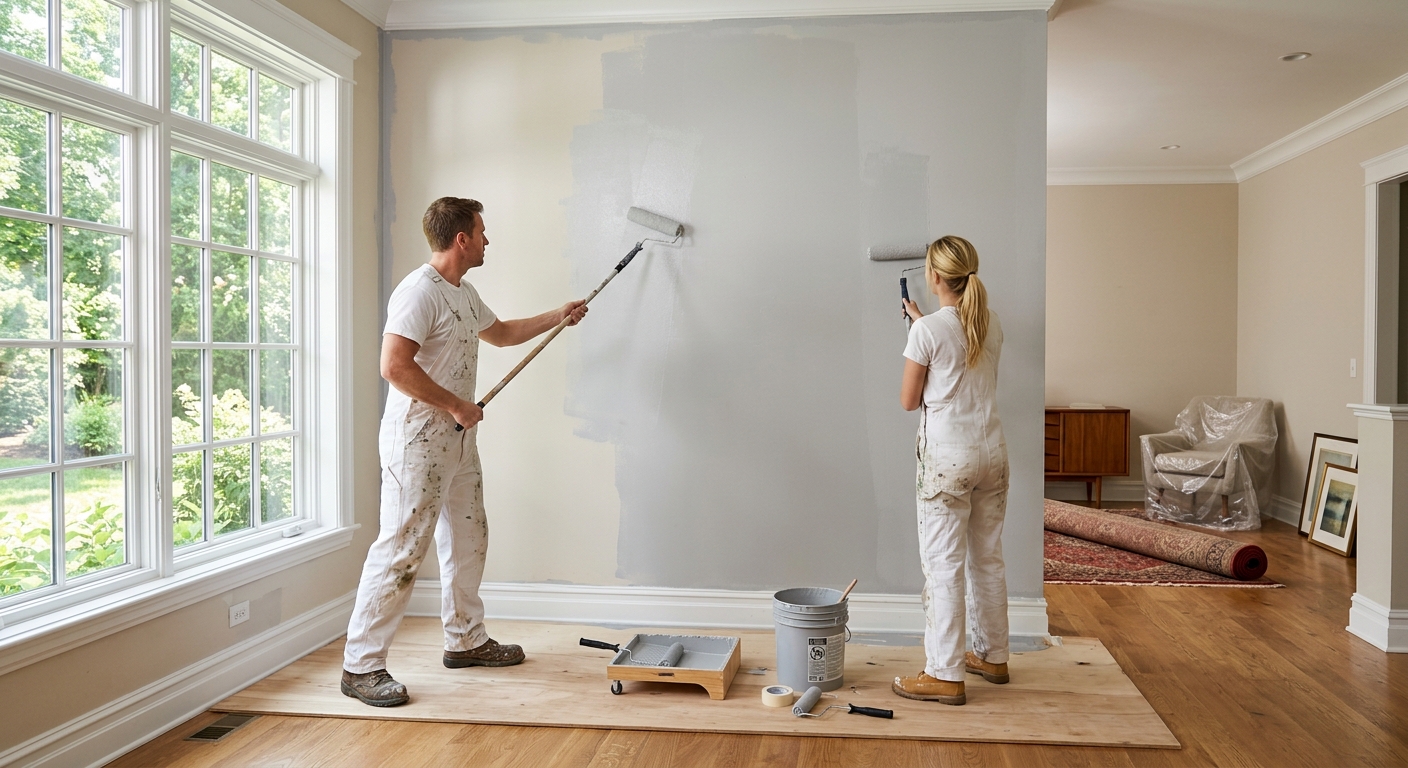
Painting options and costs in Braeside
Braeside homeowners usually start with the same question: “What will it cost, and which option actually lasts?” The answer depends on how much prep is needed and what sort of finish you want—especially in the Calgary area, where most neighbourhoods sit on a mix of mid-century to late-20th-century housing. With a population of 5,700 (Statistics Canada, 2021 Census), demand can be concentrated on the same few contractors during peak summer weeks, and that directly affects scheduling and pricing.
For older properties, the biggest cost driver is often surface condition. In the broader Calgary region, many homes pre-date 1980, which typically means more scraping, patching, caulking and stain-blocking before we ever apply a topcoat. If your home is pre-1978, we also use lead-safe practices as standard—even though Alberta homeowner permitting isn’t typically required for painting. Calgary’s exterior costs are shaped by a shorter, weather-dependent window: workable outdoor conditions usually run from mid-May to late September when daytime temperatures stay reliably above 10°C so coatings can dry and cure properly. Freeze–thaw cycles, strong UV, and hail potential also push us toward high-quality acrylics and flexible exterior systems, which can raise material cost but reduce premature failure.
In Braeside, painting demand is especially high around the residential pockets near local parks and the older, established streets where many homes are being refreshed before listing. Below are typical service options and what they often include, to help you compare quotes apples-to-apples.
| Service |
What's Included |
Typical Duration |
Price Range |
| Interior — whole home (walls, ceilings, trim) |
Patch/fill, sand, spot-prime as needed; protect floors/fixtures; paint 2-coat system in selected sheen; caulk where appropriate; clean-up and final touch-ups |
5–10 days |
$2,000–$7,500 |
| Interior — per room (standard bedroom or living room) |
Move-light items (as agreed), protect surfaces; prep minor repairs; 2-coat paint on walls/ceiling; basic trim coverage where accessible |
1–3 days |
$400–$1,800 |
| Exterior — full house (siding, trim, soffits) |
Power wash; scrape/sand loose paint; patch and caulk; prime bare spots; 2-coat exterior system; protect landscaping; final clean-up |
7–14 days |
$4,500–$9,000 |
| Exterior — trim and accent colours only |
Prep (light scrape/sand, patching); prime as required; caulk/seal; paint trim/accents with coordinated system; protect siding and windows |
3–7 days |
$2,500–$6,000 |
| Kitchen cabinet painting (doors, frames, spray finish) |
Degrease and clean; remove/label doors where possible; sand and adhesion prep; bonding primer; sprayed finish; re-install; new hardware alignment (if reused) |
5–12 days (plus dry time) |
$1,600–$6,500 |
| Specialty / faux finish (accent wall, texture) |
Surface prep and priming; multi-step application to match a chosen reference look; sealing and durability topcoat as needed |
2–5 days |
$600–$4,500 |
Prices are estimates only and vary by project scope, site access and material selection.
What affects the price of painting in Braeside
In Braeside and across the Calgary economic region, it’s common to see the same “3-bedroom repaint” land 30–50% apart. The big reason isn’t the paint brand—it’s prep time, coating system choices, access challenges, and how much is truly included (repairs, priming, caulking, and protection). When exterior work is booked during the short, weather-dependent window—roughly late May to early October—there’s less flexibility, so summer scheduling pressure can tighten availability and firm up rates. Shoulder-month work is often harder to schedule because coatings need proper drying conditions, and that pushes some contractors to prioritize higher-margin exterior starts.
Older housing stock is another cost lever. Many homes in the region show heavier wear on trim and siding, which means scraping, patching and priming can account for 50–70% of the labour on a repaint. That can move an exterior project from the lower end of the $2,500–$9,000 exterior band to the middle or upper range quickly if there’s peeling, caulk failure, or evidence of prior DIY work.
Two practical examples from Braeside: a home with flaking trim usually needs more time for stain-blocking and feather-sanding before topcoat, which can add several thousand dollars versus “minor refresh” scope. Meanwhile, a straightforward interior with minimal repairs can land closer to the $400–$8,000 interior range lower to mid levels because the labour is mainly taping/protection and two-coat application rather than deep patching.
Finally, product tier matters. Premium exterior systems and flexible coatings cost more upfront, but they help manage Alberta UV exposure and hail impacts. In a climate where temperature swings and freeze–thaw cycles are normal, the “cheap” approach often fails sooner, which raises your total cost over time.
| Price Factor |
Why It Matters |
Cost Impact |
| Surface prep — scraping, sanding, patching drywall or wood |
Prep determines adhesion and how well the coating holds through Alberta temperature swings |
High impact (often 30–70% of exterior repaint labour) |
| Number of coats — 2-coat system over primer vs. 1 coat over existing |
Coverage, uniformity and durability depend on a true coating build, not just thickness |
Medium to high (can change pricing by 10–30%) |
| Paint quality tier — contractor-grade vs. premium (Benjamin Moore, Sherwin) |
Better solids and film build can mean fewer problems, better colour stability, and less rework |
Medium (material difference, plus labour efficiency) |
| Ceilings and trim — adds significant time vs. walls-only |
Trim detailing and ceiling edges require more masking, cutting-in and careful rolling |
Medium to high |
| Exterior season window — short season raises summer rates |
Limited weather days compress schedules and increase demand for crews |
Medium (especially late May–August) |
| Lead-safe precautions — required for pre-1978 homes with lead paint |
Extra containment, wet methods, HEPA clean-up, and disposal steps add labour and materials |
Medium to high on older substrates |
| Surface material — drywall vs. plaster vs. wood vs. stucco |
Different materials require different primers, patch compounds and adhesion prep |
Medium |
| Height and access — multi-storey exterior requires scaffolding or lifts |
Safe access increases crew time and rental costs |
High for two-storey exteriors |
Permits & regulations in Alberta
For painting in Alberta, you generally do not need a permit just to paint your home’s interior or exterior. The main “regulatory” focus for homeowners is health and safety—especially on older buildings. For homes built before 1978, health guidance recommends testing for lead paint before sanding or scraping. If lead is present, standard lead-safe work practices include wet methods, HEPA-filtered vacuuming where appropriate, controlled containment to reduce dust, and correct disposal. This is not something most homeowners must legally enforce themselves, but it’s industry-standard expectation for professional contractors.
What does require a permit? Painting itself typically does not. However, if your project scope expands into structural changes, electrical/plumbing alterations, or major renovations that trigger building permits, those are separate from painting. A pure paint refresh on existing surfaces usually does not.
To verify a contractor in Braeside step-by-step, start with their Alberta business/contractor licence details online (use the provincial registry tools your contractor provides or that are publicly available). Next, request a certificate of liability insurance and confirm it’s current and specific to the contractor/company doing the work. Then confirm workers’ compensation coverage—WSIB/WCB (the Alberta workers’ compensation coverage route) should be documented before work begins. Finally, insist on a written contract listing paint brand/line where possible, sheen, number of coats, and exactly which prep steps are included. If lead-safe work is relevant, ask how they’ll manage containment and clean-up, and whether they’ll document testing and the work method.
Interior vs exterior painting — getting the best result in Braeside
In Braeside, the difference between a paint job that looks great for years and one that fails early comes down to preparation, coating build, and choosing the right product for Alberta’s conditions. For interiors, the brand matters less than prep: filling cracks, sanding glossy surfaces, spot-priming stains/patches, and cleaning dust before painting. Sheen choice also affects performance—flat paint hides wall imperfections, while eggshell or satin typically work better for family rooms and hallways. The best results usually come from two coats over the right primer system. One thick coat can look fine at first, but it often doesn’t build the film properly and may show flashing or uneven sheen later.
For exteriors, prep is non-negotiable. Calgary’s UV, hail risk, and freeze–thaw cycles demand caulking and sealing before topcoat so water can’t creep under failing edges. Use primer matched to the substrate: oil-based primers can be important on certain stubborn stains and older, slick surfaces, while high-adhesion latex/bonding primers help on sound, properly cleaned walls. Because Alberta isn’t a constant coastal humidity environment like BC, you don’t “chase mildew” the same way—but you still need the right coating chemistry for temperature stability and rain-timed cure.
If you’re considering kitchen cabinet work, painting is a strong budget alternative to replacement when the cabinet boxes are solid. It’s also where prep and bonding primer quality matter most. For pre-1978 homes, lead-safe practices should be part of the plan before sanding trim, not an afterthought.
Here’s a realistic money example: adding trim and soffit coverage can move an exterior refresh from the mid-range into the higher end because you’re paying for extra masking, caulking, and careful finishing detail. But it’s usually worth it—an exterior that’s “mostly done” with mismatched trim often requires touch-ups sooner, especially under Alberta sun exposure.
| Project Type |
Key Prep Step |
Recommended Coats |
Price Band |
| Interior — fresh drywall (new construction) |
Moisture/compound sanding and thorough dust control; prime for uniform absorption |
Primer + 2 finish coats |
$1,800–$6,000 |
| Interior — repaint (good condition, no repairs) |
Wash/degloss as needed and light sanding for adhesion |
2 finish coats (over proper prep) |
$400–$3,500 |
| Interior — repaint (patching and priming needed) |
Fill, sand, spot-prime repairs and stain/block areas |
Primer at patches + 2 finish coats |
$900–$8,000 |
| Exterior siding (wood or fibre cement) |
Scrape loose coating, sand feather edges, caulk joints and prime bare spots |
Prime as needed + 2 exterior finish coats |
$4,500–$9,000 |
| Exterior trim and accents only |
Mask tightly, prep edges and caulk before finishing colours |
Prime as needed + 2 coats |
$2,500–$6,000 |
| Kitchen cabinets (spray finish) |
Degrease and adhesion prep; bonding primer then sprayed topcoat |
Primer + 2 finish coats |
$1,600–$6,500 |
How to choose a painting contractor in Braeside
Choosing a painting contractor in Braeside is mostly about verifying three things: competence, coverage, and clarity of scope. First, ask for proof of Alberta licensing/registration if applicable to the contractor’s structure, then request a current certificate of liability insurance. For jobsite safety, confirm workers’ compensation coverage (WCB/WSIB routing) is active for the painters who will be working at your address. If they can’t provide documents promptly, that’s a sign to move on.
Next, get 2–3 itemised written quotes. You want a breakdown that separates labour from materials and lists what prep steps are included—especially scraping, sanding, caulking, patching, primer types, and whether disposal is included. Avoid lump-sum quotes that don’t specify paint line/sheens or the number of coats. Also check the scope for exclusions like removing heavy built-in fixtures, covering flooring under cabinets, lead-safe testing/containment for pre-1978 work, and what they do about previously stained surfaces.
Warranty matters for both workmanship and products. Ask how long the contractor stands behind their prep and application, and whether the manufacturer warranty (paint system) is included and how claims are handled. Payment schedule should be conservative: never pay more than about 10–15% upfront, and use a holdback until completion and final walkthrough. Finally, ask for a written start date and a realistic completion estimate—especially for exteriors, where weather can delay curing if temperatures and rain timing aren’t workable.
- Request proof of insurance and workers’ compensation before work starts
- Confirm the exact paint brand/line and sheen in the contract
- Ask whether the quote includes scraping, patching, caulking, and priming
- Verify the number of coats for each surface (walls, trim, exterior siding)
- Clarify surface prep standards (power wash scope, sanding grit, dust control)
- Check whether lead-safe practices apply for pre-1978 trim/siding
- Confirm disposal and jobsite clean-up are included
- Review how cabinets/doors are handled (remove/label, spray method, curing time)
- Get start/end dates in writing, not just “weather permitting” language
- Understand how touch-ups are handled if colours or sheens don’t match expectations
- Ask for references from similar Braeside projects (age of home, interior/exterior)
- Pay by milestone (small deposit, rest after completion) rather than large upfront amounts
In Braeside, red flags I see too often include: quotes that omit surface prep details, promises of “one-coat coverage” on repaints, contractors who won’t share insurance/coverage paperwork, schedules that don’t account for the mid-May to late-September exterior window, and contracts that don’t specify brands, sheens, number of coats, or lead-safe approach for older homes.
Frequently asked questions — painting in Braeside
How do I choose a painting contractor in Braeside?
Start by comparing itemised quotes and verifying coverage. In Braeside, I recommend you ask for a current certificate of liability insurance and proof of workers’ compensation coverage before anyone sets foot on your property. Then review the scope line-by-line: does it include scraping, sanding, patching, caulking, priming and disposal? For pre-1978 homes, ask how they handle lead-safe prep and clean-up—this is about safer practice, not a permit. Lastly, confirm the schedule fits Calgary’s workable exterior season (often mid-May to late September) and get start/completion timing in writing. If a contractor’s price looks low but their prep is vague, you’re likely paying later for touch-ups or early peeling.
How many coats does an exterior repaint need in Braeside?
Most exterior repaints in Braeside are done as a 2-coat finish system, with primer added where the surface demands it. If the siding or trim has bare wood, stained areas, or where old paint has been scraped back, we prime those zones so the topcoat adheres and the colour stays uniform. In our Calgary market, even when existing coating is still sound, skipping primer on problem spots is a common cause of early failure under UV exposure and temperature cycling. For planning, a typical full-house exterior repaint commonly lands in the $4,500–$9,000 range depending on prep complexity and access—trim-only refreshes often fall closer to $2,500–$6,000.
What is the best primer for older Braeside homes?
“Best” depends on what you’re priming—bare wood, previously painted trim, patched drywall, or areas with stains/unknown DIY coatings. For older Braeside homes (many with more worn trim and caulking history), primers need to do two jobs: promote adhesion and lock down issues like tannin staining or uneven absorption. If you have pre-1978 trim or siding, we also plan for safe preparation practices; sanding and scraping can generate hazardous dust if lead is present, so testing and lead-safe controls are important. In terms of product choice, contractors often use bonding primers on solid, sanded surfaces and targeted primers where stain-blocking or adhesion is critical. A good contractor will recommend primer type based on substrate condition, not just price.
Should I paint or wallpaper my Braeside home?
For most Braeside homeowners, paint is the more reliable, lower-maintenance option—especially where you may have older drywall seams, small cracking, or patchwork from prior repairs. Paint also lets you control sheen by room (for example, eggshell or satin in higher-touch areas) and makes future repainting easier. Wallpaper can look great, but it’s less forgiving if your walls have movement or if prep isn’t perfect; moisture and surface texture can cause lifting. If you’re aiming for a refresh within Alberta’s practical scheduling window, painting also tends to be faster to complete and easier to protect from dust and overspray. If you do consider wallpaper, get a contractor who can demonstrate wall prep standards and how they’ll manage seams and adhesion.
How do I fix peeling exterior paint in Braeside?
Peeling exterior paint should not be “covered over.” The correct fix is to remove loose coating, scrape back to sound edges, sand feathered transitions, and address the reason it failed—often failing caulk joints, water intrusion at seams, or inadequate priming on bare spots. After cleaning and prep, prime exposed areas with the right bonding/stain-blocking product, then apply a full 2-coat exterior finish system. In Braeside’s Calgary climate, freeze–thaw and UV exposure make it essential to seal penetrations and maintain caulking lines before topcoat. Because peeling usually means extra labour, you may see the job move into the higher end of the exterior band—commonly $4,500–$9,000 for full houses depending on how widespread the peeling is.
What colours add the most resale value in Braeside?
In Braeside and the wider Calgary area, the safest resale approach is generally “market-friendly neutrals” that don’t fight your lighting. For exterior, greige, soft warm greys, and classic off-whites tend to appeal to more buyers, especially when paired with crisp trim colours and earth-tone accents. For interiors, warm whites, light greys and muted earthy tones often read well across daylight and evening lighting. The resale value comes less from one exact colour and more from consistent coverage, clean trim lines, and a finish sheen that suits the room. If you’re repainting and want an easy win, choose a coordinated exterior trim and soffit colour plan; many homeowners do a trim/accent upgrade in the $2,500–$6,000 range to modernize without the full-house cost.